

The disbursement rate is too low.
According to observations by reporters from SGGP newspaper, the pressure to disburse funds is increasing in many localities. At the Quy Nhon - Pleiku expressway project (with a total investment of nearly 44,000 billion VND), local counterpart funds have been fully disbursed, but central government funds have not yet been allocated, causing many difficulties for contractors.
In Quang Ngai , the public investment plan for 2026 is over 7,300 billion VND. As of May 8th, the locality had only disbursed over 850 billion VND, equivalent to nearly 12% of the plan. In Quang Tri, by the beginning of May, the province's disbursement rate was only nearly 8% of the plan.
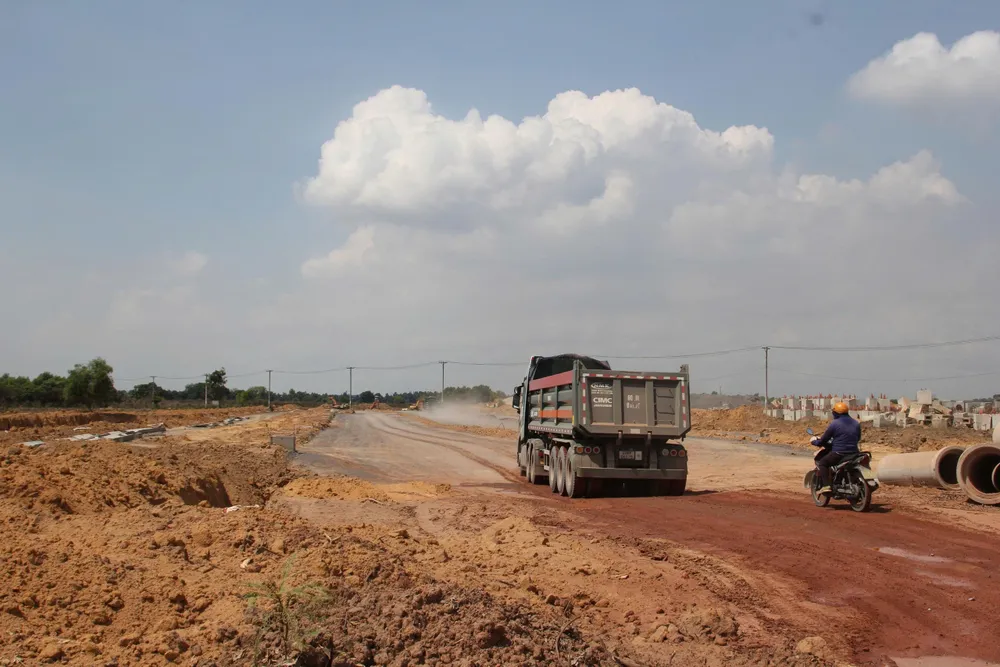
In Hue City, many key projects are progressing rapidly, but the biggest challenge remains land and resources for construction. Mr. Hoang Hai Minh, Vice Chairman of the Hue City People's Committee, said that the locality is requiring investors to develop detailed weekly disbursement plans and is focusing on resolving bottlenecks related to land acquisition.
In Khanh Hoa province, as of early May, the disbursement rate had only reached over 14% of the plan assigned by the Prime Minister. The main reasons are slow land clearance, shortage of leveling materials, lengthy paperwork procedures, and limitations in implementation by some investors and contractors.
In Tay Ninh province, the total local capital plan allocated for 2026 is nearly 30,800 billion VND, but by the end of April, only nearly 3,200 billion VND had been disbursed, approximately 11% of the plan assigned by the Government.
Similarly, in Ca Mau province, the total planned public investment capital for 2026 is over 7,000 billion VND, but by the end of April, only nearly 1,500 billion VND had been disbursed, equivalent to 20% of the plan. The Chairman of the People's Committee of Ca Mau province, Lu Quang Ngoi, requested that the investors allocated investment capital urgently implement procedures to complete the contractor selection process, accelerate implementation progress, and disburse all planned capital within the stipulated timeframe.
In Dong Nai City, the pressure is even greater as the locality has identified public investment as a key driver to achieve double-digit growth targets in 2026. However, despite being allocated a total capital of over 27,000 billion VND, as of May 5th, the locality had only disbursed over 2,600 billion VND, equivalent to nearly 10% of the plan. The biggest bottlenecks in Dong Nai remain land clearance and fluctuating construction material prices.
Many key transportation projects in Dong Nai City, such as the Ho Chi Minh City Ring Road 4, Huong Lo 2, routes 769 and 770B, and the upgrade project for Road 25B, are facing pressure from delays. Another infrastructure project underway in Nhon Trach ward (Dong Nai City) is the upgrade of Road 25B, the section from the center of Nhon Trach commune to National Highway 51, over 9.2 km long, with 10 lanes and an investment of nearly 1,500 billion VND. Construction began in late December 2024 and was expected to be completed by June 30th, but it is currently behind schedule and faces the risk of not meeting the planned completion date.
Mr. Do Dinh S. (Director of D.A Construction Company, Long Thanh Ward, Dong Nai City) said that the sharp increase in fuel costs at the beginning of April and the price of construction stone ranging from 51,000 to 240,000 VND/ton (depending on the type) - double the initially announced price - forced the company to temporarily suspend signing a construction contract for one project.
Ongoing projects are only purchasing materials in limited quantities because large amounts are not readily available. Mr. S. suggested that if fuel and construction material prices continue to rise sharply as they have recently, relevant agencies should consider adjusting construction contracts to avoid project delays.
Pressure from cost overruns and project delays.
Besides land acquisition and procedural obstacles, the surge in construction material prices is causing many public investment projects to face the risk of cost overruns and extended construction times.
According to Mr. Tong Van Nga, Chairman of the Vietnam Building Materials Association, input costs such as energy, extraction, and transportation have impacted domestic building material prices, thereby affecting public investment projects, especially transportation infrastructure projects. Currently, the country is implementing approximately 44 key projects with a total investment of about 569,000 billion VND, of which the value of uncompleted work is about 267,000 billion VND. Given this scale, even a few percent increase in building material prices could result in additional costs of tens of thousands of billions of VND.
Meanwhile, according to Mr. Nguyen Quoc Hiep, Chairman of the Vietnam Construction Contractors Association, when construction material prices rise sharply, the risk of cost overruns becomes a real pressure. What is worrying is that the current construction cost management mechanism has not kept pace with the rapid fluctuations of the market. Fluctuations in construction material prices have caused instability in the planning and allocation of public investment capital.
Investors and contractors face difficulties in accurately estimating costs, leading to cost overruns or the need for multiple adjustments, thus reducing the efficiency of resource utilization. Particularly for large-scale infrastructure projects, extended construction periods further increase the risk of price fluctuations, creating double pressure on both the state budget and the financial capacity of construction companies.
Faced with this reality, many localities are shifting to a more decisive management approach. According to Ho Van Ha, Vice Chairman of the People's Committee of Dong Nai City, the biggest bottleneck in disbursing public investment capital is land clearance, especially for transportation infrastructure projects. Therefore, the city has assigned the Department of Finance and the Department of Construction to coordinate with project owners to develop detailed disbursement plans on a monthly and quarterly basis. The People's Committees of communes and wards are directly and comprehensively responsible for this work.
In Khanh Hoa province, Vice Chairman of the Provincial People's Committee Tran Hoa Nam requested that units clearly assign responsibilities for each project, closely monitor progress on a weekly and monthly basis, and promptly resolve any arising obstacles. Projects that are behind schedule or unable to disburse funds will be considered for reallocation of capital to projects with better progress. Khanh Hoa province also requested strict handling of cases of irresponsibility, hindering progress, and delaying the allocation and disbursement of funds.
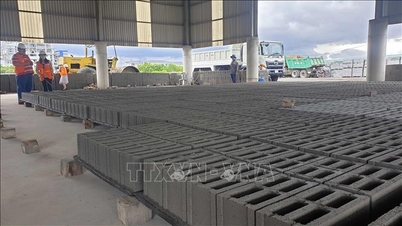
According to a recent report by the Ministry of Construction, in March alone, many groups of construction materials recorded sharp price increases, such as sand, stone, and bricks, which rose from 13.5% to 23%. In particular, asphalt (an essential material for transportation infrastructure) increased by nearly 32%, creating significant pressure on highway, airport, and large-scale infrastructure projects.
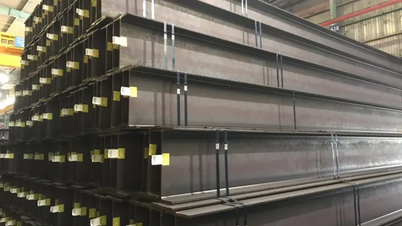
This has pushed up total construction costs by approximately 1.91%-8.09%, depending on the scale and nature of the project. “The 1.91%-8.09% increase in costs may not sound too large, but for infrastructure projects worth trillions of dong, this is a very significant figure. Many projects were budgeted in the past, when the prices of sand, stone, steel, and asphalt were low, so now there is a large discrepancy between the budget and the actual costs,” Mr. Tong Van Nga stated.
According to the Price Management Department (Ministry of Finance), the sharp increase in construction material prices is directly impacting the investment and operating costs of construction enterprises. Fluctuations in construction material prices are forcing many infrastructure and transportation projects to adjust their budget estimates and total investment levels, putting pressure on the state budget balance in a context where public investment resources are limited.
Authorities will intensify monitoring of market developments and promptly handle cases of hoarding, supply chain disruptions, unreasonable price increases, and price manipulation of construction materials.
→ The total public investment plan using state budget funds for 2026, as assigned by the Prime Minister, is over 1 trillion VND , including: over 363,000 billion VND from the central budget and over 650,000 billion VND from local budgets.
→ From the beginning of the year until May 14th, the total capital allocated by ministries, sectors, and localities for detailed tasks and projects is nearly 999,000 billion VND. Currently, more than 28,000 billion VND remains unallocated due to ongoing investment procedures at 13 ministries and central agencies and 15 localities.
Regarding disbursement progress, the cumulative disbursement of public investment capital nationwide has only reached over 166,000 billion VND, equivalent to 16.4% of the plan assigned by the Prime Minister. Of this, 8 ministries and central agencies and 17 localities have disbursement rates at or above the national average; while the remaining 27 ministries and central agencies and some localities have disbursement rates below the national average.
Source: https://www.sggp.org.vn/thao-diem-nghen-mat-bang-va-gia-vat-lieu-post853834.html
![[Image] Close-up view of the interchange connecting the two expressways and Long Thanh Airport.](https://vphoto.vietnam.vn/thumb/1200x675/vietnam/resource/IMAGE/2026/05/25/1779703378210_ndo_br_z7863716673926-224453a31600126cce10622af6290afd-4549-jpg.webp)

![[Image] Hanoi's urban life under the challenge of a "scorching hot" environment](https://vphoto.vietnam.vn/thumb/1200x675/vietnam/resource/IMAGE/2026/05/25/1779706979265_nang-nong-t5-2026-minh-duy-7-4636-jpg.webp)


























































































Comment (0)