

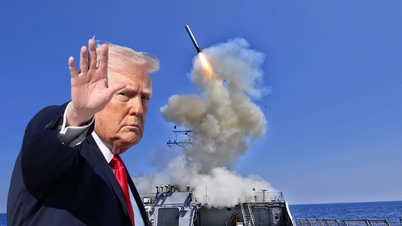
Following a week of continuous escalation, the consequences of the US and Israeli attacks on Iran, along with retaliatory measures from Tehran, have resulted in a disruption of traffic through the Strait of Hormuz – a strategic shipping lane carrying approximately 20% of the world 's oil consumption – raising concerns in the market that global supply could be tightened for an extended period.
Breathtaking fluctuations

Recent oil price movements have shown an unprecedented surge. Last week, US crude oil prices rose by approximately 35%, marking the largest weekly increase since oil futures trading began in 1983.
Not only did oil prices surge, but they also fluctuated very rapidly. In early trading on March 9th in Asia, oil prices rose by 10% in just about a minute and continued to increase by another 10% within the following 15 minutes.
The immediate cause of the price increase is the disruption to shipping in the Strait of Hormuz. Since the conflict broke out, many commercial ships have avoided passing through the area due to fears of attack, bringing shipping traffic to a near standstill.
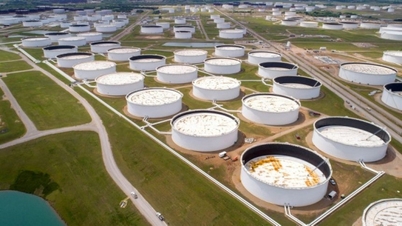
Saudi Arabia has increased shipments from the Red Sea to maintain exports, but shipping data shows this effort is still insufficient to compensate for the oil that cannot pass through the Hormuz. The disruption to shipping quickly impacted production. When oil tankers were unable to transport cargo, oil inventories at storage facilities increased, forcing many producers to reduce output.
Iraq has been hit hardest. Market estimates suggest its oil production has fallen by about 60%, from 4.3 million barrels per day before the conflict to around 1.7–1.8 million barrels per day. With oil tankers unable or unwilling to navigate the Strait of Hormuz, many oil wells have been forced to shut down.
This situation has also spread to other major producers. Kuwait has announced cuts in oil production and refining capacity due to threats to shipping, while the United Arab Emirates (UAE) said it is cautiously adjusting offshore production to avoid a shortage of storage space.
The threat to energy infrastructure is further increasing market concerns. Israel attacked a fuel storage facility near Tehran, while Iran conducted drone and missile attacks in the region. These developments have fueled market fears that energy infrastructure in the Middle East could continue to be targeted.
Heavy pressure

Volatile oil prices are putting significant pressure on the global economy , driving up the prices of gasoline, diesel, and jet fuel. Higher energy costs are raising concerns that inflation could return and force consumers to cut back on spending. If oil prices remain above $100 per barrel for an extended period, many analysts believe that global economic growth will be negatively impacted. According to a warning from the Managing Director of the International Monetary Fund (IMF), Kristalina Georgieva, a 10% increase in oil prices over a year could increase global inflation by approximately 40 basis points, while simultaneously reducing global economic output by 0.1-0.2%.
Economies heavily reliant on energy imports are under the greatest pressure. Japan imports about 90% of its oil through the Strait of Hormuz, South Korea depends on the Middle East for about 70% of its crude oil, while about 60% of Taiwan's oil and 30% of its natural gas are transported via this route.
The energy price shock is having a major impact on Europe and Asia – regions heavily reliant on supplies from the Middle East. According to Rystad Energy's chief economist, Claudio Galimberti, diesel prices in Europe have doubled, while jet fuel prices in Asia have risen by nearly 200%. Supply disruptions are also beginning to affect people's lives. In South Korea, the average price of gasoline in Seoul has exceeded 1,900 won per liter – the highest in almost four years – due to refinery price hikes. Myanmar, which relies almost entirely on imported fuel, announced on March 7th a restriction on gasoline-powered vehicles operating on alternate days based on license plate numbers. In Thailand, the government increased oil imports from West Africa and the US to reduce its dependence on the Middle East, while also pledging to keep diesel prices stable for 15 days. The Group of Seven (G7) industrialized nations are considering a plan to release 400 million barrels of oil from their common oil reserves to stabilize the market.
Supply disruptions from Iran could also exacerbate the situation. Iran currently exports around 1.6 million barrels of oil per day, primarily to China. If this supply is interrupted, China will have to find alternative sources, increasing competition in the energy market and further driving up prices.
According to Rabobank's global strategist Michael Every, what is happening in the energy market today bears the hallmarks of several major economic shocks in history. He argues that the current situation combines elements of the oil shock following the 1973 Middle East War, the commodity shock after the 2022 Russia-Ukraine conflict, and the supply chain shock caused by the COVID-19 pandemic. He warns that if the crisis persists, the damage to the global economy could increase exponentially, causing a domino effect across multiple markets.
The outlook for the oil market currently depends heavily on developments in the Middle East conflict. US Energy Secretary Chris Wright suggested that shipping through the Strait of Hormuz could be restored in the near future if threats to oil tankers are brought under control. In a worst-case scenario, disruptions could last for several weeks.
However, many experts warn that risks remain high. According to energy analyst Saul Kavonic of MST Financial, the market still expects tensions to ease in the coming weeks. But if energy supply flows are not restored soon, oil prices could rise to a point where demand is forced to plummet. In that scenario, oil prices exceeding $150 per barrel are entirely possible. Experts believe the global energy market will continue to face the risk of significant volatility in the near future, as the oil and gas supply chain is under unprecedented pressure since recent energy shocks.
According to expert Adnan Mazarei at the Peterson Institute for International Economics (USA), the market is gradually realizing that this crisis may not end anytime soon. He believes that the goals the US has set for quickly stabilizing the situation are becoming increasingly difficult to achieve.
From a geopolitical perspective, the current oil crisis highlights the extent to which energy markets depend on Middle Eastern stability. Prolonged conflict could cause the "black gold" variable to create severe crisis shocks. Even if tensions end quickly, the consequences for the energy supply chain could still linger, as damaged infrastructure takes time to repair and shipping operations must adapt to higher levels of risk.
Source: https://baotintuc.vn/kinh-te/bien-so-vang-den-20260309174643739.htm
![[Image] Hanoi's urban life under the challenge of a "scorching hot" environment](https://vphoto.vietnam.vn/thumb/1200x675/vietnam/resource/IMAGE/2026/05/25/1779706979265_nang-nong-t5-2026-minh-duy-7-4636-jpg.webp)




























































































Comment (0)