

Vietnam is facing new opportunities and prospects, namely the global digital transformation which creates opportunities for breakthroughs, enabling Vietnam to leapfrog ahead, increase labor productivity, enhance competitiveness, and reduce production costs.
Resolution No. 57-NQ/TW of the Politburo on breakthroughs in national science, technology, innovation, and digital transformation serves as a guiding principle for directing science, technology, and innovation activities, addressing immediate challenges, and shaping a long-term roadmap for building a sustainable foundation for science and technology development.
Implement digital transformation comprehensively across society.
In implementing Resolution 57, in May 2025, the Prime Minister launched the emulation movement "The whole country competes in innovation and digital transformation," with three strategic resolutions: reforming thinking and perfecting institutions to create a favorable environment for innovation and digital transformation; building breakthrough technology infrastructure and developing high-quality human resources to meet the demands of the times; and implementing digital transformation synchronously throughout society, contributing to the modernization of the economy and improving the quality of life for the people. This emulation movement is being implemented concurrently with the "Digital Literacy Movement," with the particularly important and urgent task of popularizing knowledge and technology on digital transformation and digital skills for the entire population, so that every citizen can access and effectively use various types of digital services and platforms, becoming a digital citizen, contributing to accelerating the process and successfully implementing the national revolution in science and technology development and digital transformation.
Following the Prime Minister's launch of the emulation movement, all ministries, departments, and localities have developed and issued implementation plans; established specific emulation content and criteria suitable to their characteristics and actual situation; and issued guidelines for commendation, honoring, and rewarding to promptly encourage and motivate scientists , inventors, businesses, organizations, and individuals with achievements in science, technology, innovation, and digital transformation.
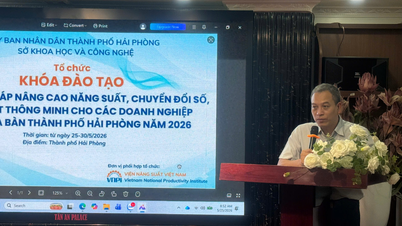
Over the past year, all ministries, departments, and localities have organized training on the application of artificial intelligence (AI) and digital transformation for officials, Party members, civil servants, and employees of their respective agencies and units.
In early September 2025, the Central Party Office, the Standing Agency of the Central Steering Committee on Science, Technology, Innovation and Digital Transformation, organized a national conference combining in-person and online training on AI applications for officials of Party committees and agencies at all levels, with nearly 4,000 connection points from the central level to the commune and ward levels.
The "Popular Digital Education" movement has received special attention and guidance from leaders at all levels of Party committees, government agencies, and units. They have organized training courses to enhance knowledge and skills in digital transformation, artificial intelligence, and innovation within their respective ministries, departments, agencies, localities, and units, with the spirit of "clear thinking, high determination, great effort, decisive action, focused and targeted, completing each task thoroughly," and "only discussing action, not retreating," as directed by the Prime Minister.
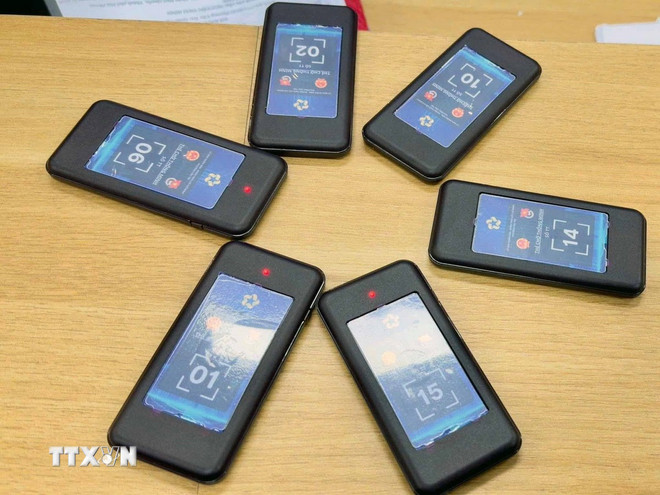
Can Tho City has launched the "Digital Literacy Movement" with the goal of making it a regular, continuous, and widespread initiative, creating a breakthrough in raising awareness and digital skills. Many ambitious goals have been set for 2025, such as striving for 100% of officials, civil servants, and public sector employees to have knowledge of digital transformation; 100% of high school and university students to be equipped with digital knowledge and skills for learning, research, and creativity, and to have safe learning and social interaction skills in the digital environment; and 996,000 adults to be certified as having achieved universal knowledge of digital transformation and digital skills on the VNeID platform…
The Can Tho City Department of Science and Technology has developed a framework of digital knowledge and skills, a digital literacy platform, and is coordinating with the City Police, the Department of Internal Affairs, the Department of Education and Training, and other relevant units to effectively implement the digital literacy platform to disseminate knowledge to the people.
Chairman of the People's Committee of Can Tho City, Truong Canh Tuyen, stated that to achieve practical results, the "Digital Literacy Movement" must become a revolutionary, all-encompassing, and widespread movement, leaving no one behind. Along with extensive and diverse forms of communication tailored to each target group to raise awareness of the role of science, technology, innovation, and digital transformation, and to encourage active participation in learning digital skills, it is necessary to leverage the role of socio-political organizations, community digital technology groups, and grassroots communicators in supporting and guiding people; placing people and businesses at the center and driving force of digital transformation.
Flexible and creative in your approach.
A key feature of the "Digital Literacy Movement" is that it avoids bureaucratic and formal implementation, instead focusing on the practical needs of each target group and geographical area, from urban to rural, mountainous, and ethnic minority regions. Each locality has its own flexible and creative approach to bringing digital knowledge and skills directly to the people.
In Quang Ninh, the "Digital Literacy Movement" is linked to the development of digital government and a digital society. Local authorities have established community-based digital technology teams in each residential area, providing hands-on guidance to residents, especially the elderly, on using smartphones, registering electronic identity accounts, submitting online applications, and making cashless payments. As a result, the percentage of people using online public services at a high level is increasing, and the need for multiple revisions and additions to applications has significantly decreased.
In parallel with the development of smart cities, Hue City is implementing the "Digital Literacy Movement" to promote digital literacy among the general public. The city is organizing free digital literacy classes at community cultural centers and schools, covering practical topics such as using applications to report incidents, search for medical and educational information, and pay for essential services digitally. Citizens are not only learning to use these tools but are also gradually developing digital habits and engaging in two-way interaction with the government.
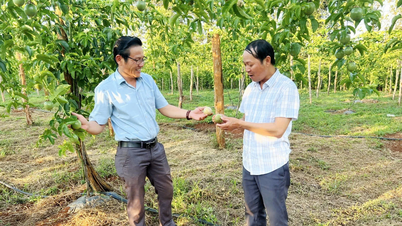
Focusing on improving digital skills for farmers, Dong Thap province has launched a widespread movement in rural areas, organizing "Digital Literacy Classes" to guide farmers in using smartphones to keep electronic production logs, trace agricultural products, and sell goods on e-commerce platforms. Many elderly farmers, despite being new to technology, have boldly changed their production methods and are gradually participating in the digital economy.
In mountainous provinces like Son La, Lao Cai, and Ha Giang, the "Digital Literacy Movement" is organized with the motto of being easy to learn, easy to understand, and easy to implement. Youth union members and grassroots officials become "digital instructors," directly guiding ethnic minority communities in using smartphones to access public services, telemedicine, and online learning. Many villages that were previously almost completely lacking in digital skills are now gradually connecting with the digital space, opening up new opportunities for socio-economic development.
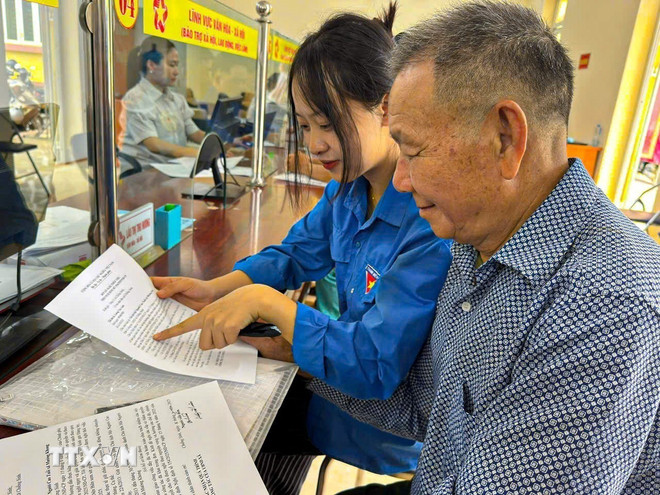
Breakthrough Action: The report of the Central Steering Committee on Science, Technology, Innovation and Digital Transformation shows that by 2025, the whole country will have completed a very large volume of work, creating clear changes from awareness to action and results in the development of national science, technology, innovation and digital transformation; contributing to the estimated 16.4% contribution of science, technology, innovation and digital transformation to GDP, while creating new opportunities for growth and employment. The rate of online applications has improved positively; many administrative procedures have been simplified, saving costs while enhancing transparency and efficiency in state management.
Speaking at the Conference summarizing the work of 2025 and outlining key tasks for 2026 of the Central Steering Committee on Science, Technology, Innovation and Digital Transformation, held on December 25th, General Secretary To Lam, Head of the Steering Committee, stated that central and local agencies have made many efforts contributing to the overall success of implementing Resolution No. 57-NQ/TW. In 2025, we established a solid institutional foundation; 2026 must be a year of breakthrough action, shifting from foundation to results, from policy to product, from ideas to practical value for the people and businesses.
The "Popular Education Movement," along with the "Nationwide Emulation Movement for Innovation and Digital Transformation," is gradually realizing the goal of building a learning society in the digital age, creating a solid foundation for Vietnam's rapid and sustainable development, ensuring that no one is left behind.
Source: https://www.vietnamplus.vn/binh-dan-hoc-vu-so-dua-tri-thuc-so-den-tung-nguoi-dan-tung-dia-ban-post1085188.vnp





![[Image] Hanoi Police officially crowned champions of V-League 2025/2026](https://vphoto.vietnam.vn/thumb/1200x675/vietnam/resource/IMAGE/2026/05/31/1780244769054_ndo_br_039d561b692be875b13a-jpg.webp)













![[GALLERY] Summer mistakes that cause phone batteries to drain extremely quickly](https://vphoto.vietnam.vn/thumb/402x226/vietnam/resource/IMAGE/2026/05/31/1780231867344_sac-4-png.webp)











![[Photo] The General Secretary, President and his wife begin their state visit to the Philippines.](https://vphoto.vietnam.vn/thumb/1200x675/vietnam/resource/IMAGE/2026/05/31/1780230559452_anh-man-hinh-2026-05-31-luc-19-28-11.png)































































Comment (0)