

The dark side of cyberspace and the need to protect women in the digital environment.
One of the most hotly debated issues was the safety of women and girls online. Representative Nguyen Tran Phuong Ha (National Assembly Delegation of Dong Nai province) acknowledged the government 's efforts in leveraging the power of cross-border platforms like TikTok and Facebook to spread the message of gender equality. However, behind the glamorous "billions of views," she pointed out a significant gap in the report, which failed to adequately assess the dangers women face.
Today, cyberspace is not just a channel for propaganda but has become a real living environment where harassment, fraud, and even the use of artificial intelligence (AI) to defame women are becoming increasingly sophisticated. Representative Ha argued that instead of relying on one-way communication, we need to develop effective measurement tools and consider protecting gender safety in cyberspace as a strategic goal in our socio-economic development plans.
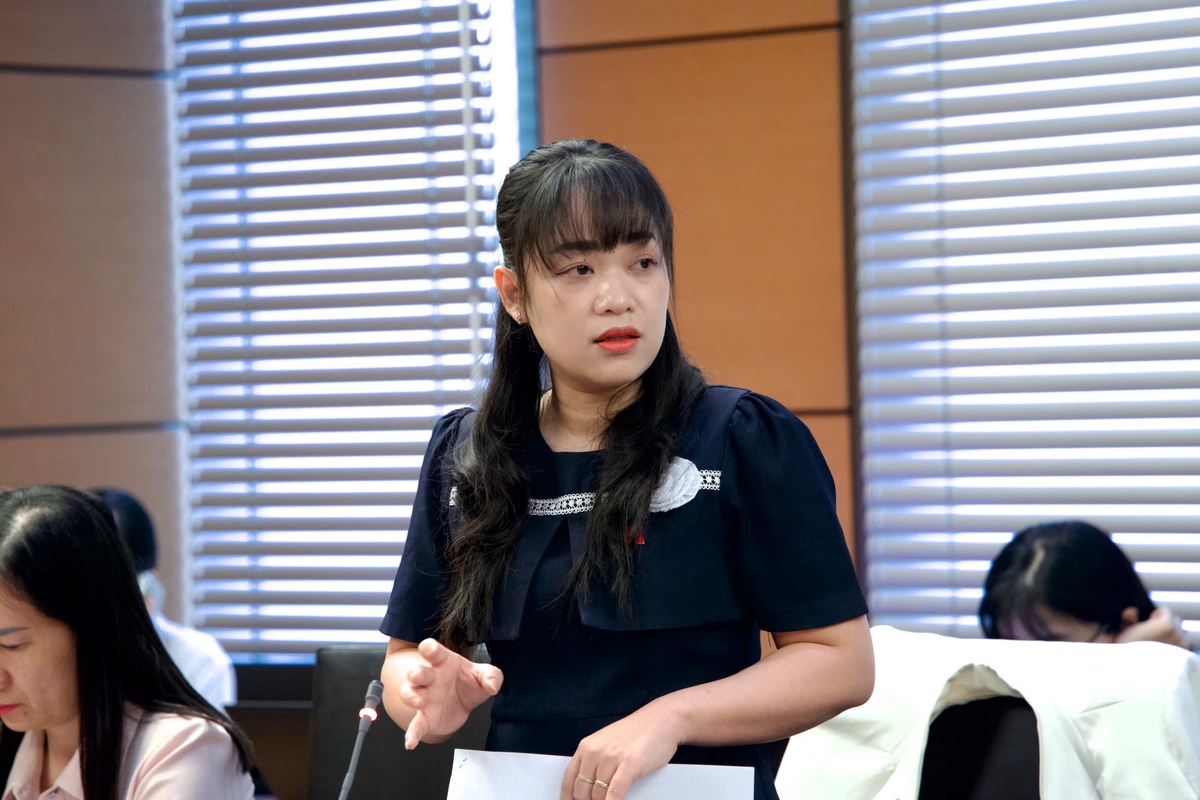
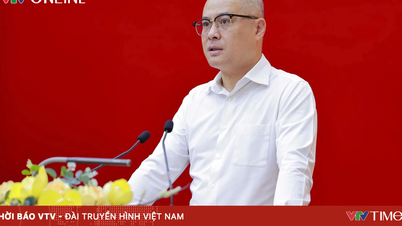
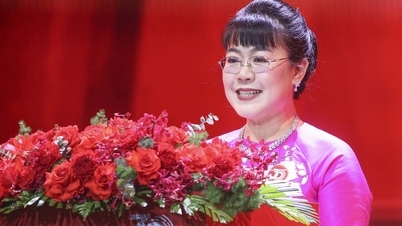
Representative Nguyen Tran Phuong Ha, National Assembly representative from Dong Nai province, delivers a speech. Photo: Nguyen Hung
Income inequality and the challenge of genuine equality.
Besides the cybersecurity issue, the topic of economic equality also attracted attention. Representative Pham Thi Thu Thuy (from the Thai Nguyen Provincial National Assembly Delegation) expressed her concern about the gap between statistics and reality. According to her, it's impossible to assess gender equality solely based on job growth charts, as the average income and status of female workers haven't seen a corresponding breakthrough. While the percentage of women in stable employment has increased, the reality shows that their average income still lags far behind that of men, and the proportion of women holding key leadership positions hasn't seen a significant increase.
Representative Thuy raised the question of whether these barriers stem from a lack of resources or from deeply ingrained gender stereotypes in societal thinking. She emphasized that future solutions should not adopt a general formula but rather require specific regional and grouping approaches to narrow the gap and ensure that every woman, regardless of location, enjoys equal opportunities for development.

Representative Pham Thi Thu Thuy, National Assembly representative from Thai Nguyen province, delivers a speech. Photo: Nguyen Hung
Social security for "double vulnerable" groups and the need for legal reform.
Regarding sustainable development, National Assembly delegate Dieu Huynh Sang (Dong Nai province) warned about Vietnam's "aging before getting rich" phenomenon. In the context of rapid population aging, elderly women and women with disabilities are becoming the most vulnerable groups. They not only face economic pressure due to lower incomes than men but also bear the heavy burden of household responsibilities, creating a double inequality in both healthcare and social security.
Based on this reality, Representative Sang affirmed that the Law on Gender Equality, after nearly 20 years of implementation, has revealed outdated aspects and a lack of consistency with the current local government model and legal system. This obsolescence inadvertently creates "gaps" in budget allocation and personnel restructuring at the grassroots level.
Including the amendments to the Law on Gender Equality in the legislative agenda as soon as possible is an urgent requirement to create a solid legal framework, helping social welfare policies truly reach female workers in the informal sector and specific groups of women.
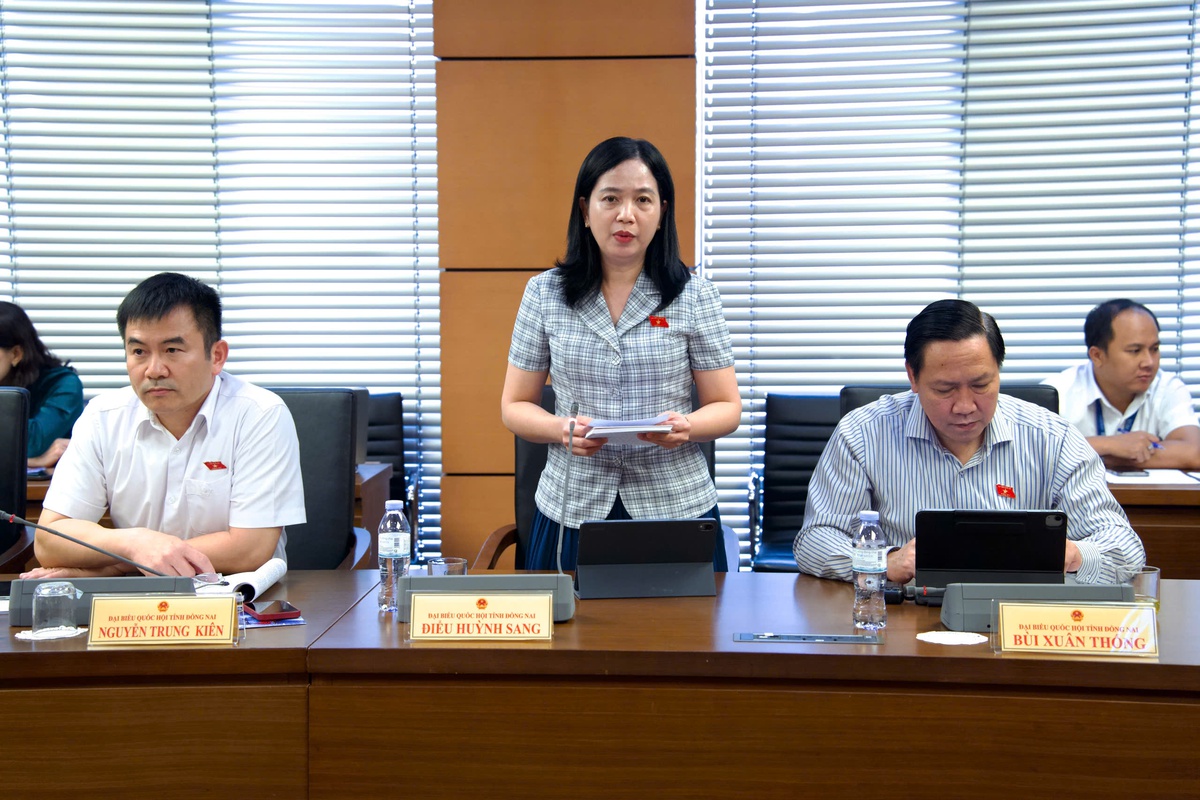
Representative Dieu Huynh Sang, National Assembly representative from Dong Nai province, delivers a speech. Photo: Nguyen Hung
Shifting the reporting mindset for the new phase.
Looking ahead to the 2026-2030 period, delegates unanimously agreed that the government needs to fundamentally change its approach to evaluation and reporting. A quality report should not merely be a list of achievements, but should also include in-depth analysis of the context, lessons learned, and, most importantly, a specific explanation of the gender impact of each resolution and policy.
Only when gender equality is "infused" into every development policy decision, instead of being just procedural rhetoric, can we expect a more equitable and genuine society for all genders in the future.
Source: https://phunuvietnam.vn/binh-dang-gioi-phai-thuc-chat-khong-chi-la-con-so-23826041014132593.htm
![[Photo] The General Secretary, President and his wife begin their state visit to the Philippines.](https://vphoto.vietnam.vn/thumb/1200x675/vietnam/resource/IMAGE/2026/05/31/1780230559452_anh-man-hinh-2026-05-31-luc-19-28-11.png)


![[Photo] Solemn bathing ceremony and Buddha procession in Hue](https://vphoto.vietnam.vn/thumb/1200x675/vietnam/resource/IMAGE/2026/05/31/1780228263543_1-jpg.webp)
![[Photo] Admire the coral "masterpiece" amidst the million-year-old heritage of Dak Lak province.](https://vphoto.vietnam.vn/thumb/1200x675/vietnam/resource/IMAGE/2026/05/31/1780221235105_anh-man-hinh-2026-05-31-luc-16-53-27.png)
















![[Video] Sunset at Lap An Lagoon – Where the sun sets over the fishing nets](https://vphoto.vietnam.vn/thumb/340x192/vietnam/resource/IMAGE/2026/05/31/1780192137701_beach-landscape-sea-water-nature-grass-745871-pxhere-com.jpeg)


































![[Photo] Admire the coral "masterpiece" amidst the million-year-old heritage of Dak Lak province.](https://vphoto.vietnam.vn/thumb/402x226/vietnam/resource/IMAGE/2026/05/31/1780221235105_anh-man-hinh-2026-05-31-luc-16-53-27.png)
































Comment (0)