

Binh Ngoc – a land at the northernmost point of Vietnam, sharing a road with Tra Co from Mong Cai city. Although not as famous as Tra Co, Binh Ngoc's natural scenery and people possess a unique and unforgettable charm for tourists. Once its tourism potential is exploited, it will be a driving force for the development of this cultural land.
A land rich in historical traditions.
Coming down from Mong Cai City, after crossing the Tra Binh bridge, you'll reach a fork in the road: turning left leads to Tra Co, turning right leads to Binh Ngoc. My first impression of this land at the northernmost point of the country was that Binh Ngoc was incredibly beautiful and pristine. Tall, lush green casuarina trees lined the wide, clean concrete road, welcoming visitors. On the green meadows, buffaloes grazed leisurely. A few white egrets silently perched around, watching for flies. I suddenly chuckled, remembering the slightly sulky remark from Nguyen Quy Duyen, 38, the female Party Secretary and head of neighborhood 2, Binh Ngoc ward, the other day: "Most tourists who come here only go to Tra Co; how many actually visit Binh Ngoc, my hometown?"

According to historical records, in the 15th-16th centuries, Tra Co village was established by people from Do Son ( Hai Phong ) who came to cultivate the land and fish. From Tra Co, the village later expanded to include Dong Thinh, Trang Lo, Trang Sa, Sa Vi, Ngoc Son, and Binh La hamlets. Tra Co village was then divided into two communes: Tra Co in the north and Binh Ngoc in the south. Binh Ngoc comprises the hamlets of Ngoc Son and Binh La. Tra Co consists of the remaining hamlets. In 2010, Binh Ngoc commune became Binh Ngoc ward, now comprising 4 residential areas with over 4,000 inhabitants.
From the beginning of the commune, where rows of casuarina trees line the road, a clean concrete path runs all the way to Ngoc Cape. Ngoc Mountain – or Ngoc Son – is a place name mentioned early and frequently in historical records. For centuries, Ngoc Son belonged to Van Ninh. It was once one of the cargo ports of Van Don trading port during the Ly and Le dynasties. From here, ceramics from kilns in Van Ninh and products from Mong Cai were transported to merchant ships both domestically and internationally. It should also be noted that, before the road connecting Tra Co and Binh Ngoc to the mainland as it is today, Tra Co and Binh Ngoc were islands (similar to the Ha Nam and Quang Yen regions), acting as a natural barrier at the mouth of the Ka Long River, making the inner shores of Tra Co and Binh Ngoc an ideal anchorage for ships. All waterways from southern China passed through here. In 1284, a Mongol army invading Dai Viet, passing through Ngoc Son, was ambushed by the Tran dynasty's army and people under the command of General Tran Toan - as recorded in the Complete History of Dai Viet .

Mr. Tran Tien Hung, the principal of Binh Ngoc Junior High School, inadvertently became our guide, leading us to visit the Ganh Ut shrine, opposite Ngoc Son mountain. The shrine sits on a small hill, surrounded on three sides by mangrove forests, with the sea on the other side, overlooking Van Ninh commune. Mr. Nguyen Van Quang, the caretaker of the shrine, explained to us that Ganh Ut – in the local dialect – means a small mountain, "little" compared to other mountains in the area. The shrine currently worships Tran Khanh Du and several famous generals of the Tran dynasty. The shrine also preserves several royal decrees from the reigns of Emperors Tu Duc (1885) and Khai Dinh (1924), bestowing the titles of Giac Hai and Khong Lo upon the tutelary deities of Ngoc Son village.
Mr. Quang showed us some artifacts found beneath and around the temple grounds, including brick towers, ceramic bowls and jars, earthenware vases, and roof tiles... dating back to the Tran and Le dynasties. This proves that Ganh Ut was once a temple with a long history. Over time and due to war, the structure fell into disrepair until 2016, when Mr. Quang and his family, along with contributions from the people and tourists, rebuilt it to its current state.

On our way to visit Binh Ngoc communal house, we visited and offered incense to the female martyr Hoang Thi Hong Chiem at the house built as a gift from the Quang Ninh Department of Commerce – now a place of worship for the martyr. The simple, modest house is currently looked after by Mr. Hoang Van Khuong, who maintains the incense offerings. Mr. Khuong said that his parents had 10 children. Ms. Chiem was the third, and he was the eighth. Now, only he and his younger brother live in Binh Ngoc; the others live elsewhere, some of whom have passed away. On the altar and the left wall are three portraits of the heroic female martyr who fought and bravely sacrificed herself alongside the officers and soldiers of Po Hen during the border defense war on February 17, 1979. The house is currently looked after by the martyr's younger brother, Mr. Hoang Van Khuong, who maintains the incense offerings for her.
"Apart from a few photos from her younger days, my sister didn't leave anything else behind," Mr. Khuong said with a mix of sadness and pride as he recalled memories of his sister.
Next to Binh Ngoc communal house, within the grounds of the former Binh Ngoc Junior High School, stands a statue of martyr Hoang Thi Hong Chiem, created by artist Ly Xuan Truong. The statue depicts her standing defiantly, one hand holding a gun, the other a grenade, her foot stepping on the enemy's head. It is said that the monument will be renovated and expanded.
Notably, Lieutenant General Doan Sinh Huong, a Hero of the People's Armed Forces and a native of Binh Ngoc, is the brother-in-law of martyr Hoang Thi Hong Chiem. General Huong's family currently resides in Nghe An. He returns to visit his hometown whenever he has the opportunity.

Binh Ngoc Temple is located right on the main road of the commune, near the ward headquarters and Binh Ngoc Junior High School. In 1910, Tra Co commune was divided into Tra Co and Binh Ngoc communes. The people of Binh Ngoc built a temple and brought the incense burner from Tra Co Temple to worship the tutelary deities, including human and celestial gods, and six founding ancestors who contributed to the founding of the ancient Tra Co - Binh Ngoc village. The temple still preserves several imperial decrees from the Nguyen dynasty, a recognition by the state of Binh Ngoc's long-standing cultural history. Binh Ngoc Temple is a source of pride not only for the people of Binh Ngoc but also for those who have left their homeland and are now living abroad.
The Binh Ngoc communal temple festival is held annually on the 30th of May to the 1st of June according to the lunar calendar, and its nature, content, and scale are basically the same as the Tra Co communal temple festival.
Tourism potential
It can be said that Binh Ngoc has a very favorable geographical location, and its people are honest and friendly. From the ward officials I interacted with, such as Ms. Vu Thi Van Anh, Deputy Secretary of the Party Committee; Ms. Nguyen Thi Lan Thanh, Deputy Chairperson of the People's Committee; Ms. Doan Thi Thu, cultural and social affairs officer… to the local people, everyone was extremely open and enthusiastic, creating a feeling of closeness as if we had known each other for a long time. In particular, I noticed that almost every person in Binh Ngoc is incredibly proud of their homeland's traditions, of the generations of ancestors who built this land at the northernmost point of Vietnam, proud to be the birthplace of the female martyr Hoang Thi Hong Chiem, and of the Hero of the People's Armed Forces Doan Sinh Huong…
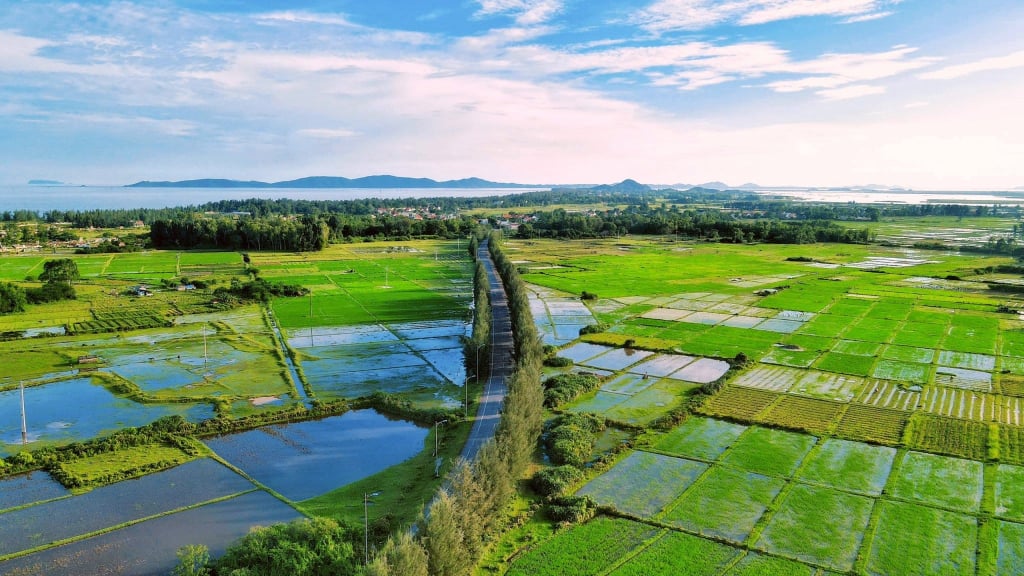
Furthermore, Binh Ngoc boasts convenient transportation and is blessed with many beautiful natural landscapes, such as the Black Stone Beach, the romantic rows of casuarina trees, and a beach stretching for kilometers. It also has the Binh Ngoc communal house, the Ganh Ut shrine, and other temples and shrines dedicated to the tutelary deity, all associated with numerous historical legends...
Despite its favorable conditions, Binh Ngoc's tourism remains like a "sleeping princess in the forest." I was surprised to find that even now, the entire ward lacks a single hotel, guesthouse, karaoke bar, or any food, beverage, or massage services. A local resident jokingly told me that he once had a friend who wanted coffee, and when the friend craved it, he had to take him all the way to the center of Mong Cai city to get some.
Perhaps recognizing the limitations of tourism in Binh Ngoc, on April 11, 2022, the Party Committee of Binh Ngoc Ward issued a Resolution on the development of tourism and services in Binh Ngoc Ward until 2025, with a vision to 2030. The goal is to develop Binh Ngoc into one of the key tourist areas of Mong Cai by 2025, with synchronized tourism infrastructure and facilities, diverse tourism products, and a strong tourism brand reflecting the unique identity of Binh Ngoc. Tourism revenue will account for 15-20% of the ward's total budget. Looking further ahead, by 2030, tourism will become a leading economic sector in Binh Ngoc. Binh Ngoc will become a high-quality coastal and island tourist area, one of the top destinations in Mong Cai, with tourism revenue accounting for 25-30% of the ward's total budget.

According to Ms. Nguyen Thi Lan Thanh, along with the renewal of awareness and thinking about tourism development in Binh Ngoc among the Party committee, government, and people, the ward is also focusing on reviewing and implementing planning, creating land funds for tourism investment projects; mobilizing resources to invest in some key infrastructure projects such as the fishing port and fisheries logistics services (Mui Ngoc seafood market), rest stops and showcasing OCOP products that are strengths of Binh Ngoc, such as seafood and sweet potatoes; encouraging individuals and businesses to invest in building new hotels, guesthouses, and homestays; developing a system of standard seafood restaurants to welcome tourists; seafood markets, and cultural and culinary services.
Binh Ngoc also identified the need to boost investment promotion, inviting strategic businesses and investors with established brands, reputation, capabilities, and experience to invest in large-scale projects in areas with tourism and service development potential within the ward, according to the planning. The restructuring, innovation, and improvement of tourism product quality will focus on beach tourism, sports and entertainment; cultural tourism; resort tourism; agricultural, forestry, and fisheries tourism; forest and marine ecological tourism; and community tourism…
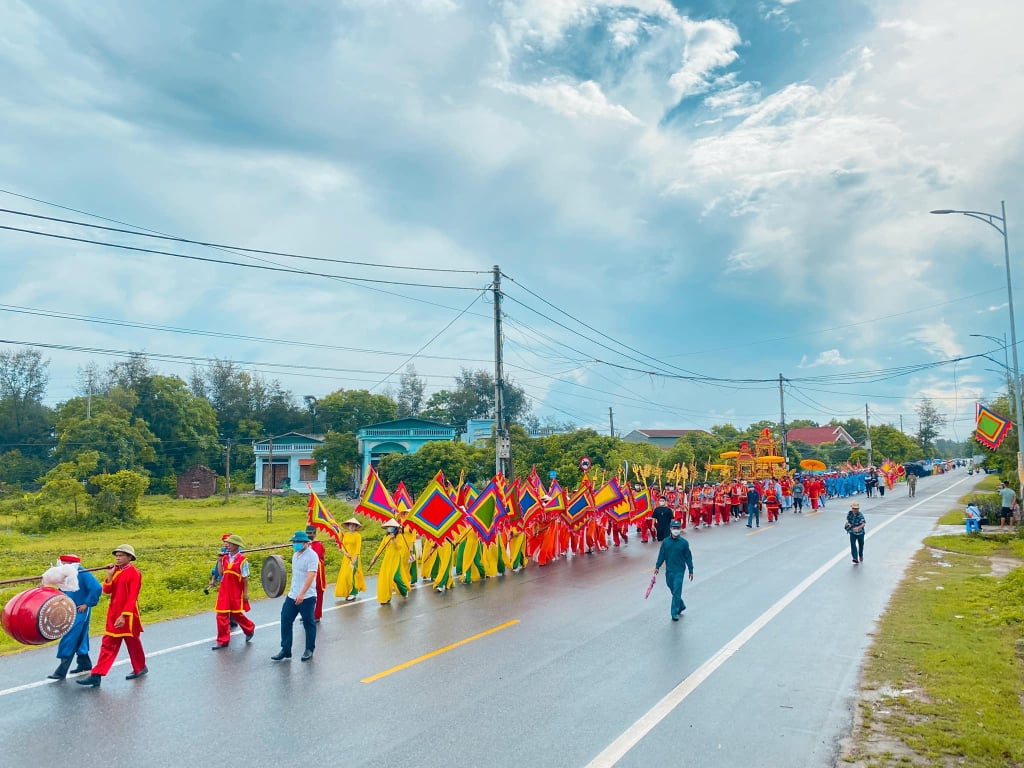
The April 30th and May 1st holidays are approaching. Along with other localities in Mong Cai, Binh Ngoc ward is actively preparing to organize festivals for folk dance and sports clubs, traditional games, team building activities, and a "one-day fisherman" experience for tourists...
“During the upcoming Binh Ngoc communal temple festival, the ward plans to organize many activities to attract tourists and promote the land and people of Binh Ngoc. Please come back,” said Doan Thu, the enthusiastic and cheerful cultural officer of the commune. I promised Thu and Lan Thanh that I would return because I wanted to see many new, attractive, and changing aspects of Binh Ngoc. A Binh Ngoc with such rich tourism potential cannot remain dormant forever.
Source

![[Photo] Standing Committee member of the Party Central Committee Tran Cam Tu working with the Central Inspection Committee](https://vphoto.vietnam.vn/thumb/1200x675/vietnam/resource/IMAGE/2026/05/28/1779969579668_ndo_br_bnd-2495-jpg.webp)













































































Comment (0)