

According to updated data from CoinDesk, Bitcoin (BTC) briefly fell below $63,000 during afternoon trading in the US (early morning of February 6th, Vietnam time). This is the lowest level since October 2024. More alarmingly, this drop means Bitcoin has lost approximately 50% of its historical peak of $126,000 set in October last year.
The developments on February 5th (US time) are heading towards setting a grim record: the sharpest single-day drop since the collapse of the FTX exchange in November 2022. At that time, the FTX shock caused BTC to lose 14.3% in just one day. Now, with a drop of over 10% in 24 hours, the haunting memories of the past are returning for investors.

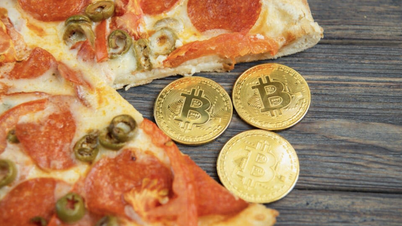
Bitcoin has fallen more than 10% in the last 24 hours, dropping to the $63,000 range, heading towards its biggest one-day drop since the FTX crash in November 2022 (Photo: Invezz).
However, the storm isn't confined to the cryptocurrency market. A domino effect is spreading to other assets. Silver prices have plummeted by 14% in a single day, now nearly 40% lower than last week's peak. Even gold – considered a "safe haven" asset – is under pressure, falling more than 2% to around $4,850 per ounce.
On the US stock market, technology stocks and companies related to cryptocurrencies also plummeted. Shares of Coinbase, MicroStrategy, and cryptocurrency mining companies like Marathon Digital all recorded declines of over 10%. This indicates widespread panic.
The shattered dream of "digital gold" and the conspiracy theory of "big short"
Why did Bitcoin crash so sharply amidst global instability?
According to an analysis by CNN, Bitcoin is losing its status as the "digital gold" that its proponents have often touted. 2026 begins with a series of escalating geopolitical tensions, from tough statements from the White House against Iran and Venezuela to trade disputes with allies. According to old theories, this is "fertile ground" for Bitcoin to break through.
But in reality, money is fleeing from bitcoin in search of the absolute safety of physical gold (although gold has experienced a short-term correction, it has risen 24% since October). This divergence suggests that bitcoin is still behaving more like a risky asset than a safe haven.
Michael Burry, the legendary investor known for the film The Big Short, recently made an interesting observation on Substack. He suggested that the recent dramatic fluctuations in gold and silver are actually due to bitcoin speculators being forced to sell off precious metals to "recover" losses from their cryptocurrency portfolios.
In addition, liquidity also plays a crucial role. Adrian Fritz, Chief Strategy Officer at 21Shares, told CoinDesk that market liquidity is "very thin." In an environment where buy and sell orders are limited, even a small amount of selling pressure can trigger a chain reaction of liquidations, causing prices to plummet uncontrollably.
This drop also officially wiped out the so-called "Trump Bump"—the price surge that benefited from US President Donald Trump's election victory in late 2024. Confidence in crypto-friendly policies is severely shaken, especially after US Treasury Secretary Scott Bessent declared before Congress that the agency has no authority to intervene to stabilize the cryptocurrency market.
Where is the bottom in the middle of February, the "winter" month?
Individual cryptocurrency investors are frantically searching for answers about the next bottom. Is it time to "catch a falling knife"?
Experts are quite pessimistic in the short term. Adrian Fritz stated: "There are still no signs that the market has bottomed out. It's too early to talk about a clear reversal."
Technically, one analyst points out that the 200-day moving average (MA200), currently in the $58,000-$60,000 range, is the most important support level at this time. This is also the "exercise price" zone (the average purchase cost of the entire market). If this level is breached, a scenario of a prolonged recession like in 2018 or 2022 could very well repeat itself.
The situation is even more dire for altcoins. XRP has lost as much as 19% of its value in just 24 hours, and according to technical analysis, the coin "has virtually no significant support zone left."
The history of the cryptocurrency market has witnessed some devastating crashes: Mt. Gox in 2014, the ICO bubble in 2018, and the FTX disaster in 2022. While the market has always recovered after each setback, at the present time, with eroded confidence and weakened institutional capital, investors need to be extremely cautious before making risky bottom-fishing decisions.
Source: https://dantri.com.vn/kinh-doanh/bitcoin-boc-hoi-50-thung-moc-63000-usd-cu-sap-lon-nhat-4-nam-20260206070033064.htm
![[Photo] First session of the 14th Congress of the Vietnam Trade Union](https://vphoto.vietnam.vn/thumb/1200x675/vietnam/resource/IMAGE/2026/06/03/1780465947883_ndo_br_img-3852-jpg.webp)



![[Photo] General Secretary and President To Lam presides over a meeting with the Central Organizing Committee.](https://vphoto.vietnam.vn/thumb/1200x675/vietnam/resource/IMAGE/2026/06/03/1780482764658_a1-bnd-4741-3342-jpg.webp)
![[Photo] Secretary of the National Assembly Party Committee, Chairman of the National Assembly presides over the meeting of the Standing Committee and Executive Committee of the National Assembly Party Committee.](https://vphoto.vietnam.vn/thumb/1200x675/vietnam/resource/IMAGE/2026/06/03/1780480353201_ndo_br_bnd-2585-jpg.webp)


























































![[Video] Sunset at Lap An Lagoon – Where the sun sets over the fishing nets](https://vphoto.vietnam.vn/thumb/1200x675/vietnam/resource/IMAGE/2026/05/31/1780192137701_beach-landscape-sea-water-nature-grass-745871-pxhere-com.jpeg)








































Comment (0)