

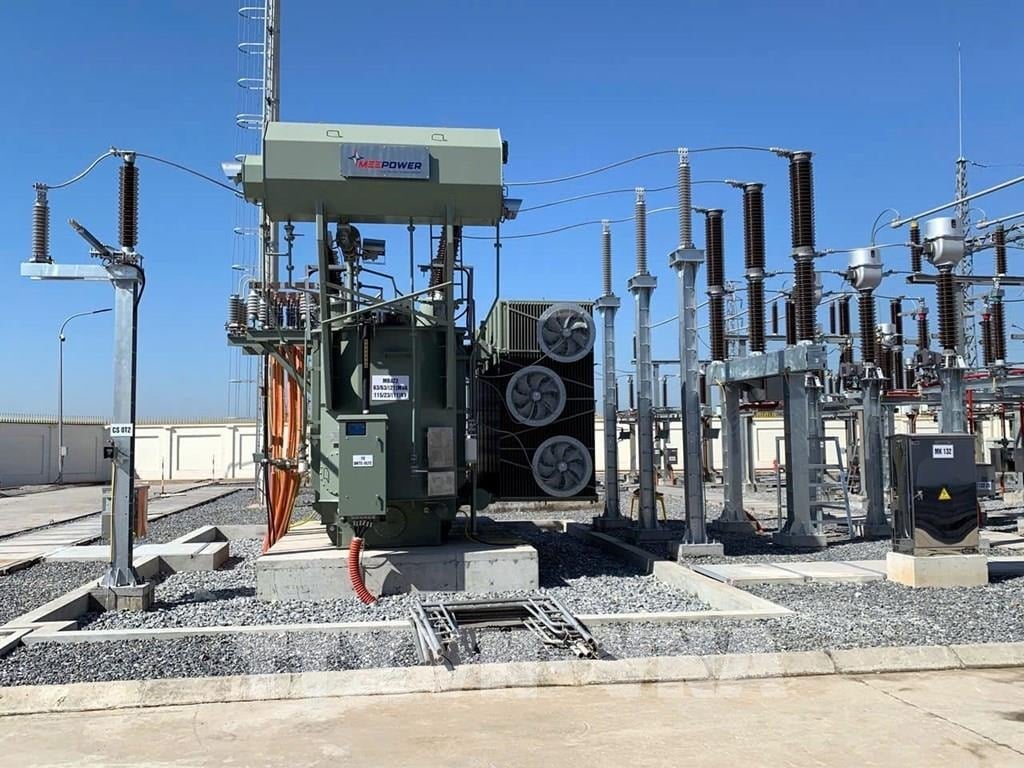
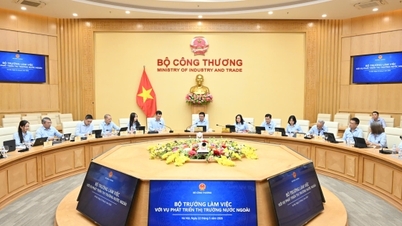
According to the Ministry of Industry and Trade, accelerating the progress of power projects is an urgent requirement to ensure national energy security. This not only meets the electricity demand for the projected double-digit socio -economic growth in the coming years, but also concretizes Decision No. 768/QD-TTg on approving the Adjustment of Power Development Plan VIII and the Plan for implementing this plan.
Vigorously implement key tasks.
Regarding implementation, the Ministry of Industry and Trade requires relevant agencies and units to seriously and fully implement the solutions assigned by the Prime Minister in a decisive and coordinated manner. Local authorities must urgently review and update the list of power generation and grid projects into provincial planning and specialized planning (construction, urban, rural, land use). This is an important legal basis for spatial organization and investment in the construction of power projects.
In addition, localities need to proactively select investors according to their authority and allocate land in accordance with legal regulations. Developing a specific implementation plan and clearly assigning responsibilities to each specialized level (from province to commune) is a key factor in effectively implementing the revised Power Development Plan VIII.
Removing obstacles for power generation and grid projects.
For projects that have not yet received investment approval or have not yet attracted investors, the Ministry of Industry and Trade requests that localities expedite the selection process in accordance with the planning. At the same time, a full report on the reasons and obstacles encountered during this process is required. If a project fails to meet its deadlines, local authorities must proactively propose suitable alternative solutions to ensure electricity supply in the region.
For projects where investors have been identified, local authorities need to coordinate closely to expedite the appraisal of feasibility studies, construction designs, and acceptance testing. Land clearance, compensation, and resettlement should be prioritized and carried out effectively, creating the most favorable conditions for investors and contractors to complete construction on schedule.
For ongoing construction projects, local authorities must focus maximum resources and promptly resolve obstacles within their jurisdiction to bring the projects into operation as soon as possible. The Ministry of Industry and Trade emphasizes that relevant units will be held fully responsible before the law and the Government if delays occur compared to the approved plan.
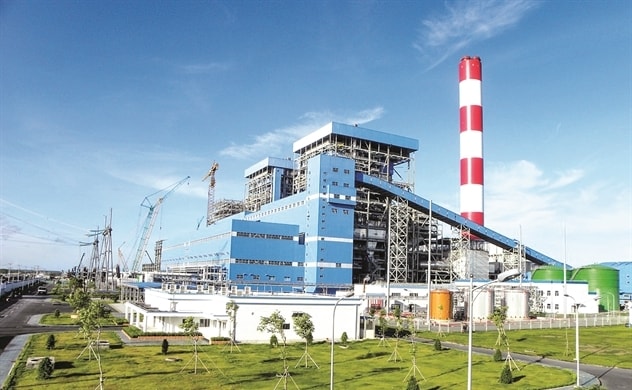
Proactively implement new mechanisms and policies.
Regarding Resolution No. 253/2025/QH15 of the National Assembly (effective from March 1, 2026), the Ministry of Industry and Trade requests localities to carefully review regulations on the national energy development mechanism for the period 2026-2030. This resolution allows for adjustments to the planning but does not change the major goals and orientations, and does not increase the total installed capacity according to the defined structure of each type of power source.
Based on the Resolution, localities need to direct specialized agencies to research and prepare documents for adjusting and updating the planning. The documents must clarify the legal basis, necessity, assessment of the current situation, scale, progress, and impact of the adjustments on the regional power system. This work must ensure consistency between national and local planning according to the decentralization stipulated in Decree No. 56/2025/ND-CP.
Early operation targets and key milestones
The Ministry of Industry and Trade requires units to strive to bring the factory into operation 3-6 months earlier than planned, while still ensuring the process and quality of the construction.
For LNG thermal power projects, investors need to urgently bring the projects into operation before January 1, 2031, to benefit from the preferential mechanisms as stipulated. Failure to meet the deadline will result in the investor being fully responsible for the project's effectiveness. For flexible power generation projects, investors need to coordinate with local authorities to determine the location and complete investment preparation procedures as soon as possible.
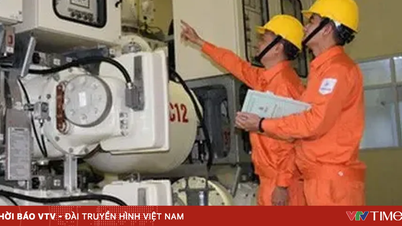
For the power grid system, the requirement is to focus intensely on investment and construction, especially on projects supplying electricity to the North and the grid serving electricity imports from Laos, ensuring safe and continuous operation according to the plan.
NGUYEN MANH (compiled)Source: https://baohaiphong.vn/bo-cong-thuong-tang-toc-cac-du-an-dien-quy-hoach-viii-532752.html



![[Image] Hanoi's urban life under the challenge of a "scorching hot" environment](https://vphoto.vietnam.vn/thumb/1200x675/vietnam/resource/IMAGE/2026/05/25/1779706979265_nang-nong-t5-2026-minh-duy-7-4636-jpg.webp)
![[Image] Close-up view of the interchange connecting the two expressways and Long Thanh Airport.](https://vphoto.vietnam.vn/thumb/1200x675/vietnam/resource/IMAGE/2026/05/25/1779703378210_ndo_br_z7863716673926-224453a31600126cce10622af6290afd-4549-jpg.webp)















































































Comment (0)