

After 12 years of land reclamation and farming guidance from the Border Guard, most Chứt ethnic minority households in Ka Ai village have gradually become accustomed to cultivating wet rice. However, due to their simple understanding of life and lingering reliance on others, some households will neglect cultivating their main food crops if the soldiers "let go." Recognizing this, along with the task of protecting the border and controlling the border gate, the Cha Lo International Border Gate Border Guard Post has maintained a task force in Ka Ai village to ensure security and order and care for the people's lives. In this task force, officers stationed in the village directly assist and encourage the villagers to cultivate wet rice and other food crops.
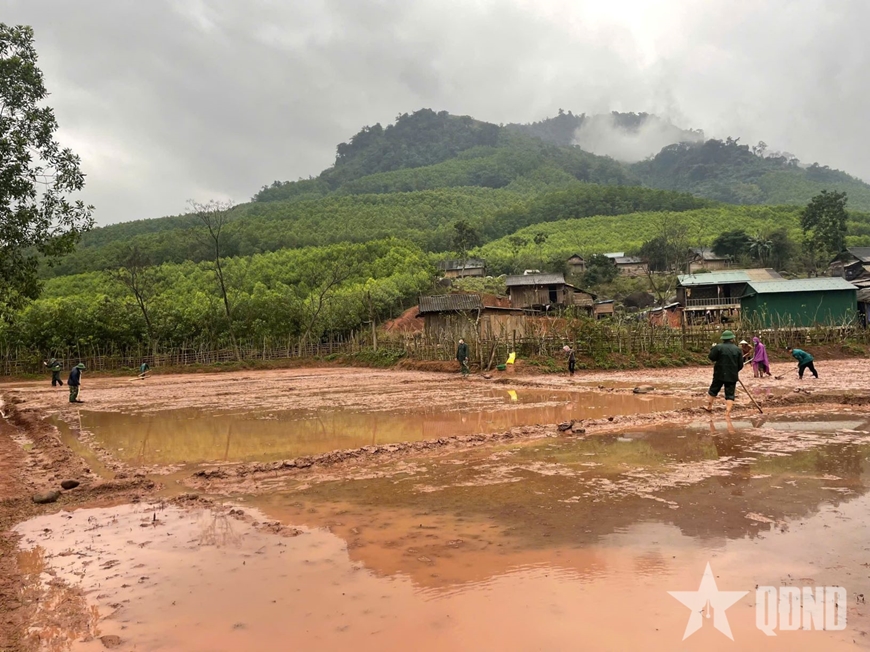 |
| Border Guard officers and soldiers, along with local people, are out in the fields preparing for the new planting season. |
On a 5-hectare plot of land, the soldiers and local people plant two rice crops each year: the Winter-Spring and Summer-Autumn crops, contributing to the Chứt people's self-sufficiency in food. According to the annual plan, the Winter-Spring rice crop is usually sown before the Lunar New Year. However, before the 2025 Lunar New Year, the area experienced severe cold weather, forcing a delay in planting. Therefore, after the New Year, taking advantage of the warmer weather, the Cha Lo International Border Gate Border Guard Post mobilized its maximum force and machinery, urging the people to quickly prepare the land for the new crop.
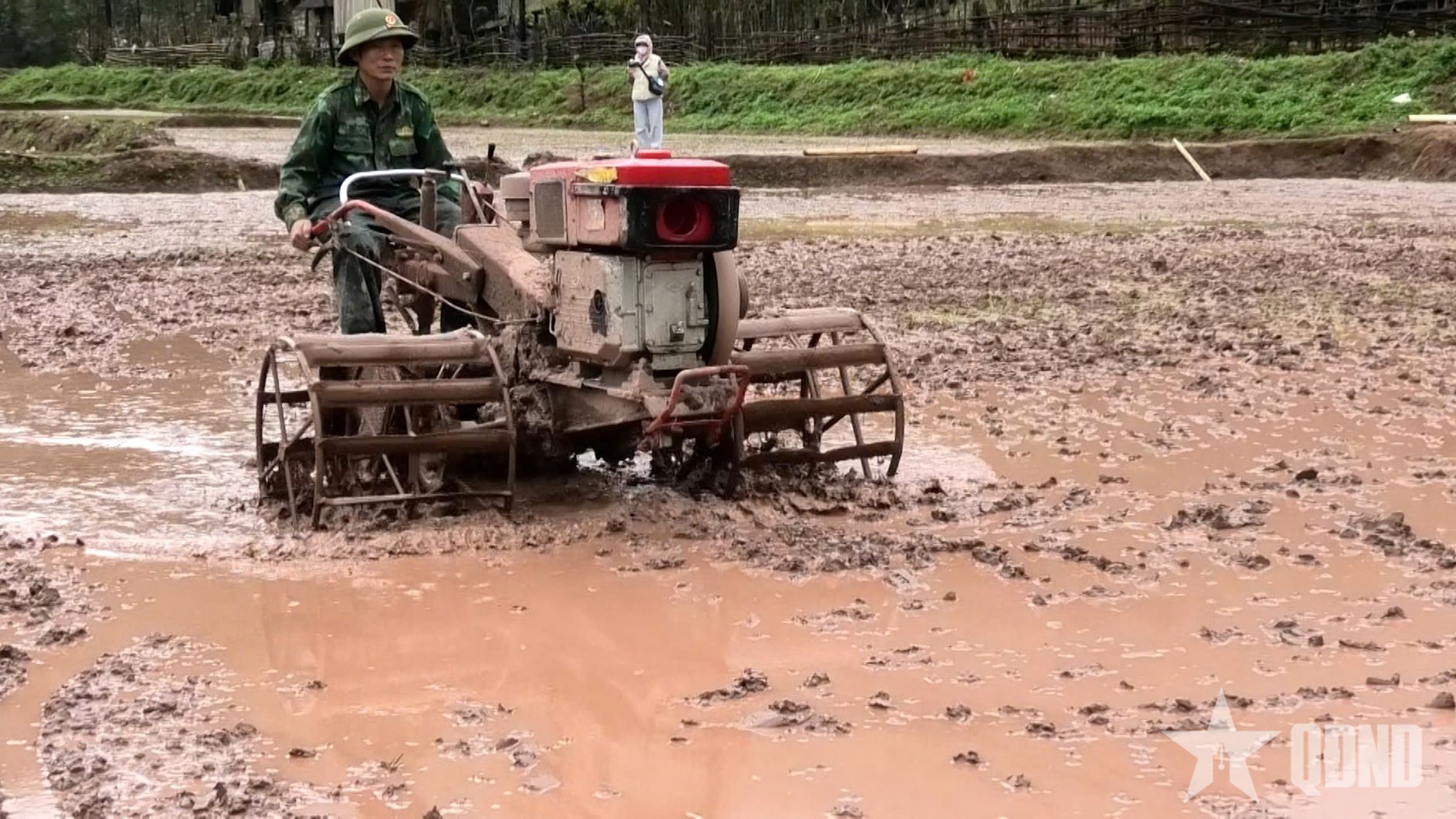 |
| Border guards are using small tractors to help local people cultivate their fields. |
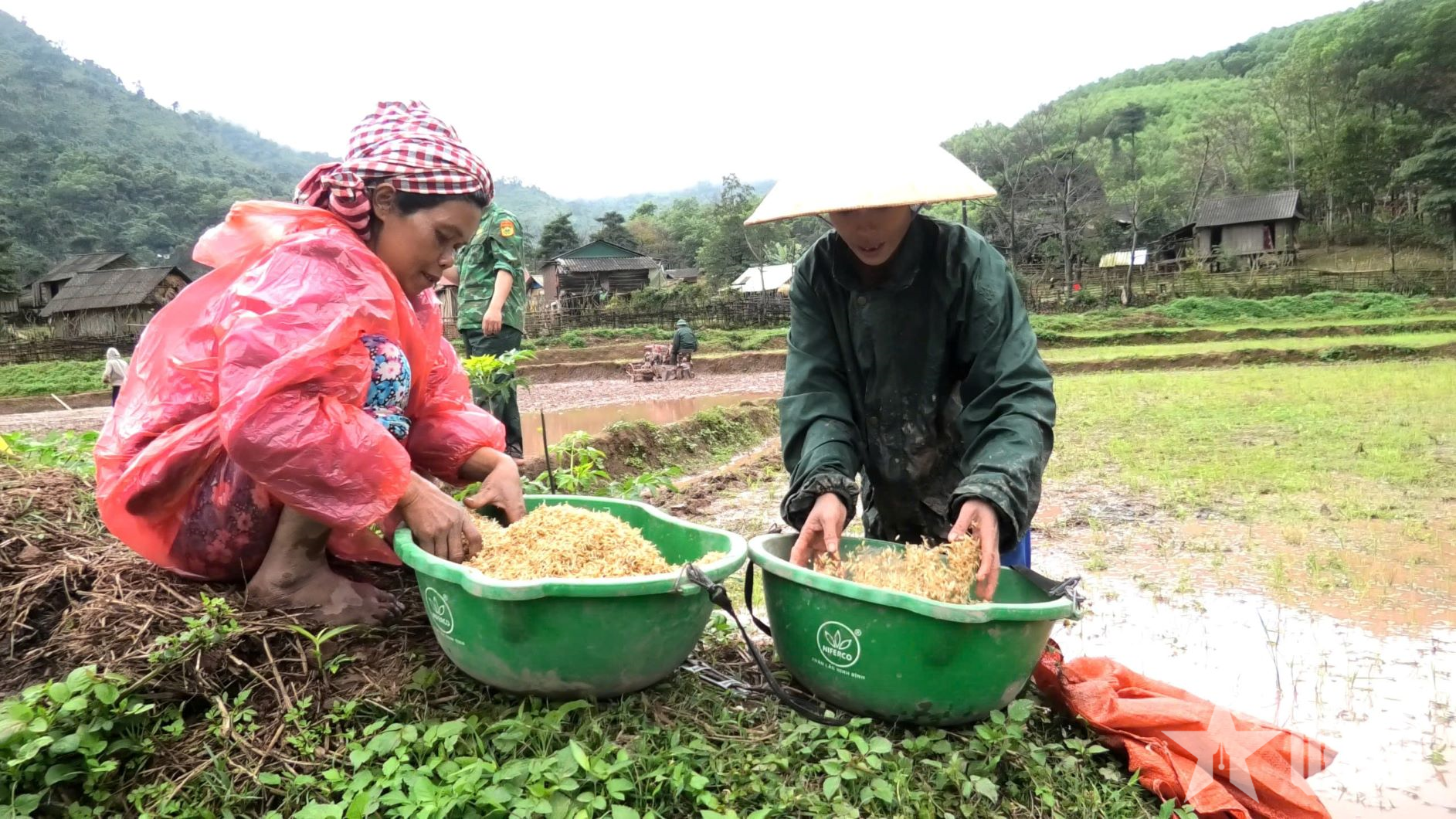 |
| The Chứt ethnic minority people are preparing rice seeds for planting. |
On the vast fields, officials and villagers each have their own tasks, creating a vibrant and joyful atmosphere. Border guards operate tractors at maximum capacity, tilling the land from one field to another. Villagers fertilize, build embankments, maintain water levels, and sow rice seeds… Ms. Ho Thi Khoa, from Ka Ai village, said: “On the land assigned to us by the soldiers, my family harvests two rice crops a year, yielding 5-6 quintals, so we no longer worry about hunger. In addition, the soldiers and local authorities guide the villagers in raising livestock and poultry, and growing food crops, gradually improving our lives.”
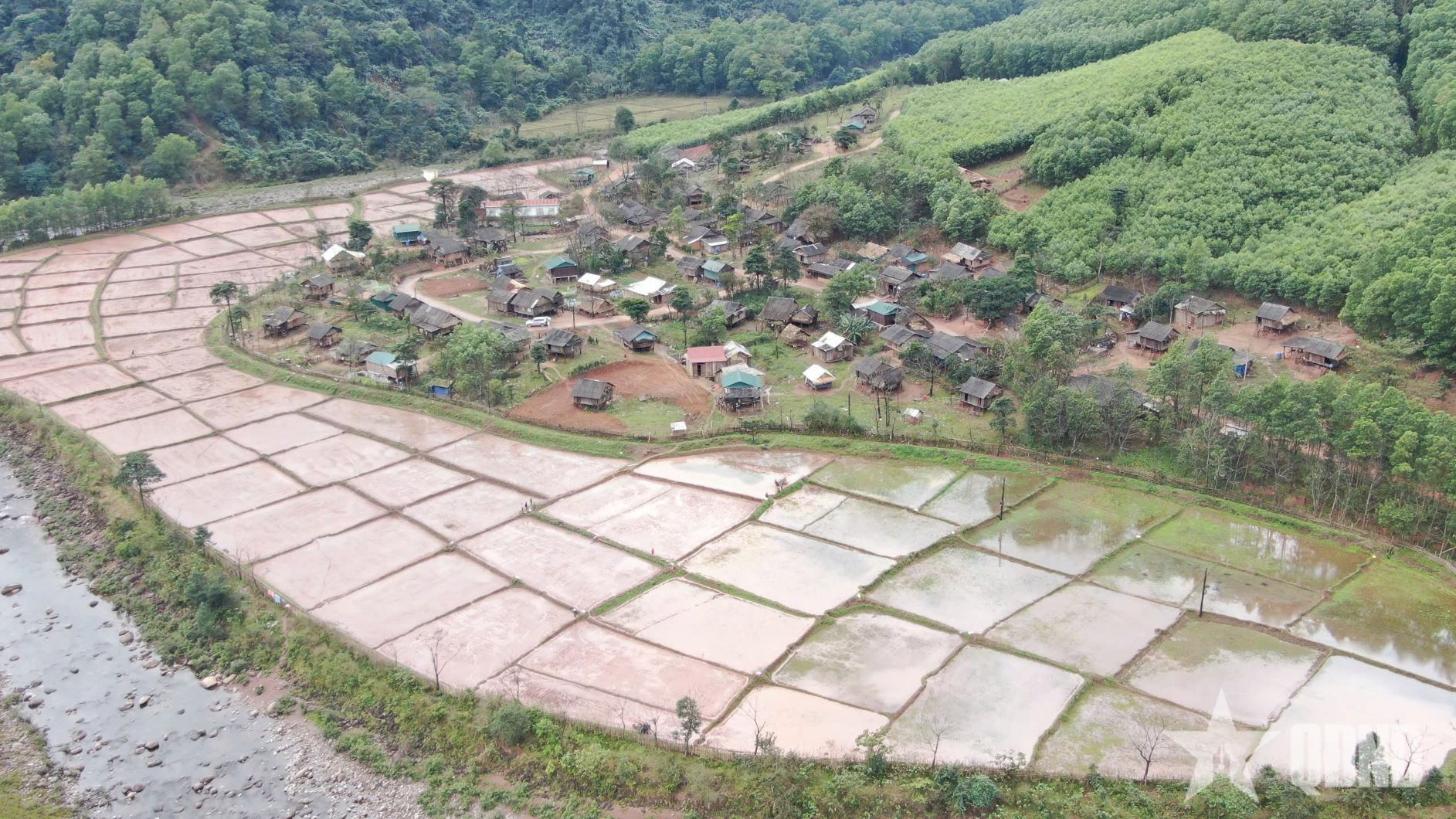 |
| A panoramic view of the rice fields and the village of Ka Ai. |
Lieutenant Colonel Ngo Anh Tuan, Political Officer of the Cha Lo International Border Gate Border Guard Station, said: “Currently, the people in Ka Ai village are more self-motivated in agricultural production, but we still have to maintain a force to supervise and support them in difficult tasks. Especially, calculating the planting time for each crop and operating the tractor to prepare the land relies entirely on the soldiers. At the same time, we continue to guide the people to become completely self-reliant in the process of growing wet rice in the fields.”
During the planting season, along with the Border Guard, the people of Ka Ai also received assistance from forces sent by the local government and police. Mr. Hoang Son Binh, Deputy Secretary of the Party Committee and Chairman of the People's Committee of Dan Hoa commune, said: "In recent days, we have mobilized commune officials and organizations to go to Ka Ai to coordinate with the Border Guard to support the people in producing the winter-spring crop. We hope that this year's weather will be favorable so that the Chut ethnic people in the border area can have a bountiful and prosperous harvest."
Text and photos: HIEU AN – HOAI NAM
* Please visit the relevant section to view related news and articles.




![[Image] Hanoi's urban life under the challenge of a "scorching hot" environment](https://vphoto.vietnam.vn/thumb/1200x675/vietnam/resource/IMAGE/2026/05/25/1779706979265_nang-nong-t5-2026-minh-duy-7-4636-jpg.webp)





























































Comment (0)