

The school has nine vice principals, more than three times the permitted number.
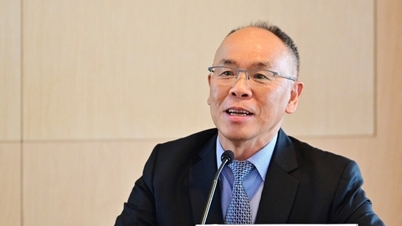
Reporting on the arrangement of educational institutions according to the two-tiered local government model, Mr. Thai Van Tai, Director of the Department of General Education (Ministry of Education and Training), stated that most localities will maintain the same number of preschools, primary schools, junior high schools, and high schools in 2025 and will develop a roadmap for rearrangement after the 2025-2026 school year.
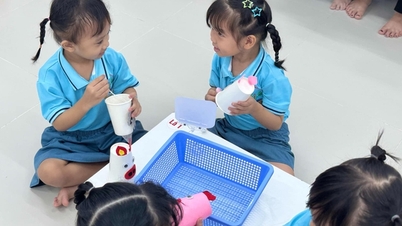
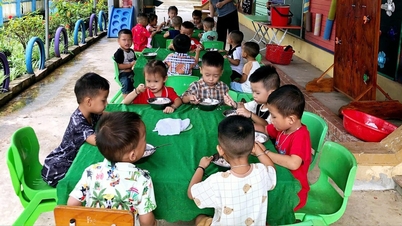
Regarding preschool education, among the 23 provinces reporting, 6 provinces maintained the status quo; 15 provinces implemented mergers with a reduction ranging from 1.76% to less than 10%; and 1 province completed mergers, reducing the number of educational institutions by 45.83%.
In general education, 7 out of 23 provinces maintained the same number of educational institutions; 15 out of 23 provinces saw a decrease of 0.2% to less than 10%; and 1 province experienced a 42.57% reduction in the number of educational institutions.
Continuing education has seen significant mergers, with many localities experiencing a reduction of over 30%.

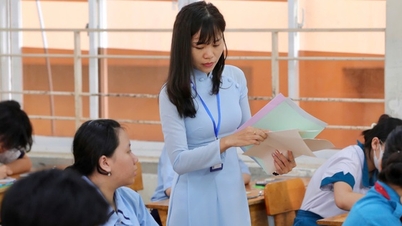
According to the Ministry of Education and Training, the initial restructuring has contributed to streamlining administrative structures, reducing management staff, redistributing teachers and staff, and overcoming localized shortages and surpluses. However, some localities have restructured and reduced the number of schools in a "mechanical" manner, leading to imbalances in class sizes and school locations; potentially overloading facilities and affecting the quality of teaching and learning.
In some areas, the rate of school mergers far exceeds professional recommendations, causing imbalances in scale. Many communes and wards merge 3-4 schools into one or consolidate schools that have already reached their maximum capacity. After the restructuring, many educational institutions have a number of classes or school branches exceeding regulations; some schools have a number of deputy principals exceeding the limit by 2-3 people, and in some places even up to 9 deputy principals. In addition, some units have not yet adjusted their personnel structure, and their organizational apparatus is not yet stable.
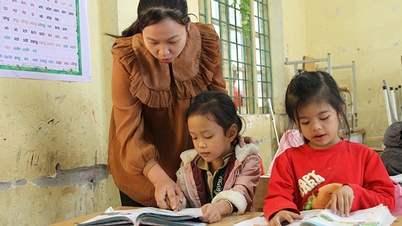
After mergers, some ethnic boarding schools no longer meet the required percentage of boarding students, leading to a loss of specificity in supporting ethnic minority and mountainous regions and affecting the right to access education for students in remote areas and disadvantaged groups. In addition, infrastructure in many places does not meet requirements; although the number of schools has decreased, investment in expanding classrooms and boarding school kitchens in the new schools has not been implemented in a timely manner.
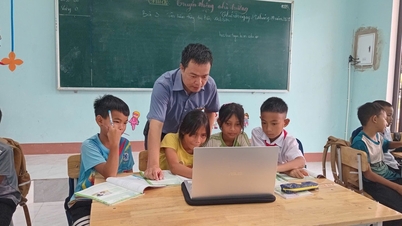
The arrangements should be carefully planned and executed without disrupting teaching and learning activities.
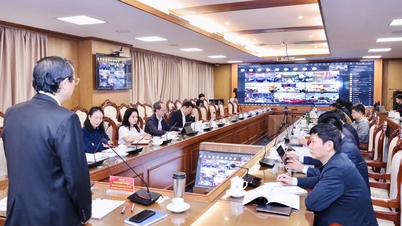
At the conference, representatives from many localities unanimously agreed that the process of reorganizing the school network needs to be cautious, follow a roadmap, avoid disrupting teaching and learning activities, ensure students' learning rights, and maintain the stability of the teaching staff.
Mr. Nguyen Vinh Hung, Deputy Director of the Department of Education and Training of Hue City, said that the city's policy is to maintain the stability of educational institutions under the Department's management, only considering reorganization at the commune and ward levels when necessary and ensuring safe travel conditions for students, especially in disadvantaged areas and border regions. The reorganization must be linked to investment in boarding and semi-boarding schools to create stable and long-term learning conditions for students in special areas.
Sharing the same view, Mr. Phung Quoc Lap, Deputy Director of the Phu Tho Department of Education and Training, believes that the merger should focus on small-scale schools and school branches that are no longer suitable, and should not prioritize speed. According to him, this is a sensitive issue that requires a suitable roadmap, coupled with public awareness campaigns to gain the consensus of the people and the teaching staff.
Mr. Bui Quang Tri, Deputy Director of the Department of Education and Training of Tuyen Quang province, said that the province has directed a review and development of a restructuring plan based on feedback from the people and local Party committees. Accordingly, eligible units will implement the plan first, while the remaining facilities will be implemented in stages. Mr. Tri proposed that the Ministry of Education and Training soon provide specific guidance on the organization, enrollment, and operation of boarding and semi-boarding schools in border areas.
Representatives from the Departments of Education and Training of Dak Lak and Vinh Long provinces stated that the biggest challenges currently are the lack of investment in infrastructure and the transportation conditions for students. These two localities requested the Ministry of Education and Training and the central government to provide financial support and flexible guidance to ensure that the school network is arranged appropriately for each region, without disrupting educational activities.
No mechanical cuts, prioritizing educational quality above all else.
In his concluding remarks at the conference, Permanent Deputy Minister of Education and Training Pham Ngoc Thuong emphasized that reviewing and reorganizing the network of educational institutions has become even more urgent in the context of implementing the two-tiered local government model and rearranging administrative boundaries according to the resolutions and conclusions of the Central Committee.

Mr. Thuong noted that the restructuring of the school network is not about mechanical reduction or chasing after quantity. The highest goal is to improve the quality of education, ensure students' right to education, and improve teachers' teaching conditions. Schools with small, scattered locations that are no longer suitable should be reorganized or merged; conversely, in areas with large student numbers exceeding the standard, consideration should be given to splitting schools and building new ones, ensuring compliance with class sizes, school safety, and educational principles.
Mr. Thuong emphasized three overarching requirements: sufficient schools, sufficient classrooms, and sufficient teachers, but these must be reasonable and appropriate to local realities. The arrangement needs to meet the goals of universal education, especially universal preschool education for children aged 3-5 and compulsory education at the primary and lower secondary levels. Along with that, the organization of schools and classrooms must adhere to the principles of education and contribute to improving the quality of teaching and learning.
The Deputy Minister of Education and Training also requested that localities strictly implement current regulations on school standards, facilities, and teaching staff.
Source: https://vietnamnet.vn/bo-gd-dt-noi-ve-tinh-hinh-sap-xep-to-chuc-cac-co-so-mam-non-pho-thong-2474162.html


![[Photo] Prime Minister Pham Minh Chinh attends the Conference on the Implementation of Tasks for 2026 of the Industry and Trade Sector](/_next/image?url=https%3A%2F%2Fvphoto.vietnam.vn%2Fthumb%2F1200x675%2Fvietnam%2Fresource%2FIMAGE%2F2025%2F12%2F19%2F1766159500458_ndo_br_shared31-jpg.webp&w=3840&q=75)
















































































Comment (0)