

Along with that, the Ministry also piloted the application of AI in management, supporting teachers in preparing lessons and innovating assessment methods. In the global context, this is a necessary step to create a generation of digital citizens with a mindset of mastering technology.
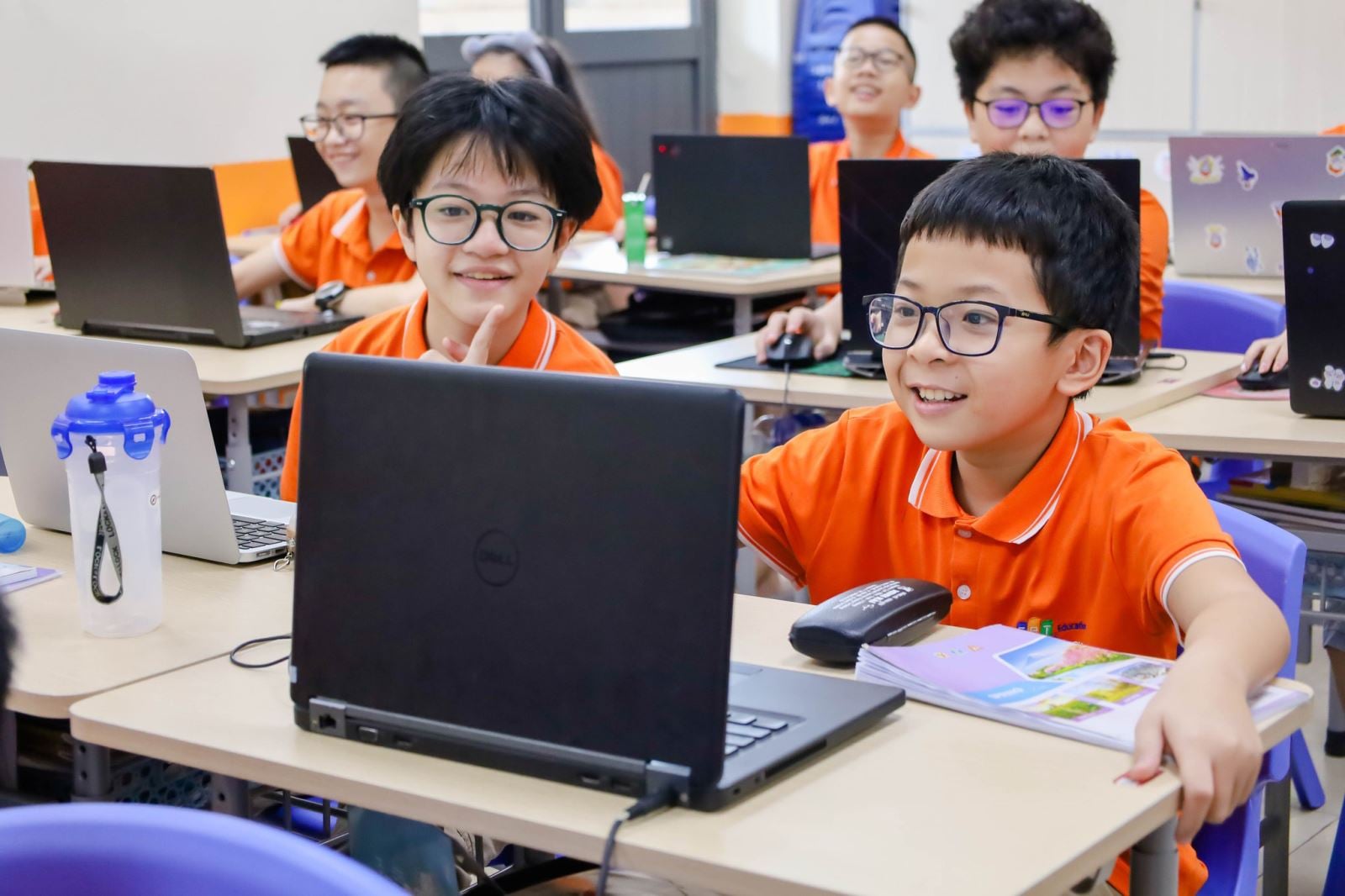
Human-centered
Deputy Minister of Education and Training Pham Ngoc Thuong said that many countries in the world have identified education as a top priority field in AI application. In the United States, according to the 2024 education technology report, 60% of teachers use AI tools to manage their teaching work. In Korea, since 2023, the Ministry of Education has piloted the use of AI for elementary school students and recorded 30% of students achieving personalization effectiveness.
Deputy Minister Pham Ngoc Thuong also shared: One of the key tasks being implemented by the Ministry of Education and Training is digital transformation, applying AI in teaching and learning. Although education has been given attention through directives and priority policies, implementing this content in Vietnam is still a challenging task due to the large scale of subjects, regional characteristics, and different socio -economic conditions.
Therefore, according to the Deputy Minister, when implementing, there needs to be a clear and specific roadmap, and it is necessary to listen, apply, and learn from international experiences, especially from countries with social conditions similar to Vietnam; from there, there will be assessments that are close to the current state of education in Vietnam, and recommendations and solutions that are suitable nationwide and in each locality will be proposed. The important solution for effective implementation is to train, foster, and equip knowledge for the team of teachers and education managers.
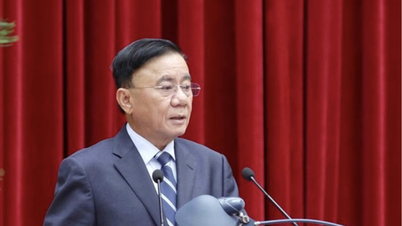
Dr. Ton Quang Cuong, Head of the Faculty of Educational Technology, University of Education (Vietnam National University, Hanoi) said that the Ministry of Education and Training's issuance of the Draft Guidelines for piloting artificial intelligence (AI) education in general education is a strategic move, meeting current development requirements.
Dr. Ton Quang Cuong highly appreciated the AI education content framework in the draft, in which the identification of four core knowledge streams is closely interwoven: Human-centered thinking; AI ethics; AI techniques and applications; AI system design.
Instead of focusing on training students to become machine “coders,” the draft prioritizes “human-centered thinking.” This is an important pedagogical statement: Technology must serve people; students need to learn to evaluate AI solutions based on the community’s benefits, truly responsible for themselves and society, before learning to create them for different purposes.
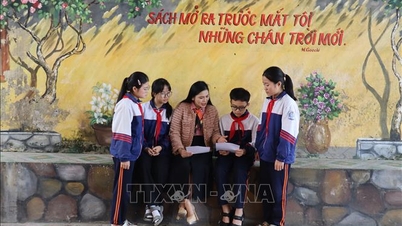
According to Dr. Ton Quang Cuong, the implementation roadmap according to the "spiral" model also shows a thorough understanding of age psychology. At the primary level, students are exposed to AI through visualization, perception and form the habit of protecting data. At the secondary level, they begin to deeply understand the "raw materials" of AI, which are data and algorithms. At the high school level, students are not only users but are empowered to become co-creators, designers and solve practical problems. This approach helps knowledge to permeate naturally, avoiding shock or overload.
However, Dr. Ton Quang Cuong's concern is the gap between the document and the actual implementation in the classroom. In particular, the biggest challenge lies in the form of organization "integration in subjects". Although this is the optimal solution to reduce the workload, it puts a huge pressure on the current teaching staff (who have not been trained in depth in AI) in terms of integration capacity.
In addition, although the draft encourages the use of free, open source platforms, the disparity in technical infrastructure and internet connection between regions can create "gaps" in access to high-quality and comprehensive education.
In order for the pilot to really create a boost and not just stop at a movement, Dr. Ton Quang Cuong said that AI education needs to focus on critical thinking and ethics from the beginning. In addition, it is necessary to socialize according to the "Sandbox" model (testing framework). The Ministry of Education and Training has a policy of encouraging cooperation with businesses, but needs a more specific mechanism to turn schools into places where students can experience the latest AI technologies from technology corporations instead of waiting for the state budget to invest in expensive but quickly outdated computer rooms.
Teachers need to be trained to play a leading role.
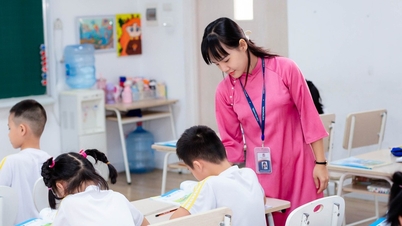
Teacher Tran Thi Thanh Xuan, Head of the Biology - Technology Group, Le Hong Phong High School for the Gifted (Ninh Binh province) shared: Artificial intelligence helps teachers a lot in the teaching process, from preparing lessons, looking up information, but it also has two sides. If students do not know how to control their time and behavior, they can easily get carried away, abuse AI too much, rely on AI, leading to lazy thinking. Therefore, teachers must be the ones to guide students' learning content. The Ministry of Education and Training needs to soon issue regulations on the use of AI in schools.
Ms. Nguyen Thi Thu Ha, Principal of Trung Vuong Secondary School (Hanoi), said that the school has ensured the basic conditions to meet the requirements for piloting AI education according to the draft of the Ministry of Education and Training. However, to operate the program effectively and in depth, the school still lacks specialized equipment, as well as needs to add copyrighted software, specialized AI platforms and creative learning spaces.
According to the Principal of Trung Vuong Secondary School, in terms of human resources, the school's IT teachers have a background in computer science but are mainly self-taught or participate in short-term training courses, and have not been properly trained according to the AI content framework of the Ministry of Education and Training. Meanwhile, teachers of other subjects have only stopped at the initial integration level through a number of training sessions.
Therefore, the school recommends that the Ministry of Education and Training soon issue pilot documents and teacher training documents, organize in-depth training courses, promote professional activities in school clusters, and expand connections with experts and technology businesses to improve the quality of AI teaching.
Education expert Pham Do Nhat Tien said that AI and digital transformation are being widely applied in schools, bringing many benefits but also posing many challenges. In fact, in Vietnam today, AI is being introduced into schools from kindergarten to university in a widespread and uncontrolled manner. Meanwhile, for an educational program or textbook to be put into use, it must go through a very strict assessment and control process.
From there, Dr. Pham Do Nhat Tien recommended that the Ministry of Education and Training build a legal framework for bringing AI into general schools and develop flexible AI management solutions in education. This is to ensure that the application of AI always keeps up with the development of education, does not create barriers and still maintains responsibility and ethics. In addition, Dr. Pham Do Nhat Tien recommended that the Ministry should create conditions for teachers to implement policy experiments related to AI. Based on the results of the experiment, the education sector can safely expand the application, serving the process of developing AI in education.
Director of the Vietnam Institute of Educational Sciences Le Anh Vinh shared that teaching and learning about AI in high schools is necessary but requires a comprehensive plan, closely following the content of the General Education Program. This helps to understand AI, promote personalization and creative thinking, and prepare the future workforce.
Source: https://baotintuc.vn/giao-duc/thi-diem-day-ai-trong-truong-pho-thong-dam-bao-thuc-chat-khong-mang-tinh-phong-trao-20251208122858601.htm


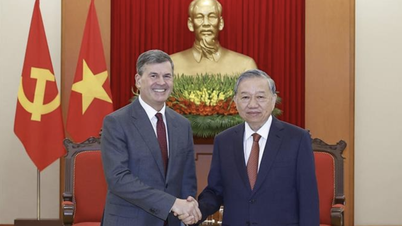
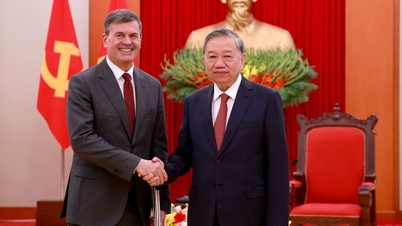
![[Photo] General Secretary To Lam receives the Director of the Academy of Public Administration and National Economy under the President of the Russian Federation](/_next/image?url=https%3A%2F%2Fvphoto.vietnam.vn%2Fthumb%2F1200x675%2Fvietnam%2Fresource%2FIMAGE%2F2025%2F12%2F08%2F1765200203892_a1-bnd-0933-4198-jpg.webp&w=3840&q=75)




































































Comment (0)