

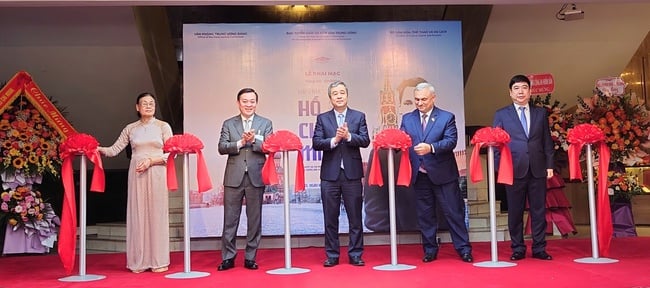
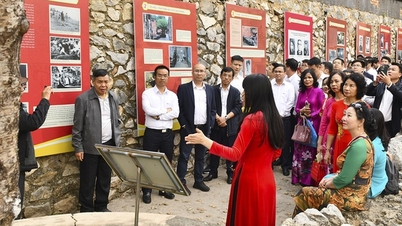
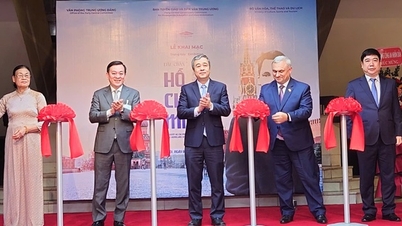
Delegates cut the ribbon to open the exhibition.
The exhibition " Ho Chi Minh's Footprints in the Homeland of the October Revolution" introduces to the public his journey to Russia - the land of Lenin and the victory of the October Revolution. Lenin's great thoughts became a source of light and a strong driving force that guided Nguyen Ai Quoc - Ho Chi Minh's path to national salvation. Here, he lived, studied and carried out revolutionary activities, thereby forming a deep attachment to the country and people of Russia.
After Vietnam gained independence in 1945, as President , President Ho Chi Minh visited Russia and the former Soviet Union member states many times. His footprints spread across the vast Soviet Union, carrying sincere friendship and leaving a deep impression on international friends. Through his visits, he clearly felt the valuable support and assistance of the Soviet Union for the Vietnamese revolution, and at the same time became a close friend and comrade of the Soviet people.
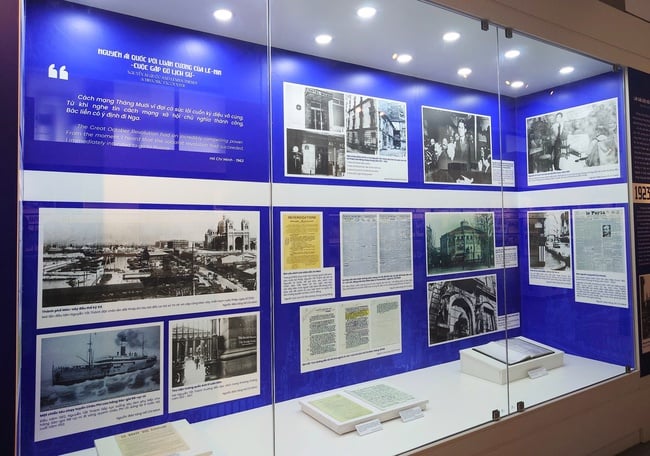
The footprints of President Ho Chi Minh in Russia - the homeland of the October Revolution, the country of the great Lenin as well as the member countries of the Soviet Union (formerly) are vivid proof of President Ho Chi Minh's revolutionary path, and at the same time depict the strong friendship between Vietnam and the Russian Federation - two peoples who always accompany and stand side by side in the cause of national liberation and national construction, creating a beautiful story of faithful and steadfast friendship.
With nearly 300 carefully selected photos, documents and typical artifacts, including rare and newly collected documents and artifacts, the special exhibition "Ho Chi Minh's Footprints in the Homeland of the October Revolution" introduces to the public the journey following the revolutionary footsteps of Nguyen Ai Quoc - Ho Chi Minh in Russia in the years 1923 - 1924, 1927, 1934 - 1938 when he traveled to find a way to save the country, as well as the journey following the footsteps of friendship that President Ho Chi Minh, in his capacity as President of the Democratic Republic of Vietnam (now the Socialist Republic of Vietnam), left across the vast Soviet Union.
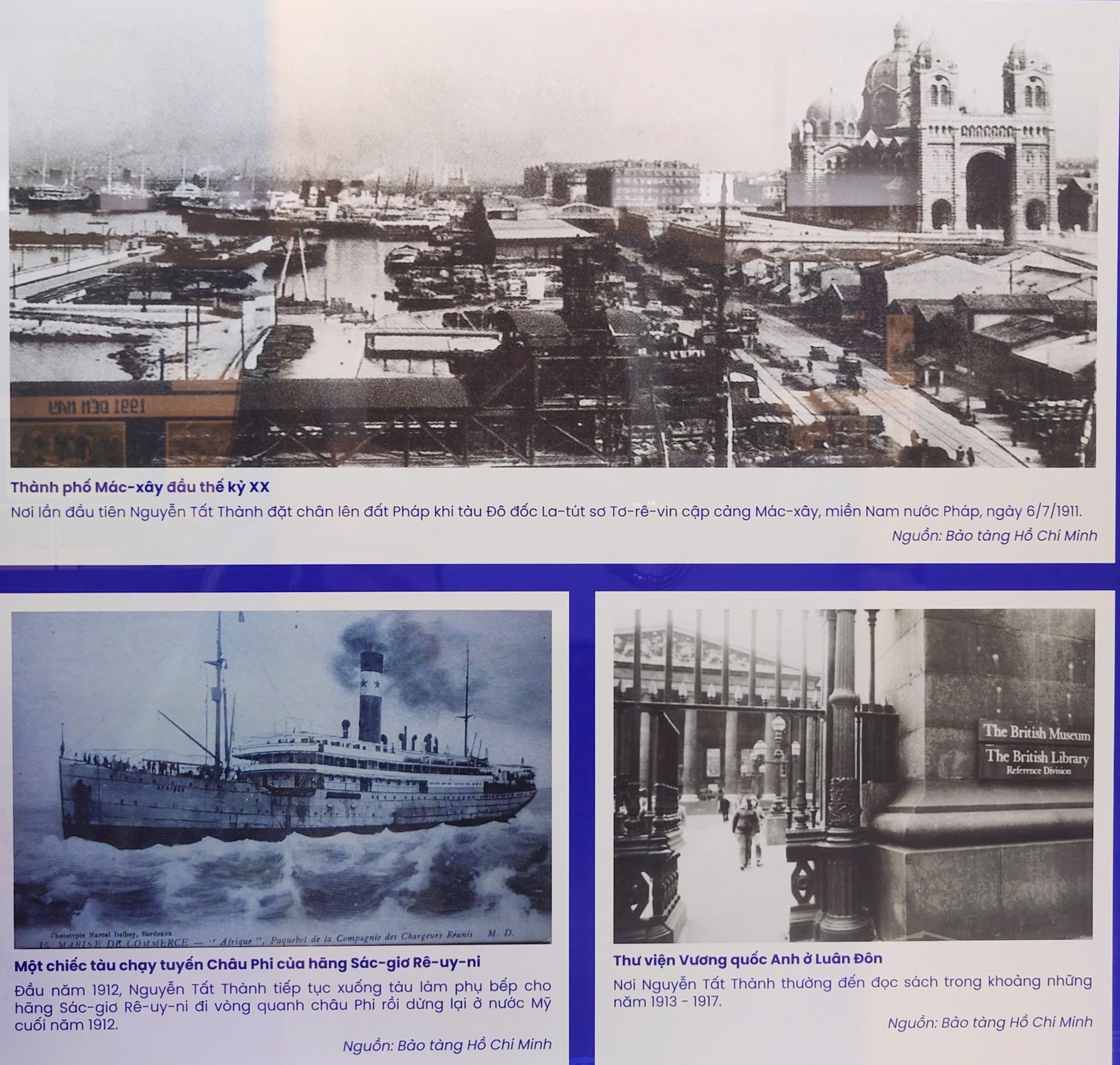
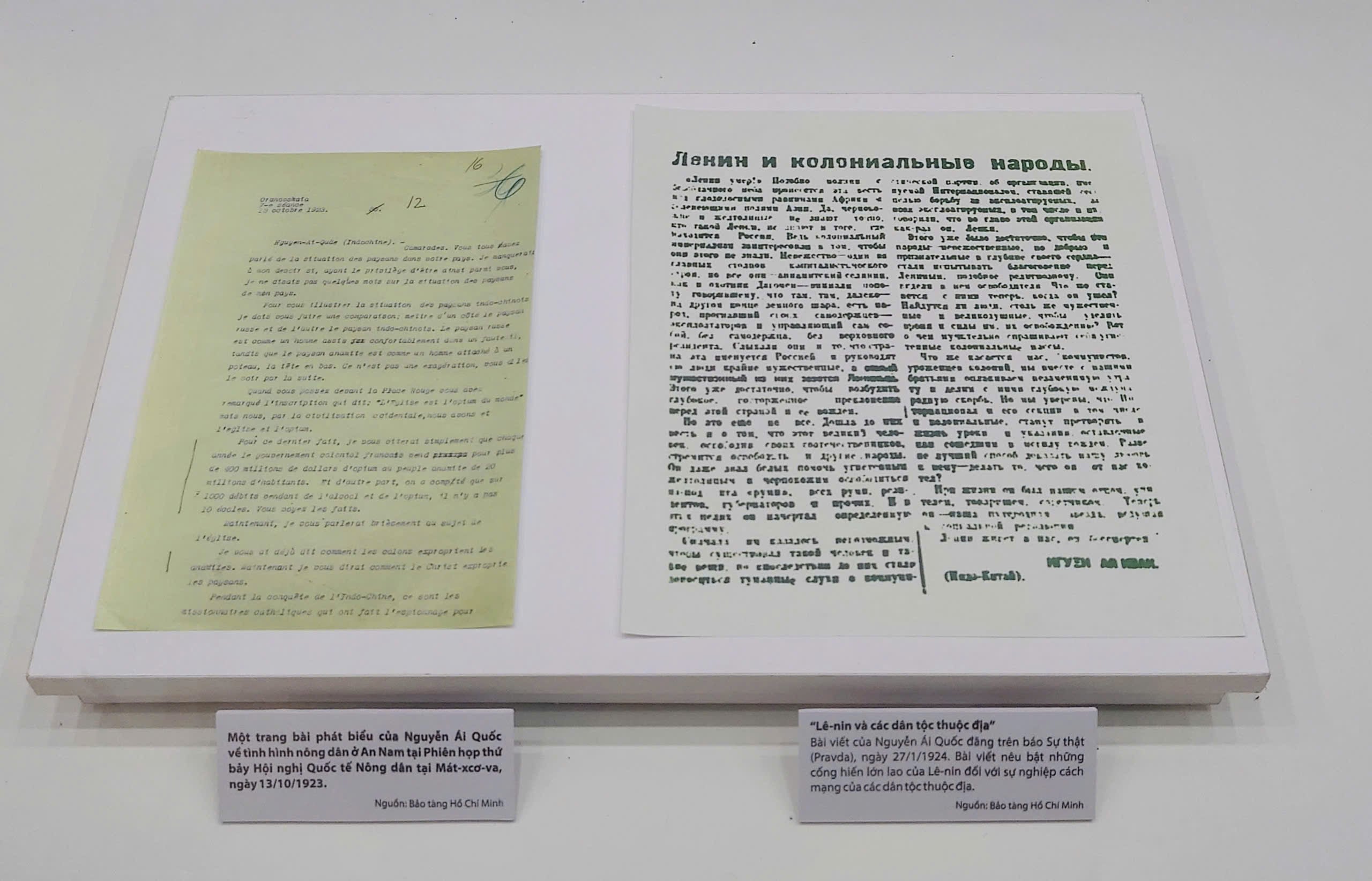
The thematic exhibition consists of 3 parts:
Part I: The Man in Search of the Shape of Water - A Journey Through Russia
In 1920, after many years of wandering in search of a way to save the country, Nguyen Ai Quoc - Ho Chi Minh came across Lenin's "First Draft of Theses on the National and Colonial Questions" and saw in it the path to national liberation. From then on, he entered the path of proletarian revolution under the light of the Russian October Revolution and Marxism - Leninism.
To supplement the theoretical and practical foundations for the Vietnamese revolutionary path, he visited Russia three times in 1923-1924, 1927 and 1934-1938. Here, he spent years studying and actively participating in revolutionary activities, learned valuable lessons, and met close comrades and international friends. In all his activities, he persistently defended and creatively applied Lenin's line on the revolution to liberate colonial peoples, in the light of the October Revolution.
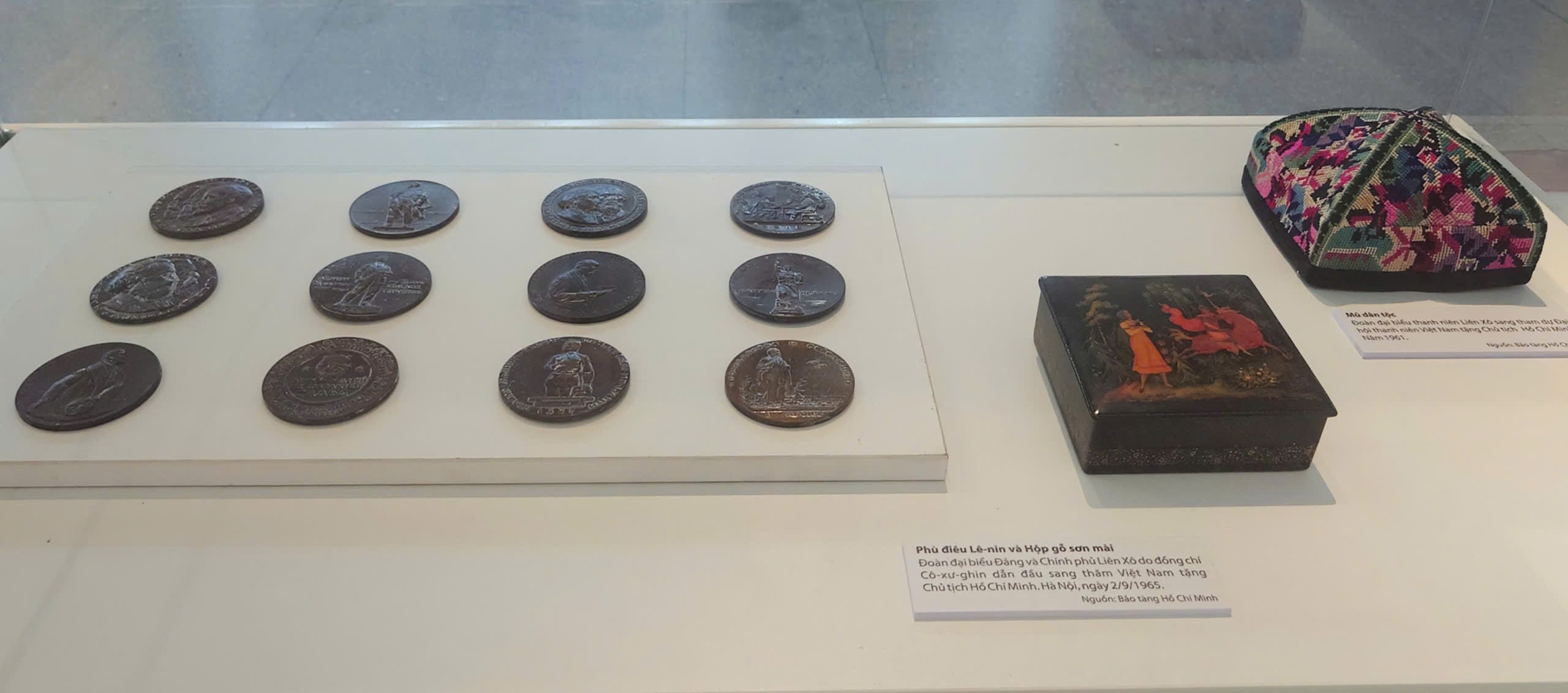
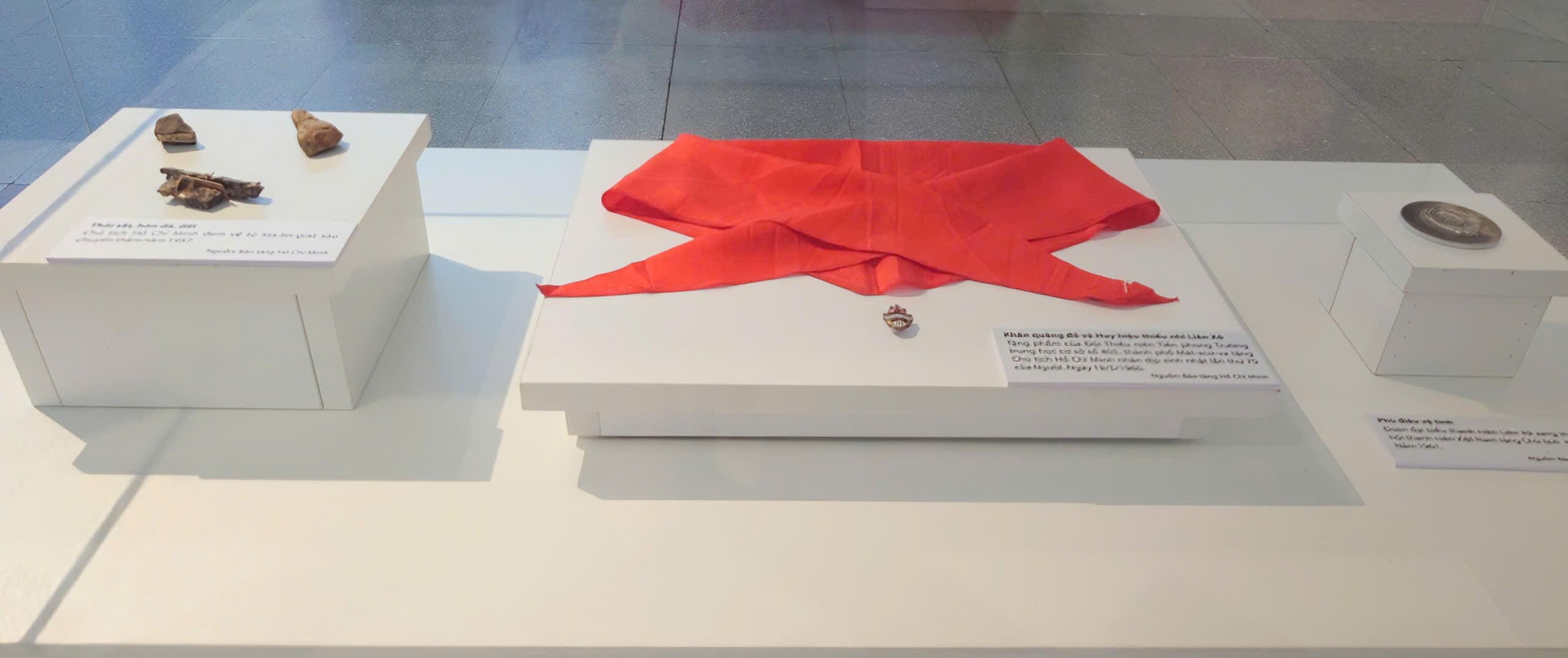
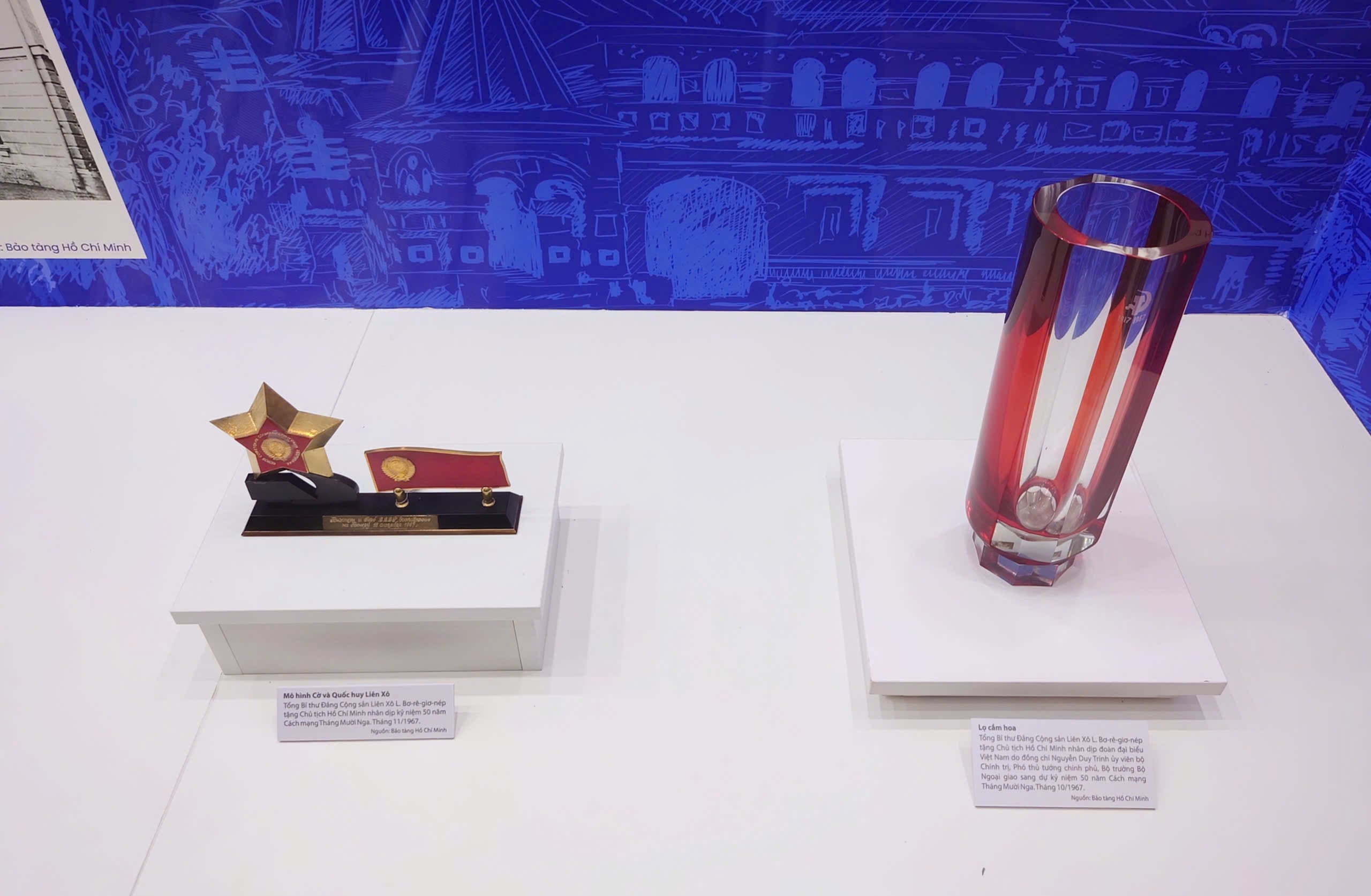
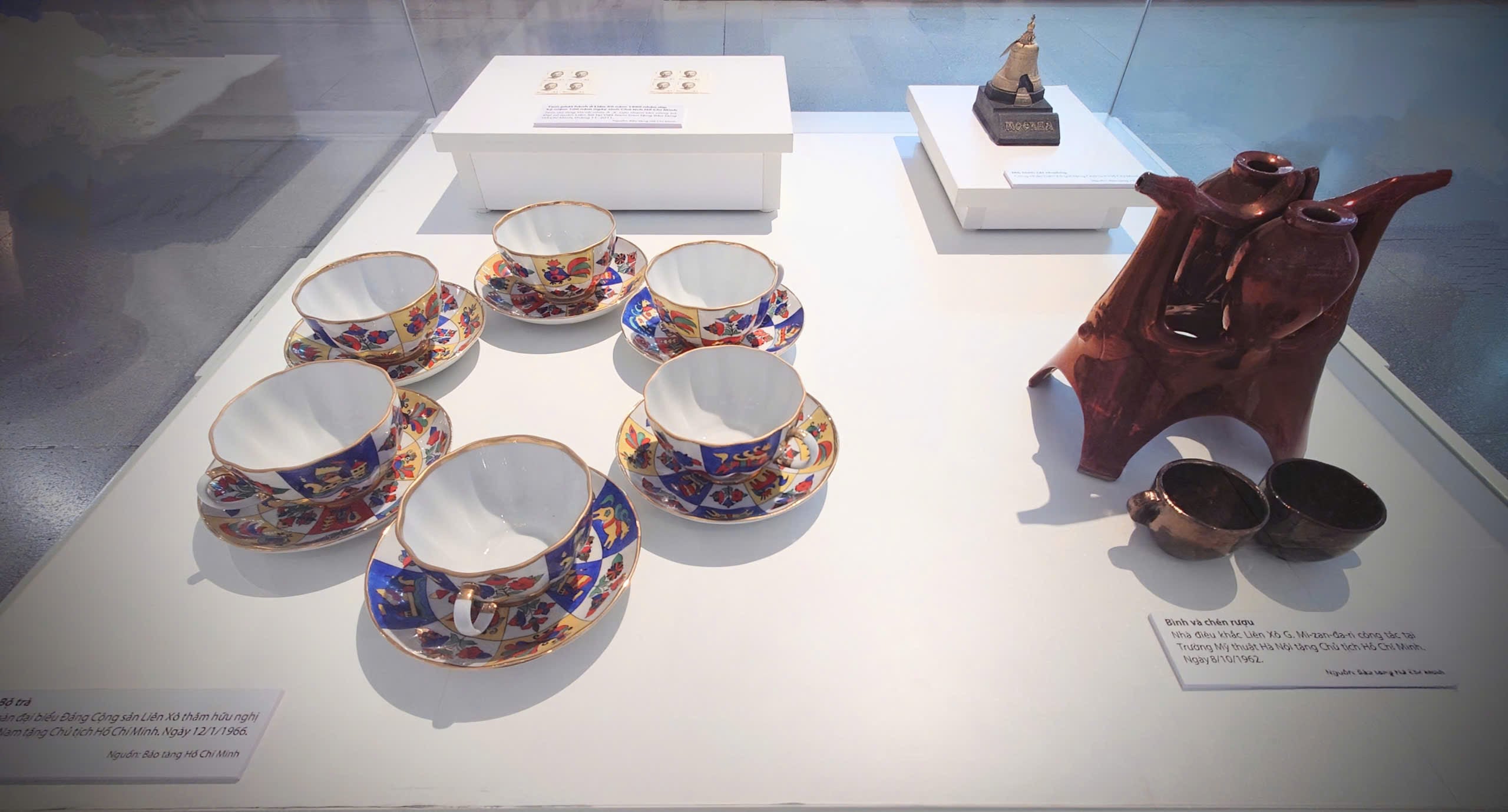
Part II: Across the Vast Soviet Union - Deepening Friendship
After the Democratic Republic of Vietnam (now the Socialist Republic of Vietnam) was founded, Vietnam and the Soviet Union established official diplomatic relations in 1950. As President, President Ho Chi Minh visited the Soviet Union many times, diligently cultivating the traditional friendship between the two countries. He visited all 15 Soviet member republics, leaving footprints of friendship throughout the vast Soviet Union.
During each visit, in addition to the time spent talking with the Soviet leaders, he also spent time meeting and visiting the people of the neighboring country at public works, farms, factories, schools, children's summer camps, exhibition halls, museums... witnessing the economic, social, cultural and educational achievements of the Soviet state. Until the last days of his life, President Ho Chi Minh always expressed his infinite gratitude to Lenin, the October Revolution and the Soviet people. His noble demeanor and the precious legacy he left for the friendship between Vietnam and the Soviet Union in the past and Vietnam and the Russian Federation today are always engraved in the hearts of the people of the two countries.
Part III: Deepening Vietnam-Russia friendship
Over the past 75 years, the traditional, faithful and steadfast friendship between Vietnam and Russia, founded by President Ho Chi Minh and generations of leaders of the two countries, painstakingly built and nurtured by the people of the two countries, has always been warm, trustworthy, and has overcome the challenges of time as well as the vicissitudes of history. This is a priceless common asset of the two peoples, which needs to be preserved and promoted.
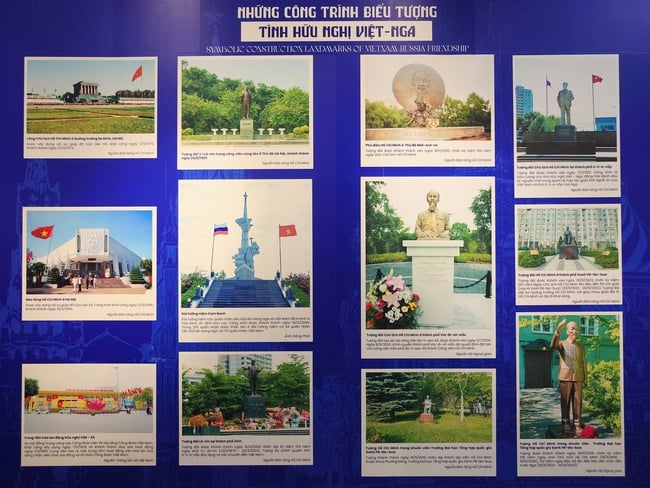
During the struggle for independence, peace, unification and national construction, the Party, State and people of Vietnam have always received the wholehearted support and assistance of the former Soviet Union. Inheriting that precious tradition, Vietnam and the Russian Federation today have made great strides on the path of cooperation and development. In 1994, the two countries signed a Treaty on the basic principles of friendly relations, laying the foundation and legal basis for bilateral relations in the new stage of development. The two countries upgraded their relations to Strategic Partnership in 2001 and Comprehensive Strategic Partnership in 2012.
Also in this Thematic Exhibition, the Ho Chi Minh Museum introduces to the public a number of documents and artifacts related to the life and career of President Ho Chi Minh, newly collected from the Russian Federation: The book "The 5th World Congress of the Communist International in 1924" donated to the Museum by lecturer Svetlana Glazunova and student Pavel Bolshkov of the Vietnamese language department of the Moscow State University of International Relations in September 2025; Photos of the visit to the Soviet Union in 1955 and President Ho Chi Minh's guestbook in the Guest Book of Honor of the Ural Geological Museum, donated to the Ho Chi Minh Museum by the State Archives of Sverdlovsk Region and the Ural Geological Museum, Russian Federation in July 2025.
The thematic exhibition "Ho Chi Minh's Footprints in the Homeland of the October Revolution" at the Ho Chi Minh Museum is a practical and influential cultural activity, contributing to fostering the traditional, loyal and profound friendship between Vietnam and the Russian Federation, as President Ho Chi Minh once said: "Although Vietnam and the Soviet Union are thousands of miles apart, our hearts are always together and beat as one." The exhibition takes place from December 8, 2025 to April 2026.
Source: https://bvhttdl.gov.vn/khai-mac-trung-bay-chuyen-de-dau-chan-ho-chi-minh-tren-que-huong-cach-mang-thang-muoi-20251208163805686.htm


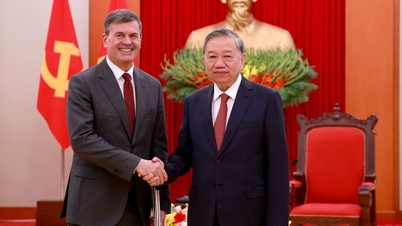
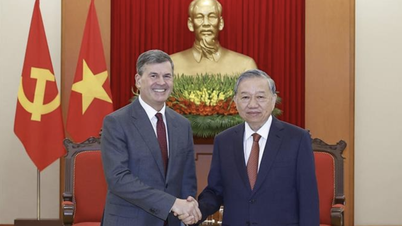
![[Photo] General Secretary To Lam receives the Director of the Academy of Public Administration and National Economy under the President of the Russian Federation](/_next/image?url=https%3A%2F%2Fvphoto.vietnam.vn%2Fthumb%2F1200x675%2Fvietnam%2Fresource%2FIMAGE%2F2025%2F12%2F08%2F1765200203892_a1-bnd-0933-4198-jpg.webp&w=3840&q=75)




















































Comment (0)