

Currently, Germany is Vietnam's second largest trading partner in Europe, accounting for more than 17% of our exports to the EU (according to 2024 data from Vietnam Customs); and is also an important transit gateway for Vietnamese goods to other markets in Europe. The shift in supply chains is opening the door for Vietnamese goods to penetrate deeper into the German market, not only as a simple supplier but also with the opportunity to participate more deeply in the supply value chain. Along with that, the Vietnam - EU Free Trade Agreement (EVFTA) has made a significant contribution, creating momentum to promote bilateral trade to continue to develop.
According to the Vietnamese Trade Counselor in Germany, the EVFTA is an important factor helping bilateral trade maintain growth momentum in the context of world trade being heavily impacted by Covid-19, the Ukraine war, and conflicts in the Red Sea disrupting supply chains. Assessing the growth rate of trade between Vietnam and Germany in the first 10 months of 2025, Counselor Dang Thi Thanh Phuong said that Vietnam-Germany trade had positive growth in 2025 when bilateral trade turnover reached over 11.14 billion USD in the first 10 months of 2025, an increase of 15.1% compared to the first 10 months of 2024.

Vietnam has a trade surplus of nearly 4 billion USD with Germany in 9 months of 2025
According to documents published in the Vietnam Trade Magazine - Quarter III/2025, citing statistics from Vietnam Customs, in the third quarter of 2025 alone, two-way trade turnover between Vietnam and Germany reached 3.3 billion USD, down slightly by 0.8% compared to the second quarter of 2025 but still up 8.7% compared to the third quarter of 2024. In the first 9 months of 2025, the total two-way import-export turnover reached 9.94 billion USD, up 15.2% over the same period last year. In terms of trade balance, Vietnam had a trade surplus of nearly 4 billion USD to Germany after 9 months of 2025. The growth in Vietnam's trade turnover with Germany took place in the context of the German economy recording positive signs.
On the other hand, data from the German Federal Statistical Office (Destatis) shows that the country's GDP in the third quarter of 2025 was flat compared to the previous quarter, but increased by 0.3% compared to the same period last year. Along with that, Germany's trade turnover also grew by nearly 2.5% when exports in the first 9 months of 2025 reached 1,176.5 billion Euros, up 0.7%; while imports increased more strongly, up 4.8%, reaching 1,025 billion Euros. In early October 2025, the German Government adjusted its GDP growth forecast for 2025 up to 0.2%, instead of the zero growth forecast given in April. This is seen as a sign of recovery of the largest economy in the eurozone after two consecutive years of recession. For 2026, GDP is expected to grow by 1.3%, and continue to grow by 1.4% in 2027. Much of the growth in the coming years will be driven by higher public spending, particularly through infrastructure investment funds and expanded defense spending.
By the end of the third quarter of 2025, Vietnam's goods exports to Germany reached 6.96 billion USD, a sharp increase of 19.4% over the same period in 2024, double the overall export growth of Vietnam to the entire EU (9.5%). This export growth comes from both agricultural and aquatic products and electronics, specifically: For the agricultural, forestry and aquatic products group, the export turnover of this group reached 1.52 billion USD, an increase of 58.4% over the same period in 2024, accounting for 21.8% of total goods exports to Germany.
Most of the items in this group achieved double-digit growth, led by coffee reaching over 940.33 million USD, up 94.7%; aquatic products 162.13 million USD, up 10.9%; cashew nuts reaching over 153.47 million USD, up 43.9%; pepper reaching nearly 99.5 million USD, up 43.4%; vegetables and fruits reaching over 61 million USD, up 39.8%; wood and wood products increasing 8.1%, reaching 64.8 million USD..., only rubber decreased by 25%. As for the group of processed and manufactured goods, the total turnover reached nearly 5 billion USD, up 11.7% compared to the first 9 months of 2024, accounting for 71.5% of the proportion. The main items in this group include: Machinery, equipment, tools and other spare parts reaching over 1 billion USD, up 13.6%; Computers, electronic products and components reached 899.5 million USD, up 20.6%; especially recorded the return of growth of traditional export items such as textiles, with 662.73 million USD, up 17.7%; footwear reached 530.9 million USD, up 0.9%.
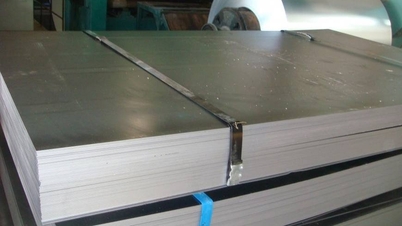
Notably, iron and steel products of all kinds increased dramatically, 6.2 times higher than the same period last year, reaching 31.6 million USD. In the third quarter of 2025 alone, Vietnam's goods exports to Germany reached more than 2.2 billion USD, up 10.6% over the same period last year. Statistics show that the group of processed industrial products including textiles, footwear, phones, computers, machinery and equipment... showed signs of slowing down. However, the group of agricultural, forestry and fishery products continued to increase sharply compared to the same period last year, with coffee increasing by 20.3%, seafood increasing by 19.1%, cashew nuts increasing by 71.3%, pepper increasing by 13.3%, vegetables and fruits increasing by 85%, tea increasing by 95.5%, wood and wood products increasing by 30.4%. This development shows that the demand for imported goods to stockpile for consumption during Christmas and New Year in Germany increased sharply.
Meanwhile, preliminary figures from the German Federal Statistical Office show that retail sales in Germany in September 2025, after adjusting for calendar and seasonal factors, increased by 0.2% in real terms (price-adjusted) and 0.1% in nominal terms (not price-adjusted) compared to August 2025. Compared to the same period in September 2024, retail sales also increased by 0.2% in real terms and by 1.7% in nominal terms. Food retail sales in September 2025 increased by 0.3% in both real and nominal terms (calendar and seasonally adjusted) compared to the previous month. At the same time, compared to September 2024, they increased by 0.2% in real terms and by 2.9% in nominal terms. In the non-food retail sector, September 2025 sales decreased by 0.6% month-on-month in both real and nominal terms. However, compared to September 2024, sales in this sector increased by 0.2% in real terms and by 1.1% in nominal terms.
According to data from the European Statistical Office (Eurostat), in the first 8 months of 2025, Vietnam ranked first in ASEAN and fourth in Asia in terms of goods exports to the German market. Notably, with an increase of more than 19%, Vietnam is the country with the strongest export growth rate to Germany among the leading goods suppliers, while its market share also increased from 0.7% to 0.8%. In particular, Vietnam's coffee export market share to Germany increased from 14.9% to 16.9%; cashew nuts increased from 46.8% to 56.3%; pepper from 52.5% to 53.7%; seafood from 2.4% to 2.8%; textiles from 2% to 2.1%...
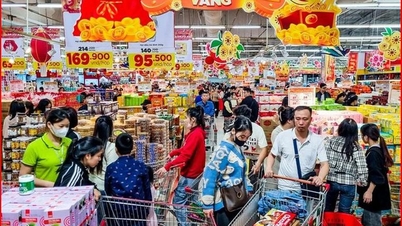
Many agricultural products are favored by German consumers.
Germany is currently Vietnam's leading important partner in the European Union, especially in the field of agricultural, forestry and fishery trade. Exports to this market are forecast to continue to grow positively in the fourth quarter of 2025 as well as in 2026 due to support from the recovery of the German economy and advantages from the Free Trade Agreement between Vietnam and the European Union (EVFTA). Since the EVFTA took effect in August 2020, the trade turnover of agricultural, forestry and fishery products between the two countries has achieved stable growth. In 2024 alone, agricultural, forestry and fishery exports from Vietnam to Germany will reach 1.3 billion USD (up 32% compared to 2023); imports from Germany will reach nearly 200 million USD (up 23.9%). Vietnam’s main export items include coffee, seafood, cashew nuts, vegetables, wood and wood products, tea and handicraft products from rattan, bamboo, sedge, carpets, etc., which are popular with German and European consumers. In contrast, Vietnam mainly imports milk and dairy products, pesticides, fertilizers, rubber, etc. from Germany.
According to the assessment, the commodity structure between the two countries is complementary, not directly competitive. Germany is currently the 7th largest agricultural market of Vietnam, accounting for 2.1% of the total export turnover of agricultural, forestry and fishery products. This country is also an important gateway for Vietnamese goods to access the EU market with more than 500 million people and a total food import demand of about 160 billion Euros/year.
Among the main commodities, Germany is currently Vietnam's largest coffee export market, and Vietnam is also the second largest coffee supplier to Germany. According to Eurostat, in the first 8 months of 2025, Germany spent more than 5 billion EUR to import coffee, up 54% over the same period last year. Of which, imports from Brazil reached 1.4 billion EUR, up 31.2%; from Vietnam reached 864.7 million EUR, up 73.9%; and from Honduras reached 389 million EUR, up 77.6%. This result has caused Brazil's coffee market share in the German market to decrease, while Vietnam and some other countries have increased. The prospect of coffee consumption in Germany in the period 2025 - 2030 is forecast to grow steadily, opening up many new opportunities for export enterprises, including Vietnam. As the largest coffee consuming market in Europe, about 75% of German adults maintain the habit of drinking coffee daily, an average of more than 6.5 kg/person/year. This is a solid foundation for maintaining high demand for coffee in the present and the future.
According to Mordor Intelligence estimates, the German coffee market size in 2025 will reach about 7.5 billion USD with an average compound annual growth rate (CAGR) of 2.5%, expected to reach 8.5 billion USD by 2030. The traditional coffee segment continues to dominate the German market with 84.87% market share in 2024, thanks to its ability to maintain stable quality and reasonable prices. However, the specialty coffee segment is growing explosively with a CAGR of 8.93% in the period 2025-2030, more than three times higher than the overall growth rate of the entire market. The driving force of this growth comes from consumers' increasing understanding of coffee origin, processing methods and coffee flavor. Therefore, in order to increase coffee exports to Germany in the coming time, Vietnamese enterprises need to focus on differentiated products including high-quality coffee, processed coffee, certified coffee and specialty coffee instead of exporting raw coffee as at present. In addition, make good use of incentives from the EVFTA Agreement to boost coffee exports to this market in the coming time.
Regarding imports, in the third quarter of 2025, Vietnam imported 1.1 billion USD of goods from the German market, an increase of 6.7% compared to the second quarter of 2025 and an increase of 5.2% compared to the third quarter of 2024. Accumulated from the beginning of the year to the end of September 2025, the import turnover reached 2.98 billion USD, an increase of 6.6% over the same period in 2024. Vietnam's import turnover of goods from Germany increased in the group of processed and manufactured goods, of which the main imported goods were machinery, equipment and spare parts reaching about 1.11 million USD, an increase of 14.3%; pharmaceuticals reaching over 313 million USD, an increase of 9.8%; chemicals reaching 210.8 million USD, a decrease of 35.9%; chemical products 200.5 million USD, a decrease of 5.7%; Computers, electronic products and components reached over 162.23 million USD, up 38.2%...
While global trade faces many prolonged shocks, economic relations between Vietnam and Germany have maintained a stable growth rate. The positive growth in bilateral trade turnover shows that the need for cooperation between the two economies has not decreased. Initial signs of recovery in the German economy are becoming a driving force to help Vietnamese enterprises expand their foothold in Europe. This growth rate is considered remarkable in the context of consumer demand in Europe not yet fully recovered, at the same time many of Vietnam's major export markets are still affected by geopolitical fluctuations and supply chain risks.
Source: https://moit.gov.vn/tin-tuc/thi-truong-nuoc-ngoai/duc-giu-vung-vi-tri-doi-tac-thuong-mai-lon-thu-hai-cua-viet-nam-tai-eu.html

![[Photo] General Secretary To Lam receives the Director of the Academy of Public Administration and National Economy under the President of the Russian Federation](/_next/image?url=https%3A%2F%2Fvphoto.vietnam.vn%2Fthumb%2F1200x675%2Fvietnam%2Fresource%2FIMAGE%2F2025%2F12%2F08%2F1765200203892_a1-bnd-0933-4198-jpg.webp&w=3840&q=75)
















































































Comment (0)