

It is easy to see that in the middle and end of April, the operational landscape of the Party, State, and Government leaders was characterized by a common feature: a high pace, a direct approach, and a focus on substantive action in each decision. The two main courses of action – foreign policy and domestic administration – were not separate but complemented each other, both aiming towards the common goal of consolidating the foundation for development, striving for double-digit growth, and strengthening social confidence.
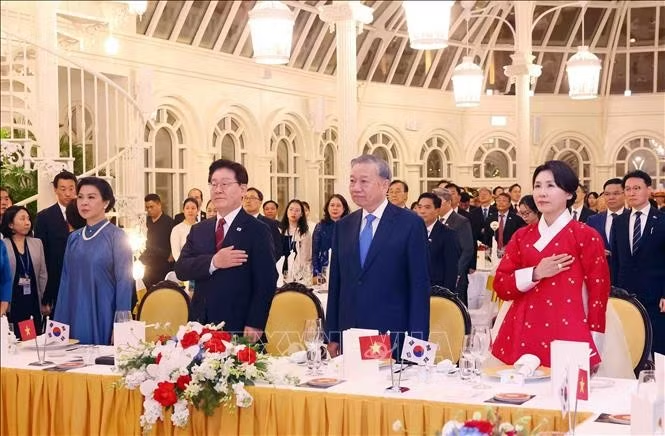
In terms of foreign relations, General Secretary and President To Lam has continuously implemented a series of bilateral activities with high frequency, clearly reflecting Vietnam's priority of enhancing its international standing in the new context. From the reception of the Slovak Prime Minister from April 12-14, with the highlight being the upgrading of relations with Slovakia to a Strategic Partnership, the State visit to China (April 14-17) with the signing of 32 cooperation documents, to the telephone conversation with the Australian Prime Minister (April 24) and the activities to receive the South Korean President (April 21-24), one can see a proactive, flexible, and increasingly in-depth diplomatic approach.
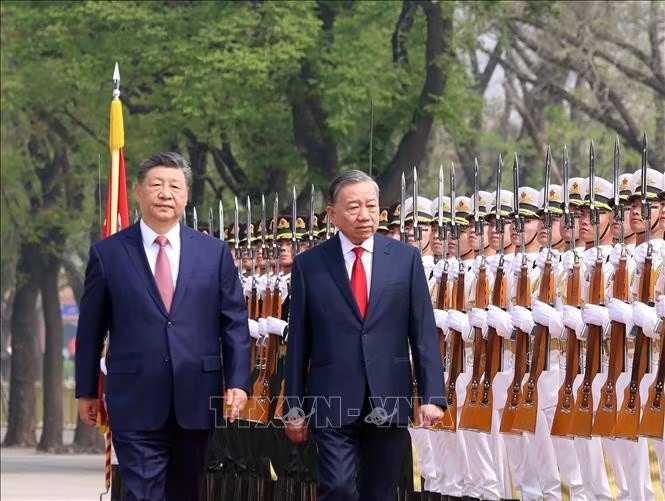
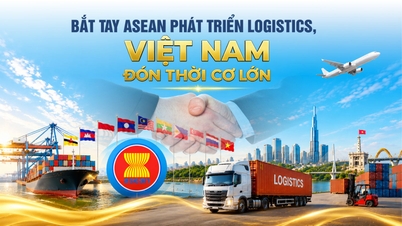
The noteworthy aspect lies not only in the frequency but also in the substance of the cooperation. The new cooperation frameworks all focus on high value-added areas. With China, among the 32 cooperation documents, there are important areas such as digital technology, logistics, production chains, and supply chains. With South Korea, the two sides exchanged 12 cooperation documents, notably one related to nuclear power. With Slovakia, cooperation focuses on breakthrough areas such as renewable energy, high-tech agriculture, and artificial intelligence.
This shows that diplomacy is not just about strengthening diplomatic relations and consolidating political trust, but is becoming an important channel for mobilizing resources, expanding the space for economic development, and positioning Vietnam's role in regional and global structures.
In the context of increasing strategic competition among major powers, this approach becomes even more significant. Vietnam not only maintains a balanced relationship but also proactively exploits opportunities arising from major trends such as supply chain shifts, green transformation, and digital transformation. High-level diplomatic activities therefore serve both long-term strategic purposes and immediate practical value, facilitating deeper economic integration with the world.
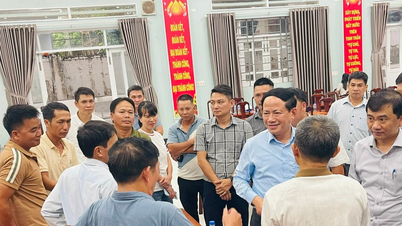
Simultaneously, domestically, Prime Minister Le Minh Hung also established a new operational rhythm with a series of continuous working sessions with numerous ministries and agencies. The leadership style clearly demonstrated a spirit of directly addressing bottlenecks, assigning specific tasks, linking individual responsibility, and requiring clear deadlines. From industry and trade, science and technology, public investment to education and culture, existing problems and obstacles were brought to the table for direct and straightforward handling, without avoidance.
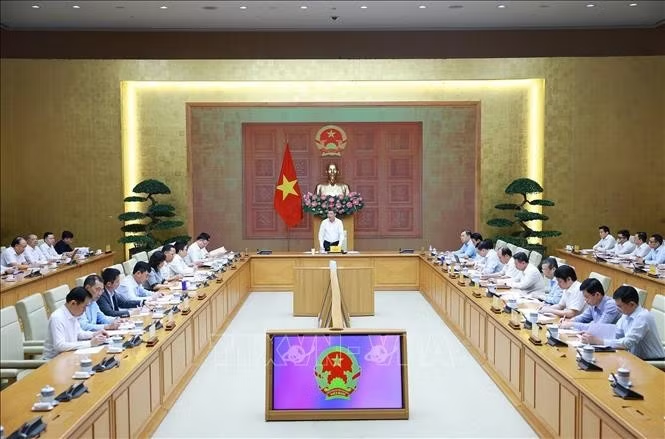
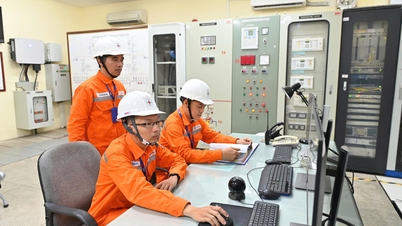
In the field of industry and trade, the Prime Minister assigned the Ministry and the Industry and Trade sector the responsibility of ensuring there are no shortages of electricity and petroleum products under any circumstances, along with the task of accelerating power projects, restructuring the petroleum distribution system, and building reserve capacity.
During a meeting with the Ministry of Science and Technology, the Prime Minister emphasized the need to prioritize resources and increase the proportion of spending on strategic technologies, high technologies, and core technologies in the total annual budget for science and technology, innovation, and digital transformation, in accordance with Resolution 57, which stipulates allocating at least 3% of the total annual state budget to this sector. The Prime Minister also requested that efforts be made to achieve a 30% share of the digital economy in GDP.
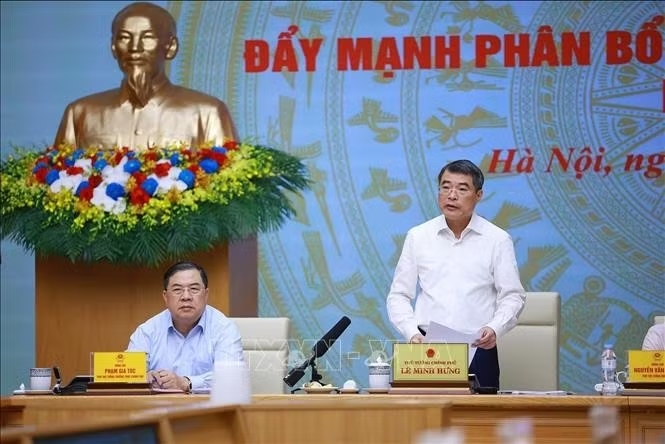
At the National Conference on Accelerating the Allocation and Disbursement of Public Investment Capital in 2026, the Prime Minister frankly and severely criticized ministries, agencies, and localities for slow disbursement; demanded the removal of all obstacles and the striving to achieve 100% disbursement of the plan; and emphasized that the results of public investment disbursement should be used to assess the performance of the heads of agencies and localities.
In his meetings with the Ministry of Education and Training and the Ministry of Culture, Sports and Tourism, the Prime Minister also demonstrated a similar spirit and working style.
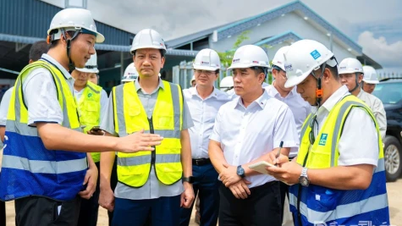
A readily apparent common thread is that the directives all revolve around removing institutional bottlenecks, unlocking resources, and improving implementation efficiency. Beyond mere guidance, the tasks assigned by the Prime Minister are quantified by timelines, linked to specific responsibilities, and accompanied by monitoring mechanisms. This creates positive pressure on the entire system, forcing all levels and sectors to move from talking to doing, from planning to action, and ultimately to achieving results.
If foreign relations open up new opportunities and resources, then domestic governance is the process of transforming those opportunities into concrete results. The connection between these two aspects is forming a more synchronized mode of operation: from establishing relationships and attracting external resources to reforming institutions and enhancing internal capacity to absorb and utilize those resources. This is also a necessary condition for Vietnam to effectively capitalize on opportunities in the context of a volatile global economy.
Notably, the domestic and international activities of key leaders are creating a positive psychological effect. When directives are issued more quickly, more clearly, and accompanied by concrete actions, the confidence of the people and businesses will be strengthened. This is a crucial factor in an economy that requires consensus and coordination from many different stakeholders.
Overall, what is happening shows that the new key leadership has immediately jumped into action with decisiveness and without delay. The high pace in foreign relations, coupled with direct domestic governance, is igniting a new momentum throughout the entire system, creating impetus for the next phase of development.
According to Thuy Duong (VNA/Vietnam+)
Source: https://baogialai.com.vn/bo-may-moi-hanh-dong-va-khi-the-moi-post585835.html
![[Photo] The heat at the fireworks display site on the opening night of the Da Nang International Fireworks Festival 2026](https://vphoto.vietnam.vn/thumb/1200x675/vietnam/resource/IMAGE/2026/05/27/1779889741485_ndo_br_z7872039145157-fecaba5112f39e8352544099d7ef4738-5140-jpg.webp)

![[Photo] The courage of new recruits of Brigade 144 on the training ground.](https://vphoto.vietnam.vn/thumb/1200x675/vietnam/resource/IMAGE/2026/05/27/1779881651341_anh-man-hinh-2026-05-27-luc-18-32-52.png)



































![[Photo] The courage of new recruits of Brigade 144 on the training ground.](https://vphoto.vietnam.vn/thumb/402x226/vietnam/resource/IMAGE/2026/05/27/1779881651341_anh-man-hinh-2026-05-27-luc-18-32-52.png)

















Comment (0)