


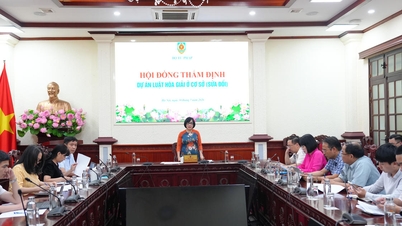
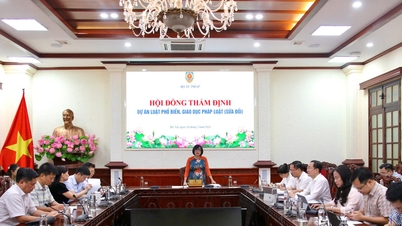
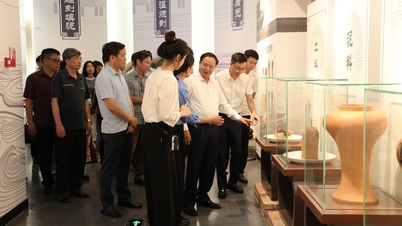
Deputy Minister of Justice Dang Hoang Oanh presides over the appraisal council for the draft Law on Mediation at the Grassroots Level (amended). Photo: Ministry of Justice.
According to the draft submission, the draft Law on Mediation at the Grassroots Level (amended) inherits some relevant provisions of the 2013 Law on Mediation at the Grassroots Level; at the same time, it adds provisions on the appointment of mediators, the rights and obligations of mediators, those invited to participate in grassroots mediation, the application of information technology and digital transformation in grassroots mediation work, and the responsibilities of agencies and organizations in grassroots mediation work.
Specifically, the following rights are added for mediators: to receive training in legal knowledge, professional skills, and mediation techniques; to invite reputable individuals with legal knowledge, specialized knowledge in relevant fields, and social knowledge to support mediation activities; to request advice and support from agencies, organizations, and individuals with legal expertise related to the mediation case; to request the People's Committee at the commune level and the commune-level police force to have a plan to ensure security and order during mediation in cases where conflicts or disputes are perceived to lead to violent acts affecting the health and lives of the parties, the mediator, or causing public disorder; and to receive support in technical infrastructure and guidance on digital skills when conducting mediation activities online or using digital platforms in managing mediation files.
In particular, the draft clearly stipulates the rights and obligations of those invited to participate in mediation, and those directly invited to participate in mediation at the grassroots level are entitled to remuneration when conducting mediation with mediators in accordance with the law, and are provided with support and assistance to mitigate the consequences if they encounter accidents or risks affecting their health or lives while carrying out mediation activities.
The government shall specify in detail the remuneration per case, the mediation process, and the financial support to mitigate the consequences if accidents or risks affecting the health or life of those invited to directly participate in mediation activities occur, as well as other related matters.
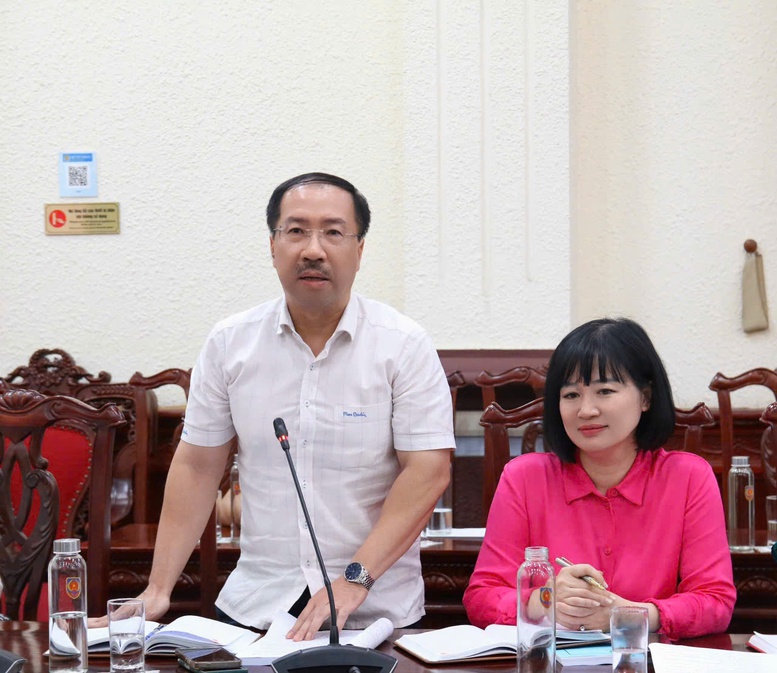
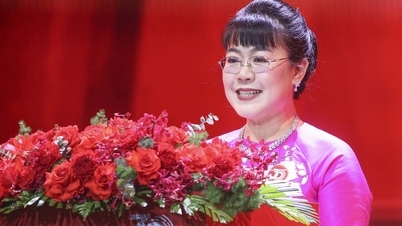
Ms. Cu Thu Anh, Director of the Department of Legal Education and Legal Aid, speaks at the evaluation session. Photo: Ministry of Justice.
To meet the requirements of digital transformation in grassroots mediation work, the draft Law also adds provisions on the application of information technology to improve the efficiency of state management and create favorable conditions for people to access mediation services. Accordingly, it encourages the application of information technology, digital transformation, equipping with technical means and ensuring other necessary conditions for grassroots mediation activities in accordance with the process of building a digital government, digital economy, and digital society as prescribed by law;
At the same time, regulations stipulate that the election of mediators and heads of mediation teams can be conducted online, ensuring compatibility with the level of information technology application and consensus among citizens and mediators; regulations allow parties to propose online mediation methods; mediators are provided with technical infrastructure support and digital skills training when conducting mediation activities online or using digital platforms in managing mediation files...
Concluding the meeting of the Appraisal Council, Deputy Minister Dang Hoang Oanh highly appreciated the contributions of the members. The Deputy Minister affirmed the purpose and viewpoint of building and amending the Law to improve the quality of mediation activities at the grassroots level; implement the policy of decentralization and delegation of power; and resolve the difficulties and obstacles of the 2013 Law on Grassroots Mediation.
The Deputy Minister emphasized the need to mobilize maximum social resources in grassroots mediation activities; uphold the principle of voluntariness; minimize bureaucratization; and at the same time, inherit appropriate regulations and learn from international experience in mediation work.
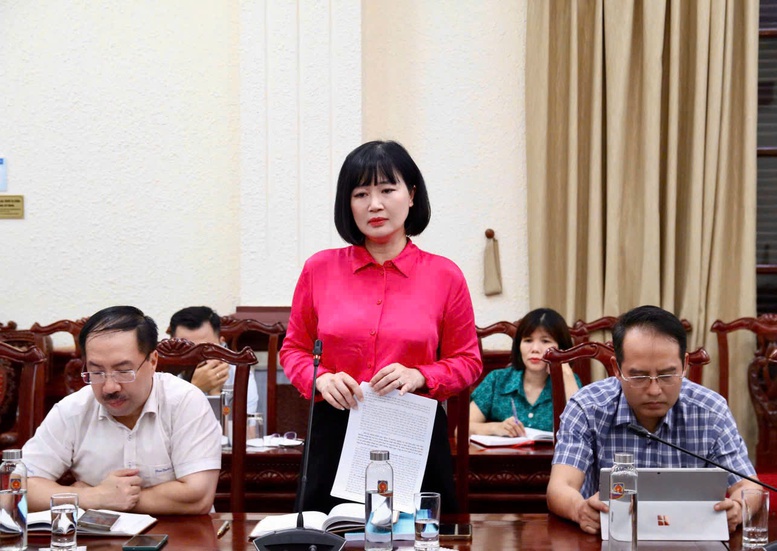
Deputy Director of the Department of Legal Education and Legal Aid Ngo Quynh Hoa speaks at the evaluation session. Photo: Ministry of Justice.
In order to improve the quality and effectiveness of grassroots mediation activities and strengthen community consensus, the Deputy Minister noted that the drafting agency needs to carefully review the document and avoid over-bureaucratizing the role of mediators.
Therefore, it is necessary to study and revise the approach so that mediators are seen as facilitators, connectors, and facilitators for the parties to engage in dialogue and find common ground; avoiding distortion of the nature of mediation and protecting the neutrality and objectivity of the mediator.
The Deputy Minister also requested the drafting agency to review the contents related to the minutes of successful mediation, the regulations in Articles 29 and 30 of the draft Law; and at the same time, study international experience but ensure it is consistent with the specific characteristics of the grassroots mediation model in Vietnam.
In addition, the Deputy Minister emphasized the role of training and skill development for grassroots mediators. According to the Deputy Minister, state management agencies need to focus on improving the capacity and mediation skills of mediators to ensure the correct implementation of the principles and nature of grassroots mediation activities, thereby enhancing the effectiveness of the Law after its promulgation.
Dieu Anh
Source: https://baochinhphu.vn/bo-tu-phap-tham-dinh-du-an-luat-hoa-giai-o-co-so-sua-doi-102260531093205643.htm

![[Photo] Admire the coral "masterpiece" amidst the million-year-old heritage of Dak Lak province.](https://vphoto.vietnam.vn/thumb/1200x675/vietnam/resource/IMAGE/2026/05/31/1780221235105_anh-man-hinh-2026-05-31-luc-16-53-27.png)
![[Photo] Solemn bathing ceremony and Buddha procession in Hue](https://vphoto.vietnam.vn/thumb/1200x675/vietnam/resource/IMAGE/2026/05/31/1780228263543_1-jpg.webp)














![[Video] Sunset at Lap An Lagoon – Where the sun sets over the fishing nets](https://vphoto.vietnam.vn/thumb/340x192/vietnam/resource/IMAGE/2026/05/31/1780192137701_beach-landscape-sea-water-nature-grass-745871-pxhere-com.jpeg)

































![[Photo] Admire the coral "masterpiece" amidst the million-year-old heritage of Dak Lak province.](https://vphoto.vietnam.vn/thumb/402x226/vietnam/resource/IMAGE/2026/05/31/1780221235105_anh-man-hinh-2026-05-31-luc-16-53-27.png)






























Comment (0)