

In early 2019, when the national golf course development plan for Vietnam until 2020 expired, the Government issued Decree 52/2020 on golf course investment and business. Decree 52 is considered to have "unleashed" investment in the golf sector with many more flexible regulations. Golf course planning will be integrated by localities into the overall socio -economic development plan of the province or city. According to the Planning Law, there is no longer a national golf course development plan after 2020; localities can license golf course investments according to the needs and socio-economic development orientation of each province or city.
This is why, over the past two years, the development plans of various localities have included a number of golf courses, such as Quang Ninh, Bac Giang, Nghe An , Thanh Hoa, Hoa Binh, etc. To date, there is no accurate statistic on the number of golf courses nationwide, as the number of planned projects has proliferated, and numerous new golf courses have been licensed by localities based on investor proposals.
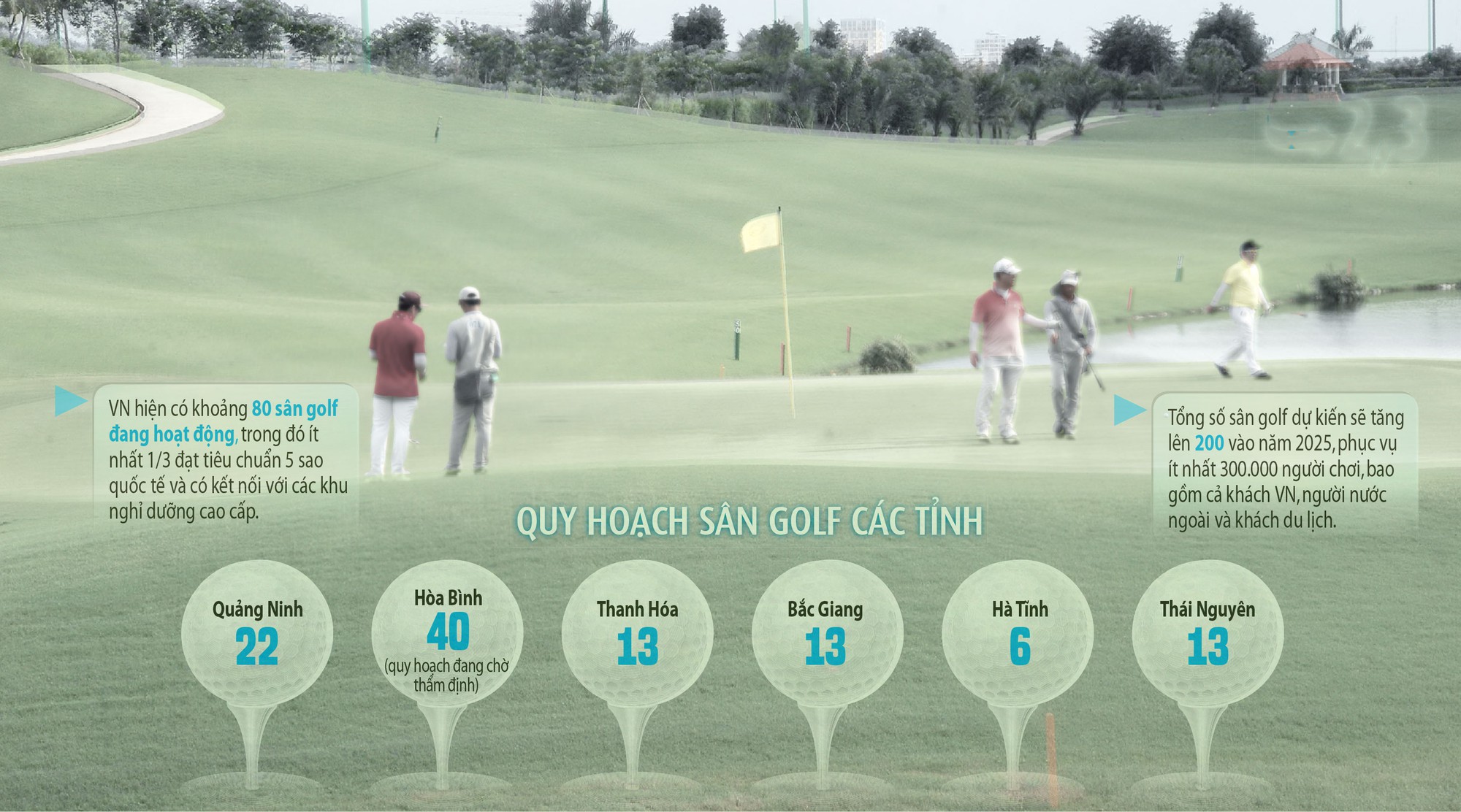
Tan Cu - Graphics: Ta Chi Hieu
The golf tourism race is heating up.
Identified as one of the products capable of reviving the tourism industry after the shock of the pandemic, the race to promote golf tourism among localities is igniting a golf course boom from north to south.
At the "Hai Phong - Golf Tourism Destination" seminar held on the afternoon of August 9th at Dragon Golf Links (Dragon Hill International Tourist Area, Do Son District, Hai Phong), leaders of the Hai Phong City People's Committee affirmed that golf tourism is one of the four new products that the city's tourism industry has identified to develop in the coming period.
Ms. Tran Thi Hoang Mai, Director of the Department of Culture and Sports of Hai Phong, assessed that one of the highlights of Hai Phong's sports is the development of non-governmental sports facilities with diverse types and methods of operation. Within this non-governmental sports sector, golf is a sport that has been successfully developed through a socialized approach. Currently, Hai Phong has four golf courses for training and competition. Approximately 1,000 people play daily; on weekends, this number increases to 1,500.
However, Hai Phong will face significant competition when it joins the golf tourism race. A number of other localities in the northern region have also indicated plans to increase the number of golf courses in the coming years.
Architect Tran Huy Anh (Head of the Inspection Committee of the Hanoi Architects Association)
Currently, Quang Ninh has 3 operational golf courses, 2 under construction, and 1 in the investor selection phase. It is projected that between now and 2025, Quang Ninh will begin construction on 5 more golf courses, aiming for a total of 22 golf courses as outlined in the Quang Ninh Provincial Planning for the period 2021-2030. With its advantage as the "tourism capital" of the north, Quang Ninh is aggressively demonstrating its intention to become the region's leading golf tourism center.
However, just as Quang Ninh announced its development plan, a "newcomer" with only two operational golf courses and three courses receiving investment approval unexpectedly declared its intention to become the "golf tourism capital"—that province being Hoa Binh. Prioritizing golf course construction is one of the solutions Hoa Binh has identified to boost its tourism industry and drive socio-economic growth, as mentioned in its planning document for the period 2021-2030, with a vision to 2050. The province has added 16 golf courses with a total area of 1,755 hectares to its plan. By 2050, Hoa Binh aims to have an additional 17 projects. Thus, if the development plan is implemented correctly, Hoa Binh could possess nearly 40 golf courses.
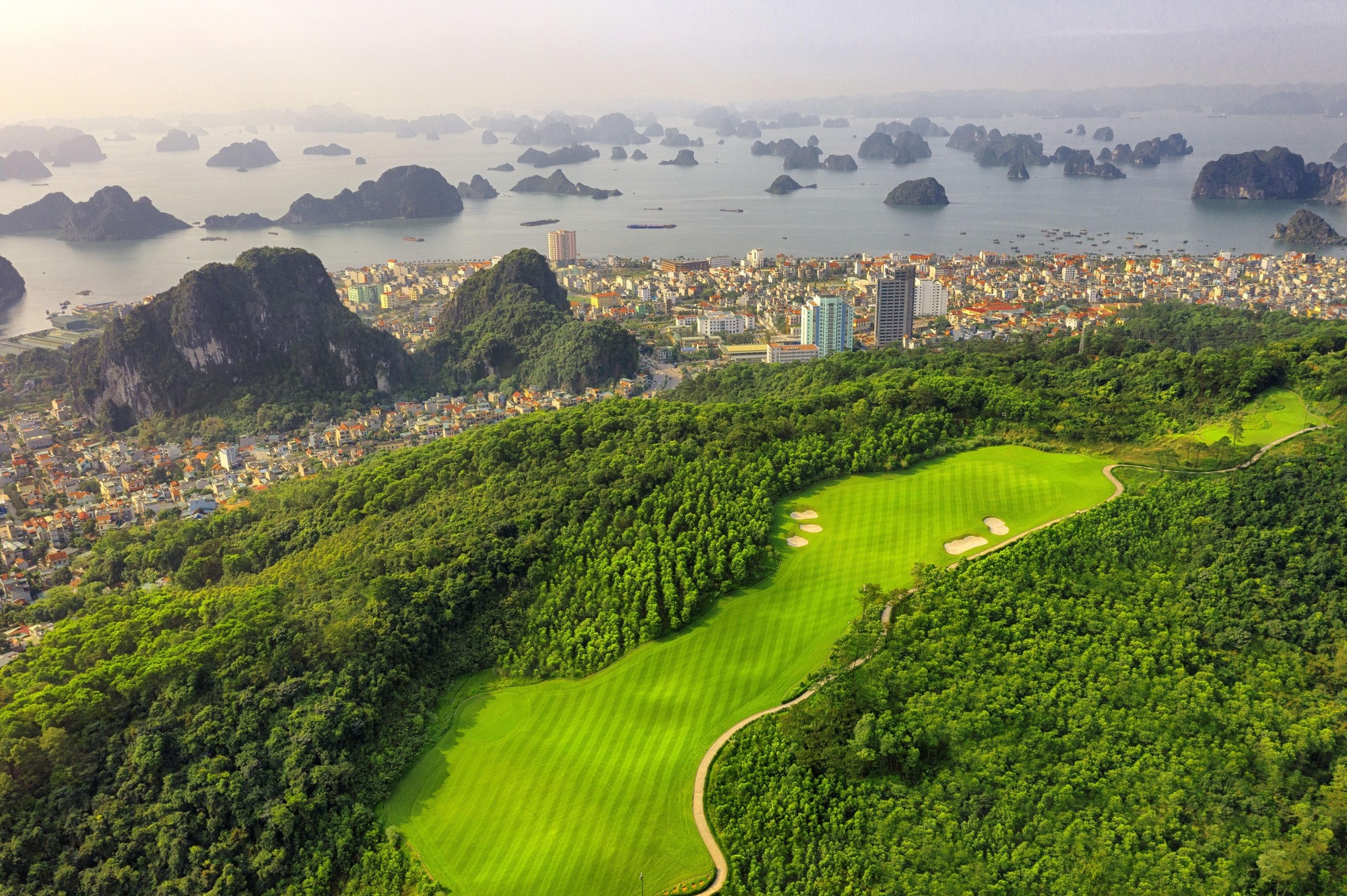
The race among localities to promote golf tourism is sparking a golf course boom from north to south.
Not to be outdone, the Central region, with its advantageous terrain, landscape, and weather conditions for developing this type of high-end tourism, is also striving to accelerate its development. Having just held the opening ceremony of the 2nd Da Nang Golf Tourism Festival 2023 on August 24th, Da Nang City not only organized a playing field for top professional golfers from around the world but also added activities in the APEC Park area, allowing residents and tourists to experience golf tourism. Da Nang aims to elevate its golf tourism to an international level, consolidating its position as a leading destination for events and festivals in Asia. Neighboring Quang Nam province is also positioning golf tourism as a breakthrough in its tourism product development in the coming years.
In its approved development plan for the period 2021-2030, Thanh Hoa province also aims to develop 13 golf courses linked to the development of high-end resort and eco-tourism areas. Similarly, the approved plan of Ha Tinh province also includes 6 golf course projects with accompanying hotel services; resort areas are among the projects calling for investment...
Although rarely mentioned on Vietnam's golf tourism map, Ho Chi Minh City is not left out of the race. In March, the first Ho Chi Minh City Golf Tourism Festival was held at Tan Son Nhat Golf Course, following the arrival of the first group of 20 international golfers (mostly businesspeople) from Singapore in February. Leaders of the Ho Chi Minh City Department of Tourism affirmed: As one of the country's bustling economic and cultural centers with a modern, world-class golf course system, Ho Chi Minh City is fully capable of attracting tourists. Developing golf tourism not only diversifies products and enhances tourism competitiveness but also attracts high-spending tourists who stay longer in the city. Therefore, in the coming time, the city's tourism industry will closely cooperate with the Vietnam Golf Association to organize professional golf tournaments for domestic and international tourists in Ho Chi Minh City.
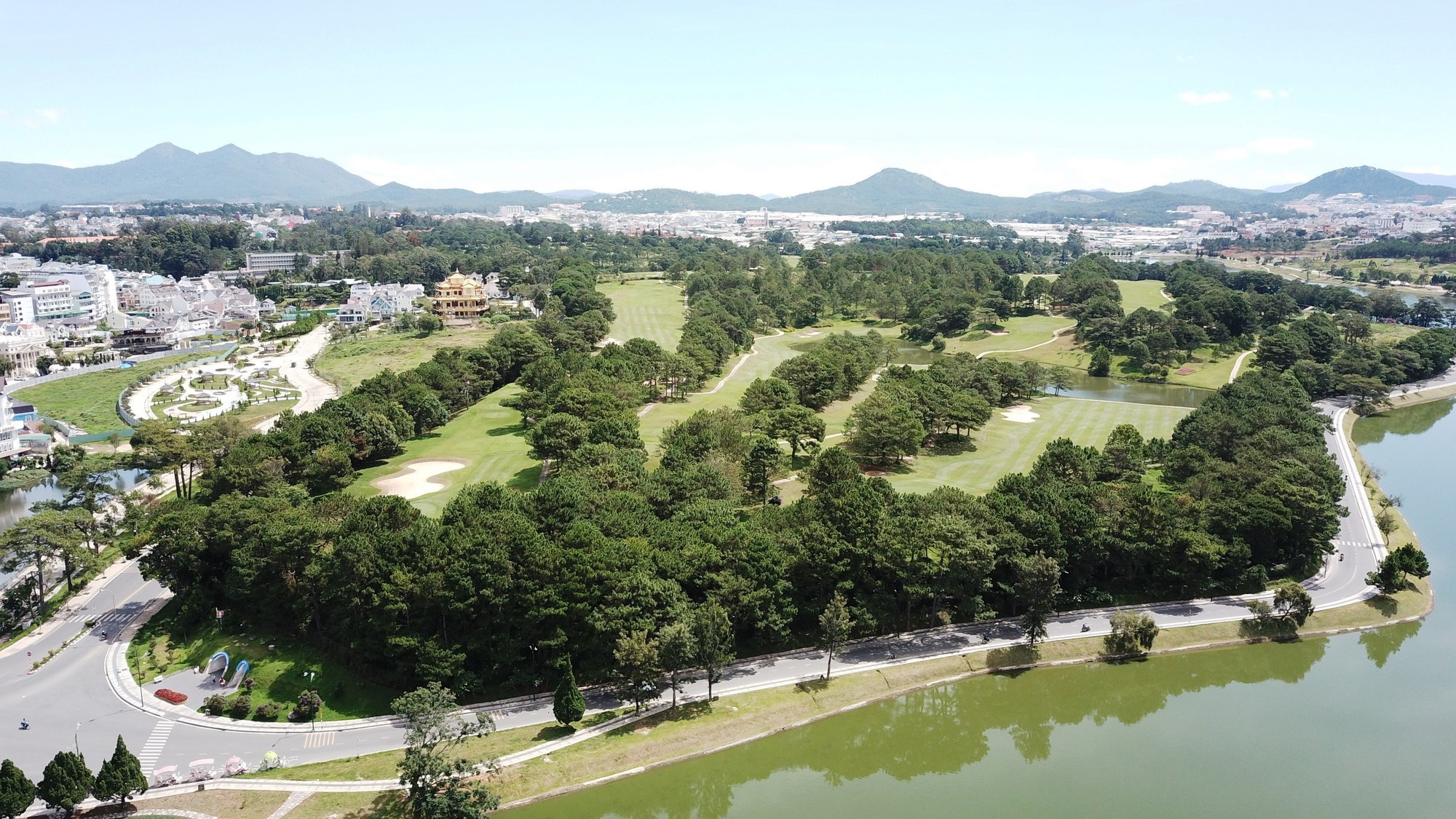
Doi Cu Golf Course, Da Lat
Attracting wealthy and ultra-wealthy customers.
This prestigious sport has been a focus of tourism promotion for some time now. Last year, Vietnam surpassed strong competitors in the region, including Japan, China, South Korea, Thailand, Indonesia, and Malaysia, to become the "Best Golf Destination in Asia 2022" at the 9th World Golf Awards. Notably, this event marked the sixth consecutive year we have been recognized as the best golf destination in the continent, since 2017.
Focus solely on developing pure golf.
It is necessary to control the situation of real estate projects that are disguised as or "piggyback" on golf course development plans. Regarding market demand, not many people want to own villas or properties next to golf courses. Tourists who come to play golf don't want to stay there permanently; they will want to explore and enjoy other experiences outside the golf course. Therefore, golf tourism should focus on developing pure, high-class golf facilities to meet the needs of golfers, not real estate speculators. Avoid developing a system of properties that are merely "ghost towns" or "ghost houses," creating a negative image.
Dr. Luong Hoai Nam (member of the Vietnam Tourism Advisory Council)
Globally, Vietnam has also been honored as the "World's Best Golf Destination" twice, in 2019 and 2021. After the pandemic, Vietnam has made efforts to reconnect the market and develop many new tourism products to meet the diverse and changing needs of tourists. One type of tourism that has been emphasized in recent years and that the tourism industry hopes tourists will experience in Vietnam is golf tourism.
Mr. Nguyen Trung Khanh, Director of the National Tourism Administration, assessed that the country's topography, with its many hills and mountains, long coastline, and beautiful scenery, are advantages for Vietnam to develop modern, world-class golf courses. We currently have about 80 golf courses, and the goal is to have around 200 golf courses by 2025 to serve golfers and tourists.
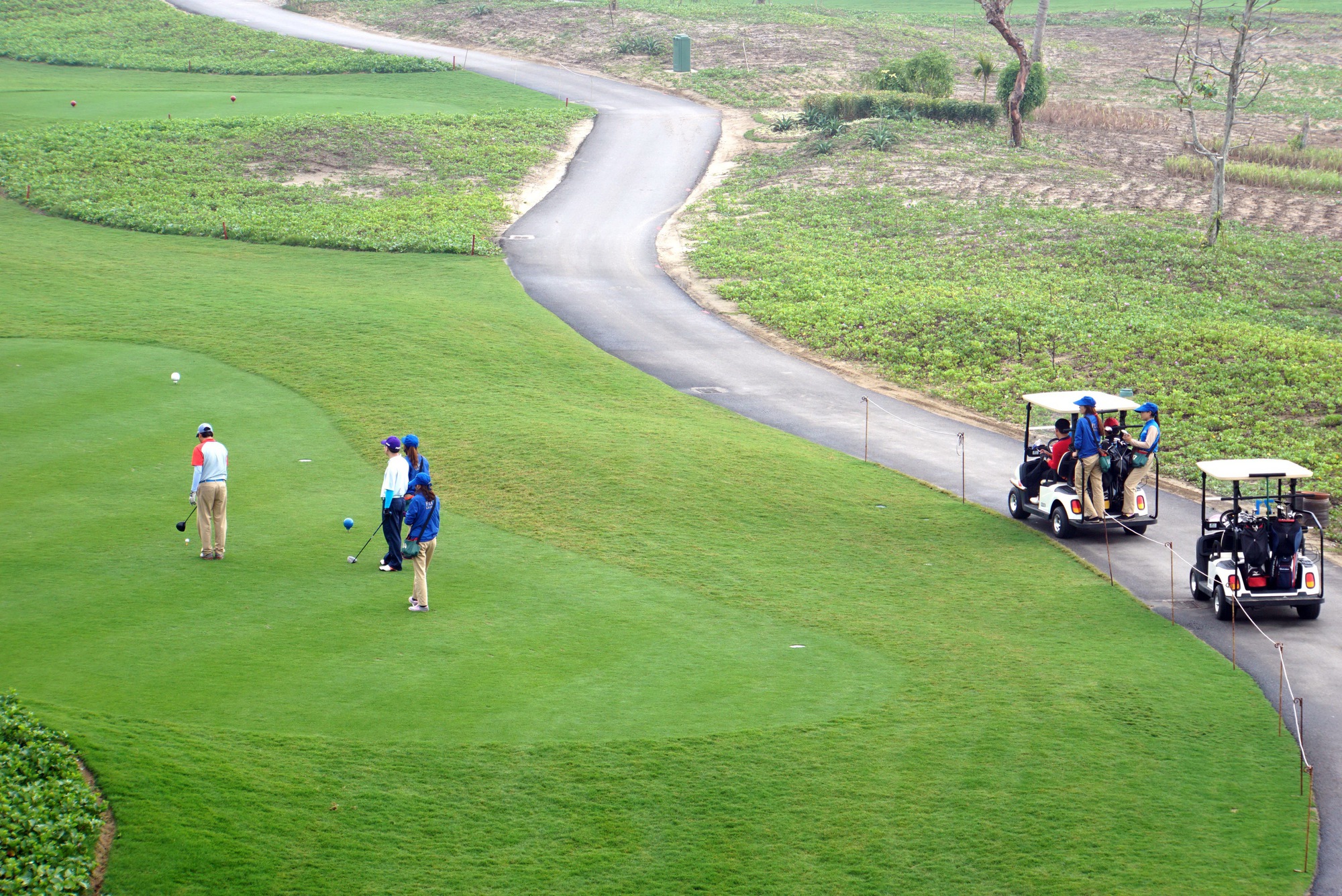
FLC Golf Course in Sam Son, Thanh Hoa
Asserting that Vietnam benefits from having more golf courses, Dr. Luong Hoai Nam, a member of the Vietnam Tourism Advisory Council, stated that the land used for golf courses is actually barren hills, sandy coastal areas, or vacant land unsuitable for agriculture. No locality takes agricultural land or clears primary forests to build golf courses. Therefore, from a resource perspective, building golf courses does not cause harm. Furthermore, the sport of golf has already developed and flourished throughout the world, from Europe to America and Asia.
According to Dr. Nam, the principles of environmental management are already well-established and are not something new or complicated; there is no need to develop new standards for handling environmental impacts. If strictly and seriously controlled according to regulations, environmental consequences will not be a problem in the strategy for developing a network of golf courses. Vietnam is concerned that 100-200 golf courses is too many, but in reality, South Korea has nearly 500 golf courses, and Japan has thousands. These are all countries that are prioritizing sustainable development.
Many golf course projects have been used for purposes other than intended.
According to the revised Vietnam Golf Course Development Plan (2014), by 2020, the country was supposed to have 96 golf courses licensed for construction in 37 localities nationwide. However, the Ministry of Planning and Investment later assessed that only about half of these were actually built and put into operation, with many golf course projects remaining "stalled" or being used for purposes other than intended.
On the other hand, golf courses create many opportunities for tourism development. In the ultra-high-end tourism sector, where Vietnam still has much room for growth, golf tourism possesses all the necessary conditions for development. Vietnam's weather conditions, especially in the north and central regions, are ideal for developing golf tourism, targeting Northeast Asian markets – a region affected by winter that makes golf impossible. That's why Japan, South Korea, Taiwan, etc., have many golf courses, yet the number of tourists from these markets coming to Vietnam to play golf is increasing.
This expert also believes that Vietnam is an ideal location because golf can be played year-round. Golf tourism generates significantly higher revenue than other types of tourism. An international golf tourist visiting Vietnam spends 2-3 times more on tourism than regular tourists. On average, each golf tourist in Vietnam spends about 40 million VND/5 days, not including airfare. Tourists who spend over 60 million VND on their trips are also mostly engaged in golf tourism.
Concerns about golf courses being misused.
Previously, the Government Inspectorate had pointed out numerous "stalled" golf course projects for violations, including delays in construction and completion many years beyond the permitted timeframe. In March 2023, following an investigation, the Ministry of Public Security initiated a criminal case to investigate violations related to the Phan Thiet coastal tourism urban area project (Binh Thuan province) by Rang Dong Group.
The irregularities stemmed from the fact that in November 2013, Binh Thuan province transferred capital in the project to a new investor, Rang Dong Joint Stock Company, with the goal of building and operating an international standard golf course and accompanying facilities. However, Rang Dong Joint Stock Company subsequently submitted a document, which was approved by the Binh Thuan Provincial People's Committee, to convert the golf course land into urban residential land for "investment in the construction and operation of villas, garden houses, townhouses, high-rise buildings, and supporting infrastructure." The golf course land, over 620,000 m2 in area and located in a prime location in Phan Thiet City, was converted to urban land by the Binh Thuan Provincial People's Council.
The number of tourists coming to Vietnam to play golf has increased sharply.
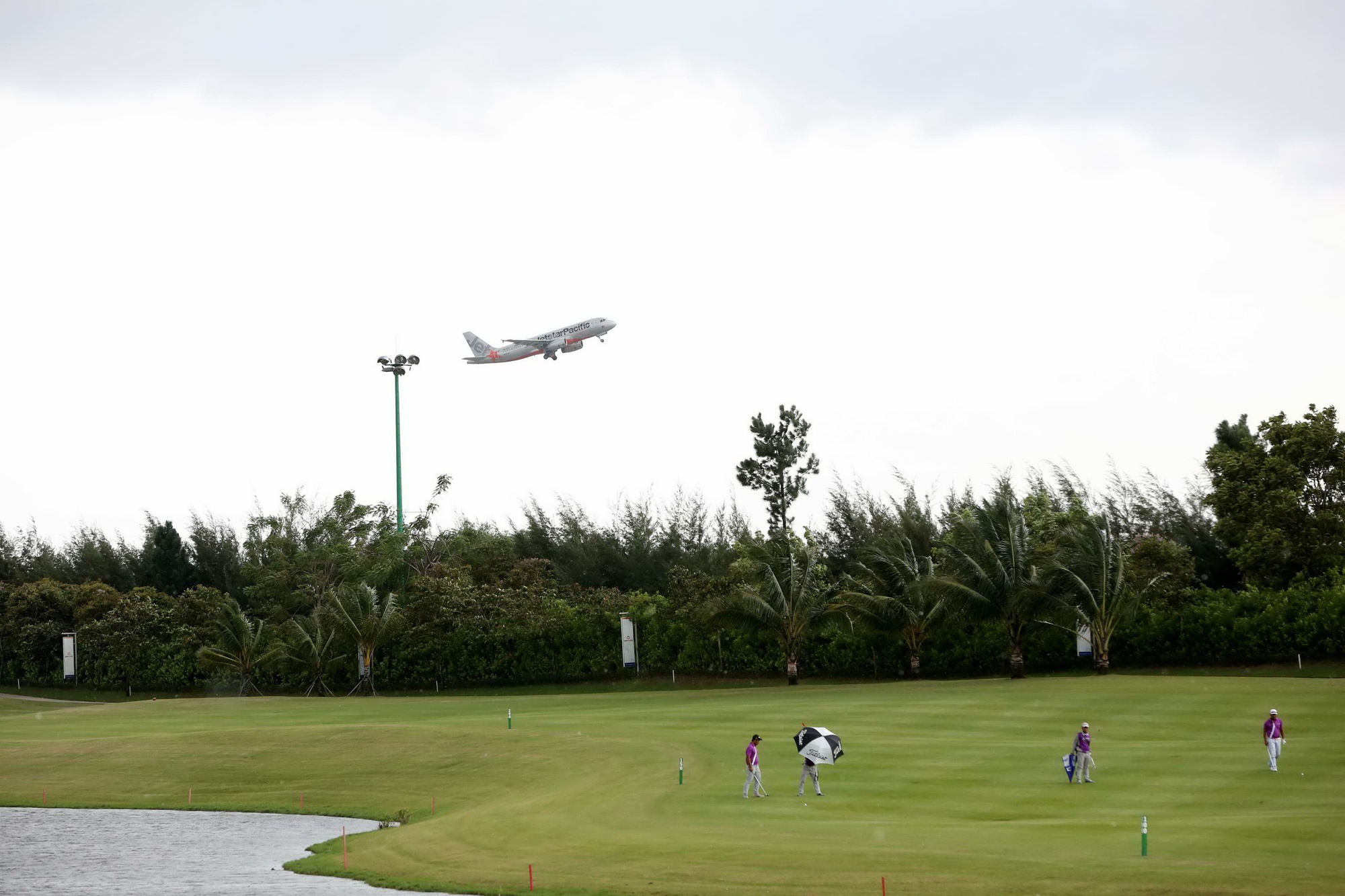
Tan Son Nhat Golf Course, Ho Chi Minh City
According to data from the Vietnam Tourism Association, in the first four months of 2023, out of 3.7 million international visitors to Vietnam, 30-40% were golf tourists. Before the pandemic (in 2019), out of 5 million visitors from South Korea to Vietnam, more than 1 million came to play golf, contributing 2-3 billion USD to Vietnam's tourism revenue. The golf sector currently attracts approximately 50,000 Vietnamese people and 20,000 foreigners living and working in Vietnam.
Vietnam currently has approximately 80 operational golf courses, of which at least one-third meet international 5-star standards and are connected to high-end resorts. The total number of golf courses is expected to increase to 200 by 2025, capable of serving at least 300,000 players, including Vietnamese, foreign, and tourist visitors.
Having opposed the proliferation of golf courses many years ago, architect Tran Huy Anh, Head of the Inspection Committee of the Hanoi Architects Association, still maintains his stance. According to him, Vietnam has potential for golf tourism, but it cannot be discussed without concrete evidence. Accurate data is needed to show how much tax revenue golf courses contribute to the budget, how many jobs they create, and how they contribute to the socio-economic development of each locality.
Expressing concern about the quality of local planning, architect Tran Huy Anh also pointed out many shortcomings in Bac Giang province's planning. According to him, although the province's plan is very extensive, it lacks maps clearly showing low-lying areas, making it difficult to allocate public land for water bodies or semi-submerged areas for water storage during the dry season, combined with the development of waterways, aquaculture, irrigation for agricultural and industrial production, and domestic use. Conversely, the provincial plan details projects involving the reclamation of public land for private investment. Specifically, it plans for 12 integrated functional zones including golf courses and resorts, entertainment, and recreation areas covering approximately 4,500 hectares, of which 13 golf courses cover 1,752 hectares.
"Maintaining a golf course requires a lot of water for irrigating the grass, causing the area to become increasingly dry. The chemicals used to kill pests and protect the grass are very toxic. However, there hasn't been a single report documenting the collection and treatment of the irrigation water that seeps into or flows away," Mr. Ánh stated.
This expert also argues that golf course business is inefficient, with many courses experiencing low occupancy rates, and even real estate businesses are not making much profit. The profit equation lacked a solid foundation from the outset. In particular, the fact that neighboring localities are planning a large number of golf courses and setting goals for golf tourism development will lead to an oversupply and undersupply problem.
According to Mr. Anh, golf courses in South Korea, Japan, Thailand, and Malaysia are fiercely competing by lowering prices. If localities indiscriminately grant permits for golf course construction without carefully considering the benefits to the local socio-economic development, the immediate risk is wasted land, while the economic return is very low.
Source link















































































Comment (0)