

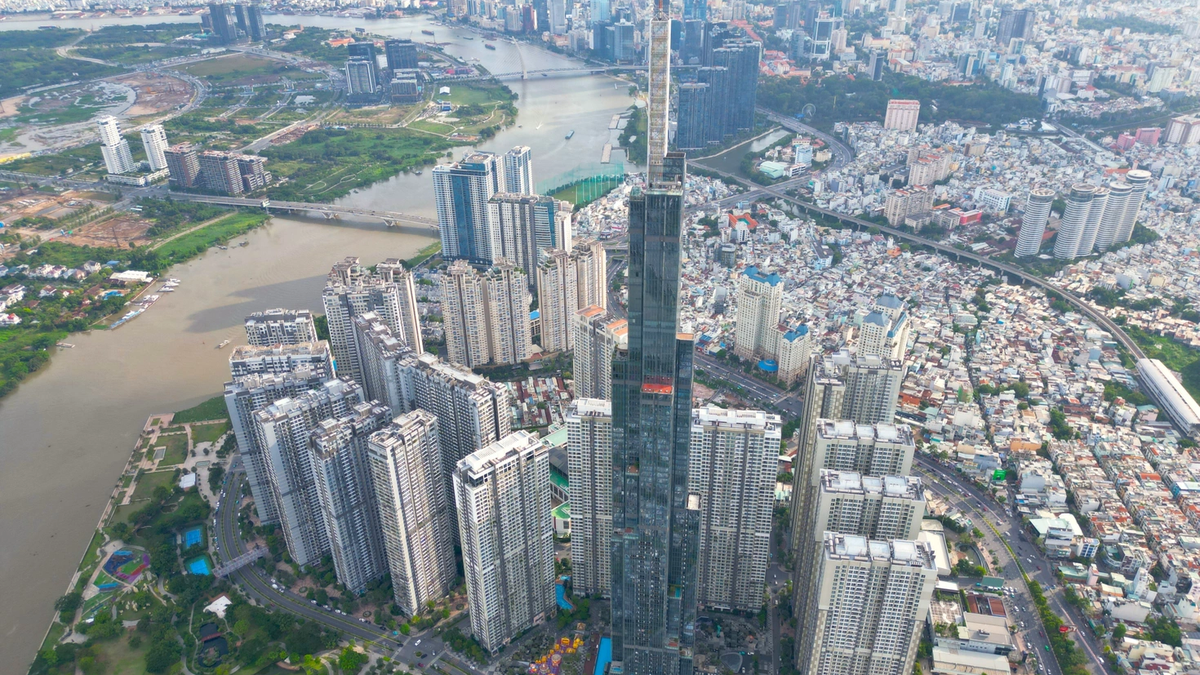
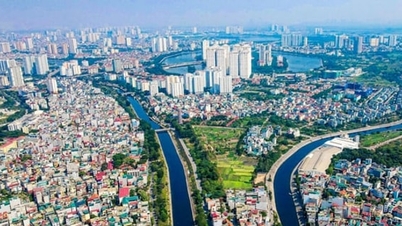
The Hanoi Capital City Master Plan with a 100-year vision positions Hanoi as a global megacity, the national political and administrative center, and a driving force for economic growth in the Red River Delta region and the entire country. First and foremost, with an open, multi-centered, multi-layered spatial planning approach, using the Red River as the main ecological and cultural landscape axis, Hanoi aims to become a green, smart, modern city with international competitiveness and a pivotal role in the development of the Red River Delta region and the northern part of the country.
One of the new strategic initiatives is urban development based on the Transit-Oriented Development (TOD) model – urban development integrated with public transportation – to create momentum for growth. According to the plan, Hanoi will establish 5-10 national and inter-regional TOD centers; 20-30 city-level TOD centers; and 120-150 regional TOD sites.
Ring roads, metro systems, underground transport, and logistics networks not only facilitate travel but also reshape population distribution, investment, and urban functions. Notably, the relocation of people from the historical core to satellite cities through public transport systems, especially the comprehensive urban rail (metro) network, is key to thoroughly addressing traffic congestion and environmental pollution.
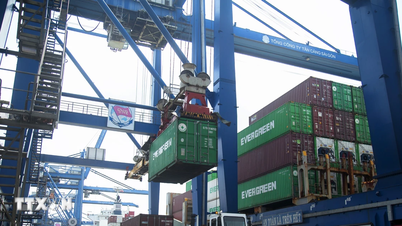
The plan also places Hanoi at the center of international economic corridors connecting with China and Laos. These include the following economic corridors: Lang Son - Hanoi - Hai Phong - Quang Ninh; Lao Cai - Hanoi - Hai Phong - Quang Ninh; Hanoi - Thai Nguyen - Cao Bang; Dien Bien - Son La - Hoa Binh - Hanoi. This provides a foundation for Hanoi to expand its development space and enhance its role as a logistics, trade, and innovation center in the northern region.
Experts believe that Hanoi's economic breakthrough in the next century will be based on the foundation of the digital economy and the knowledge economy. Urban spaces will be designed to stimulate innovation, where technology companies, universities, and research centers are closely connected. It is clear that the planning has clearly defined strategic directions, focusing on core elements to create sustainable and comprehensive development.
Therefore, for the plan to be realized, the first and most crucial requirement for agencies, units, wards, and communes is a fundamental change in management thinking. With a plan that has a 100-year vision, every decision signed and approved, every construction project today, must be accountable to the future. Management at all levels needs to completely eliminate short-term thinking and parochial interests in urban management. The commune and ward levels must be the strongest "shield" protecting the integrity of the plan.
Agencies and units must also have modern management tools. The ongoing smart city development will be a solid stepping stone for Hanoi's implementation. When data is synchronized, all content of zoning plans and detailed plans must be publicly and transparently available on digital platforms so that people can easily access them; minimizing administrative procedures and preventing land speculation for profit.
And importantly, to undertake a plan of 100-year significance, the staff at agencies, units, and wards/communes will have to further improve their professional skills; be dynamic, dare to think, dare to act, and dare to take responsibility for the common good. They must work together to develop appropriate solutions to implement the Capital City Master Plan with a 100-year vision.
Hanoi is on a journey of aspiration, joining the nation in entering an era of progress. This aspiration is not a distant dream, because the Hanoi Capital City Master Plan with a 100-year vision serves as a commitment of responsibility from today's generation: to create a Hanoi that is "Culturally Rich - Civilized - Modern - Happy".
Source: https://hanoimoi.vn/buoc-ngoat-de-but-pha-manh-me-750335.html







































































Comment (0)