

Digital data: the new research platform.
Amidst the strong digital transformation taking place in many fields, the geological industry also faces the demand for comprehensive innovation. Digital technology is not only changing the way information is stored, but is also gradually transforming the processes of basic surveys, document processing, and specialized data management.
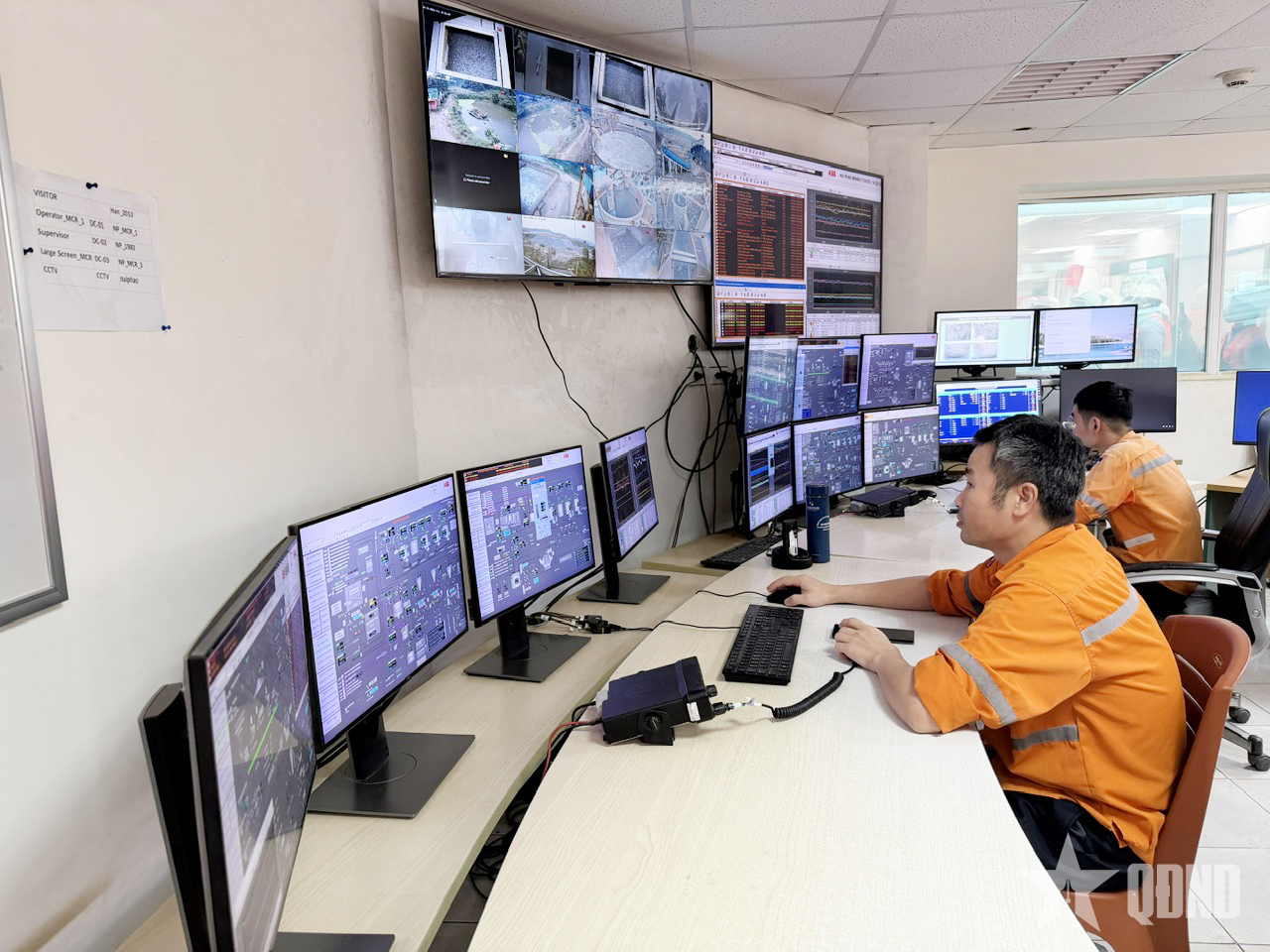 |
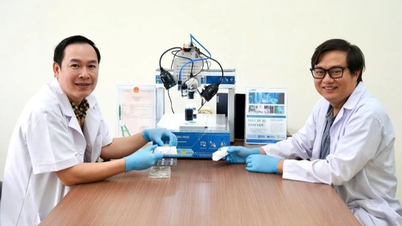
| Masan High-Tech Materials Company, part of Masan Group, focuses on applying digital transformation in mineral mining. Photo: MAI DAN |
According to Dr. Tran Binh Trong, Director of the Vietnam Geological and Mineral Resources Department ( Ministry of Agriculture and Environment ), geological data previously existed mainly in the form of paper records, traditional maps, or was stored in a dispersed manner across various units. This created considerable difficulties in compiling, sharing, and exploiting information. Currently, the geological sector is moving towards digitizing all data, building an integrated system, and centralized management to improve the efficiency of research and resource management.
In fact, numerous gamma-ray spectroscopy projects at scales of 1:25,000 and 1:50,000 have been implemented across an area of over 95,000 km². Through these projects, relevant authorities have collected a large amount of data for constructing various types of field maps, such as magnetic field maps, gamma radiation field maps, and maps showing the concentrations of radioactive elements K, U, and Th. This is considered a valuable data source for geological research and mineral resource forecasting if standardized, digitized, and integrated synchronously.
According to Mr. Kieu Huynh Phuong, Deputy Head of the Federation of Geophysics (Vietnam Geological and Mineral Resources Department), the digitization of geophysical data combined with remote sensing, geochemical, geological data, and the results of geological construction projects such as drilling, trenching, sampling, etc., along with specialized analytical software, has created a significant shift in the application of geophysics for basic geological and mineral resource surveys. This process not only improves management efficiency but also significantly enhances the capacity to process, analyze, and interpret specialized documents.
In field investigations that frequently face challenging terrain and complex weather conditions, the application of digital technology is providing invaluable support to specialized units. When data is managed on modern platforms, sharing, interconnecting, and analyzing information between agencies becomes faster, contributing to shorter processing times and improved coordination among specialized fields. Notably, artificial intelligence (AI) is gradually being integrated into geological research. Thanks to its ability to process large volumes of data from various sources, AI supports the construction of 2D and 3D geological models with higher accuracy, serving the assessment of resource potential and mineral forecasting more effectively than before.
Modern technology opens the way to discovering hidden mineral deposits.
Alongside digital transformation, the modernization of geological survey technology is becoming an urgent requirement for the geological industry today. As exposed and shallow mineral resources are increasingly depleted, searching for ore bodies located deep underground demands more modern research methods.
According to Mr. Quach Van Hieu, Deputy Head of the Organization-Administration Department of the Federation of Geophysics, the current trend in surveys focuses on processing and analyzing aerial geophysical anomalies to identify deep structures with mineral potential. In the planning for the period 2021-2030, many areas such as Western Nghe An, Northeast and North Central Vietnam are being prioritized for surveying.
In these areas, a range of modern methods such as aerial geophysics, gamma-ray spectroscopy, and gravity measurement are being deployed to assess mineral prospects at deeper levels. While previously surveys were often limited to depths of a few hundred meters, the scope of research has now been significantly expanded, facilitating the discovery of new resources. To meet the demands of this new phase of investigation, the geological sector is gradually modernizing its geophysical equipment, drilling technology, and information technology infrastructure. The goal is not only to improve the reliability of data collection and processing but also to master digital technology in building geological and mineral databases and creating integrated specialized maps.
However, along with technological investment, the demand for high-quality human resources has also become urgent. Training young professionals, improving their ability to access new technologies, and promoting international cooperation are considered crucial solutions for the geological sector to adapt to current development trends.
It is evident that, from data digitization and AI applications to the modernization of investigation technology, the geological sector is gradually developing new operating methods that are more scientific, modern, and accurate. This is not only a technological change but also a shift in research and resource management thinking, contributing to improved efficiency in mineral exploration, discovery, and exploitation, serving the sustainable development of the country in the new era.
Source: https://www.qdnd.vn/giao-duc-khoa-hoc/chuyen-doi-so/buoc-ngoat-moi-trong-nganh-dia-chat-viet-nam-1042381
![[Photo] Secretary of the National Assembly Party Committee, Chairman of the National Assembly presides over the meeting of the Standing Committee and Executive Committee of the National Assembly Party Committee.](https://vphoto.vietnam.vn/thumb/1200x675/vietnam/resource/IMAGE/2026/06/03/1780480353201_ndo_br_bnd-2585-jpg.webp)

![[Photo] General Secretary and President To Lam presides over a meeting with the Central Organizing Committee.](https://vphoto.vietnam.vn/thumb/1200x675/vietnam/resource/IMAGE/2026/06/03/1780482764658_a1-bnd-4741-3342-jpg.webp)




















![[Photo] First session of the 14th Congress of the Vietnam Trade Union](https://vphoto.vietnam.vn/thumb/1200x675/vietnam/resource/IMAGE/2026/06/03/1780465947883_ndo_br_img-3852-jpg.webp)


















![[Video] Sunset at Lap An Lagoon – Where the sun sets over the fishing nets](https://vphoto.vietnam.vn/thumb/1200x675/vietnam/resource/IMAGE/2026/05/31/1780192137701_beach-landscape-sea-water-nature-grass-745871-pxhere-com.jpeg)




























Comment (0)