

"Eye of the Storm ," the theme song by the trio Toi, Long Non La, and Phuong Nghiem, is a prime example of music spreading naturally through its inherent power. The team didn't have a promotional plan for the song. They released their first product as a lyrics video, which was initially well-received by many viewers. Afterward, the Vietnamese reaction community supported the three young artists, working together to spread the song about the revolution.
The three artists realized their "golden" opportunity had arrived when, after just a few days, the number of listeners of "Mat Bao " (Storm Eye) surged dramatically. They immediately began producing the music video, releasing it to continue the craze from the lyrics video version. As a result, the "Mat Bao" music video quickly reached the top 5 trending music on YouTube. In recent days, the song has started to create a positive effect on social media platforms.
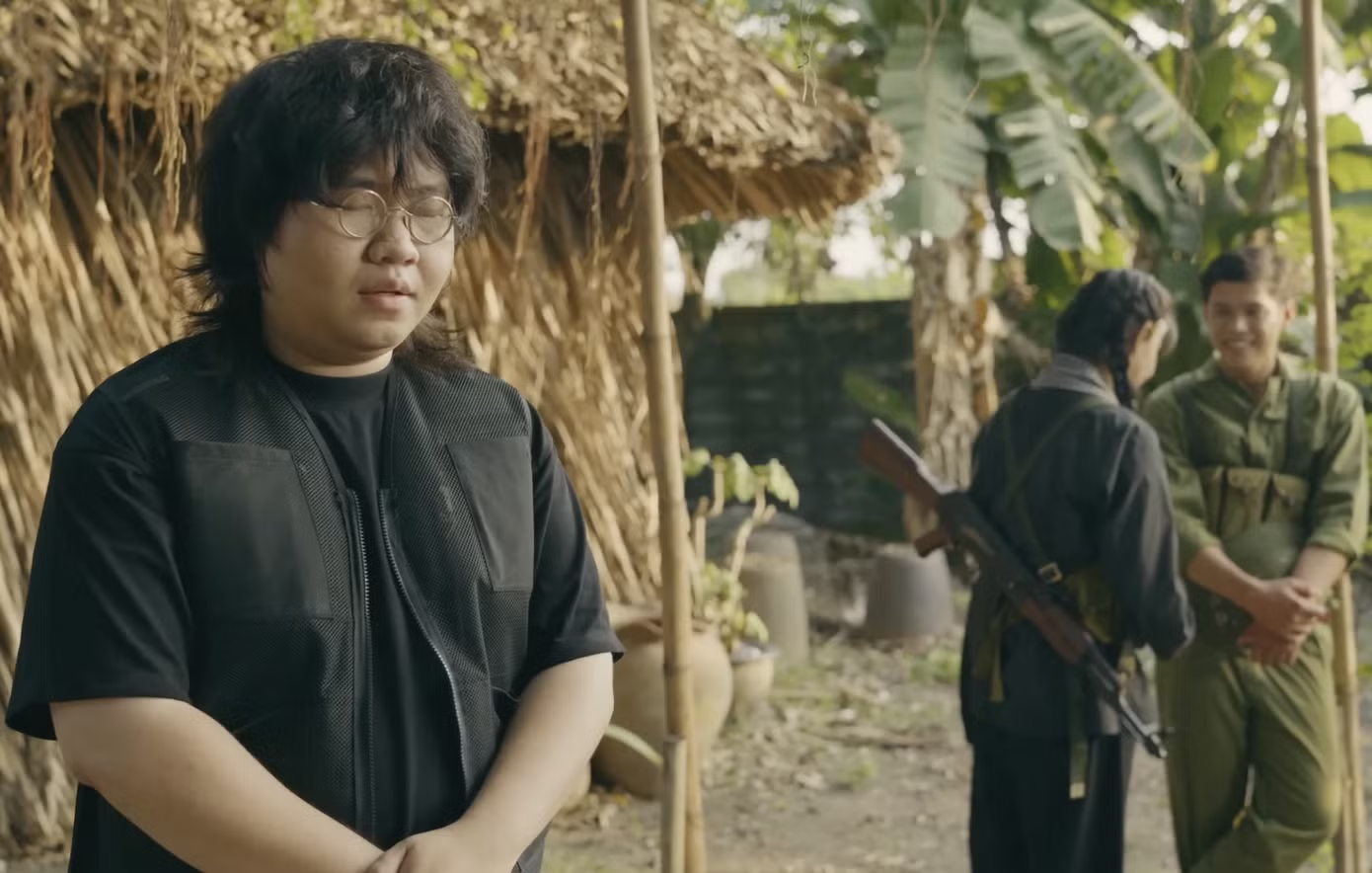
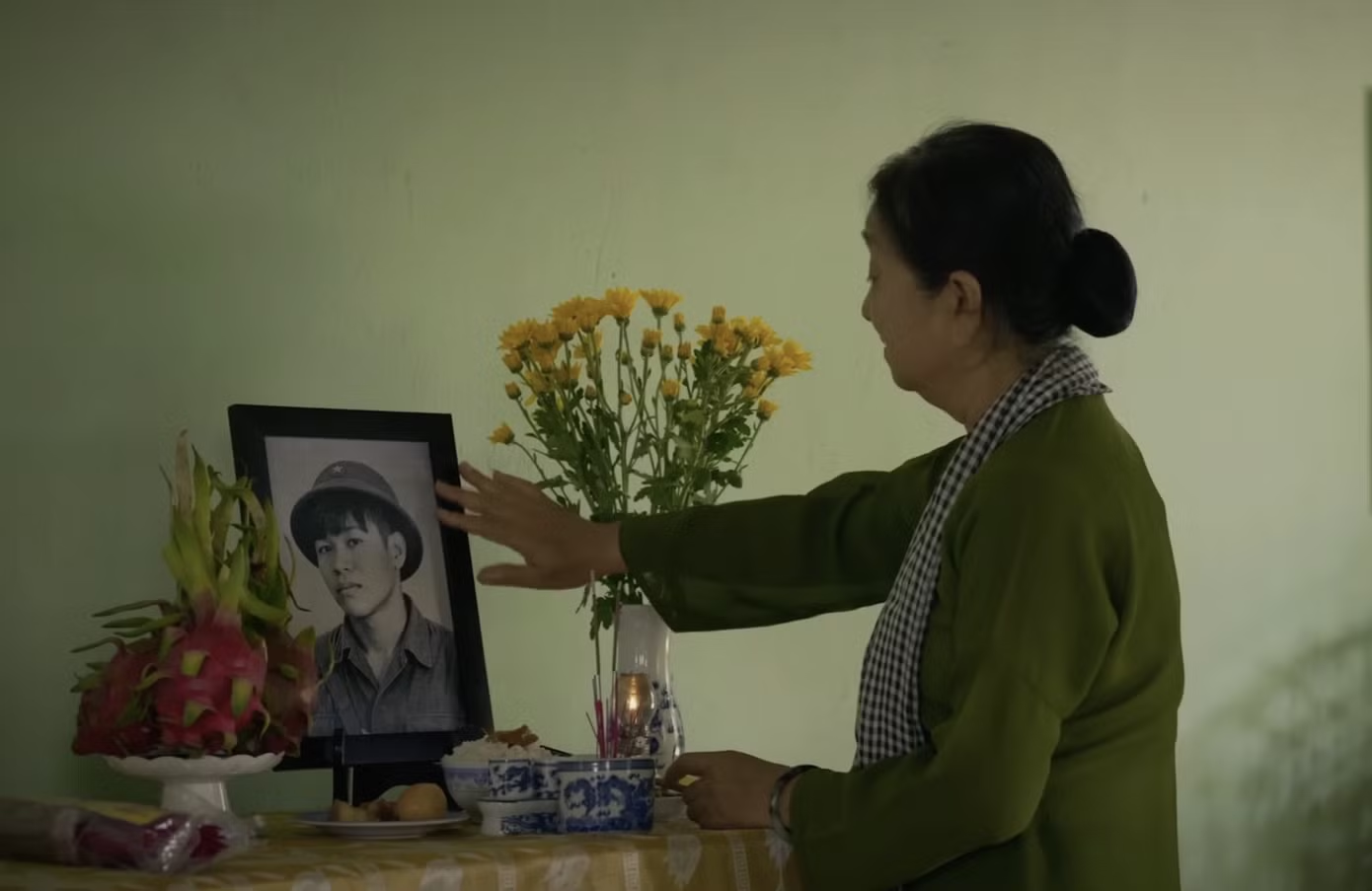
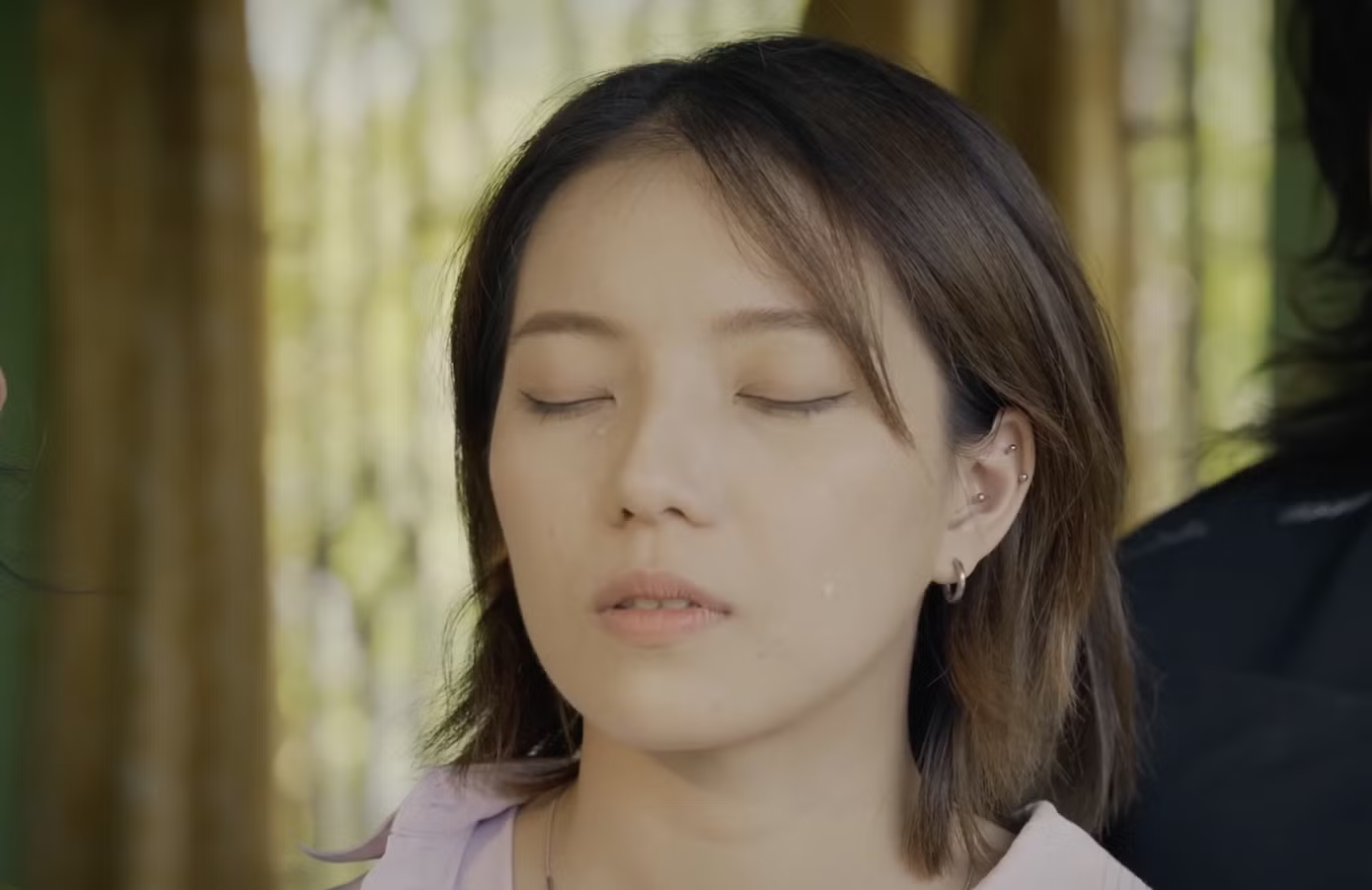
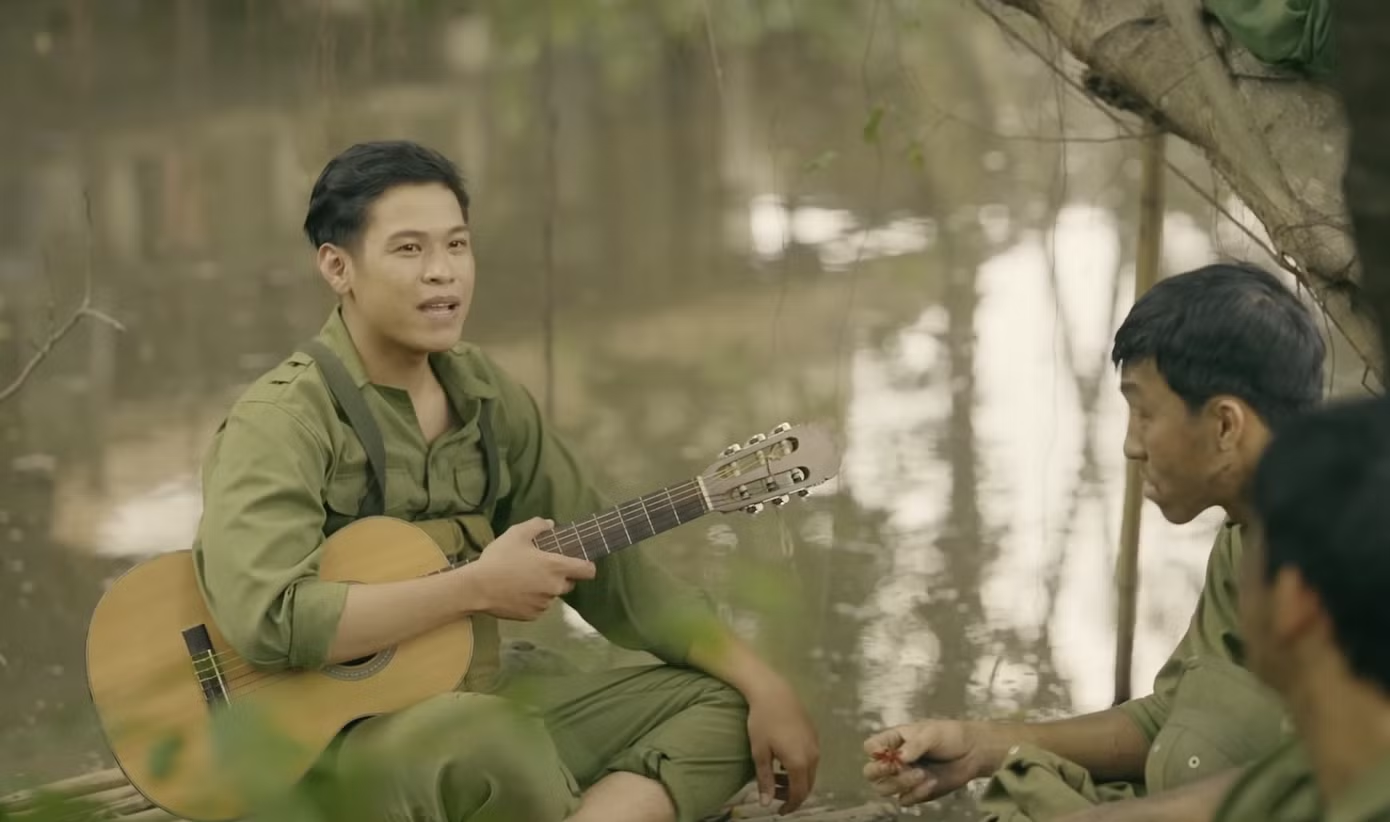
Unique song
"Eye of the Storm" is the theme song of the film "Squad 1978 ". "Long Nón Lá" begins with a pure rap segment, then transitions into a Lý folk melody, before Phương Nghiêm's female vocals take center stage in the chorus. I added a rap verse to shift the second half of the song to a completely different spirit.
The trio of young artists have given revolutionary music a new lease of life with their own inner strength and abilities. Instead of forcing themselves into traditional academic or scholarly molds, they chose the most authentic and natural approach, true to the free spirit of a young generation of artists.
Starting from the initial street music foundation, the producer adapted it into an R&B Pop/Lofi style. Long Nón Lá's rap verses were highly praised for their complex rhyming patterns, such as "On the battlefront, I have no attachment because I heard Uncle Six say the situation is changing." Long Nón Lá then transitioned into the Southern Vietnamese folk melody, a clever choice.
Tọi's rap verse has a line that went viral on social media: "I'm the one who stays behind, and the one who stays behind understands the pain of loss." The two segments by Long Nón Lá and Tọi are different. Long Nón Lá's is a heartfelt letter from a young man about to go to war, addressed to his mother and family. Tọi's is a final message to his lover before a life-or-death moment, hoping only to survive and return home.
Toi and Long Non La are two contestants from Rap Viet season 3. Phuong Nghiem is a young singer who first gained recognition with his song "Mat Bao" (Storm Eye ). Every word they wrote was sincere and innocent, without any pretense, a far cry from the revolutionary or "red" music that audiences are usually familiar with. Therefore, audiences were intrigued by " Mat Bao "—a revolutionary song on the outside, but with a trending musical style underneath, featuring strong rap verses in line with current market trends.
A song that is both meaningful and musically well-crafted to appeal to young audiences. It's not hard to understand why "Mat Bao" (Storm Eye) achieved such success in its early stages, despite being sandwiched between many multi-million dollar projects by Vietnamese artists. These same trio of artists previously created the largely unnoticed "Gen Viet" (Vietnamese Gen) project in 2025. A year later, they started over with a new project and achieved success.
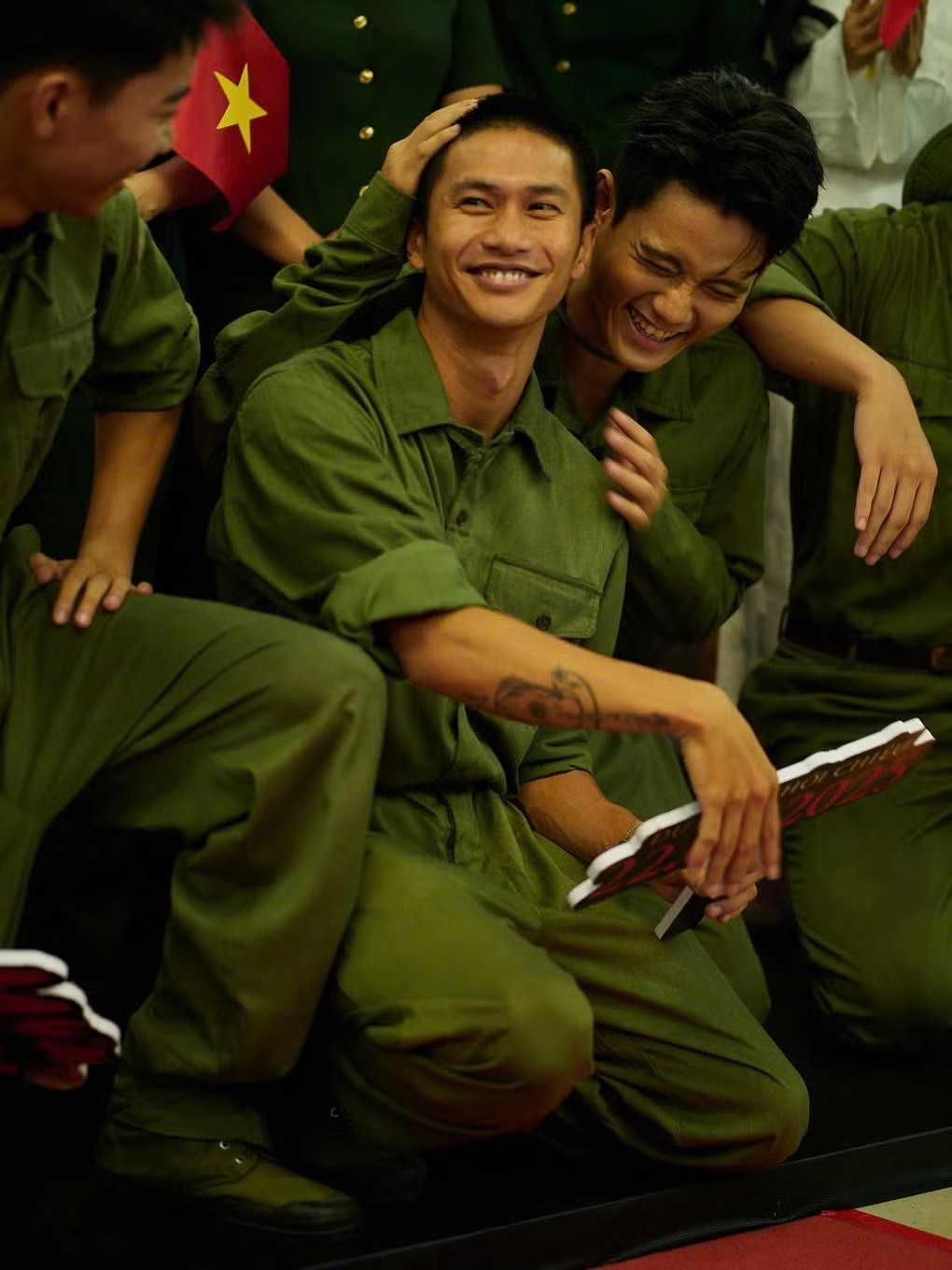
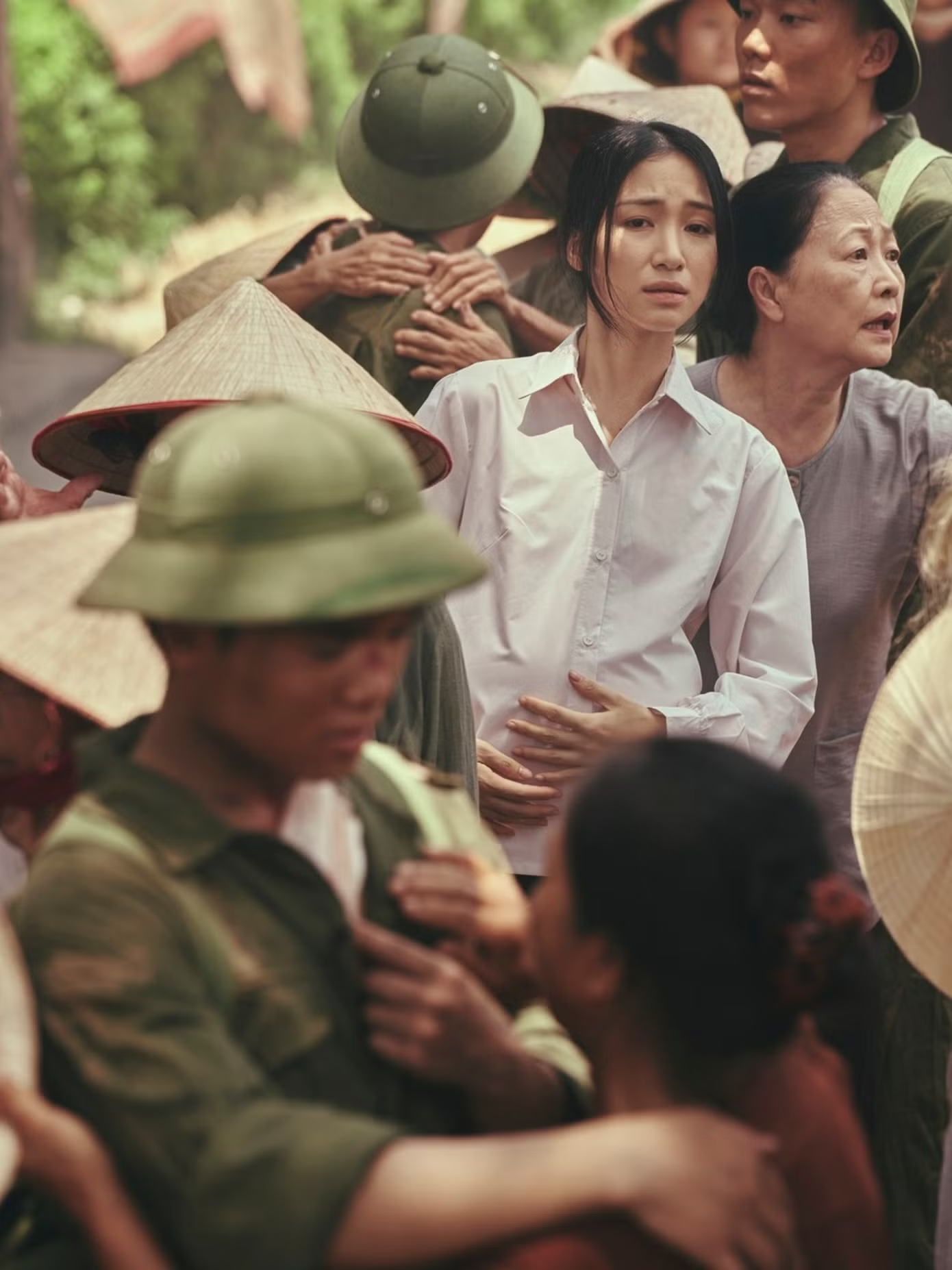
Young people listen to more revolutionary music.
Revolutionary music (or "red music") has long been associated with solemnity, grand stages, and seasoned vocalists with a classical feel. This inadvertently created a generational divide, sometimes making the heroic melodies seem too heavy or overwhelming for the everyday listening habits of young people. However, in the last two years, the situation has changed, and young people are now enthusiastically embracing and listening to revolutionary music more often.
It all started with a remix craze on TikTok. Tung Duong's song "Khát vọng tuổi trẻ" (Youthful Aspirations ) was remixed into a House style track by a producer, with a fast-paced rhythm to capitalize on the TikTok trend. The song unexpectedly became a sensation, surprising even Tung Duong himself due to its completely spontaneous and unplanned spread.
Subsequently, the "Continuing the Story of Peace " craze completely transformed the market. For the first time, a "patriotic" song reached one billion views across all platforms. The heroic and captivating melody of "Continuing the Story of Peace " strongly stimulated patriotic spirit during two major national holidays in 2025. It helped revive a "hit maker" like Nguyen Van Chung, changed the life of singer Nguyen Duyen Quynh, and created countless other values from this national hit song.
Following the film "Red Rain," two more popular revolutionary songs emerged: "What Could Be More Beautiful?" and "The Pain in Peace . " "What Could Be More Beautiful?" by Nguyen Hung contributed significantly to bridging the gap between young audiences and revolutionary music. It's a ballad with high replayability, easily appealing to young audiences who mostly enjoy ballads. " The Pain in Peace " by Hoa Minzy is also an easy-to-listen-to, relatable ballad, with a strong market appeal, differing only in its content about war and patriotism.
Audiences collectively call it "patriotic" music. The market continues to see a series of billion-view hits like " Thịnh vượt Việt Nam sáng ngời" (Bùi Trường Linh), "Lá cờ " (Hà Anh Tuấn ft DTAP), and many revolutionary songs released during the resistance against the French and Americans, which have unexpectedly become popular again because producers have rearranged them with a more youthful and market-oriented sound.
Young people are flocking to listen to revolutionary music, which is a positive sign for the market. Each listen and each share of these songs becomes a way to spread the proud, natural, and powerful patriotic spirit of today's young generation.
Source: https://tienphong.vn/ca-khuc-viet-khien-tat-ca-ngo-ngang-post1846553.tpo
![[Photo] The heat at the fireworks display site on the opening night of the Da Nang International Fireworks Festival 2026](https://vphoto.vietnam.vn/thumb/1200x675/vietnam/resource/IMAGE/2026/05/27/1779889741485_ndo_br_z7872039145157-fecaba5112f39e8352544099d7ef4738-5140-jpg.webp)

![[Photo] The courage of new recruits of Brigade 144 on the training ground.](https://vphoto.vietnam.vn/thumb/1200x675/vietnam/resource/IMAGE/2026/05/27/1779881651341_anh-man-hinh-2026-05-27-luc-18-32-52.png)








































![[Photo] The courage of new recruits of Brigade 144 on the training ground.](https://vphoto.vietnam.vn/thumb/402x226/vietnam/resource/IMAGE/2026/05/27/1779881651341_anh-man-hinh-2026-05-27-luc-18-32-52.png)






















Comment (0)