

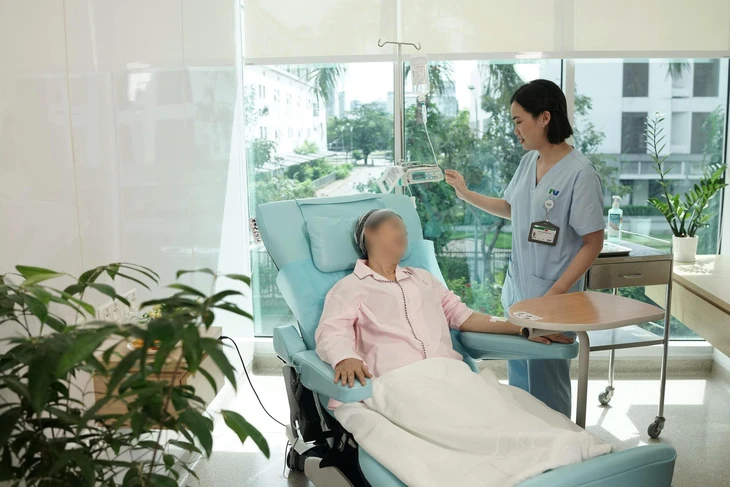
Personalized treatment at FV helps lung cancer patients manage their disease - Photo: FV
Find the "identifier" for targeted therapy.
Previously, non-small cell lung cancer was typically treated with a standard regimen, which limited treatment effectiveness. Advances in molecular biology have changed this landscape.
According to MSc. Dr. Vo Kim Dien, Deputy Head of the Hope Cancer Treatment Center at FV Hospital, lung cancer patients are now categorized in detail according to gene mutations (EGFR, ALK, KRAS, ROS1…) or PD-L1 protein expression levels to select appropriate medications for each patient.
"Molecular biological testing is a mandatory step before developing a treatment plan. Accurately identifying the specific mutation helps doctors choose the right next-generation targeted therapy," Dr. Dien emphasized.
In addition to controlling the disease in the advanced stages, targeted therapies are used as adjuvant treatment in the early stages, helping to consolidate surgical outcomes and support the prevention of recurrence.
MSc. Dr. Vo Thi Phuong Thao - Senior treating physician at the Hope Center, shared the case of a 48-year-old female patient, a non-smoker, who was diagnosed with early-stage lung cancer and had an EGFR gene mutation.
After developing an individualized treatment plan, the patient received four cycles of adjuvant chemotherapy combined with targeted therapy over three years. To date, after more than 53 months of follow-up, the patient remains healthy with no signs of relapse or disease progression.
Another case involves a female patient (born in 1964) who had metastatic lung cancer since 2018. Thanks to the detection of a gene mutation and consistent use of targeted therapy, she is now healthy after many years of controlling the malignant cells.
Surgery to help preserve lung function.
In addition to medical treatment, thoracic surgery is also undergoing significant transformation thanks to robotic technology and early intervention strategies.
Dr. Dang Dinh Minh Thanh, Head of the Thoracic Surgery Department and Head of the FV da Vinci Robotic Surgery Center, explained that for small lung nodules under 3cm located deep within the lungs but showing signs of suspected cancer, transthoracic needle biopsy can sometimes cause complications such as pneumothorax or produce false negative results.
"The solution is minimally invasive surgery combined with immediate frozen section biopsy during the operation. The results are available within a few tens of minutes, allowing doctors to decide on the extent of resection and lymph node dissection in a single surgery, ensuring the removal of malignant cells while maximizing the preservation of the patient's healthy lung tissue," Dr. Thanh explained.
At FV, this strategy is implemented precisely thanks to the Da Vinci Xi robotic system, which allows for manipulation in the confined space of the body, precise control of major blood vessels, and faster patient recovery after surgery.
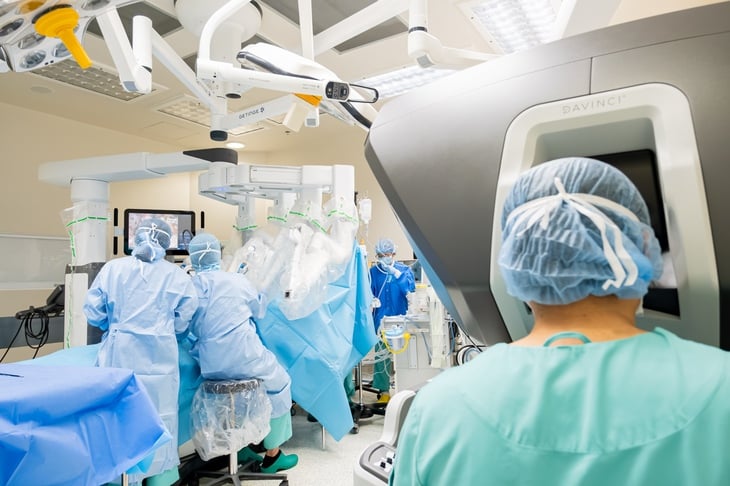
FV doctors remove lung tumors using the Da Vinci Xi robotic system - Photo: FV
Dr. Thanh shared the case of a 68-year-old female patient with a suspected malignant solid lung lesion. Using the Da Vinci Xi robotic system combined with immediate intraoperative biopsy, the team precisely removed the portion of the lung containing the tumor. Examination of the resected area and lymph nodes revealed no malignant cells. The patient recovered after surgery and preserved her respiratory function.
In another case, a patient with a small lung nodule was monitored for 17 months due to suspected benignity. After multiple preoperative biopsies yielded inconclusive results, the patient underwent surgery, and the tumor was subsequently confirmed to be cancerous.
Dr. Thanh emphasized that individualizing surgical intervention strategies using robotic technology combined with early immediate biopsy for lesions under 3cm helps support early treatment, increase the chances of success, and significantly reduce costs for patients.
Metronomic therapy for elderly patients
A humane piece in the individualization puzzle at FV is the solution for patients who do not qualify for major surgery, high-dose chemotherapy, or do not have the gene mutation to receive targeted therapy.
According to Dr. Dien, for elderly patients with multiple underlying conditions or weakened physical condition, the hospital implements Metronomic therapy using low-dose, continuous oral medication.
The results of implementing this method at the hospital have proven to be a solution that helps maintain disease stability for a longer period.

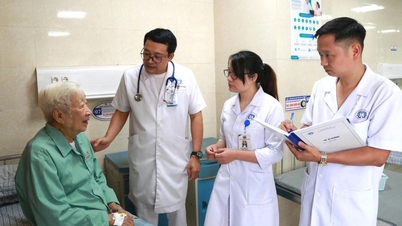
Doctors at the Hope Cancer Treatment Center consult on treatment methods for patients - Photo: FV
Modern lung cancer treatment is no longer the domain of a single specialty, but rather a closely coordinated, multidisciplinary approach to tailor treatment plans to each individual.
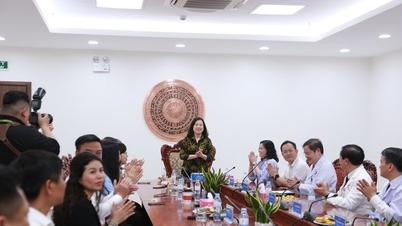
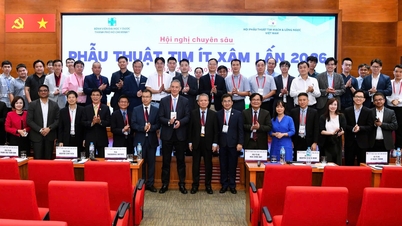
To update and share experiences with the domestic medical community, on May 23, 2026, FV Hospital organized the CME Workshop "Personalized Lung Cancer Treatment: From Theory to Clinical Practice".
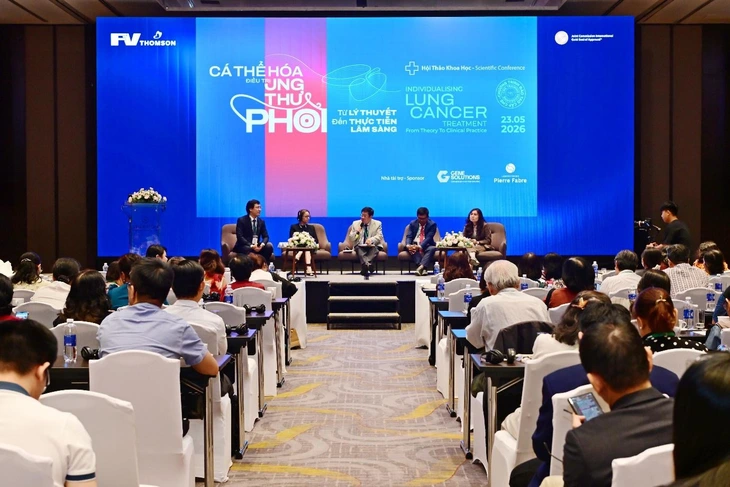
The workshop "Personalized Lung Cancer Treatment: From Theory to Clinical Practice" was organized by FV Hospital. - Photo: FV
The workshop was attended by prominent figures such as Assoc. Prof. Dr. Le Thuong Vu - Head of the Respiratory Department, University Medical Center of Ho Chi Minh City, Dr. Nguyen Duy Sinh - Medical Director of Gene Solutions Vietnam, along with the FV team of experts: MSc. Dr. Vu Truong Son (Medical Director), Dr. Basma M'Barek (Head of Hope Cancer Treatment Center) and the team of doctors from the Hope Center, including MSc. Dr. Vo Kim Dien, MSc. Dr. Vo Thi Phuong Thao, Dr. Dang Dinh Minh Thanh - Head of Thoracic Surgery Department and Head of FV da Vinci Robotic Surgery Center.
This is one of FV's in-depth academic activities aimed at sharing experience and updating new knowledge for the medical community in Vietnam.
Source: https://tuoitre.vn/ca-the-hoa-dieu-tri-ung-thu-phoi-tu-cong-nghe-gene-den-robot-20260528173904756.htm


![[Photo] Standing Committee member of the Party Central Committee Tran Cam Tu working with the Central Inspection Committee](https://vphoto.vietnam.vn/thumb/1200x675/vietnam/resource/IMAGE/2026/05/28/1779969579668_ndo_br_bnd-2495-jpg.webp)



















































































Comment (0)