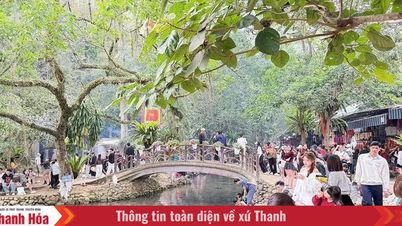
Lap Thach fermented fish, a rustic dish deeply rooted in rural culture, is an indispensable part of the Tet feast.
Lap Thach fermented fish, a rustic dish deeply rooted in rural culture, is an indispensable part of the Tet feast.
Speed up production
In Lap Thach, the craft of making fermented fish has been passed down through generations as an indispensable part of local culture. According to locals, this dish originated from the need to preserve food during the long winter months when there was an abundance of fresh fish caught that could not all be consumed. The people creatively devised a method of salting and combining it with roasted corn and rice flour to create this unique fermented fish dish.
Ms. Tran Thi Lien Hoa (41 years old, Lap Thach, Vinh Phuc), owner of Dung Hoa Fermented Fish – a famous local brand, said that her family has been in this business since her grandmother's time. "Since I was little, I've been familiar with the smell of fermented fish, seeing my mother and grandmother diligently working with the fish. Now, my family has been involved in the fermented fish business for three generations," Ms. Hoa shared.
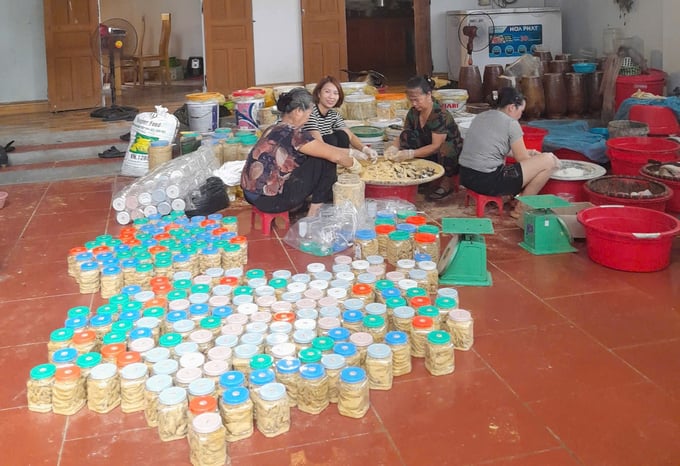
Ms. Hoa's production facility not only supplies fermented fish to people in the area but is also a trusted address for many diners from other provinces. Photo: Provided by the owner.
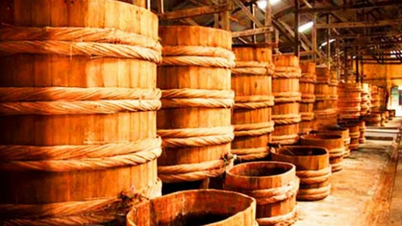
Ms. Hoa's establishment specializes in using fish such as pomfret, carp, and catfish, sourced from nearby rural areas like Tien Lu, Van Quan, and Van Truc Lake. After thorough preparation, the fish are marinated and fermented for an extended period to achieve their distinctive delicious flavor.
Each day, the facility produces about 90-100kg of dried fish, priced between 70,000 and 100,000 VND/kg, depending on the type of fish. Especially during Tet (Lunar New Year), the demand for dried fish increases significantly, not only for consumption but also as gifts. “Normally, two people are enough, but for Tet orders, I have to hire 5-6 more people to keep up with the demand. And we have to start preparing the fish 2-3 months in advance so it's ready to send to customers,” Ms. Hoa said.



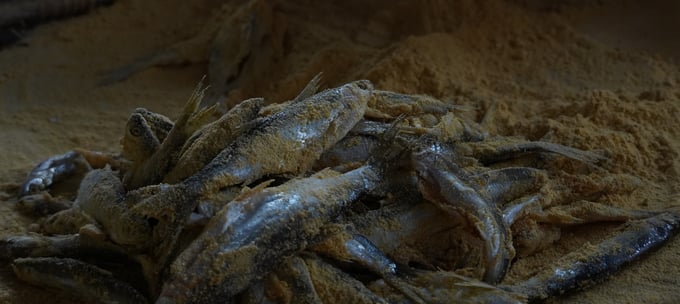
After being salted, the fish is evenly coated with a layer of roasted rice powder to enhance its distinctive flavor and help preserve it for longer. Photo: Minh Toàn.
The production of fermented fish also requires careful time management. According to Ms. Hoa, it usually takes 4 months for the fermented fish to reach the desired quality in winter, while in summer it only takes 2-3 months, or even 6 months to over a year if kept in suitable conditions, ensuring warmer weather. Once finished, the fermented fish can retain its delicious flavor for a long time.
For the people of Lap Thach, fermented fish is not just a dish, but also a part of their memories. Ms. Nguyen Thi Mai, a long-time customer, shared: "Every Tet holiday, my family buys fermented fish to eat with banh chung (traditional Vietnamese rice cake). The taste of the fish reminds me of the old days, when the whole family gathered around the dinner table in the early spring chill."
Meticulously crafted down to the last grain of salt.
What makes fermented fish so appealing is its distinctive flavor, a combination of salty, slightly sour, and the strong aroma of roasted rice flour. The fish, after being fried until golden brown and crispy, is not only visually appealing but also surprisingly delicious with rice.
To make a delicious batch of fermented fish, every step requires meticulous attention. From gutting the fish and washing it thoroughly until it's clear, to the salting and stuffing process, everything must be done in the correct proportions and with the right technique. "10kg of fish usually requires more than 1kg of salt. The salt must be clean and high-quality, like Hai Chau iodized salt, to ensure the fish doesn't spoil. 1kg of fresh fish will yield about 700 grams of finished fermented fish," Ms. Hoa shared.
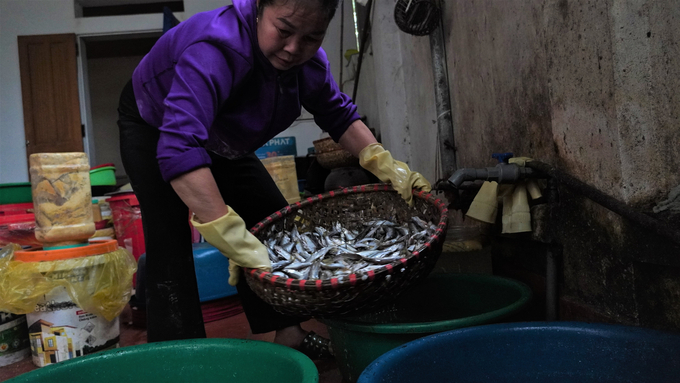
The fish must be washed thoroughly several times to ensure it doesn't spoil during the natural fermentation process. Photo: Minh Toan.
Specifically, the fermented fish paste must be stuffed into the fish's belly and gills, and evenly spread over the surface to ensure natural fermentation. Guava leaves or dry straw are used to prevent the paste from spilling out. The longer the fermentation time, the richer the flavor, with a slight sourness that suits many people's tastes.


Fermented fish is suitable for the tastes of both adults and children. Over time, Lap Thach fermented fish has maintained a special place in the hearts of local people and visitors from afar. Each batch of fermented fish is not only the result of meticulous effort but also a symbol of love for the homeland and traditional craft.
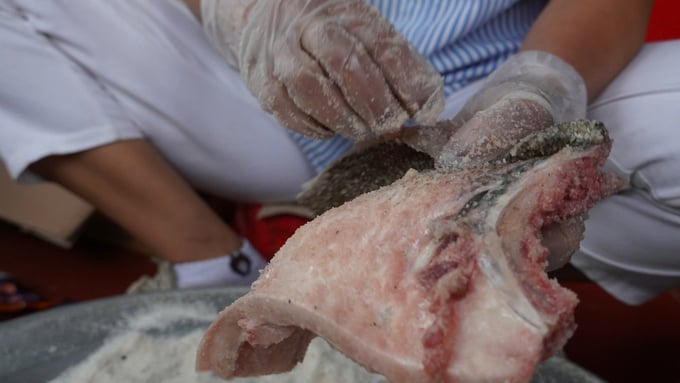
Making fermented fish requires meticulous attention to every grain of salt to ensure the finished product has the perfect flavor. Photo: Minh Toàn.
Lap Thach fermented fish is not just a dish, but also a story about culture, about the skill and love of the people here for their traditional craft. Amidst the bustling atmosphere of Tet (Lunar New Year), the aroma of fermented fish makes the family meal even warmer and more flavorful.
Source: https://nongsanviet.nongnghiep.vn/ca-thinh-lap-thach-trong-mam-com-tet-d418640.html








































![The Essence of the Viet Bac Villages: [Part 3] The Precious Fragrance of Nghinh Tuong](https://vphoto.vietnam.vn/thumb/402x226/vietnam/resource/IMAGE/2026/05/29/1780020600366_5237-tinh-tuy-ban-lang-viet-bac-bai-3-chuyen-o-nghinh-tuong-050626_700.jpeg)
![The Quintessence of Northern Vietnam's Villages: [Part 2] The Famous Cassava Noodles of Kunming](https://vphoto.vietnam.vn/thumb/402x226/vietnam/resource/IMAGE/2026/05/28/1779937455892_3929-3144-mien-dong-15-nongnghiep-023138.jpeg)