


Sakaekiko Ninomiya often shares videos of her daily life in China with both Chinese and Japanese audiences on social media.
Shunsuke Nakamura (29 years old), who has visited China many times for both study and tourism, says he has a fondness for the people there, especially the kindness of his classmates at Xiamen University. Currently working as a personal trainer in Tokyo, Nakamura remains active on Xiaohongshu, where he shares friendly videos in fluent Mandarin with over 32,000 followers.
Despite the booming Chinese social media landscape, bilingual vloggers remain relatively rare, partly explaining the appeal of Japanese KOLs to the public. In a study of Chinese social media user interactions with foreign KOLs on Xiaohongshu and Douyin (the Chinese version of TikTok), researchers at Beijing Foreign Studies University found that "genuine curiosity and admiration" for non-Chinese content creators is a key factor in their popularity.
Building cultural empathy leads to improved relationships.
Nakamura said that social media users genuinely appreciate each other's cultures, including Japanese people willing to learn about China and Chinese people who love the Japanese language and culture.
While the number of Japanese in China is declining, the number of Chinese in Japan is increasing. Chinese citizens are the largest group of foreign residents, with over 930,000 by the end of 2025. Approximately 124,000 of them are students, accounting for more than one-third of the total international student population – according to the Japan Student Services Organization.
This asymmetry helps shape the audience that Ninomiya, Nakamura, and other KOLs attract. Their Xiaohongshu posts—often subtitled in both Chinese and Japanese—create a space for interaction between both Japan enthusiasts in China and Japanese people curious about life in China.
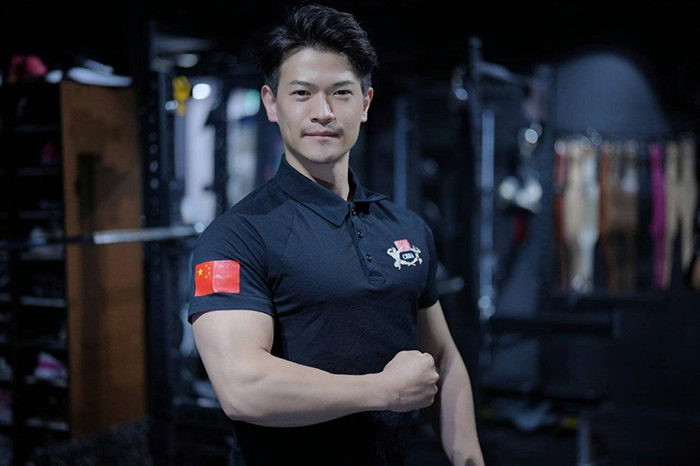
Shunsuke Nakamura, who has over 32,000 followers on Xiaohongshu, believes that the Japanese and Chinese cherish each other's cultures.
Ninomiya says she always aims to “create content that connects both perspectives,” focusing on experiences that evoke empathy across cultures. Some of Ninomiya’s viewers in Japan have said their perceptions of China have changed or they have been inspired to visit the country.
Content creators like Ninomiya, Nakamura, and many other vloggers reach their audience not through government policies or messages, but through accumulation—small, recurring glimpses of everyday life in China. Over time, these help reshape viewers' perceptions.
For those willing to participate in reconciliation, cyberspace truly offers a sense of familiarity, or empathy, helping to bridge the gap between the two countries. Kazuki Ota, a businessman in his 30s who travels to China monthly for business or tourism, hopes that Sino-Japanese relations will improve. He often shares videos of his enjoyable experiences in China with his 120,000 followers on Xiaohongshu. Ota acknowledges that “periods of strained relations will not disappear completely, but they make mutual understanding even more important.”
LE THU (According to Japan Times)
Source: https://baocantho.com.vn/cac-kol-nhat-no-luc-han-gan-van-hoa-voi-trung-quoc-a204303.html


































![[Photo] Reception to welcome General Secretary and President To Lam and his wife on their State visit to the Philippines](https://vphoto.vietnam.vn/thumb/1200x675/vietnam/resource/IMAGE/2026/06/01/1780295488620_vna-potal-chieu-dai-chao-mung-tong-bi-thu-chu-tich-nuoc-to-lam-va-phu-nhan-tham-cap-nha-nuoc-toi-philippines-8798060-7855-jpg.webp)





























































Comment (0)