

Gout is a metabolic disorder of purine metabolism that causes high levels of uric acid in the blood. If left uncontrolled, the disease can destroy joints, causing deformities, and also affect the liver and kidneys, increasing the risk of dyslipidemia, hypertension, and diabetes.
- 1. What active compounds are found in taro root?
- 2. Effects and uses of taro root to lower uric acid.
- 3. Notes on using taro root
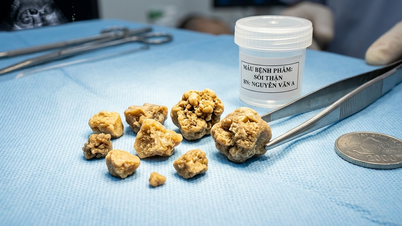
High levels of uric acid in the body produce urate salts. Normally, urate salts are soluble in body fluids, but under certain conditions, they can crystallize into small, sharp, needle-like crystals, causing damage to the kidneys, heart, blood vessels, and skin.
When urate crystals deposit in the joints, they cause acute gout attacks with very clear symptoms: swelling, heat, redness, and severe pain. The most common location is the joint of the big toe, but it can also affect the ankle, knee, wrist, elbow, or fingers.
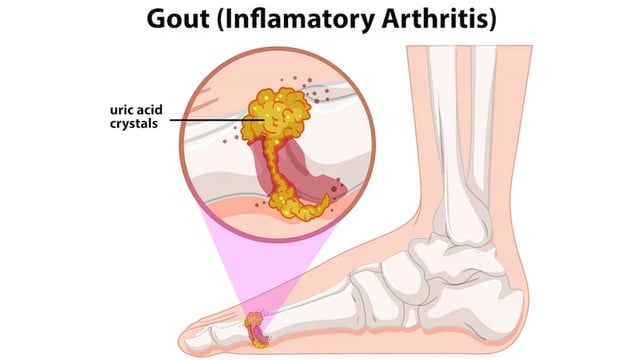
Uric acid crystals deposit in the joints, causing acute gout attacks.
1. What active compounds are found in taro root?
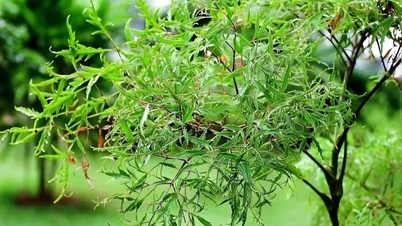
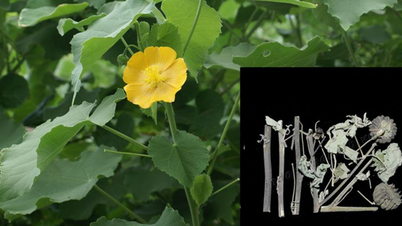
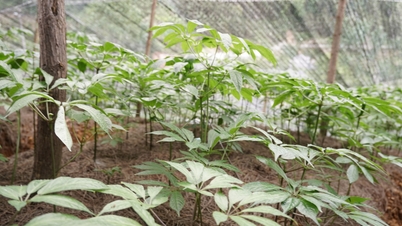
Alocasia macrorrhizos, scientifically known as Alocasia macrorrhizos, belongs to the Araceae family and is a genus comprising over 100 species of perennial herbaceous plants, ranging in size from small to very large, and are easy to grow. They are distributed in tropical and subtropical regions of Asia, such as the Western Pacific, Australia, and Vietnam.
Taro root is a familiar medicinal herb in folk medicine, containing many chemical compounds. Research shows that starch is the main component, providing energy. Saponins in taro root are glycosides, consisting of two main parts:
+ Aglycone: The sugar-free portion, usually a steroid or triterpenoid.
+ Sugar portion: One or more sugar chains attached to the aglycone.
These glycosides offer benefits such as antioxidant, anti-inflammatory, and cholesterol-lowering properties.
However, taro root also contains calcium oxalate, a skin irritant, and a small amount of cyanide, so it needs to be thoroughly processed before use.
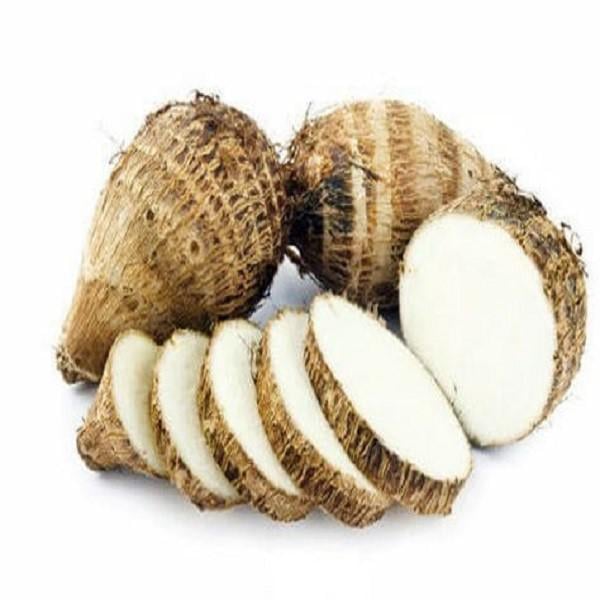
Do not eat raw taro root as it can cause poisoning.
2. Effects and uses of taro root to lower uric acid.
Taste and properties: Taro root has a bland taste, is cold in nature, and is highly toxic; eating it raw can easily cause itching in the mouth and throat.
Uses: In folk medicine, taro root is used topically to reduce itching and swelling, and as a remedy for boils, scabies, and swelling of the hands and feet. Additionally, taro root combined with unripe banana is used to help lower uric acid levels.
How to use taro root to help lower uric acid: Slice 20g of taro root into small pieces and dry it in the sun. Also, dry 20g of ripe banana seeds. Roast both ingredients until golden brown, then add the mixture to about 1.5 liters of water. Boil twice and drink throughout the day; this can be used continuously for 1-2 months.
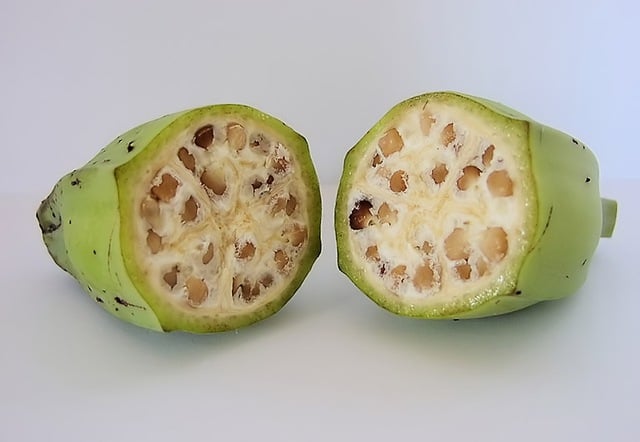
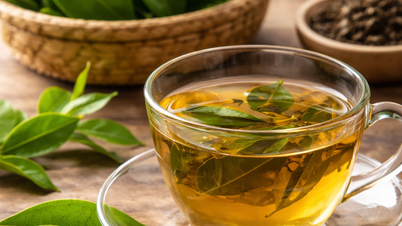
Wild bananas and taro root can help treat gout.
3. Notes on using taro root
- Calcium oxalate in taro tubers can cause itching, pain, and skin irritation; when handling fresh taro tubers, wear gloves to avoid direct contact.
- Calcium oxalate loses its irritating effect when dried or cooked, so it needs to be thoroughly processed.
- Taro root is cooling in nature and bland in taste; it should not be used by people with weak constitutions or those prone to coldness.
- Do not eat raw, unprocessed taro root as it can easily cause burning in the mouth and throat, and poisoning.
- There have been cases of poisoning due to mistaking taro tubers for elephant ear/water yam; careful differentiation is necessary.
- Pregnant and breastfeeding women should consult a doctor before use.
- Taro root only has a supportive effect and is not a substitute for medication to treat gout.
See more trending articles:
Source: https://suckhoedoisong.vn/cach-dung-cu-ray-ho-tro-ha-axit-uric-16925112418590879.htm
![[Photo] General Secretary and President To Lam presides over the meeting to approve the draft report on the results of the second inspection by the Politburo of the Standing Committee of the Hanoi City Party Committee.](https://vphoto.vietnam.vn/thumb/1200x675/vietnam/resource/IMAGE/2026/05/26/1779789811432_a2-bnd-4430-9620-jpg.webp)




































































Comment (0)