

Professor G. Devarajan, Secretary General of the All India Forward Bloc (AIFB), affirmed this in an interview with a VNA reporter in New Delhi on the occasion of the 95th anniversary of the founding of the Communist Party of Vietnam (February 3, 1930 – February 3, 2025).
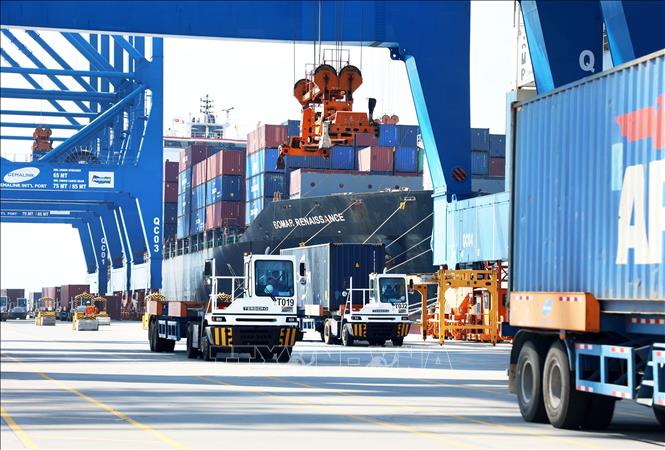 Export activities at the Cai Mep - Thi Vai port cluster, Phu My town, Ba Ria - Vung Tau province. Photo: Hong Dat/TTXVN
The Doi Moi (Renovation) process, initiated by the Communist Party of Vietnam in 1986, marked a significant shift in Vietnam's economic policy. Faced with economic stagnation, widespread poverty, and the inefficiency of the state-run economy, the Communist Party leadership recognized the need for comprehensive reform. The Doi Moi process was designed to modernize the Vietnamese economy, improve efficiency, and open the country to global trade while maintaining the state's socialist orientation. These reforms transformed Vietnam from one of the world's poorest countries into a rapidly developing economy with significant improvements in living standards, infrastructure, and human development. Under the leadership of the late General Secretary Nguyen Phu Trong, the Communist Party of Vietnam continued this process successfully, ensuring sustainable development and socio-economic stability, while maintaining the Party's leading role in governing the country.
Professor G. Devarajan expressed his confidence that under the current leadership of the Communist Party of Vietnam, General Secretary To Lam and President Luong Cuong will continue the Doi Moi (Renovation) process and will address the new challenges emerging in the modern globalized world. According to the Professor, the leadership must focus on maintaining economic growth, improving social welfare, and ensuring the Party's leading role in the country's political life. Because, according to the Professor, one of the key aspects contributing to Vietnam's success during the Doi Moi period is the Communist Party of Vietnam's ability to maintain political stability while implementing reforms.
Assessing the innovative and reform efforts undertaken by the Communist Party of Vietnam in leading the country, Professor Devarajan stated that transformation and modernization, combating corruption, and streamlining the administrative apparatus are essential activities to achieve the Party's long-term goals of sustainable development, social justice, and political stability. By preventing corruption, the government ensures that policies and resources reach the people, while improving administrative efficiency, ultimately strengthening the leadership of the Communist Party of Vietnam and its relationship with the people.
The professor expressed his pleasure at seeing Vietnam's current leadership placing considerable emphasis on anti-corruption efforts and ensuring the Party's accountability to the people. According to him, the anti-corruption campaign has helped improve public trust in the Party and its ability to fulfill its promises of modernization and development. The current leadership of the Communist Party recognizes that sustained anti-corruption efforts are necessary to achieve the broader goals of national development, social justice, and political stability. By continuing to tackle corruption, the Party ensures that the benefits of its policies are truly shared by all, especially those in need, while strengthening its credibility as the country's leading political force.
In reality, a crucial step in the fight against corruption is streamlining and modernizing the administrative apparatus. The Party's effective leadership of the country depends on efficient, transparent, and accountable public institutions. When corruption is successfully combated and the administrative apparatus is streamlined, the benefits from government policies and development programs will reach the people more effectively. Combating corruption ensures that public resources are directed towards projects that truly address the needs of the most vulnerable segments of society. Professor G. Devarajan emphasized that the Communist Party of Vietnam's continued commitment to addressing corruption and improving governance will strengthen the Party's leadership, enhance public trust, and lay the foundation for a fairer and more prosperous future for all Vietnamese citizens.
Regarding the goal of reaching new heights in the new era, Professor Devarajan noted that Vietnam is standing at the threshold of a new period of progress, equipped with a strong ideology and a profound commitment to people-oriented policies under new leadership. This transitional period marks an important chapter in the country's ongoing development journey, and under the current leadership of the Party, Vietnam is ready to rise to new heights, fulfilling the aspirations of its people.
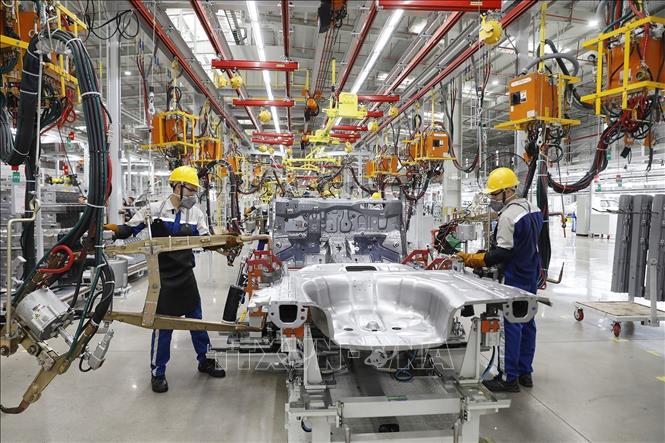 Hyundai Thanh Cong's automobile production and assembly line. Photo: Duong Giang/TTXVN
According to the Professor, as Vietnam enters a new era of development and transformation, the Communist Party of Vietnam, in its leadership role, faces both enormous opportunities and challenges in implementing its socialist-oriented policies. These policies play a central role in Vietnam's journey towards modernization, economic development, and social equity. The Party's strategic goal is to sustain progress while ensuring that the benefits of development are widely shared among the people. Vietnam's rapid economic growth over the past few decades has made the country one of the fastest-growing economies in Southeast Asia. This economic dynamism presents significant opportunities to further expand the socialist-oriented market economy, balancing state-directed planning with market-based reforms. Therefore, Vietnam has the opportunity for further economic growth, integration into the global economy, technological progress, improved social welfare, and poverty reduction.
Furthermore, Vietnam also faces challenges such as balancing market reforms with socialist ideals, increasing income inequality, issues of privatization and state control, geopolitical tensions and other security challenges, environmental sustainability, technological disruption, and changes in the labor market. However, according to Professor Devarajan, by leveraging its core strengths – people-centered policies, ideological commitment, and lessons learned from past experiences – the Communist Party of Vietnam can steer the country toward continuous progress, ensuring the realization of its vision of a prosperous, just, and equitable society. With a reasonable balance between innovation, prudence, and strategic planning, Vietnam can successfully overcome challenges and seize opportunities ahead, meeting the aspirations of its people and contributing to the global movement for peace, justice, and socialism.
Professor Devarajan affirmed that the All India Forward Bloc (AIFB), as a dedicated ally in the global socialist movement, has always stood in solidarity with and wholeheartedly supported the Communist Party and the people of Vietnam. He believes that, under the leadership of the Communist Party, Vietnam will successfully advance, overcome all obstacles, and achieve even greater heights of development and prosperity.
Professor Devarajan expressed admiration for Vietnam's achievements and welcomed the dedication of the Communist Party of Vietnam to revolutionary principles, human values, and the Party's commitment to a better, more just future. Sending congratulations to the Communist Party of Vietnam on its 95th anniversary, the Professor emphasized that the journey Vietnam is undertaking will not only elevate the country but also serve as an inspiring example for socialist movements worldwide, demonstrating that a people-centered development path is not only feasible but also necessary for achieving true social justice.
Ngoc Thuy – Quang Trung (VNA)


![[Photo] Prime Minister Pham Minh Chinh attends the Conference on the Implementation of Tasks for 2026 of the Industry and Trade Sector](/_next/image?url=https%3A%2F%2Fvphoto.vietnam.vn%2Fthumb%2F1200x675%2Fvietnam%2Fresource%2FIMAGE%2F2025%2F12%2F19%2F1766159500458_ndo_br_shared31-jpg.webp&w=3840&q=75)












































































Comment (0)