

There are still many limitations.
According to statistics from the International Finance Corporation (IFC), by the end of the second quarter of 2024, Vietnam had 476 green buildings, equivalent to 11.489 million square meters of floor space, that had received green building certification. The number of buildings certified as green buildings and using energy efficiently has already exceeded the target set in Decision No. 280/QD-TTg dated March 13, 2019, of the Prime Minister approving the National Program on Energy Saving and Efficiency for the period 2019-2030.
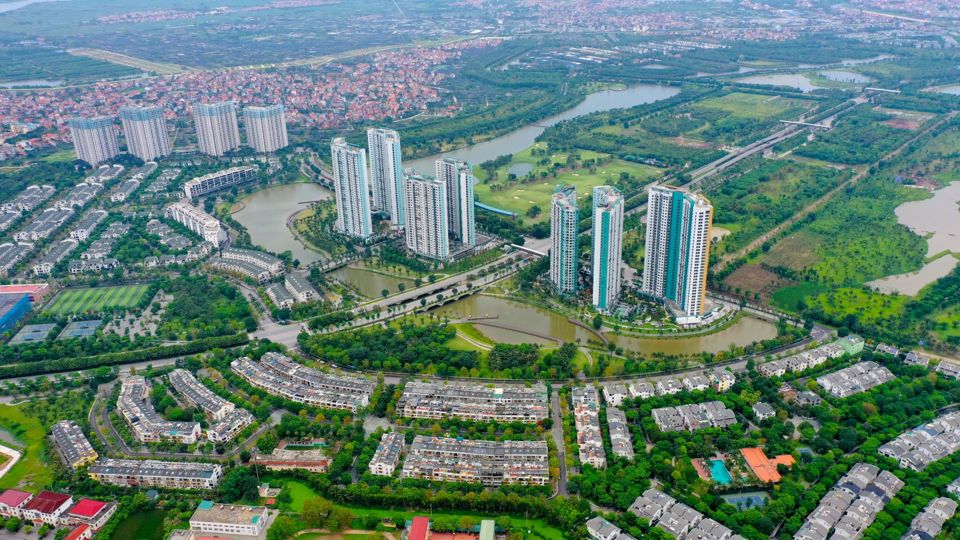
Specifically, the target is to have 80 green buildings certified for energy efficiency by 2025, and 150 green buildings certified for energy efficiency by 2030. The number of green buildings in Vietnam is at a moderately high level compared to other ASEAN countries. In 2023, Vietnam ranked 28th in the world in the number of green buildings assessed according to LEED standards (green building assessment and certification by the U.S. Green Building Council).
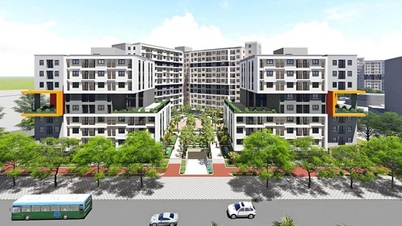
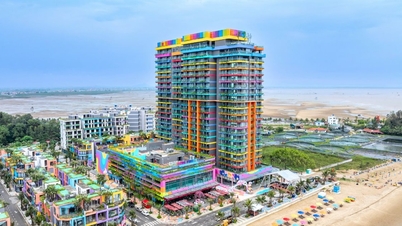
In addition, Vietnam also has many commercial buildings that meet both domestic and international green building standards. Following the inevitable trend, the construction of social housing is now required to comply with "green" criteria for construction. Building green social housing not only helps reduce greenhouse gas emissions but also improves the quality of life for residents without increasing housing prices. However, developing green social housing projects without increasing costs remains a challenge requiring the joint efforts of investors and society as a whole.
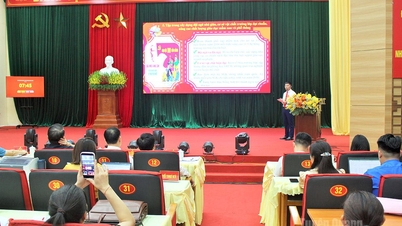
According to Mr. Nguyen Duc Vinh, Deputy Head of the Social Housing Management and Development Department, Department of Housing and Real Estate Market Management, Ministry of Construction , the legal system related to housing has been studied and amended to suit the practical situation. Many laws related to the housing sector have been studied and amended to take effect simultaneously. The National Housing Development Strategy to 2020, with a vision to 2030, and the National Housing Development Strategy for the period 2021-2030, with a vision to 2045, have clearly stated their views on developing energy-efficient housing.
The housing development sector nationwide has made positive progress, contributing to improving the living conditions of the majority of people in both urban and rural areas.
"The application of energy efficiency and environmental protection standards in the housing sector is still limited. Currently, energy-saving housing projects are mostly implemented by the developers themselves, setting their own targets," said Master's degree holder Nguyen Duc Vinh.
According to the International Finance Corporation (IFC), the main reasons for the limitations and shortcomings in the development of energy-efficient and environmentally friendly housing in Vietnam include insufficient awareness of environmental protection and energy efficiency in housing development. Furthermore, the application of science and technology is limited, and the investment costs for such housing are often 1-2% higher than those of conventional housing.
Furthermore, the lack of publicity and promotion about the benefits of energy-efficient housing projects has resulted in little interest from developers and customers buying, renting, or leasing homes.
Disassembly from design
According to construction industry experts, to build green buildings at a reasonable cost, it is necessary to define a green building roadmap from the outset and select a multidisciplinary team of experts with diverse solutions.
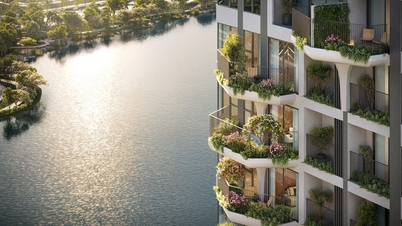
Next, a solution that the project can utilize should be proposed, such as a planning solution, a green roof solution, using sunshade techniques on the building's facade, or using solar panels on the roof or facade to generate energy for the building, or a combination of all these solutions.
Furthermore, optimizing investment costs aims to reduce overall expenses and maximize energy efficiency within budget constraints, while simultaneously carefully controlling indoor environmental quality. This approach effectively reduces both investment and operating costs, and provides valuable design data.
Once these items are completed, obtaining green building certification becomes easy and inexpensive, as the energy and environmental savings scores are very high, even reaching the maximum. Then, adding a few more simple green elements, in the form of bullet points, helps to earn enough points for the desired certification level.
Nguyen Bich Ngoc, Director of Sen Vang Group, commented that a green building alone is not enough; a green building must be green in terms of materials, living space, energy efficiency, and operation. Therefore, it is necessary to clearly distinguish between green certification and green building. Because green certification is not everything.
"Typically, green building projects today only involve the design phase. However, to be a truly green building, investors need to develop a sustainable green strategy, evident from the beginning to the end of their project development process. This includes land acquisition, product development, production implementation, sales implementation, post-sales operation and management, and finally, product management after commissioning," explained Ms. Nguyen Bich Ngoc.
According to Master's degree holder Nguyen Duc Vinh, relevant authorities need to research and issue, supplement housing regulations and standards for new designs, techniques, and construction technologies aimed at improving housing quality, in line with the trend of green, sustainable, smart housing development, and the application of digital technology; while also strengthening inspection and monitoring activities related to the application of housing regulations and standards.
“We need to develop mechanisms and policies to encourage the application of regulations and standards to existing residential areas of households and individuals, linked to urban renovation and upgrading. We must strengthen the application of science and technology, research and apply new housing designs, techniques and technologies, new materials, and digital technologies to save costs, lower construction prices, and simultaneously use energy efficiently and reduce emissions,” said Mr. Nguyen Duc Vinh.
According to incomplete data from 42 out of 63 localities, the estimated average housing area per person nationwide in 2024 is approximately 26.5 m2. Housing quality is improving, as many old, dilapidated housing areas have been replaced with new, modern housing complexes.
Mr. Nguyen Duc Vinh , M.Sc. - Deputy Head of the Social Housing Management and Development Department, Housing and Real Estate Market Management Bureau (Ministry of Construction)
Source: https://kinhtedothi.vn/phat-trien-cong-trinh-xanh-can-mot-chien-luoc-ben-vung.html


























































































Comment (0)