

Close to the people and possessing outstanding practical skills.
- Sir, the 16th National Assembly elections are fast approaching. What are your expectations regarding the quality of the representatives that voters will choose this time?
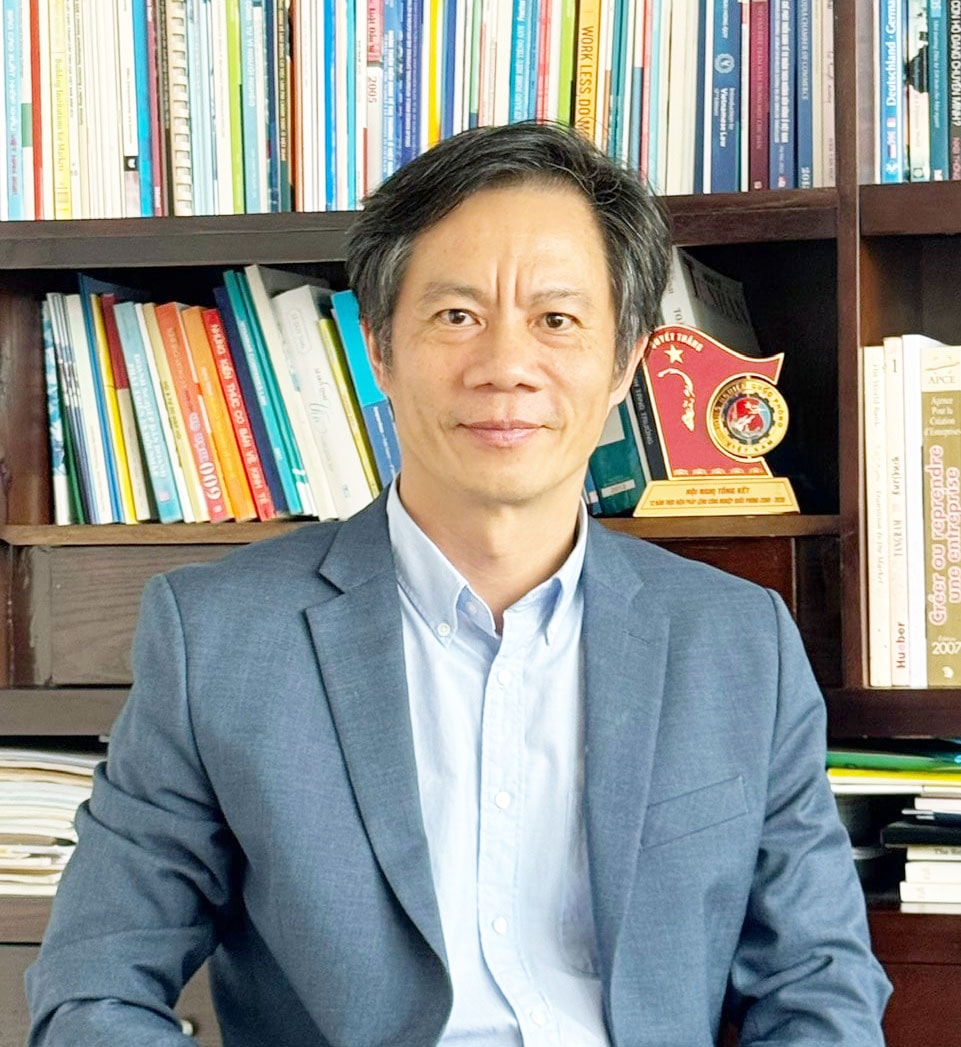
- This election is taking place at a crucial turning point for our country: realizing our great aspirations in the spirit of the Resolution of the 14th National Congress of the Party. We aim for continuous double-digit economic growth so that by 2030 we will become a developing country with modern industry and a high-middle income, and by 2045 we will become a developed country with a high income.
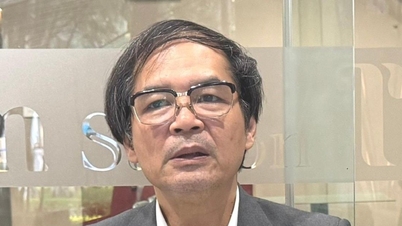
In this context, the public administration in general and elected bodies in particular must be truly effective, efficient, and effective. From the perspective of a voter, I hope that the elected National Assembly deputies will possess a convergence of three qualities: virtue, talent, and integrity.
First and foremost, the representative must be truly close to the people and understand their needs – this is a core requirement. The representative must grasp the thoughts and aspirations of the grassroots in order to accurately reflect them in the decisions made in parliament.
Furthermore, the delegate must possess outstanding practical capabilities , not only excelling in theory but also having a practical approach when facing pressing national issues, especially in lawmaking and overseeing institutional reforms. With a deeply integrated economy, global issues will directly impact social welfare and the domestic economy. Therefore, delegates need not only expertise in their own field, understanding of policies and laws, local conditions, and national affairs, but also knowledge of international experience to gain a global perspective and appropriately apply international experience to Vietnamese practice in the legislative process and voting on important national issues.
Another important point is that the various sectors of the economy are interconnected, interdependent, and mutually supportive. Therefore, delegates need to understand the relationships between different sectors when formulating policies to support the country's sustainable growth.
Removing the "bottleneck of bottlenecks"
creating new growth drivers
- With such high growth targets as you just mentioned, how do you think the new National Assembly should fulfill its role and responsibilities to create a launching pad for the economy?
- I believe the new National Assembly is facing both immense pressure and significant motivation. To ensure high growth targets, the National Assembly must act as the gatekeeper for the major balances of the economy. This includes closely monitoring budget revenue and expenditure, controlling inflation, and managing fiscal and monetary policies to maintain macroeconomic stability.
Furthermore, the greatest responsibility lies in institutional reform. The National Assembly needs to remove institutional bottlenecks – which are essentially "bottlenecks within bottlenecks." Legislative work must focus on reviewing and eliminating outdated legal regulations that hinder development, emphasizing the use of market mechanisms instead of administrative regulations.
The National Assembly needs to build a conducive business environment, creating a safe, favorable, and highly competitive legal framework compared to the region and the world to attract international investment and promote the domestic strength and self-reliance of the economy. Institutions must unleash resources through the appropriate use of market mechanisms to unlock capital, promote innovation, and apply science and technology. Policies must support the establishment of a new growth model, with particular emphasis on the shift towards a digital economy, a green economy, and a circular economy. These ideas need to be integrated throughout legal documents or through the forums of the National Assembly.
In particular, the National Assembly needs to oversee efforts to reduce the gap between policy and practice. A crucial metric is reducing compliance costs and inconveniences for businesses and citizens, ensuring that policies on public investment or administrative procedures are implemented effectively and directly in practice.
- Oversight is one of the three constitutional functions of the National Assembly. Based on the experiences of the past term, what are your expectations for the oversight activities of the 16th National Assembly?
- The past term has left invaluable lessons regarding the quick and flexible response of the National Assembly. A prime example is when businesses faced difficulties due to Decree No. 46/2026/ND-CP on food safety, the Standing Committee of the National Assembly promptly requested the Government to conduct a more in-depth assessment of the impact, and at the same time requested lessons to be learned in the issuance of sub-legal documents such as decrees and circulars. This shows that the National Assembly has "closely followed the pulse of life" and put the people and businesses at the center. To promote this in the next term, I propose that the oversight work of the new term needs to be stronger, especially in the "pre-oversight" stage.
Accordingly, the National Assembly and its committees need to vigorously implement the assessment, supervision, and consultation process right from the draft stage. This is especially important for documents directly related to national development, socio-economic affairs, and public welfare. The National Assembly also needs to expand its consultation network through close coordination with the Vietnam Fatherland Front, organizations such as the Vietnam Confederation of Commerce and Industry, business associations, and experts to gather diverse opinions. Direct and in-depth consultation will improve the overall quality of the institutional framework.
We are undergoing a strong digital transformation, and the National Assembly also needs to accelerate the digitalization of information channels. The National Assembly should establish a dedicated online feedback channel for the business community and citizens. When obstacles arise in the implementation of laws, they can report them immediately, providing elected bodies with factual data and enabling more timely policy responses.
Simultaneously, the National Assembly needs to expand its rapid decision-making mechanism. For emerging issues with widespread impact, the National Assembly should maintain the holding of extraordinary sessions, or establish a mechanism to delegate authority to the Standing Committee of the National Assembly to "meet quickly and decide quickly," ensuring that the country's development is not missed.
Parliament - "the center of intellectual convergence"
- Mobilizing intellectuals and experts is essential in the legislative process and in making decisions on important national issues. What are your expectations regarding this from the new National Assembly?
- In fact, the National Assembly has made commendable efforts in this area. The Vietnam Economic and Social Forums and expert consultation workshops have become important channels for the National Assembly to listen to critical voices from universities, research institutes, and associations.
In the coming term, I hope this mechanism will operate at a new level. Accordingly, the National Assembly should consider maintaining both regular and extraordinary consultation channels: not only scheduled consultations, but the National Assembly should proactively hold urgent and extraordinary meetings and seminars when socio-economic issues arise so that experts can offer timely suggestions. These forums will provide additional independent perspectives and factual data so that National Assembly deputies have sufficient information before voting on draft laws or major policy decisions.
Beyond traditional voter outreach, the National Assembly becoming a "center of intellectual convergence" will help ensure that policy decisions are not only politically sound but also scientifically and practically sound.
In summary, I believe that an effective National Assembly is one that listens to the people and the business community, values the wisdom of experts, and possesses the courage to reform in order to unleash all resources and lead Vietnam steadily towards the development goals of 2030 and 2045.
Thank you very much, sir !
Source: https://daibieunhandan.vn/can-nhung-dai-bieu-hoi-tu-duc-tai-ban-linh-10409945.html
![[Image] Hanoi Police officially crowned champions of V-League 2025/2026](https://vphoto.vietnam.vn/thumb/1200x675/vietnam/resource/IMAGE/2026/05/31/1780244769054_ndo_br_039d561b692be875b13a-jpg.webp)

![[Photo] Admire the coral "masterpiece" amidst the million-year-old heritage of Dak Lak province.](https://vphoto.vietnam.vn/thumb/1200x675/vietnam/resource/IMAGE/2026/05/31/1780221235105_anh-man-hinh-2026-05-31-luc-16-53-27.png)

![[Photo] The General Secretary, President and his wife begin their state visit to the Philippines.](https://vphoto.vietnam.vn/thumb/1200x675/vietnam/resource/IMAGE/2026/05/31/1780230559452_anh-man-hinh-2026-05-31-luc-19-28-11.png)
![[Photo] Solemn bathing ceremony and Buddha procession in Hue](https://vphoto.vietnam.vn/thumb/1200x675/vietnam/resource/IMAGE/2026/05/31/1780228263543_1-jpg.webp)












![[Video] Sunset at Lap An Lagoon – Where the sun sets over the fishing nets](https://vphoto.vietnam.vn/thumb/340x192/vietnam/resource/IMAGE/2026/05/31/1780192137701_beach-landscape-sea-water-nature-grass-745871-pxhere-com.jpeg)





























![[Photo] Admire the coral "masterpiece" amidst the million-year-old heritage of Dak Lak province.](https://vphoto.vietnam.vn/thumb/402x226/vietnam/resource/IMAGE/2026/05/31/1780221235105_anh-man-hinh-2026-05-31-luc-16-53-27.png)


























Comment (0)