


The WHO continues to maintain the highest alert level for the COVID-19 pandemic.
According to the statistics website worldometers.info, as of February 5th, the world had a total of 676,137,324 confirmed cases and 6,771,358 deaths from COVID-19. In the past seven days, the world has seen an additional 1,172,856 new cases and 8,988 new deaths from COVID-19. With 292,614 new cases and 1,901 new deaths, Japan continues to be the country with the highest number of new infections and deaths from COVID-19 in the world this past week.Data from the statistics website worldometers.info also shows that as of February 5th, 648,549,388 COVID-19 cases globally have been reported as recovered. Of the 20,816,578 active cases, 20,774,864 are mild (99.8%) and the remaining 41,714 (0.2%) are in serious condition. The pandemic is currently raging in 231 countries and territories worldwide.
Three years after declaring COVID-19 an international public health emergency, the World Health Organization (WHO) decided on January 30th to maintain the highest alert level for the pandemic. This decision came two days after the 14th meeting of the WHO's Emergency Committee on International Health Regulations, held on the afternoon of January 27th, where Director-General Tedros Adhanom Ghebreyesus agreed that the declaration of a public health emergency of international concern should continue. Dr. Tedros stated that he considered lifting the highest alert level premature.
According to the World Health Organization, the planet must maintain vaccination momentum "to achieve 100% coverage for high-priority groups," inspired by the recommendations of the WHO's principal advisory group on vaccines and immunization (SAGE) on the use of vaccines and booster doses. The WHO stressed: “Member states should plan to integrate COVID-19 vaccination into lifelong immunization programs,” and urged countries to improve the reporting of SARS-CoV-2 surveillance data to the WHO. For the UN agency, better data is also needed to detect, assess, and monitor emerging variants; identify significant changes in the epidemiology of the coronavirus; and understand the burden of disease in all regions.
Hot air balloons further escalate US-China tensions.
The developments surrounding the Chinese balloon suspected of conducting espionage in US airspace not only disrupted the US Secretary of State's planned visit to Beijing, but also threatened to derail efforts by both countries to stabilize their increasingly strained relationship.
According to Bloomberg, the "Chinese balloon" was first spotted earlier this week, moving over Montana – home to the U.S. Minuteman III intercontinental ballistic missile silos. However, according to a U.S. Department of Defense official, the balloon posed no physical or intelligence threat. Officials also "did not rate" the object highly in terms of its intelligence capabilities. According to the Independent, the balloon was estimated to be the size of three buses. U.S. Defense Secretary Lloyd Austin informed President Biden of the incident, but recommended against shooting down the balloon to avoid debris affecting populated areas. Biden agreed to that recommendation.
For its part, according to Xinhua News Agency, on February 3, a spokesperson for the Chinese Ministry of Foreign Affairs announced that the unintentional appearance of a Chinese civilian balloon in US airspace was unavoidable. In a statement, the spokesperson said the balloon was a civilian research balloon, primarily used for meteorological research. The statement clarified that due to the influence of temperate westerly winds and limited self-control, the balloon deviated significantly from its intended route. The spokesperson stated that China regretted the balloon's entry into US airspace due to unavoidable circumstances and affirmed that Beijing would continue to communicate with Washington and handle this unexpected situation appropriately.
During a phone call with US Secretary of State Blinken on the evening of February 3rd, Wang Yi, Director of the Office of the Central Foreign Affairs Commission of the Communist Party of China, discussed how to handle incidents professionally and calmly. Wang Yi stated that China and the US need to focus, communicate promptly, avoid misjudgments, and manage differences when faced with unexpected situations.
However, on February 4th, the Pentagon announced that it had sent a fighter jet to shoot down a Chinese spy balloon off the coast of South Carolina. US President Joe Biden congratulated the pilots on completing the mission. "They successfully shot it down. I want to commend our pilots," Biden said.
Meanwhile, US Defense Secretary Lloyd Austin called the downing of the balloon a "deliberate and legitimate action" in response to China's "violation of sovereignty" against the United States. Secretary Austin confirmed that US military fighter jets shot down a balloon suspected to be a Chinese spy plane over the Atlantic Ocean, off the east coast of the US, at 2:39 p.m. on February 4th.
On February 5th, the Chinese Ministry of Foreign Affairs expressed its displeasure and strong protest against the US use of force to shoot down their balloon.
According to analysts, President Joe Biden's order to shoot down a Chinese balloon on February 4th was a move that seriously hampered the already deteriorating US-China relationship.
Increased tensions on the Korean Peninsula.
On February 2nd, in a statement published by the Korean Central News Agency (KCNA), the North Korean Foreign Ministry accused the United States of taking actions aimed at pushing the security situation on the Korean Peninsula to an "extreme red line" and escalating tensions through the expansion of joint military exercises with South Korea in both scope and scale. The Foreign Ministry warned that this is clear evidence that the dangerous scenario the US is pursuing will turn the Korean Peninsula into a massive arsenal of war and a serious conflict zone.
The statement read: “North Korea will respond with the strongest possible force to any U.S. military effort in accordance with the principle of ‘nuclear weapons against nuclear weapons and full-scale confrontation against full-scale confrontation.’ If the U.S. continues to deploy strategic assets to the Korean Peninsula and surrounding areas, North Korea will more clearly demonstrate its deterrence capabilities depending on the types of assets deployed.” The statement added: “North Korea is not interested in any contact or dialogue with the U.S. as long as it pursues its hostile policy and confrontational approach.”
The announcement came hours after South Korea and the United States launched their first joint air exercise of 2023 in the Yellow Sea. The exercise involved B-1B strategic bombers and F-22 and F-35B stealth fighters from the U.S. Air Force, along with F-35A fighters from the South Korean Air Force. Additionally, the two allies plan to hold simulated exercises this month to enhance their extended deterrence capabilities. The concept of “extended deterrence” refers to the U.S. commitment to using its full military capabilities, including nuclear ones, to defend allies against threats.
These developments signal that the situation on the Korean Peninsula will continue to be complex after a turbulent 2022. In response to North Korea's latest warning, the South Korean Ministry of Unification reiterated its call for North Korea to exercise restraint in actions that escalate tensions and return to the negotiating table.
Millions of French people are on strike in protest against pension reforms.
On January 31, the second nationwide strike in France, protesting President Emmanuel Macron's pension reform plan, disrupted public transport, schools, and oil refinery deliveries across the country.
According to the CGT union, approximately 2.8 million people participated in protests across France on January 31st. This figure is higher than the CGT's estimate of 2 million participants across France on January 19th, although French authorities only put the number at around 1 million protesters.
The protests resulted in half of the primary school teachers and 55% of TotalEnergies workers quitting their jobs to join the strike. The current challenge for the unions will be to sustain the strike movement at a time when high inflation is driving down wages.
The strikes and protests across France are a crucial test for both President Emmanuel Macron's government and his political opponents.
The French government has stated its determination to push forward President Macron's election promise to reform France's pension system. Labor unions and left-wing lawmakers are battling in the French National Assembly against Macron's plans to raise the retirement age from 62 to 64.
On January 30, Macron described the pension reform as "necessary." French Prime Minister Elisabeth Borne stressed last weekend that raising the retirement age to 64 was "no longer negotiable."
Meanwhile, the striking workers and protesters intend to reverse the bill.
More than 100 people killed in massive explosion in Pakistan.
A massive explosion occurred at a mosque in the city of Peshawar, northwestern Pakistan, on January 30, killing at least 101 people and injuring 150 others.
The Peshawar city police chief said the mosque is located within a complex that houses the provincial police headquarters and a city counter-terrorism police department. At the time of the explosion, approximately 260 people were praying at the mosque.
Pakistan was placed on high alert following the explosion, reinforcing checkpoints and increasing security forces. Meanwhile, in the capital Islamabad, snipers were deployed on buildings and city entrances.
Pakistani Prime Minister Shehbaz Sharif called the bombing at the mosque in Peshawar, northwestern Pakistan, a suicide attack. "The terrorists wanted to create fear by targeting those who are fulfilling their duty to protect Pakistan. Those who oppose Pakistan will be wiped off the face of the earth," Prime Minister Shehbaz Sharif declared.
Source link
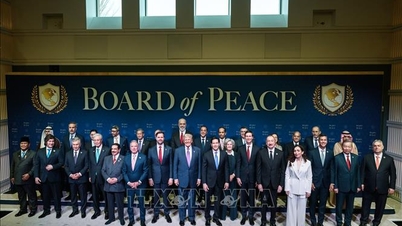
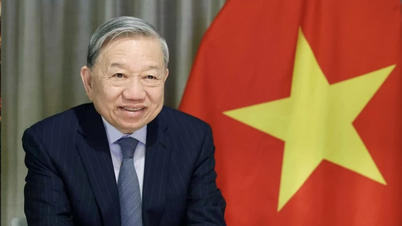
![[Photo] General Secretary To Lam attends the opening session of the Peace Council on Gaza.](https://vphoto.vietnam.vn/thumb/1200x675/vietnam/resource/IMAGE/2026/02/19/1771516865192_tbttolam5-jpg.webp)



















































































Comment (0)