

Warning about scams involving silent phone calls.
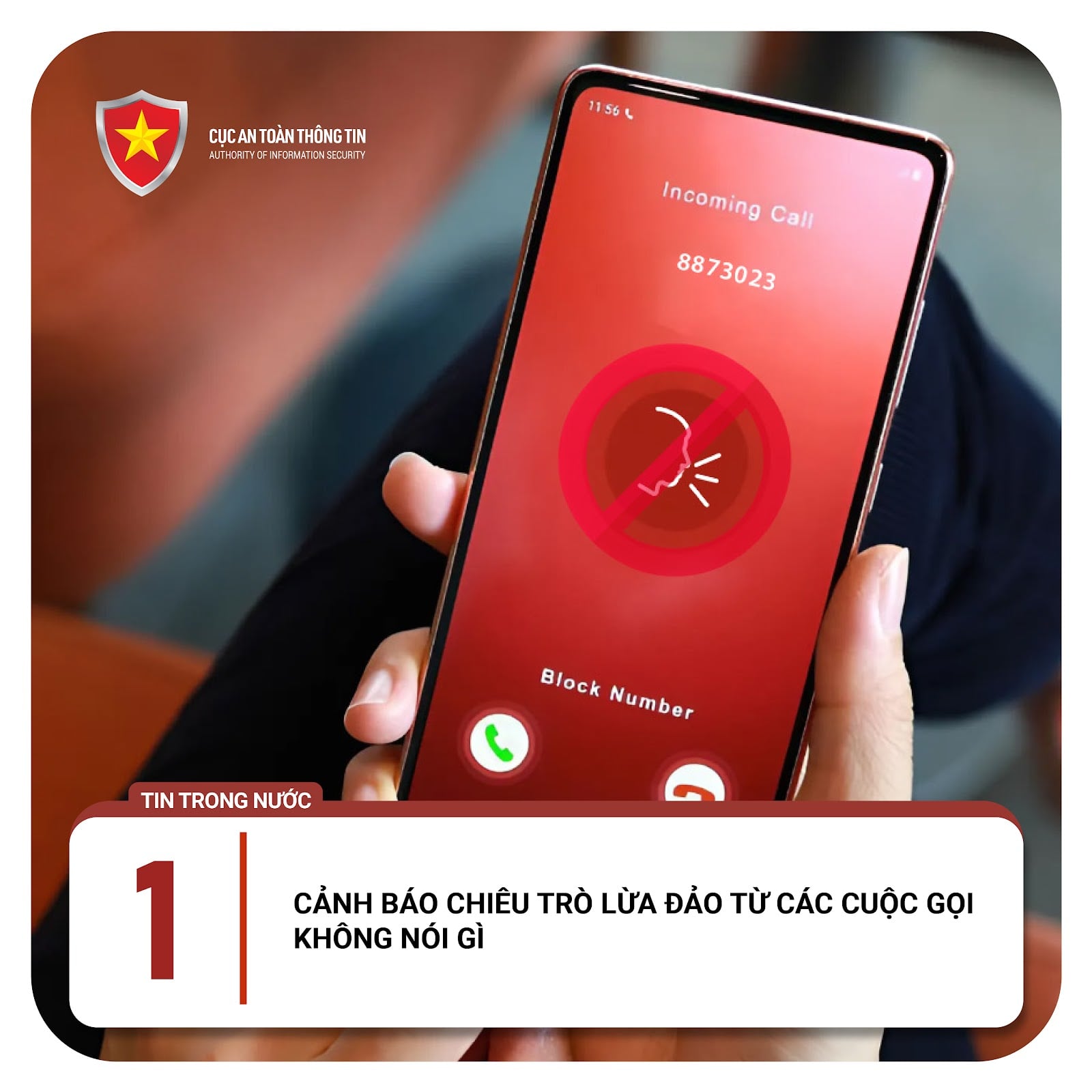
Recently, there has been an increase in customers receiving numerous strange calls from impersonators, calls with no sound, or calls with no voice, causing inconvenience. Many people have even fallen victim to scams, so be vigilant.
Recently, many mobile phone users have reported frequently receiving calls from unknown numbers, but when they answer, no one responds. This could be due to a technical error or fraudsters intentionally making silent calls to pique curiosity and encourage callers to return. This can result in unusually high telecommunication charges. This situation is often referred to as a "bait call," where calls are made briefly and then disconnected, prompting users to call back, resulting in significant costs for a few short seconds without hearing anything from the caller.
This type of scam, once very common in the US and European countries a decade ago, is now making a comeback, causing panic among mobile network customers. This scam method has long been warned about by both domestic and international news outlets. Specifically, scammers use a device to automatically make calls to millions of random mobile phone numbers globally. Exploiting a very common habit of phone users – returning missed calls – this trick has deceived countless people. Most of the phone numbers are difficult to identify because they closely resemble the area codes in some parts of Vietnam.

Recently, the Ministry of Public Security sent out a warning message about the emergence of cybercriminals exploiting publicly available images and videos of citizens to edit, manipulate, and blackmail them with fake videos.
Deepfake technology is a prominent branch of AI. Thanks to its ability to accurately reproduce a person's voice and image, fraudsters can impersonate leaders in online meetings or create videos and calls to commit financial fraud. Furthermore, these scams often exploit psychological factors such as urgency, fear, or power, causing victims to act hastily without verifying the authenticity. Deepfakes are not limited to financial investment scams. Another example is AI romantic scams, where deepfakes are used to create fictional characters that interact with victims through video calls. After gaining the victim's trust, the scammer requests money to resolve emergencies, travel expenses, or loans.
Recently, a group of more than two dozen people involved in these types of scams were arrested after defrauding victims in Singapore, India, and other countries of $46 million. Voice fakes have also been used in scams targeting individuals, as well as in attacks on banks that use voice authentication systems.
The Information Security Department (Ministry of Information and Communications) advises users to be wary of investment advice from celebrities, especially on social media. Carefully observe unnatural facial expressions in videos. If an investment sounds too attractive, it is very likely a scam. In addition, users should limit posting content related to personal information on social media to avoid having their information stolen by malicious actors, such as images, videos, or voice recordings. They should also set their accounts to private mode to protect personal information. Users should also be wary of unknown messages, emails, or calls that do not provide personal information or account details, or that request their help. Furthermore, paying attention to unusual signs in images, videos, or voice recordings can also help identify scams.
Warning about scams selling electric motorcycle batteries to steal money.
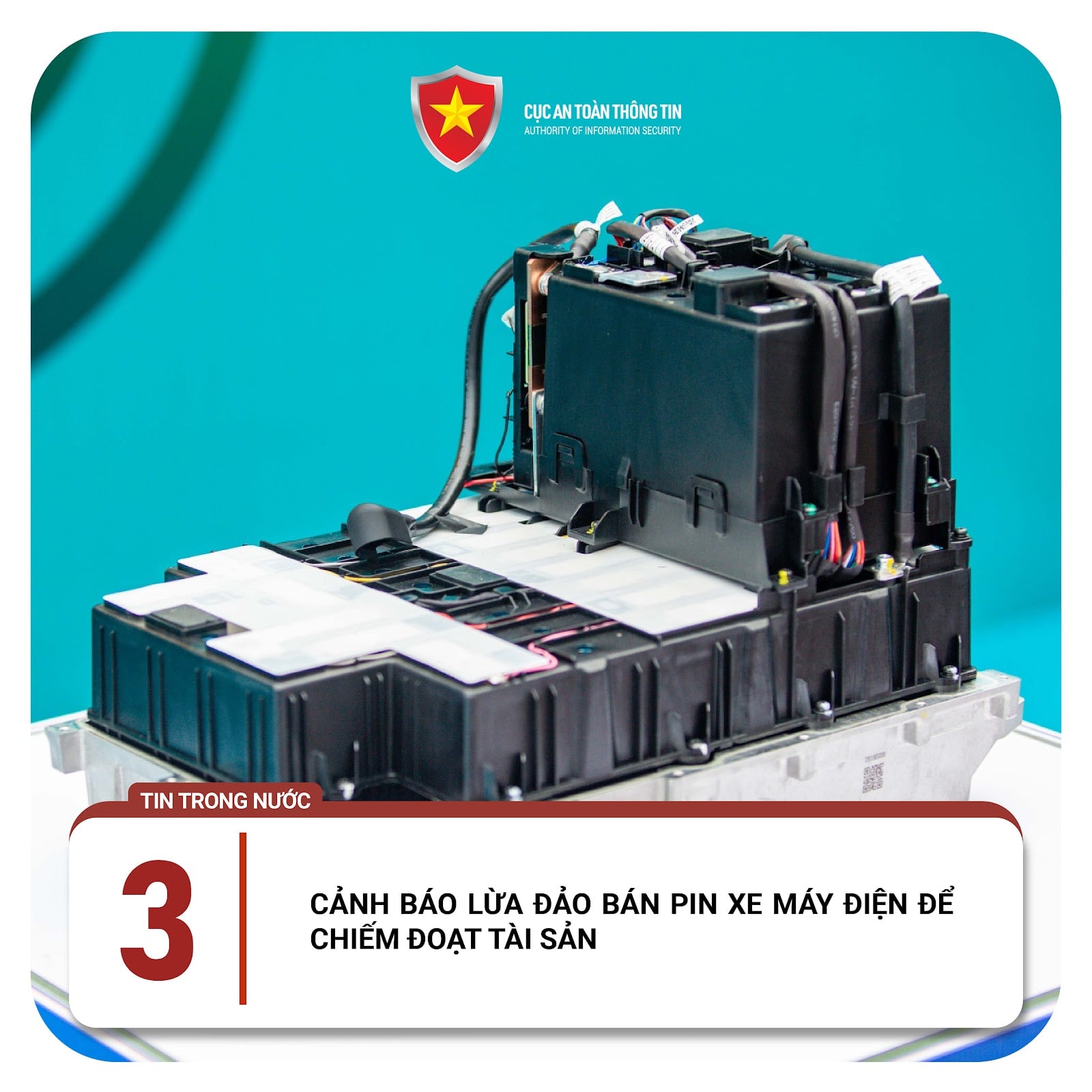
The Investigation Police Department of Hoai Duc District, Hanoi City, is investigating a case of "Fraudulent appropriation of property" and "Forgery of seals and documents of agencies and organizations; use of forged seals and documents of agencies and organizations" that occurred on December 11, 2024, in Chua Tong village, La Phu commune, Hoai Duc district, Hanoi City .
Accordingly, the fraudster has been identified as Do Thi Thu Hien, born in 2000, residing at Do Thuong Hamlet, Pham Kha Commune, Thanh Mien District, Hai Duong Province. She worked as a salesperson for electric motorcycles and electric motorcycle batteries at the Vinfast dealership located at 485 Quang Trung, Ha Dong, Hanoi, from the end of 2022 until October 30, 2023, when the dealership closed, causing Hien to quit her job. During her time as an electric motorcycle salesperson, Hien became acquainted with many customers. After quitting, customers continued to contact Hien to buy and rent electric motorcycle batteries. Because she lacked personal funds, Hien conceived the idea of fraudulently selling Vinfast electric motorcycle batteries to others for money. She used a fake seal mimicking the Vinfast dealership's seal but with an address in Chuc Son Town, Chuong My District, Hanoi, and created a fake battery handover document based on the Vinfast electric motorcycle dealership's template, then used the fake seal to stamp the document. Later, Hien used that document to sell electric motorbike batteries to others and embezzled the money.
Scams involving the sale of counterfeit and substandard goods on social media are no longer uncommon. The common tactic used by these scammers is to create fake social media pages, post information and images of products, and advertise them at prices significantly lower than market value. The personal Facebook pages of these scammers often lack transparent personal information. Furthermore, the scammers participate in online groups and continuously post advertisements to attract user attention. Many even forge documents related to product authenticity certificates and company seals to increase credibility and build trust with buyers. Once a victim approaches and agrees to buy, the scammer requests a deposit, then absconds with the money and blocks all communication with the victim.
The Information Security Department (Ministry of Information and Communications) advises people to be cautious when conducting transactions on social media or online. In addition, people should verify the identity of the seller, research the seller's credibility and product quality before purchasing, and avoid transferring deposits to prevent fraud. Maintain vigilance and proactively protect personal information, especially important information such as citizen identification cards and bank account information. Specifically, do not transfer money or provide OTP codes to unknown individuals; be cautious and carefully verify information received from social media and calls from unknown sources. Do not access any links or attachments received from unclear sources.
Beware of calls impersonating the Fire Department.

Recently, the Calgary Fire Department (Canada) announced that they have been impersonated by scammers who proactively contact people via phone calls with the aim of stealing information and money.
Scammers call residents, posing as employees of the city's Fire Department and offering to provide routine maintenance services for gas stoves (heating equipment that uses gas). Besides introducing and offering services, they also inform residents about the serious harm and consequences of not inspecting and maintaining gas-powered appliances for extended periods. To register for the service, the scammers request information such as full name, home address, bank details, etc., and then arrange an appointment for an in-home inspection and maintenance. The Fire Department also stated that with the increasing number of accidents caused by gas leaks, residents will not hesitate to provide information to use the services offered by these scammers.
Information Security Department (Ministry of Information and Communications) People are advised to be vigilant when receiving calls with similar content. Be wary of calls requesting payment via scratch cards, online applications, or e-wallets. Carefully verify information through reputable websites or official portals. Absolutely do not blindly follow instructions or provide personal information without verifying the identity of the caller. When noticing suspicious signs, people should quickly report to the authorities to promptly investigate and prevent fraudulent activities.
Beware of scams exploiting the call consolidation feature.
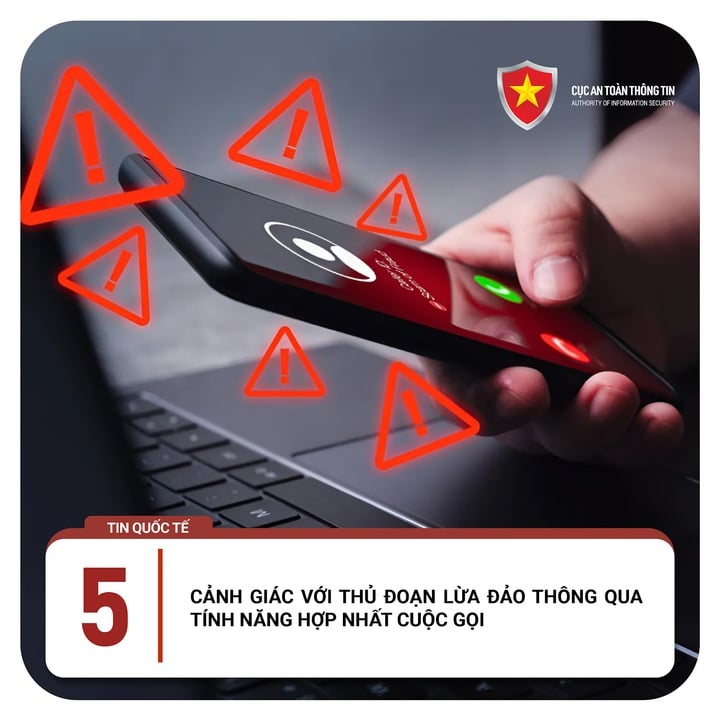
Recently, the National Payment Systems Corporation of India (NPCI) issued a warning about a new and highly sophisticated scam targeting the gullibility of users to steal OTP codes and fraudulently obtain funds through online transactions.
The scammers proactively approach victims through direct phone calls. Initially, they claim to have obtained the victim's phone number through a friend. It is known that the scammers obtained this friend's identity from the victim's social media friend list. Then, they use the excuse of discussing work and ask the victim to allow this friend to join the call via the merge call feature. In reality, this friend's phone number is a call from the bank providing an OTP code for a transaction the scammers are conducting using the victim's previously stolen bank account. By joining the merge call, the scammers can legitimately obtain the OTP code, which they then use to carry out illegal transactions.
The Information Security Department (Ministry of Information and Communications ) advises people to be vigilant when receiving calls from unknown individuals. Carefully verify the caller's identity through friends and family. Absolutely do not follow instructions, provide important information, or transfer money to suspicious individuals. People are also advised to use scam call detection applications such as nTrust, Truecaller, or Calls Blacklist to detect fraudulent activities early.
Source: https://mst.gov.vn/canh-bao-chieu-tro-lua-dao-truc-tuyen-ngay-cang-tinh-vi-197250224164837108.htm

![[Image] Hanoi's urban life under the challenge of a "scorching hot" environment](https://vphoto.vietnam.vn/thumb/1200x675/vietnam/resource/IMAGE/2026/05/25/1779706979265_nang-nong-t5-2026-minh-duy-7-4636-jpg.webp)


![[Image] Close-up view of the interchange connecting the two expressways and Long Thanh Airport.](https://vphoto.vietnam.vn/thumb/1200x675/vietnam/resource/IMAGE/2026/05/25/1779703378210_ndo_br_z7863716673926-224453a31600126cce10622af6290afd-4549-jpg.webp)
















































































Comment (0)