

Meningococcal disease occurs sporadically throughout the year, and its symptoms are easily mistaken for other conditions, leading to delayed treatment and potentially severe long-term consequences.
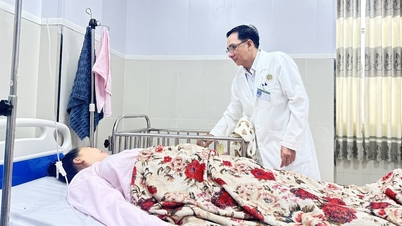
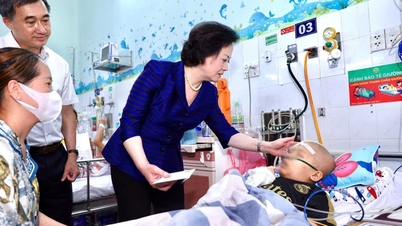
In mid-June, Ngoc Anh (5 months old) was brought to the hospital by her family for treatment with a high fever of 40 degrees Celsius, lethargy, refusal to feed, convulsions, and several red, star-shaped hemorrhagic spots on her skin.
The family reported that the child had symptoms of high fever and a red rash two days before being admitted to the hospital. They assumed the child had dengue fever and treated it themselves with over-the-counter medication. Only when the condition did not improve did they take the child to the hospital. The child was not old enough to receive the dengue vaccine.
Dr. Phan Thi Thu Minh, Deputy Head of the Pediatrics Department at Tam Anh General Hospital in Hanoi , stated that meningococcal meningitis is an acute infectious disease primarily transmitted through the respiratory tract, causing conditions such as meningitis, sepsis, pneumonia, arthritis, otitis media, and pericarditis. Among these, meningitis and sepsis are the two most common and dangerous conditions, potentially leading to death within 24 hours. Even if the child survives, they may face serious sequelae such as limb amputation, finger or toe amputation, brain damage, and hearing loss.
People infected with meningococcal bacteria typically experience symptoms such as fever, severe headache, nausea and vomiting, stiff neck, and the appearance of star-shaped purpura on the skin 1-2 days after the fever... The appearance of purpura, especially on the trunk and legs, indicates that the patient is severely intoxicated and facing complications from meningococcal meningitis. Cases are usually concentrated in the fall, winter, and spring. Although summer is not the season for meningitis, scattered cases still occur in the context of purulent meningitis.
Everyone is susceptible to meningococcal disease, however infants and young children are at the highest risk. Many cases are detected late, with patients already in a severe condition, due to symptoms being mistaken for the flu or dengue fever.
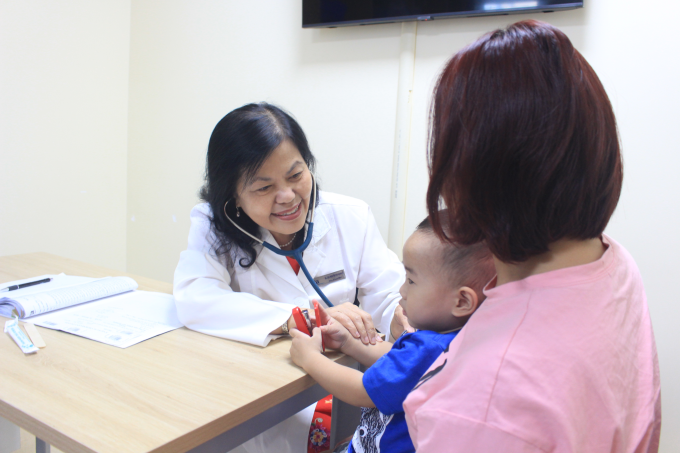
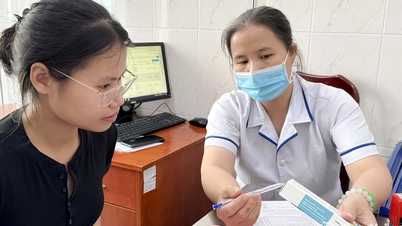
Children are examined at the Pediatrics Department, Tam Anh General Hospital System. Photo: Moc Thao
For example, in early June, the Bac Ninh Center for Disease Control (CDC) recorded two cases of meningococcal disease in Yen Phong district. The patients were a 4-year-old boy and a 9-year-old girl, siblings from the same family, who had not been vaccinated against meningococcal disease. In late May, the children had symptoms of fever, headache, cough, and runny nose, and although they were prescribed medication at a clinic, their condition did not improve.
Subsequently, the children developed scattered necrotic purpura all over their bodies, accompanied by pain, and had to be transferred to the National Children's Hospital for treatment. To date, the health condition of the two children is stable, and no similar cases have been recorded.
According to the Bac Ninh CDC, meningococcal disease has a high rate of complications and mortality (10-20% complication rate, 8-15% mortality rate), and the rate of asymptomatic carriers is 5-25%. The disease has the potential to spread into an epidemic, therefore, monitoring and preventive measures have been implemented as soon as cases are detected.
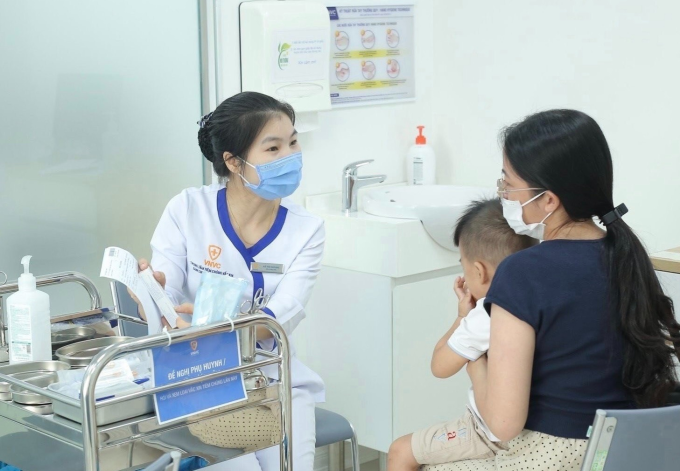
A family has their child vaccinated against meningococcal disease at VNVC. Photo: Moc Thao
Dr. Bach Thi Chinh, Medical Director of the VNVC Vaccination System, stated that preventing meningococcal meningitis is crucial to minimizing the incidence rate. Recommended measures include personal hygiene such as frequent handwashing; disinfecting the throat and mouth; eating a nutritious diet and exercising to improve overall health; and regularly cleaning living and working spaces. People should seek medical attention if they suspect they have the disease. For those who have been exposed to the source of infection, doctors may prescribe preventive medication.
To prevent the disease, the most effective and proactive measure is vaccination. The bacteria that cause the disease belong to 13 different groups, the most common being A, B, C, X, Y, Z, and W135. Vaccines for groups A, C, Y, and W135 are currently available and are indicated for children aged 2 years and older. Dr. Chinh advises families to understand the importance of vaccination and have their children vaccinated early.
At VNVC, we offer vaccines such as: Prevenar 13 (Belgium) and Synflorix (Belgium) to prevent pneumococcal diseases; VA-Mengoc-BC (Cuba) and Menactra (USA) to prevent meningococcal diseases; Hexaxim 6-in-1 (France) and Infanrix Hexa (Belgium), Quimi-Hib (Cuba) to prevent diseases caused by Hib bacteria. All vaccines have been proven effective, safe, create active immunity for the lungs and respiratory system, prevent co-infection with multiple diseases, and reduce severe progression and mortality.
Chile
Source link

































































































Comment (0)