

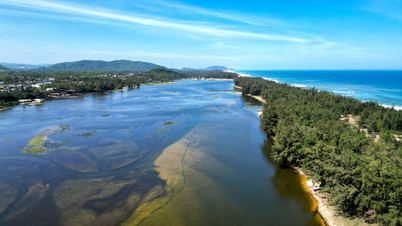
The Dinh River, especially the section from Tan Xuan (Ham Tan) to Da Dung Dam, which flows through La Gi town in Binh Thuan province, is very beautiful. During holidays and festivals, local people often choose this section of the river for recreation and picnics.
The river's distinctive beauty lies in its rocks, bamboo-lined banks, and shady trees, especially the patches of lush green vegetation that grow even during the dry season.
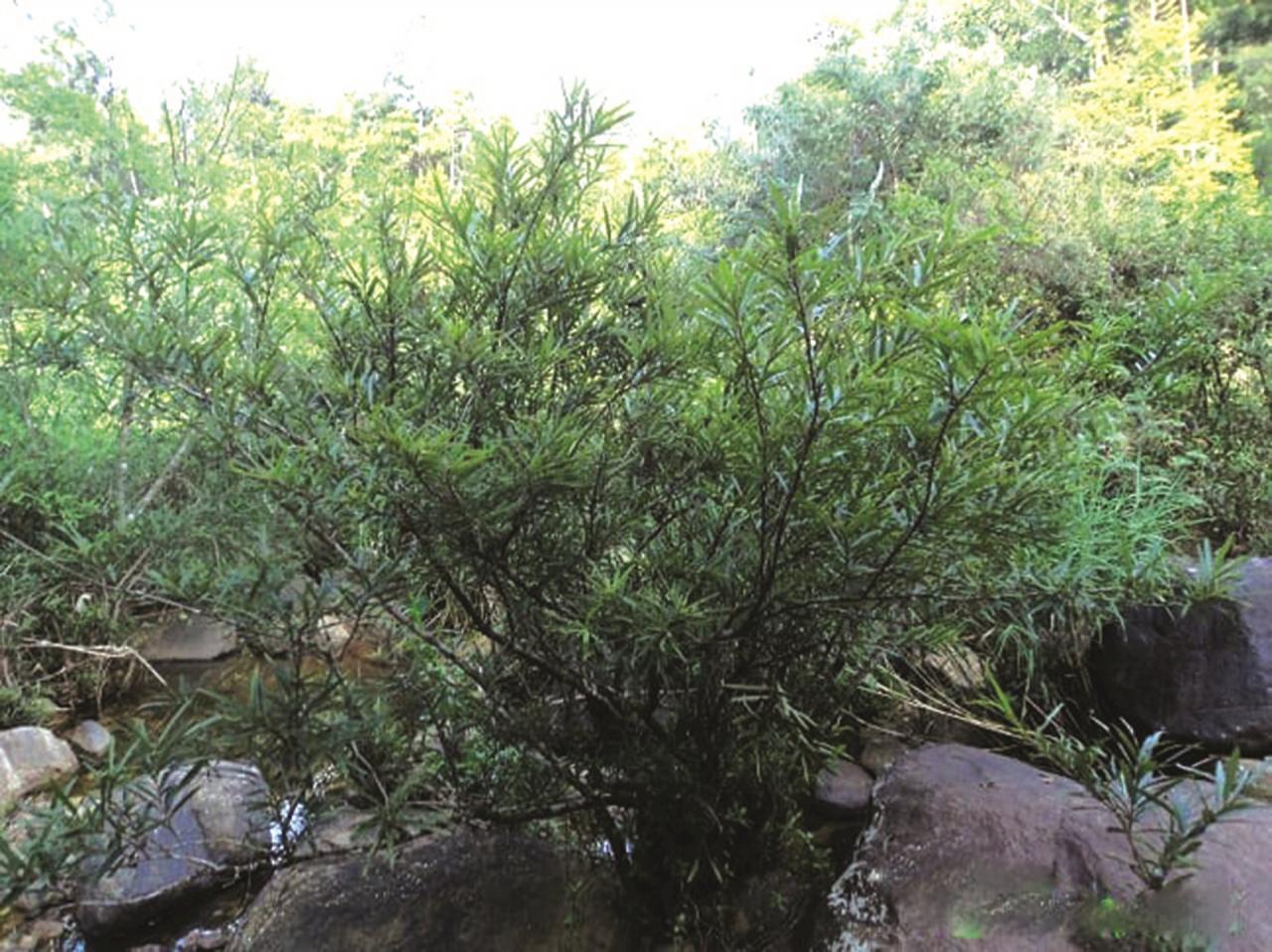
The rù rì tree has a very flexible trunk, long green leaves, and grows abundantly in rivers and streams, forming clumps and bushes, both on the ground and in rocky crevices. Many rù rì trees have large trunks and beautiful shapes, which buyers choose to use as ornamental plants. In 2008, there was a time when Chinese people scoured Vietnam to buy rù rì trees. A single beautifully shaped rù rì tree trunk could fetch millions of dong.
The Rù Rì tree, a species with extraordinary vitality, clings to the rocks and endures the floodwaters, no matter how high they rise. Once the flood subsides, the tree straightens up again. Even in the dry season, no matter how arid, it sprouts new leaves and shoots. The vibrant green of the Rù Rì tree adorns the Dinh River, making it cooler and more poetic. The Dinh River is a charming scenic spot in La Gi.
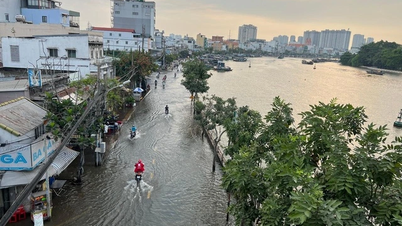
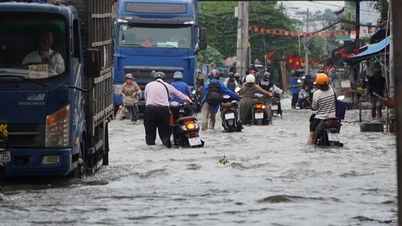
For more than half my life, I've lived by the river, surrounded by the rustling bushes brimming with memories. I keep wondering how the life of the rustling bush resembles the lives of the people of my Vietnamese homeland. People who toil their whole lives, struggling amidst incredibly harsh weather. Every year, countless natural disasters befall them. In the hot season, the sun scorches the sky and the earth. Fields crack, trees wither. When the rainy season comes, storms follow storms, floods upon floods. People are like the rustling bushes, clinging deeply, wrapping themselves tightly to the earth and rocks, enduring the hardships. When the storms subside and the floods recede, they rise again, binding their pain, shouldering the burden of cleaning up their homeland, "cleaning up" their lives.
In Central Vietnam, or even in the North, you can tell whether the floodwaters were high or low just by looking at the walls. But there are also years when the floodwaters leave no walls to bear witness, forcing people to live on their rooftops; the moss and debris clinging to the rafters and beams are proof of the flood. Similarly, seeing a pile of debris swaying on the branches of a river or stream tells you that the river was submerged in water that year.
Year after year, generation after generation, people, like rustling trees, endure storms and floods to survive and give back the greenery to the world.
Source































































































Comment (0)