

Over the years, the education and training sector in ethnic minority and mountainous areas has received special attention from the Party, the State, all levels of government, the Ministry of Education and Training , and the Provincial People's Committee through support policies and investment for development. As a result, the education and training sector in ethnic minority and mountainous areas of the province has undergone significant changes.
Preparing ethnic minority children well for first grade.
The project "Strengthening Vietnamese language skills for preschool children and students in ethnic minority areas in the period 2016-2020, with a vision to 2025" has been implemented by schools through many effective solutions to improve the quality of Vietnamese language teaching for ethnic minority students, ensuring that students achieve the Vietnamese language proficiency standards for each grade. Accordingly, schools have organized preparatory Vietnamese language classes for first-grade students during the summer; and organized training for 100% of management staff and teachers on teaching Vietnamese to ethnic minority students. In addition, a Vietnamese-speaking environment was created for students through Vietnamese language teaching activities in various subjects and educational activities such as organizing learning games, increasing teaching time, and Vietnamese language exchange activities. As a result, in the 2022-2023 school year, 11,260 out of 11,551 ethnic minority students completed their class programs, achieving a rate of 97.5%.
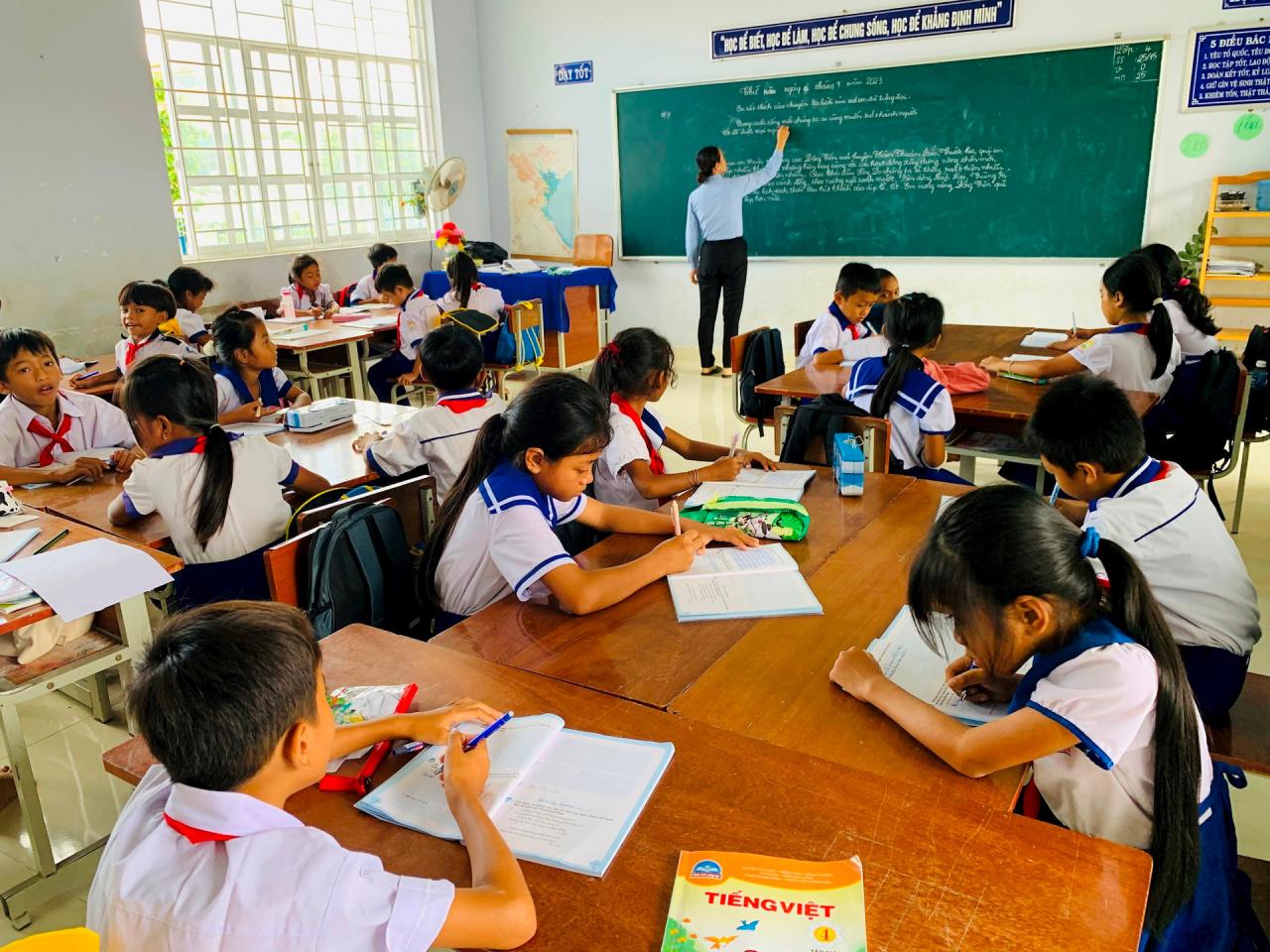
In addition, primary education institutions organize the teaching and learning of ethnic minority languages in a way that suits the actual conditions and needs of students. Accordingly, at the primary level throughout the province, 4 districts, 12 schools, and 152 classes with 3,679 students are learning the Cham language. The units implement Cham language teaching for 2-4 lessons per week, suitable to the school's practical situation. As a result, 3,674 out of 3,679 students completed the Cham language program, achieving a rate of 99.9%. Furthermore, schools have strengthened the organization of specialized topics, developed model activities in the field of language development, enhanced life skills education, helped children become more confident in communication, and focused on teaching essential social skills to prepare them well for first grade.
Prioritizing investment in education in ethnic minority and mountainous regions.
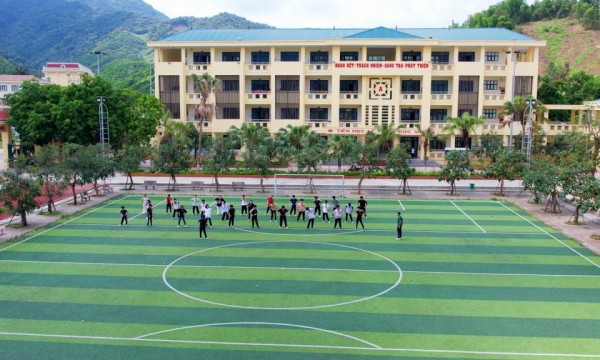
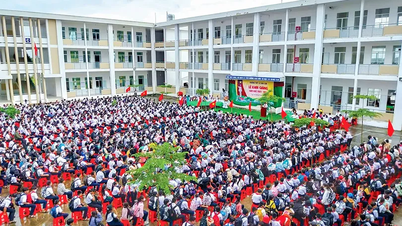
Furthermore, the network of schools and classrooms, especially those with a large number of ethnic minority students, has received significant investment and construction, ensuring adequate facilities to gradually improve the quality of teaching and learning. In particular, the specialized education system (ethnic minority boarding schools and ethnic minority semi-boarding schools) is increasingly demonstrating positive effectiveness. Policies and regulations regarding ethnic minority administrators, teachers, and students are fully and promptly implemented. Facilities meet the learning needs of students attending two sessions per day, and all schools have specialized classrooms for students to conduct practical experiments in various subjects. Dormitories and dining halls are strategically located within school grounds, meeting the needs of boarding students for accommodation and recreation. In addition, localities have promptly addressed other regulations and policies as stipulated by the Central Government and provincial regulations related to teachers and students, such as allowances for teachers, support for organizing Cham language teaching, allowances for students from ethnic minority groups, support for books, notebooks, rice, and lunch for students in mountainous areas, and allowances for students with disabilities...
The Vietnam Fatherland Front, political and social organizations, the Association for the Promotion of Learning at all levels, the "Continuing the Journey to School for Children" Fund, and the collective of cadres, teachers, and staff actively participated in mobilizing children to attend classes and return to school; building and maintaining many models to help students in difficult circumstances, poor students, and ethnic minority students... As a result, the school attendance rate has increased significantly, and the number of students repeating grades or dropping out has decreased. Evidence shows that the dropout rate among ethnic minority and preschool students has decreased significantly each year; the graduation rate for junior and senior high school students has increased, with the high school graduation rate for ethnic minority boarding students reaching 99.63% in the three years from 2021; and reaching 100% in the 2022 and 2023 academic years, an increase of 0.37%, and maintaining a stable annual graduation rate…
According to the Department of Education and Training, despite the achievements, many teachers have not received the required standard training in ethnic minority languages. Therefore, they lack in-depth expertise in this subject, and teachers of ethnic minority languages currently receive mainly training and professional development locally. Furthermore, while all teachers work in ethnic minority areas, the policy only applies to areas with particularly difficult socio-economic conditions, while ethnic minority and mountainous regions do not benefit from the policy.
To improve the quality of education and training in ethnic minority and mountainous areas, the provincial education and training sector continues to refine the structure and network of educational institutions, diversifying teaching and learning methods. It constantly strives to improve the quality of education, flexibly implementing educational programs suitable to the learning conditions of students, linking education with the practical development of the socio-economic conditions and the cultural characteristics of the locality. Alongside this, it develops and improves the quality of the teaching staff and education management personnel, ensuring sufficient numbers, professional standards, and a reasonable structure. It fully implements policies for teachers and students. It increases budget and infrastructure investment for ethnic minority education...
Source

![[Photo] Prime Minister Pham Minh Chinh presides over a meeting on private sector economic development.](/_next/image?url=https%3A%2F%2Fvphoto.vietnam.vn%2Fthumb%2F1200x675%2Fvietnam%2Fresource%2FIMAGE%2F2025%2F12%2F20%2F1766237501876_thiet-ke-chua-co-ten-40-png.webp&w=3840&q=75)










































































Comment (0)