

Recognizing the importance of herbs on the dinner tables of Vietnamese trainees, Utsumi and his Vietnamese wife sought out the secrets to cultivating 15 types of herbs in Osaka.
Three years ago, every Saturday morning, from inside his father's sushi restaurant in Tondabayashi, Osaka, chef Utsumi Shoki would see groups of Vietnamese trainees cycling dozens of kilometers to find and buy food from their homeland.
"They had to go to Vietnamese grocery stores in the city to find spices and herbs grown locally there," Utsumi recounted. He realized the indispensable role of herbs on the Vietnamese dinner table, so he started importing spices and herbs from Southeast Asian countries to sell to trainees in Japan.
However, after a while, worried that imported produce was not fresh and contained pesticide residues, in 2020 Utsumi decided to borrow a plot of land from her maternal grandfather and apply for a farming permit from the local government to grow herbs herself.
Utsumi's bold idea was met with strong opposition from his family, "because so few people know about herbs." But after careful explanation and outlining a long-term strategy, the 24-year-old finally received his grandfather's approval.
"There are many Vietnamese restaurants in Japan, so the demand for herbs nationwide is huge, while most of the herbs at that time were grown on a small scale and spontaneously, without any standardized cultivation practices," Utsumi told VnExpress .
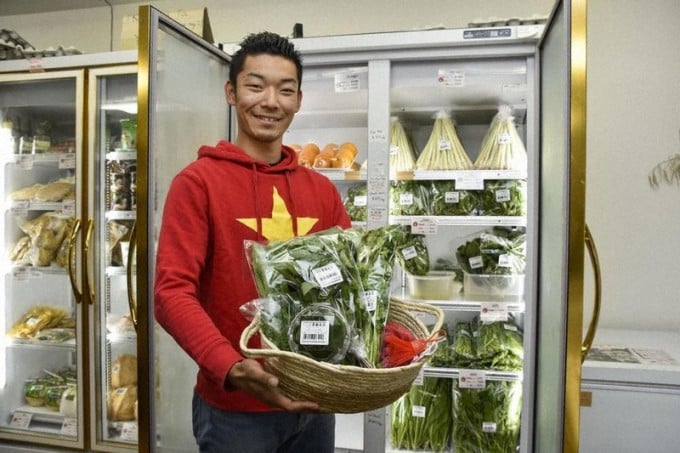
Masaki Utsumi with her harvested herbs grown in Osaka. Photo: Mainichi
Utsumi's maternal grandfather, who owned a farm, began to pass on to him the experience he had accumulated over more than six decades of farming . However, he was not immune to setbacks when growing tropical vegetables on Japanese soil.
"I struggled to control the temperature suitable for basil, the growth rate of sawtooth coriander, but the biggest challenge was cilantro. My cilantro beds always flowered before they were mature enough, so I couldn't produce satisfactory results for the first year," Utsumi recalled.
Undeterred, he and his girlfriend, Nguyen Trang Dung, who was then a student studying abroad, continued to travel around seeking further advice from Japanese agricultural experts.
"We were surprised to learn that the herb only thrives in temperatures of 15-20 degrees Celsius, contrary to many people's expectations of a tropical herb," the two recalled the experience they gained when they consulted the local agricultural office.
After successfully growing coriander, Utsumi went on to "conquer" 14 other different herbs using cultivation techniques he had learned from his own experience.
The next challenge Utsumi had to solve was the harvesting, preservation, and packaging of her product. Identifying potential customers as Vietnamese restaurants in Osaka, where most owners are Japanese and have very strict requirements, Utsumi and Dung decided that this stage "had to be done meticulously."
"Vegetables sold in Japan have to be very clean; even a small amount of dirt on the packaged bunches is unacceptable. The growing process is very hard work, so we have to cherish the fruits of our labor," said Dung, 29.
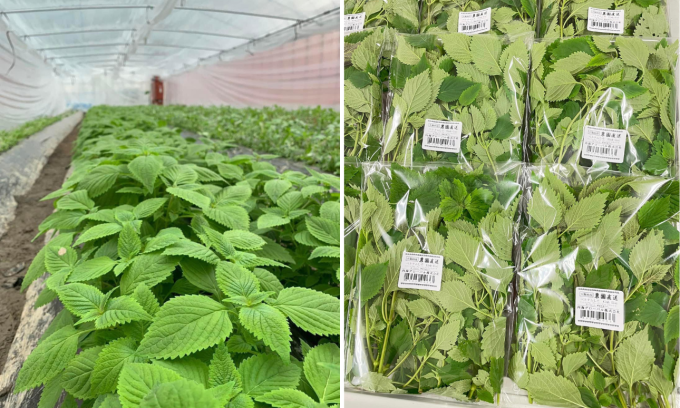
Vietnamese coriander and finished products for sale by Masaki Utsumi and Nguyen Trang Dung in Osaka. Photo: Facebook/Sho-Kyu Fish Fin Shop.
After carefully researching the needs and styles of Southeast Asian restaurants in Osaka, Dung and Utsumi brought their first bundles of herbs to these establishments in 2021 to offer samples and promote their products.
"These restaurants previously sourced herbs from makeshift farms, and after picking and washing, only about 70-80% could be used. Seeing that our herbs were clean and stayed fresh longer, they were satisfied and started placing orders, with about 10-15 orders per week in the beginning," Dung said.
Their bunches of herbs quickly became popular in Southeast Asian restaurants in Osaka. They then decided to get married and establish the Shark Fin Shop, specializing in cultivating and selling herbs.
Recognizing the boom in online business models in Japan during the Covid-19 pandemic, Dung strengthened online connections with Vietnamese restaurants across the country.
Orders for vegetables began pouring in from all over, including restaurants in Hokkaido, Japan's northernmost prefecture, and Okinawa in the far south. Last month, Japan's Mainichi newspaper wrote about the couple's entrepreneurial story, calling Utsumi's herbs "a refreshing breeze carrying the 'herbal' aroma of Southeast Asia."
"There were times when we couldn't keep up with market demand. The Vietnamese trainee and student community warmly embraced our herbs and called them 'authentic flavor'," Utsumi proudly stated. The products from the Fish Fin Shop have been distributed in approximately 17 prefectures across Japan, achieving sales of 30 million yen (approximately 5 billion VND) in 2022.
After the product was well-received, he expanded his farming operation, built more greenhouses, and adjusted the temperature to ensure a year-round supply of herbs. The herbs are usually harvested early in the morning and transported by truck to restaurants in Osaka on the same day.
Dung said that 40% of her vegetable customers are from the Vietnamese community in Japan, 20% are foreigners, and the rest are locals. "Japanese people also have a great demand for herbs. We want them to know more about Vietnamese vegetables and Vietnamese dishes," she said.
The couple said they are pursuing the idea of getting their herbs on supermarket shelves in Osaka to make the product more widely available.
"The satisfied smiles of customers when they receive fresh, clean produce are what motivate me to pursue my dream of making the quintessential Vietnamese vegetables a specialty in this region," Utsumi said.
Duc Trung
Source link

![[Photo] Prime Minister Pham Minh Chinh attends the Conference on the Implementation of Tasks for 2026 of the Industry and Trade Sector](/_next/image?url=https%3A%2F%2Fvphoto.vietnam.vn%2Fthumb%2F1200x675%2Fvietnam%2Fresource%2FIMAGE%2F2025%2F12%2F19%2F1766159500458_ndo_br_shared31-jpg.webp&w=3840&q=75)

































































































Comment (0)