

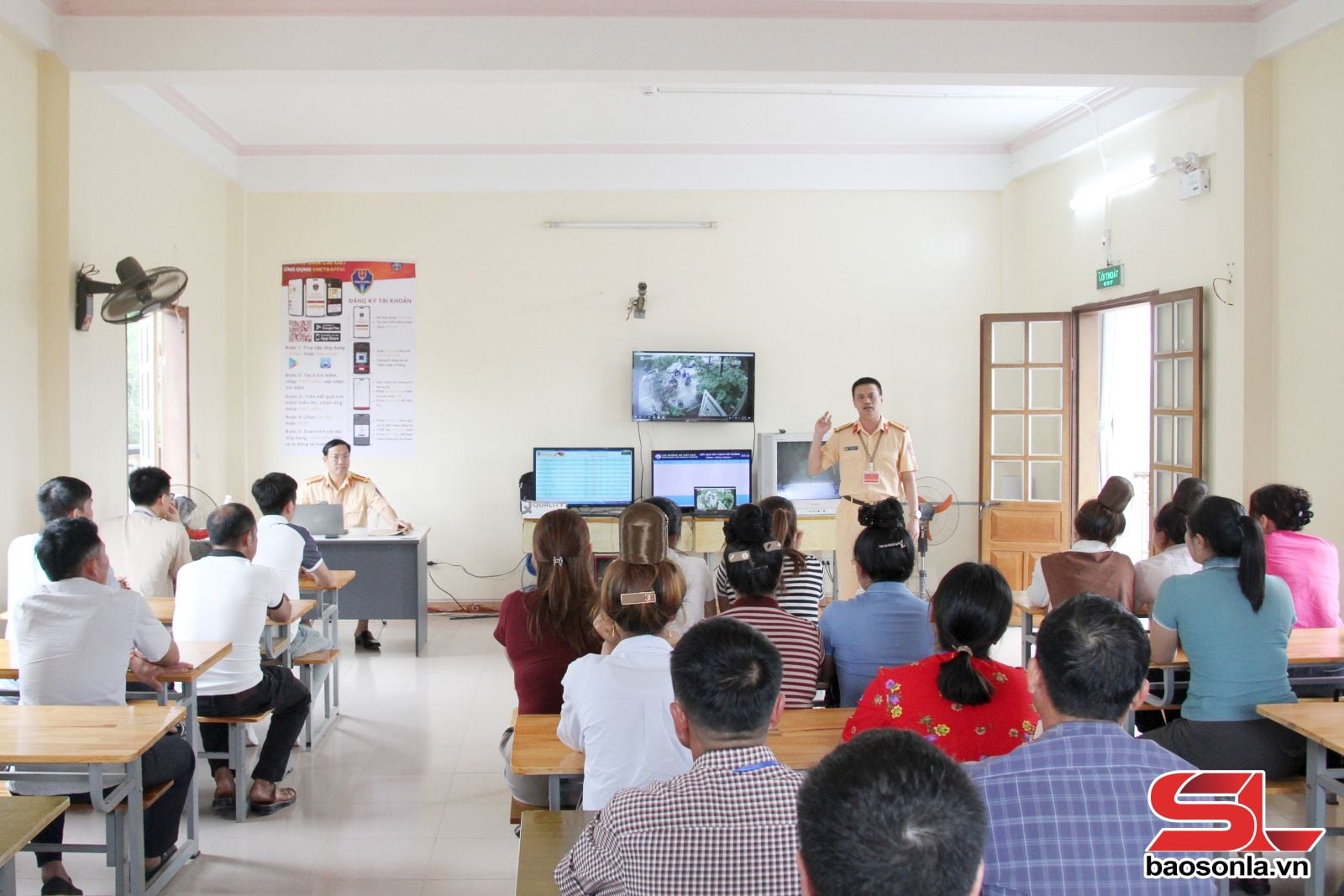
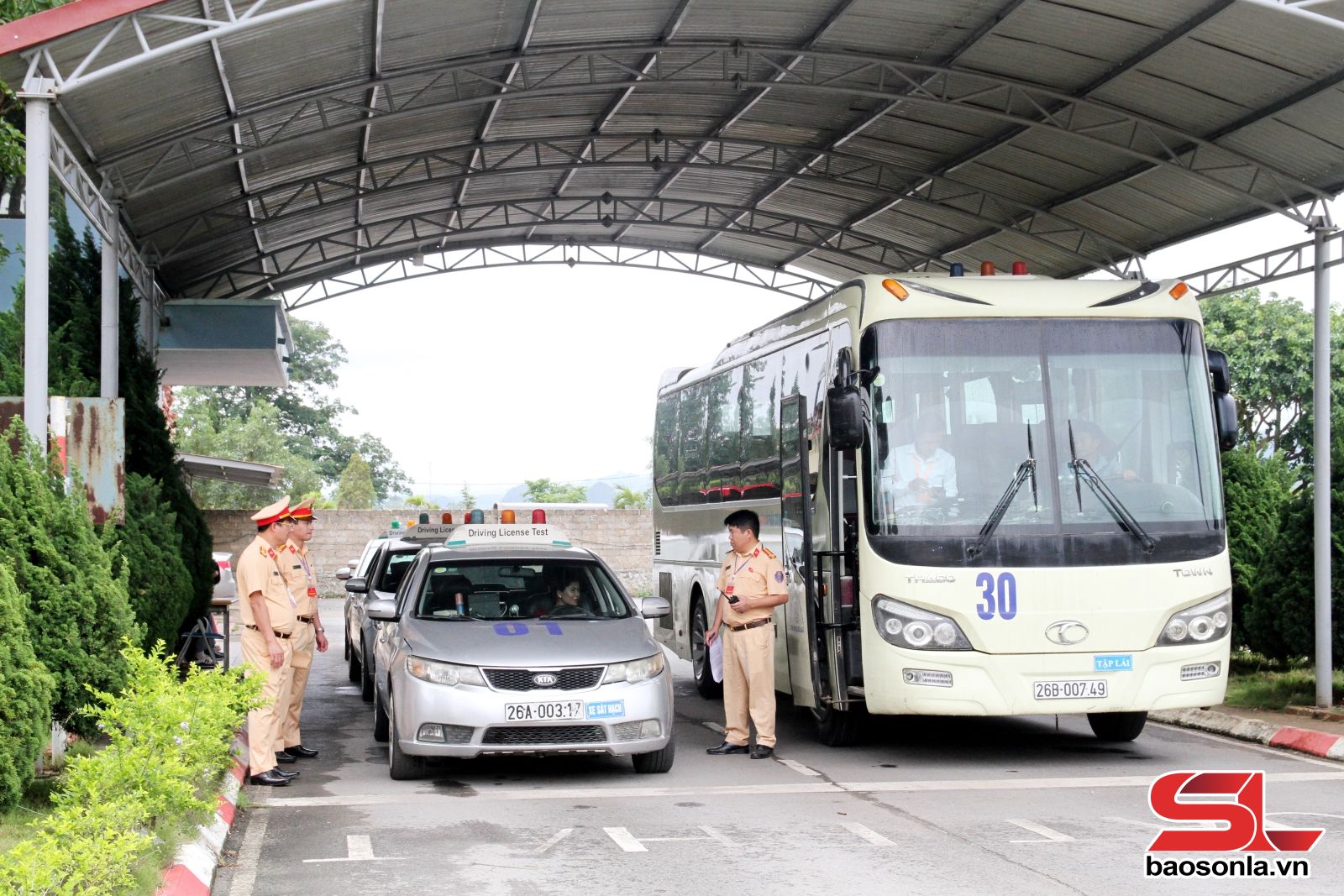
Observations at the Type 1 Motor Vehicle Driving Test Center in Chiềng Mung commune show that the organization of the driver's license examination for automobiles is serious and systematic. To obtain a driver's license, candidates must pass several tests, including: theory test, simulation test, driving test on a course, and road test. The entire examination process, from theory to practice, is organized in an automated manner and closely monitored using technology.
The theoretical exam room uses an automated scoring system; the simulation and driving test areas are equipped with cameras and electronic sensors to monitor every action of the candidates. There are no longer any "gaps" for subjective interference; each test result is recorded digitally, stored, and automatically cross-referenced, ensuring transparency, objectivity, and fairness for all candidates. Before the exam, the testing area is thoroughly inspected by traffic police. The markings, bricks, and even empty water bottles are all cleaned up, ensuring there are no soft surfaces where candidates could learn tricks or cheat to pass the test.

Specifically, before entering the examination sections, candidates are briefed on the examination regulations and shown videos of traffic accidents prior to the test to help them improve their awareness and sense of responsibility when operating a vehicle. The videos, approximately 15 minutes long, recreate various situations that easily lead to accidents, such as illegal turning, reckless overtaking, drunk driving, or lack of observation at intersections. Some situations will also be integrated into the simulation test to assess the candidates' ability to handle real-world situations.
Lieutenant Colonel Hoang Minh Tuan, Head of the Motor Vehicle Driving License Examination Team, stated: Before entering the examination room, candidates must undergo several rounds of checks to detect and prevent high-tech cheating devices. Violations will be recorded and processed according to regulations. In addition, sensor-based scoring systems and surveillance cameras monitor the entire examination process, eliminating subjective interference and ensuring that results accurately reflect the candidate's actual abilities. Tightening control aims not only to detect cheating but also to create fairness for all candidates. Each driver's license issued must be the result of a serious and objective evaluation process; each license holder must possess the necessary skills, awareness, and ethics for safe driving.
With stricter examination procedures, the atmosphere at the driving tests has also changed significantly. Candidates are more proactive in studying and reviewing before taking the test. Failing and having to retake the test has become more common, reflecting the increased requirements for the final exam. This contributes to improving the quality of drivers from the outset, reducing risks when participating in traffic later on. Ms. Hoang Thu Huong from Chieng Sinh ward shared: "Participating in the driving test, I felt quite reassured because every step was clearly explained, from gathering to the test itself. The officers specifically reminded candidates of each step, making it easy for them to follow along and preventing confusion. As a result, candidates felt more relaxed and focused on performing better."
Candidates must thoroughly review both theory and practice before taking the exam; they should spend time practicing driving many times, familiarizing themselves with real-life situations, so that they can handle the requirements well during the exam. Mr. Lo Van Phong from Ta Khoa commune happily said: "Initially, I was a little nervous, but when I arrived, I received detailed instructions, so I gradually calmed down. The exam sections were arranged in a clear order, and the officers reminded me of each step, so I didn't get confused. I am very happy that I passed all the sections of the exam and received my driver's license."

After more than a year of taking on the task of conducting driving tests and issuing driver's licenses, the Traffic Police Department has organized 66 testing sessions, including 20 for cars and 46 for motorcycles, with nearly 45,000 candidates participating. Notably, the pass rate for the car test was only about 50%. This figure reflects the actual quality of training and testing, as the examination process is now more strictly controlled. In particular, candidates who pass the test will have their driver's license numbers generated and synchronized in the Traffic Police Department's database system within just two hours, ensuring that citizens meet the requirements to operate vehicles.
Improving the quality of training, coupled with strict control over the examination process, are solid steps in the roadmap to reducing traffic accidents and raising public awareness of traffic culture.
Source: https://baosonla.vn/xa-hoi/chat-che-trong-sat-hach-lai-xe-JRo37ZbDg.html

![[Photo] Reception to welcome General Secretary and President To Lam and his wife on their State visit to the Philippines](https://vphoto.vietnam.vn/thumb/1200x675/vietnam/resource/IMAGE/2026/06/01/1780295488620_vna-potal-chieu-dai-chao-mung-tong-bi-thu-chu-tich-nuoc-to-lam-va-phu-nhan-tham-cap-nha-nuoc-toi-philippines-8798060-7855-jpg.webp)





















































































Comment (0)