


Streamline the workforce and select officials who possess both virtue and talent.
The 14th National Congress defined the thinking, vision, and strategic decisions to firmly advance in the new era of the nation. This historical mission places very high demands on the Party's personnel preparation work, requiring the building of a key cadre with sufficient qualities, capabilities, and prestige to lead and guide the successful completion of revolutionary tasks in the new stage of national development.
Looking back over the past year since the implementation of the organizational restructuring revolution, Mr. Nguyen Thanh Binh, Deputy Head of the Central Organization Committee, affirmed: The streamlining has not only reduced the number of organizations and units, reduced staffing, and reduced recurrent expenditures, but more importantly, it has improved the effectiveness and efficiency of the apparatus, reduced intermediate levels, and promoted decentralization and delegation of power in a way that is closer to the people, serving them better; it has opened up space, unlocked resources, and created room for socio-economic development in the next phase. In particular, the building and perfecting of the political system's organizational structure demonstrates a strategic vision for the organizational restructuring revolution, considering it the key to ushering the country into an era of progress.
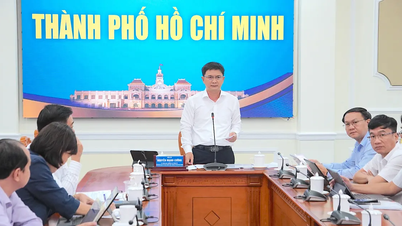
To ensure the smooth, effective, and efficient operation of the system, Mr. Binh believes that it is necessary to focus on key tasks such as continuing to improve and synchronize the Party's institutions and regulations and the State's laws to suit the new organizational model; clearly defining the functions, tasks, and organizational structure in each agency and unit; promoting and effectively implementing decentralization and delegation of power between the central and local levels in the direction of enhancing the autonomy and accountability of localities. Promoting digital transformation to meet the requirements of national development. Improving regulations on personnel work; renewing awareness and improving the quality of the cadre, especially at the grassroots level. Improving mechanisms and policies to attract, value, and develop talented individuals; reviewing, developing, and perfecting job positions; and allocating personnel according to the functions and tasks of each agency and organization in the 2026-2030 period.
According to Hoang Dang Quang, Deputy Head of the Central Organization Department, the preparation of personnel for the 14th Central Committee has been proactively carried out early by the Politburo and the 13th Central Committee, in accordance with Party regulations, ensuring a scientific , rigorous, comprehensive, objective, and transparent process, promoting democracy and intellectual capacity, and balancing standards and structure, as well as continuity, stability, and development.
The 14th National Congress elected the 14th Central Committee of the Party, comprising 180 full members and 20 alternate members, representing over 5.6 million Party members. These are all "key figures" of the Party, as General Secretary To Lam stated in his closing speech: These comrades meet the standards of character, morality, prestige, competence, and qualifications to shoulder the important responsibilities before the Party and the people in the new term – the term that marks the beginning of a new era of national progress.
Presiding over the international press conference, the General Secretary also affirmed a strong message to the international community: The members of the 14th Central Committee are typical representatives of approximately 5.6 million members of the Communist Party of Vietnam, possessing all the necessary standards of moral character, prestige, competence, and qualifications, and were elected by the Congress with high confidence to the Party's leadership bodies between two Congresses to shoulder important responsibilities before the Party and the people in the new revolutionary period.

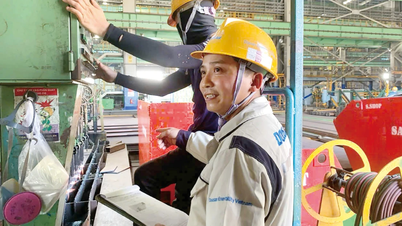
How can we obtain a high-quality workforce?
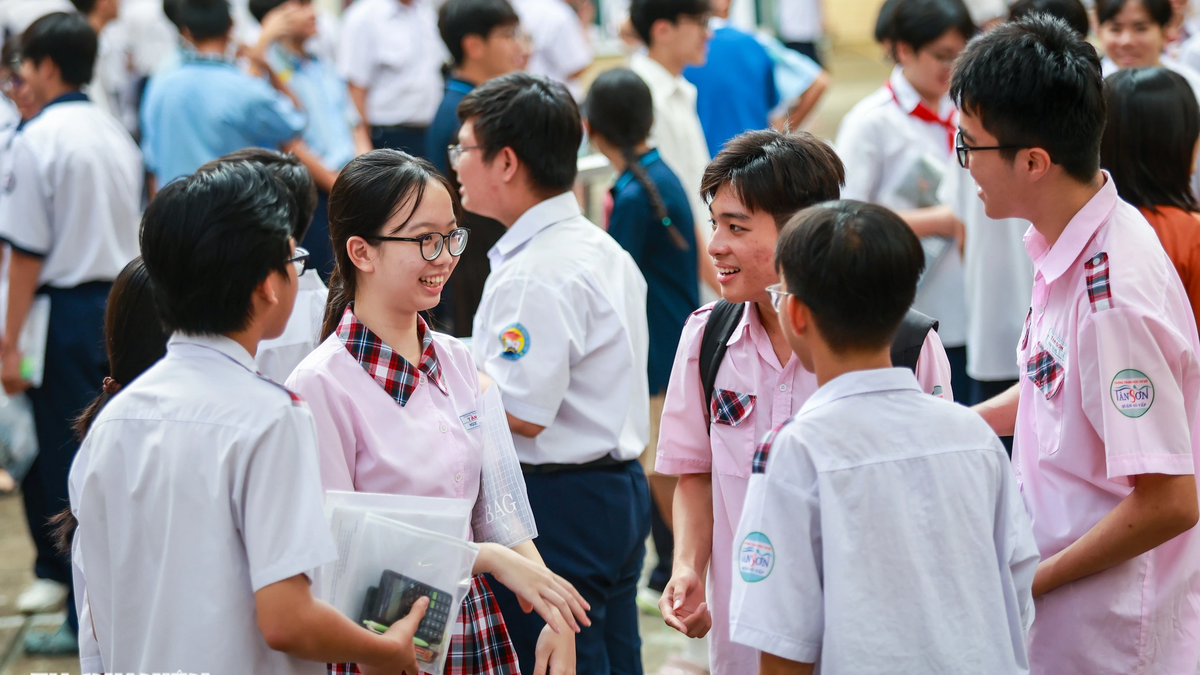
The 14th National Congress identified three strategic breakthroughs to focus on during the term. Regarding human resources, the focus should be on restructuring and improving the quality of human resources, developing high-quality, highly skilled human resources; contributing to increased productivity and labor quality; promoting the attraction and utilization of talent; and encouraging and protecting dynamic, creative cadres who dare to think, dare to act, and dare to take responsibility for the common good. The work of cadre management should be strongly reformed, ensuring fairness, openness, transparency, objectivity, democracy, substance, and effectiveness, especially in the assessment and evaluation of cadres according to the principle of "entry and exit," "promotion and demotion."
With two very clear centenary goals and a GDP growth target of 10% or more starting from 2026, the demand for high-quality human resources in the coming period is immense. To achieve this, human resources are considered crucial. According to Associate Professor Dr. Nguyen Trong Phuc, former Director of the Institute of Party History, the documents of the 14th National Congress set very high goals in the context of a complex and fiercely competitive international environment. Cadres at all levels must innovate their working style, overcome the fear of making mistakes and taking responsibility, and dare to think, dare to act, and dare to take responsibility for the common good. The Central Committee wants to emphasize that without a team of cadres with sufficient intelligence, courage, integrity, and a spirit of action, all major strategies will be difficult to implement.
Mr. Dao Duy Quat, former Deputy Head of the Standing Committee of the Central Ideology and Culture Committee (now the Central Propaganda and Mass Mobilization Committee), observed that the goal of achieving economic growth of 10% or more in the 2026-2030 period requires highly qualified cadres and a well-trained workforce to meet the demands of the coming period. Accordingly, regarding the strategic leadership team, the recent 14th National Congress selected comrades with dedication, vision, competence, and the courage to think outside the box, take action, and assume responsibility, at the central, ministerial, and provincial levels.
However, in the current context, according to Mr. Quat, attention needs to be paid to the grassroots-level (commune-level) officials. The recent implementation of the two-tiered local government system has revealed "many problems." Therefore, further action is needed. Review and evaluate to train and supplement the workforce with qualified personnel at the grassroots level.
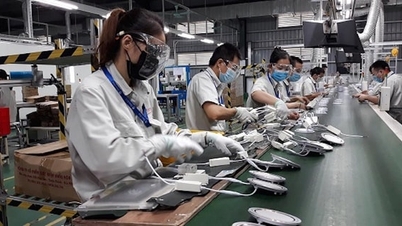
Currently, the proportion of trained workers with degrees and certificates is much lower than in other countries in the region. Furthermore, Vietnam's labor productivity remains low compared to the region, only 59.6% of Thailand's and 52.8% of Malaysia's. In particular, we are facing a serious shortage of highly skilled human resources. Therefore, in the context of the current demands for rapid and accelerated development, in addition to the capacity of strategic-level leaders, Mr. Quat believes that attention should be paid to high-quality human resources in key sectors and strategic technologies such as artificial intelligence, semiconductors, and biotechnology. “Besides training, we need to strengthen policies to attract foreign experts and Vietnamese people living abroad to return to work in the country. At the same time, we need to increase foreign investment to produce technological products linked to technology transfer. In education, we shouldn't only focus on universities and research institutes, but also pay attention to vocational schools to train highly skilled and specialized workers,” Mr. Quat expressed.
Associate Professor Bui Thi An, President of the Hanoi Women Intellectuals Association, stated that the current national context requires a high-quality workforce. Therefore, the training process needs to be aligned with market demands. If domestic training cannot meet the needs, then training abroad should be pursued. In the immediate future, the urgent need for a high-quality workforce is to attract skilled foreign experts to work in Vietnam.
“To achieve economic growth of 10% or more, we must rely on science and technology, innovation, and mastering core technologies in key sectors, rather than investing in a scattered manner. We must move forward through innovation and science and technology to create breakthroughs. Developed countries always progress on a foundation of modern science and technology. Each country has its own strengths. Therefore, we need to identify our strengths to invest heavily in their development, rather than investing haphazardly and in a scattered way,” Ms. An emphasized.

Source: https://daidoanket.vn/chat-luong-nguon-nhan-luc-trong-ky-nguyen-moi.html


![[Photo] General Secretary and President To Lam presides over a meeting on preparations for the review of one year of operation of the three-tiered government system.](https://vphoto.vietnam.vn/thumb/1200x675/vietnam/resource/IMAGE/2026/06/02/1780391821195_a1-bnd-4595-9717-jpg.webp)
































































Comment (0)