

The 2026-2027 academic year marks the second year that the entrance exam for 10th grade in public high schools in Ho Chi Minh City is organized according to the guidelines of the 2018 General Education Program. As a highly competitive exam receiving significant attention from students, parents, and educational institutions, the exam continues to aim at comprehensively assessing mathematical ability, emphasizing the ability to apply knowledge to practical situations, logical thinking, and problem-solving in scenarios relevant to real life.
Based on the official exam for the 2015-2026 school year, this year's exam is designed to maintain a stable structure while offering diversity in context and problem-solving approaches. The questions explore knowledge from the three content areas of the 2018 General Education Program, while also being linked to practical situations related to familiar issues in learning, daily life, and other aspects of life. This not only assesses students' knowledge but also reflects their ability to analyze, reason, and choose appropriate solutions to real-world problems.

Besides basic-level questions designed to ensure the program's learning outcomes are met, the exam also maintains content with a high level of differentiation. These questions require students to apply a comprehensive range of knowledge, combining various mathematical skills and creative thinking to find optimal solutions. Therefore, the exam both fulfills the goal of admission to public high schools and contributes to encouraging teaching and learning oriented towards developing the qualities and competencies that the 2018 General Education Program aims for.
Compared to the official exam in 2025-2026, the official exam in 2026-2027 has minor adjustments to the structure of some questions (Questions 6 and 7), but this does not change the overall structure. The exam content covers the following knowledge areas: Geometry and measurement; numbers and algebra; statistics and probability, closely following the junior high school curriculum, focusing on problems that apply learned knowledge to solve real-world problems. From question 6 onwards, although familiar types of problems are still explored, the difficulty level has been increased, requiring candidates to have good reading comprehension skills, as well as the ability to reason and think logically. A specific assessment of each question in the exam is as follows:
Lessons 1 and 2: These are familiar types of math problems involving graphs of linear functions, quadratic equations, and the application of Viète's theorem. The structure and difficulty level are similar to the official exam for the 2025-2026 school year. The questions are mainly at the basic recognition and application level, making them easy for students to approach and complete if they have a solid understanding of the fundamental concepts.
Lesson 3: Belonging to the Statistics and Probability knowledge area, this problem requires students to directly apply the knowledge they have learned in the junior high school curriculum. The problem's content is clear, familiar, and not tricky, suitable for assessing students' ability to read, understand, process data, and perform calculations.
Lesson 4: This is a practical problem solved by setting up an equation, combining it with geometric knowledge. To complete the problem, students need to understand the problem statement, accurately analyze the given data, and be flexible in dividing and combining geometric shapes to build a suitable mathematical model.
Lesson 5: This is a spatial geometry problem linked to a real-world situation and provides the necessary formulas. Students mainly apply their skills in reading comprehension, identifying related quantities, and performing calculations to find the result. Compared to the official exam in the 2025-2026 school year, this question is considered easier in terms of thinking and calculation level.
Lesson 6: This is a familiar type of labor productivity problem. Although it doesn't require complex problem-solving techniques, the problem requires students to be able to analyze the situation, establish relationships between quantities, and use logical reasoning to construct appropriate equations or formulas. This question serves to assess mathematical modeling skills and problem-solving abilities.
Lesson 7: This is a plane geometry problem with familiar content such as inscribed quadrilates, proving triangle similarity, proving geometric identities, proving parallelism, and calculating quantities related to area. Compared to the geometry problem in the official exam of the 2025-2026 school year, this year's question includes additional questions and focuses more on application and advanced application requirements, contributing to improving the differentiation of students in the above-average and excellent score groups.
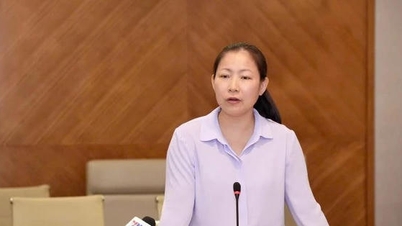
Overall, the 2016-2027 Grade 10 entrance exam in Mathematics in Ho Chi Minh City continues to adhere to the competency-based assessment orientation of the 2018 General Education Program, focusing on students' ability to apply knowledge to practice and solve problems. The chosen contexts are close to real life, practical, and appropriate for junior high school students. Although the exam is relatively large, the requirements are presented clearly, coherently, and with a reasonable distribution of difficulty levels. The exam ensures that it assesses the basic knowledge and skills of the majority of students while also including differentiating content to identify and select candidates with strong abilities, meeting the requirements of the entrance exam for public high schools.
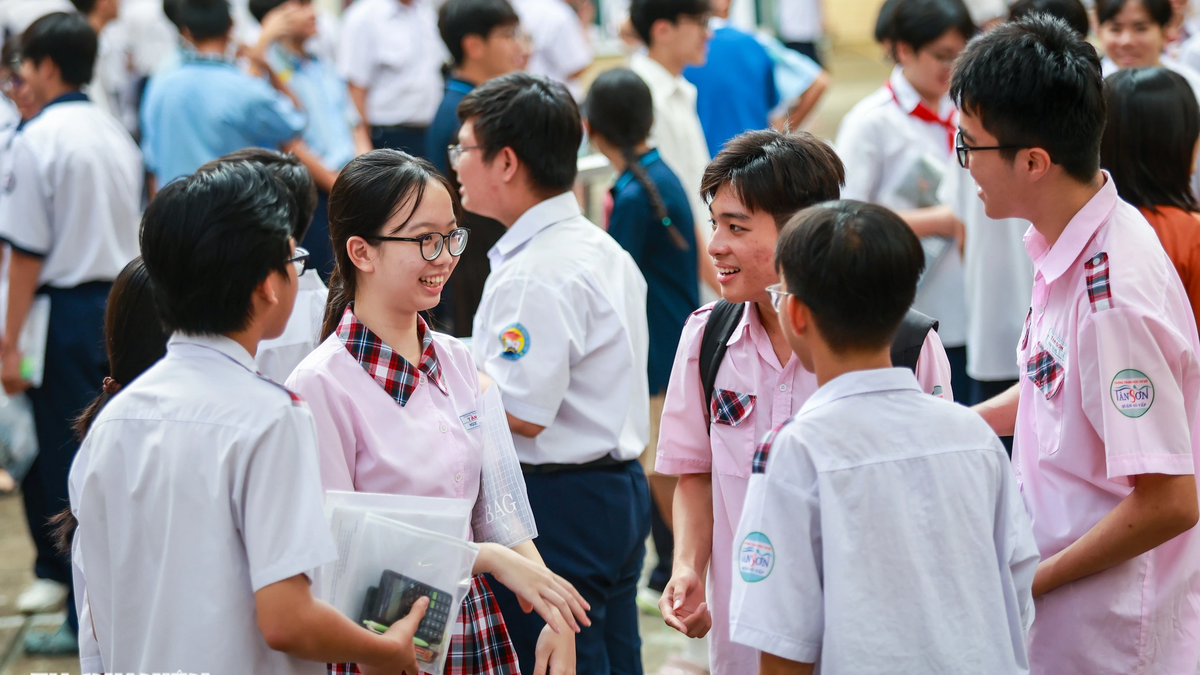
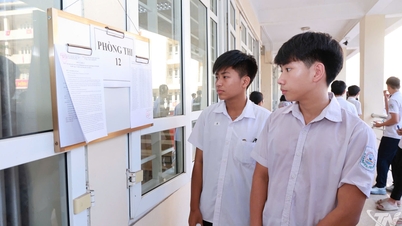
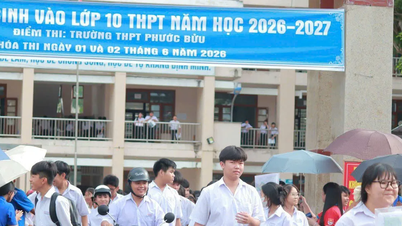
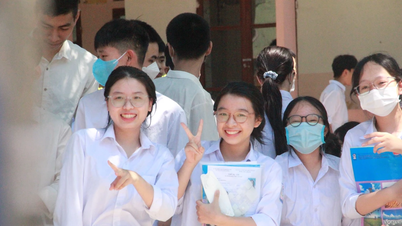
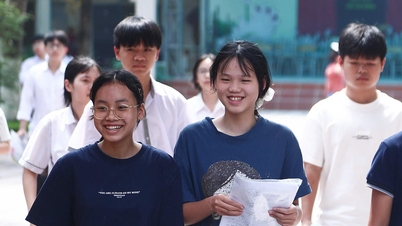
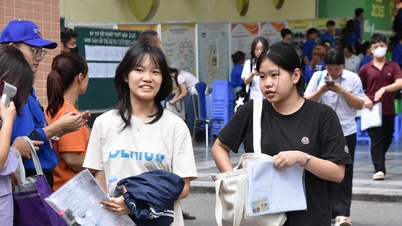
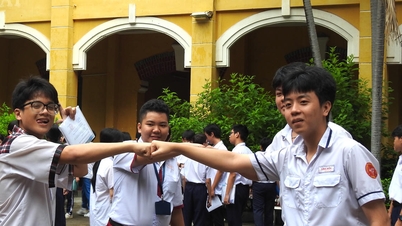
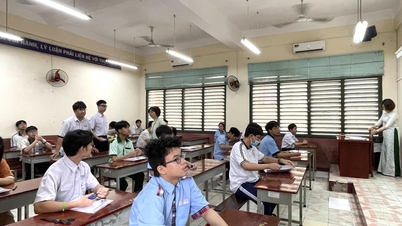
According to a preliminary report from the Ho Chi Minh City Department of Education and Training, the Mathematics exam on the morning of June 2nd proceeded generally normally. Across the city, 639 out of 151,557 registered candidates were absent, representing a 0.42% absence rate. Three students were absent due to illness during the exam. The exam questions were assessed as stable, with no incidents related to organization or distribution of exam papers. Security and traffic safety in the exam area were also ensured.
Source: https://daidoanket.vn/de-thi-toan-vao-lop-10-tphcm-dam-bao-phan-hoa-thi-sinh.html



![[Photo] General Secretary and President To Lam presides over a meeting on preparations for the review of one year of operation of the three-tiered government system.](https://vphoto.vietnam.vn/thumb/1200x675/vietnam/resource/IMAGE/2026/06/02/1780391821195_a1-bnd-4595-9717-jpg.webp)





































































Comment (0)