

Rescue forces are racing against time to find the Titan submersible, carrying five people, which went missing on June 18 in the North Atlantic while visiting the wreck of the Titanic.
According to CNN, some experts believe that the oxygen supply on the missing Titan submersible, with five people on board, is becoming a matter of life and death as advanced equipment is being rushed to the North Atlantic in a large-scale search operation. Loud underwater pounding sounds detected on June 20th and 21st in the search area have raised hopes of finding survivors.
Rescue forces are facing numerous challenges and difficulties in the search for the Titan. “Everything is pitch black with very low temperatures when diving deep. The seabed is muddy and the terrain is rugged,” Tim Maltin, an expert on the Titanic sinking and maritime accidents, told Reuters. In addition to the complex terrain, factors such as water pressure and currents could significantly impact the search.
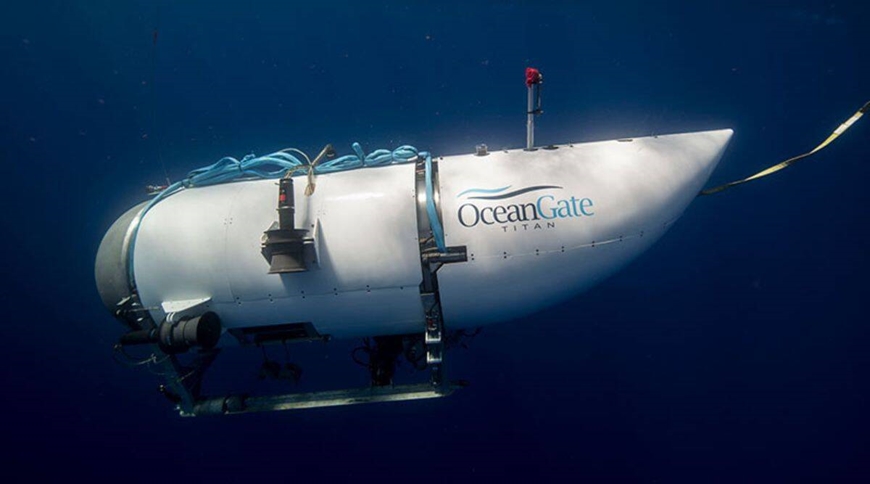 |
| The Titan submersible. Photo: OceanGate |
The Titan submersible, owned by OceanGate, a private American company specializing in ocean exploration, lost contact with its mother ship, the Polar Prince, nearly two hours after embarking on its voyage on the morning of June 18. The US Coast Guard reported that remotely operated deep-sea vehicles from Canada, the UK, and France have been deployed to the scene, scouring a vast area of the North Atlantic to search for the vessel. According to OceanGate advisor David Concannon, the submersible had enough oxygen for 96 hours, starting from approximately 6:00 AM on June 18 (local time). Theoretically, this oxygen supply would last until the morning of June 22. However, this timeframe depends on the breathing rate of those inside, especially if passengers have little diving experience and are experiencing shortness of breath due to panic.
Back in 2020, OceanGate announced tours of the Titanic wreck at a cost of approximately $250,000 per person. The submersible typically carries five people: a pilot, three passengers, and a person described by the company as a “content expert.” Before each tour of the Titanic wreck on the Titan, passengers are informed of the potential risks. Mike Reiss, who participated in last year's tour, said he had to sign a waiver accepting responsibility for his own death.
According to OceanGate, the Titan submersible is made of titanium and carbon fiber, is 6.7 meters long, weighs 10,432 kg (equivalent to about six medium-sized cars), and is capable of diving to a depth of 4,000 meters. The vessel uses four electric propulsion engines and is equipped with a camera, lighting, and scanners to explore its surroundings. Because the Titan has no seats, passengers must sit cross-legged on the floor, monitoring their surroundings via digital screens connected to external cameras. Inside the submersible is a rudimentary control system, and food and water are limited in quantity. According to The Guardian, OceanGate stated that the Titan submersible was specially built, weighing only about half as much as other submersibles or underwater research vessels to facilitate easy access to and observation of the Titanic wreck.
Experts have offered numerous theories about the cause of Titan's disappearance, ranging from it becoming entangled in Titanic wreckage and losing power to communication system malfunctions. However, the incident has also led many to question the design and safety features of the Titan. In an interview with CNN, Doug Virnig, who worked on OceanGate's Titan submersible development project for about a year, said that some materials and design choices were considered "controversial" at the time the submersible was produced in 2018.
LAM ANH
Source
![[Photo] National Assembly Chairman Tran Thanh Man working with the Standing Committee of the Law and Justice Committee](https://vphoto.vietnam.vn/thumb/1200x675/vietnam/resource/IMAGE/2026/05/21/1779378929214_ndo_br_1-4610-jpg.webp)



![[Photo] General Secretary and President To Lam presides over a working session with the Central Policy and Strategy Committee on the development of the materials industry.](https://vphoto.vietnam.vn/thumb/1200x675/vietnam/resource/IMAGE/2026/05/21/1779359935432_a3-bnd-3129-1412-jpg.webp)


































































Comment (0)