

Before Typhoon Gaemi struck, China had been facing months of extreme weather, including record rainfall in southern provinces and heatwaves in northern regions.
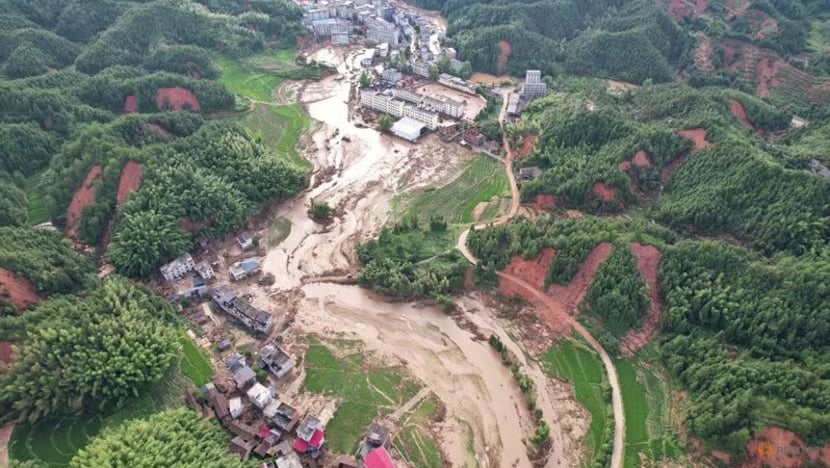
The aftermath of a landslide in Zhumenzi town following heavy rainfall from the remnants of Typhoon Gaemi in Zixing, Hunan province, China, on July 31, 2024. Photo: REUTERS
The city of Zixing was the hardest hit by the storm, with rainfall reaching 673.9mm in 24 hours. Typhoon Gaemi has killed 30 people and left 35 missing.
The city's infrastructure suffered severe damage, with 149 villages losing power, 78 areas losing communication, 1,641 homes destroyed, and 1,345 sections of road collapsed.
Approximately 118,000 people, or about one-third of the population of Tu Hung, were affected, and about 13,800 hectares of crops were damaged.
Prime Minister Li Qiang called for efforts to search for missing persons, restore infrastructure, and prevent disasters such as landslides.
The hilly and densely forested terrain hampered rescue efforts, with many areas cut off by collapsed roads, forcing rescuers to walk to the most severely affected regions.
Across Hunan province, floods have affected 1.15 million people, causing direct economic losses of 6.13 billion yuan (US$849 million). Emergency forces have been struggling to repair a breached dike on the Jianshui River, with two other breaches reported on July 28.
More severe weather is forecast for August, with many areas expected to receive more rain than in the corresponding periods of previous years.
Cao Phong (according to Reuters, CNA)
Source: https://www.congluan.vn/trung-quoc-chay-dua-tim-nguoi-mat-tich-sau-lu-lut-do-bao-gaemi-gay-ra-post306080.html

![[Photo] Admire the coral "masterpiece" amidst the million-year-old heritage of Dak Lak province.](https://vphoto.vietnam.vn/thumb/1200x675/vietnam/resource/IMAGE/2026/05/30/1780107638639_y25-jpg.webp)










































































































Comment (0)