

Put an end to the "wait and see" mentality.
Since July 1, 2025, the implementation of a two-tiered local government model has had far-reaching impacts. After a period of implementation, positive signs from this change are gradually becoming apparent in the field of irrigation.
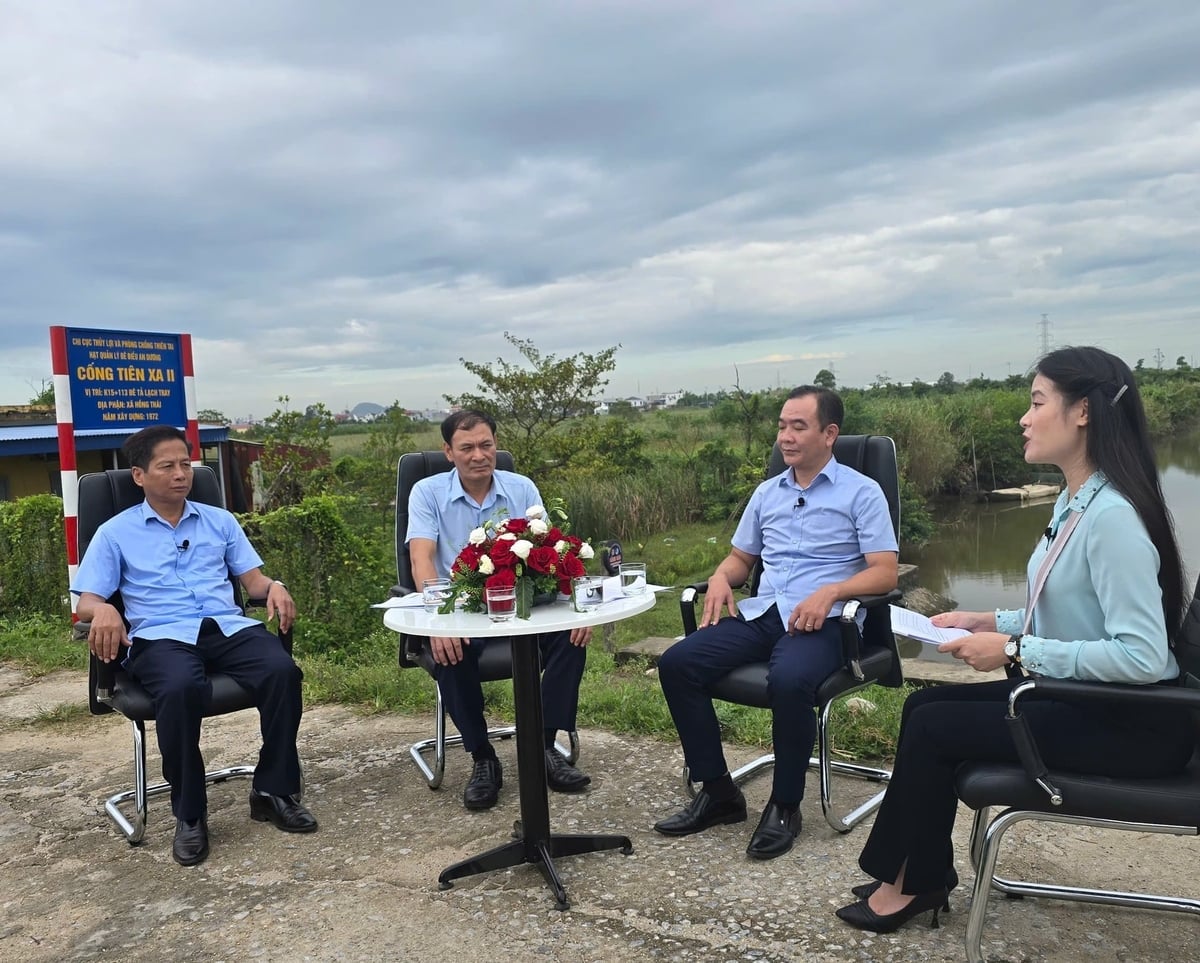
Mr. Doan Van Ban - Deputy Head of the Department of Water Resources Management and Disaster Prevention of Hai Phong City (second from the left) at a seminar on irrigation work organized by the Agriculture and Environment Newspaper. Photo: Dinh Muoi.
Speaking with the Agriculture and Environment Newspaper, Mr. Doan Van Ban, Deputy Head of the Water Resources Management and Disaster Prevention Department of Hai Phong City, commented: "The two-tiered government system is a major policy aimed at streamlining the administrative apparatus, but the core effectiveness lies in bringing policy decisions closer to the people."
According to Mr. Ban, previously, the process of handling irrigation issues often faced delays due to the multi-layered administrative mechanism. A minor incident in an irrigation canal or a violation of the protected corridor of a structure could sometimes take weeks for documents to travel from the commune to the district, and then wait for instructions to come back. However, from July 2025, this picture has changed.
"The biggest difference we've noticed is the proactive and decisive approach of the new ward-level authorities. Local leaders, even those transferred from other areas, have demonstrated a very high sense of responsibility. They are no longer passively waiting for instructions but are directly taking action to address hotspots," Mr. Ban emphasized.
This change is particularly important for Hai Phong, where rapid urbanization frequently leads to damage to irrigation works. Shortening administrative procedures helps prevent violations from occurring in their early stages, instead of waiting until it's too late as before.
Discipline has been tightened.
One of the "bottlenecks" in previous local irrigation management was the reluctance and avoidance stemming from intricate village and kinship ties. Mr. Ban stated that the new model, with the rotation and appointment of non-local officials, has completely resolved this issue.
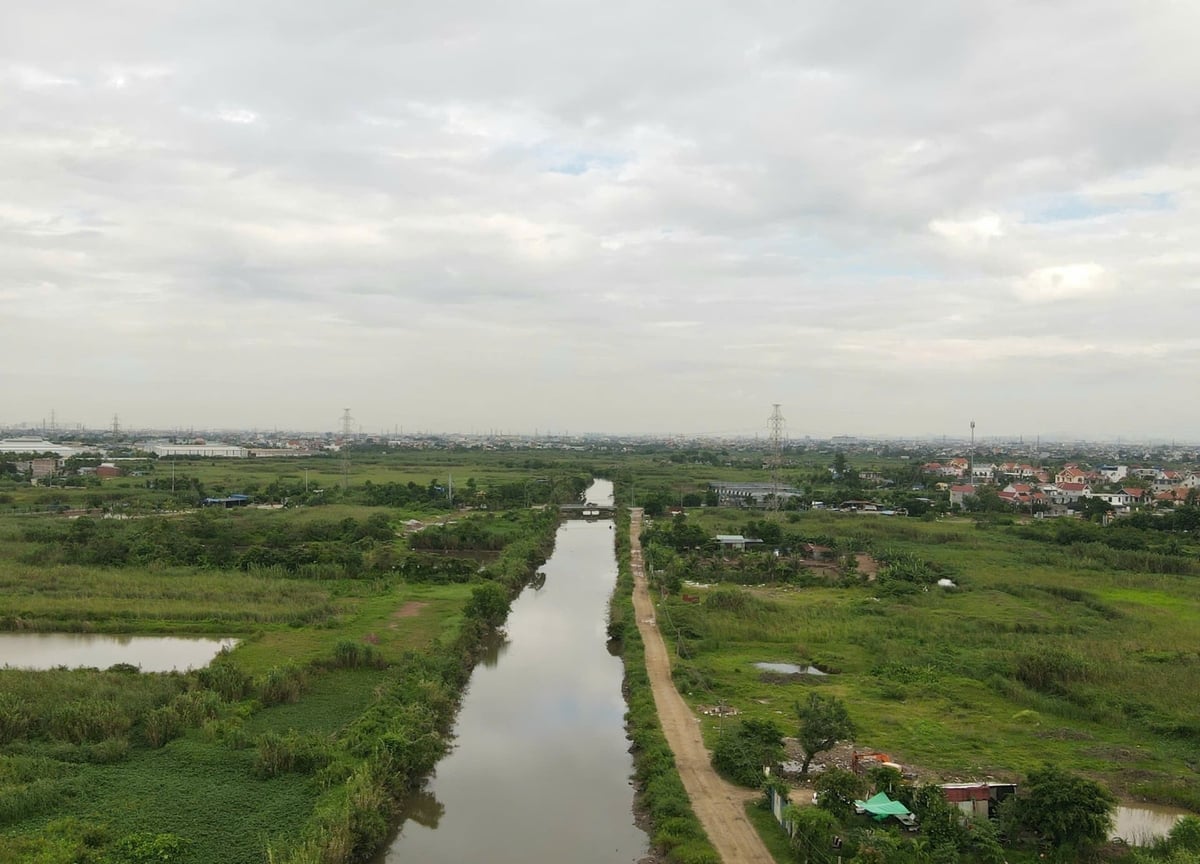
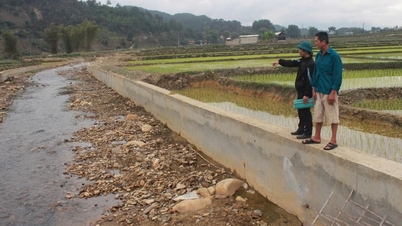
Discipline in the management, operation, and exploitation of irrigation works has been tightened. Photo: Dinh Muoi.
"The new commune and ward leaders are very enthusiastic and objective in their coordination work. They have intensified inspections and urged the handling of violations involving encroachment on irrigation works in a fair manner, without being hindered by family or kinship ties," Mr. Ban shared.
Furthermore, in disaster prevention and control – a vital task for coastal cities – the mobilization of local forces has become more flexible. Feedback from the grassroots level to the Sub-department and vice versa occurs almost instantaneously, helping state management agencies gain a comprehensive view to advise on policies that are closely aligned with reality.
However, Mr. Doan Van Ban also frankly acknowledged the challenges ahead. The transition to a new management model requires multi-talented ward officials, while many lack in-depth expertise in irrigation.
To address this issue, the Department of Water Resources Management and Disaster Prevention is advising the Department of Agriculture and Environment to organize intensive training courses. "We are focusing on training ward officials, especially those with dual responsibilities, on the Water Resources Law and the operation procedures of irrigation works, helping them quickly grasp the job," Mr. Ban said.
Regarding investment capital, especially maintenance funds for small-scale or dilapidated projects, the Sub-Department is reviewing the issue to propose that the City People's Committee prioritize resources. For inter-provincial irrigation systems such as the Hoa Phong canal (related to two former localities), the authorities are also developing a more coordinated mechanism to ensure water security.
"We have the right to hope for a future with a well-managed and smoothly operating irrigation system. The Sub-Department is committed to providing maximum support to ensure that the two-tiered government model truly works effectively, contributing to building a civilized and disaster-safe Hai Phong," Mr. Doan Van Ban further shared.
Source: https://nongnghiepmoitruong.vn/chinh-quyen-2-cap-giup-co-so-tang-tinh-chu-dong-trong-quan-ly-thuy-loi-d789764.html


![[Photo] Prime Minister Pham Minh Chinh attends the Conference on the Implementation of Tasks for 2026 of the Industry and Trade Sector](/_next/image?url=https%3A%2F%2Fvphoto.vietnam.vn%2Fthumb%2F1200x675%2Fvietnam%2Fresource%2FIMAGE%2F2025%2F12%2F19%2F1766159500458_ndo_br_shared31-jpg.webp&w=3840&q=75)


































































Comment (0)