

 |
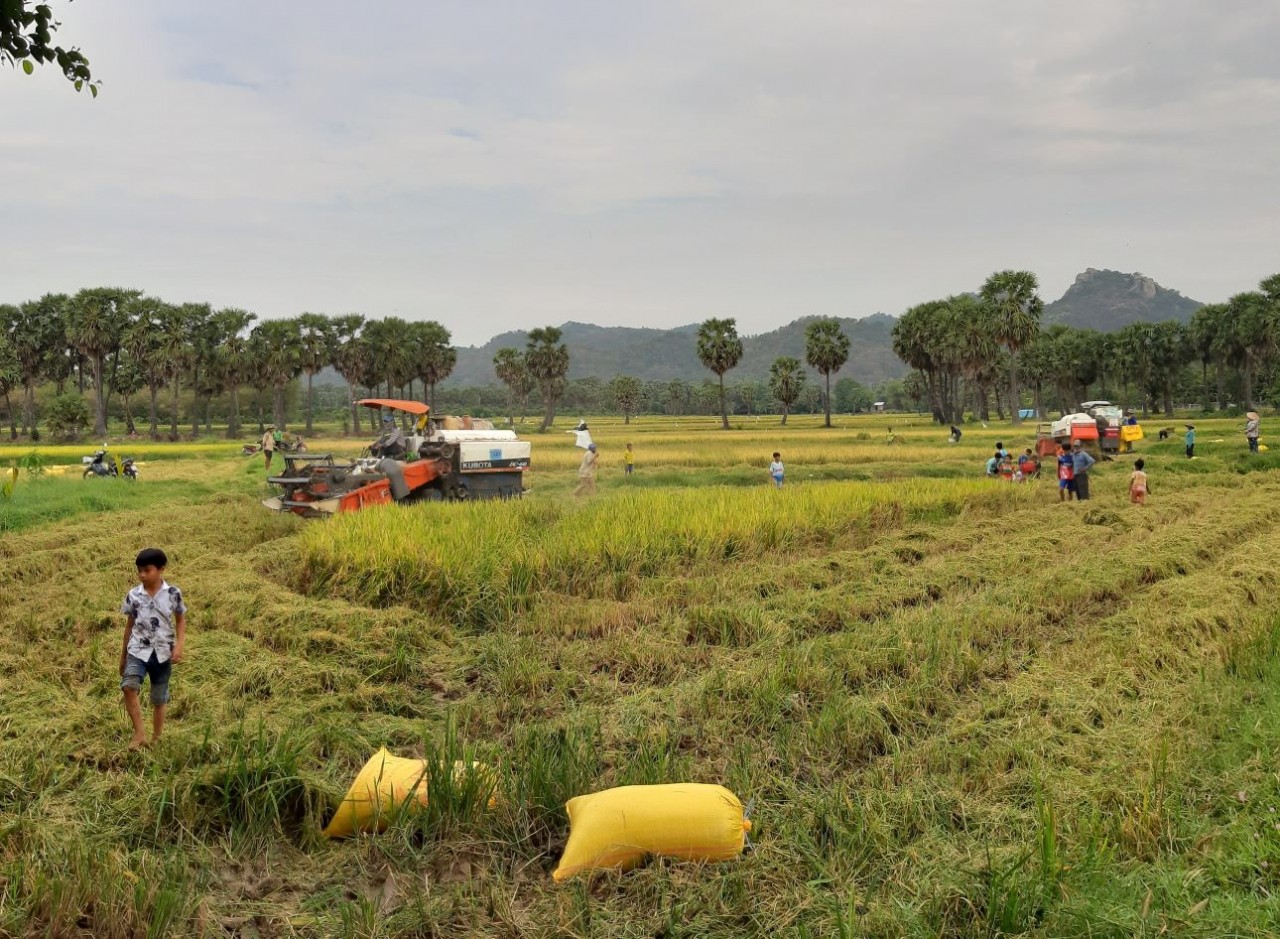
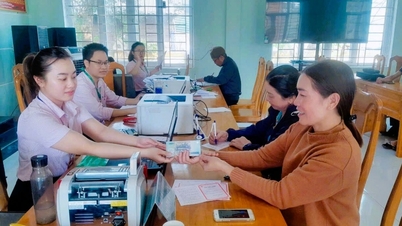
| An Giang supports investment in infrastructure development, and many production models are being implemented among ethnic minority communities to support sustainable poverty reduction. (Photo: Phuong Nghi) |
The rural landscape has completely changed.
Visiting the Khmer villages in An Giang province, one can easily see that the rural landscape has completely changed. Most noticeably, the transportation system has improved significantly, not only facilitating travel between communes and towns but also supporting the people in transporting agricultural products from the mountainous areas to the lowlands, district centers, and markets.
After three years of implementing the National Target Program (NTP) 1719, by the end of October 2023, An Giang province had invested in 66 infrastructure projects and completed 24 of them. Specifically, Tri Ton district completed 15 out of 52 projects, Tinh Bien district completed 4 out of 9 projects, Thoai Son district completed 2 out of 2 projects, and An Phu district completed 3 out of 3 projects. The resources from these NTP 1719 projects have contributed to the completion of infrastructure systems serving production and people's lives, especially for ethnic minorities in particularly difficult areas.
According to Mr. Chau Anne, Deputy Head of the Ethnic Affairs Committee of An Giang province: Alongside infrastructure investment, An Giang has diversified livelihoods and developed poverty reduction models. The province has been allocated over 13.6 billion VND (nearly 12.4 billion VND from the central government budget); implemented 27 poverty reduction models for 810 poor, near-poor, and newly-escaped-poverty households; and implemented 18 projects supporting agricultural, forestry, and fisheries production, assisting 263 participating households (132 poor households, 109 near-poor households, and 109 newly-escaped-poverty households) with a budget of over 7 billion VND. In addition, 179 short-term vocational training courses have been opened for nearly 5,400 trainees from poor, near-poor, and newly-escaped-poverty households, with a total budget of over 3.5 billion VND. This has helped workers acquire knowledge and skills, contributing to job creation, increased income, and stable livelihoods.
“At the beginning of 2022, the entire province had 20,129 poor households (accounting for 3.82%), by the end of the year, there were only 14,872 poor households (accounting for 2.81%) according to the multidimensional poverty criteria; the number of poor households belonging to ethnic minorities decreased to 3,161 (accounting for 11.70% of the total number of ethnic minority households), a decrease of 3.15% compared to the beginning of the year. Regarding near-poor households, the number decreased to 24,370 (accounting for 4.61%), a decrease of 1.32% compared to the beginning of the year,” Mr. Chau Anne said.
It can be affirmed that, through the implementation of ethnic policies with support for production development and investment in infrastructure construction, especially public welfare projects, the material and spiritual lives of the Khmer people have improved significantly.
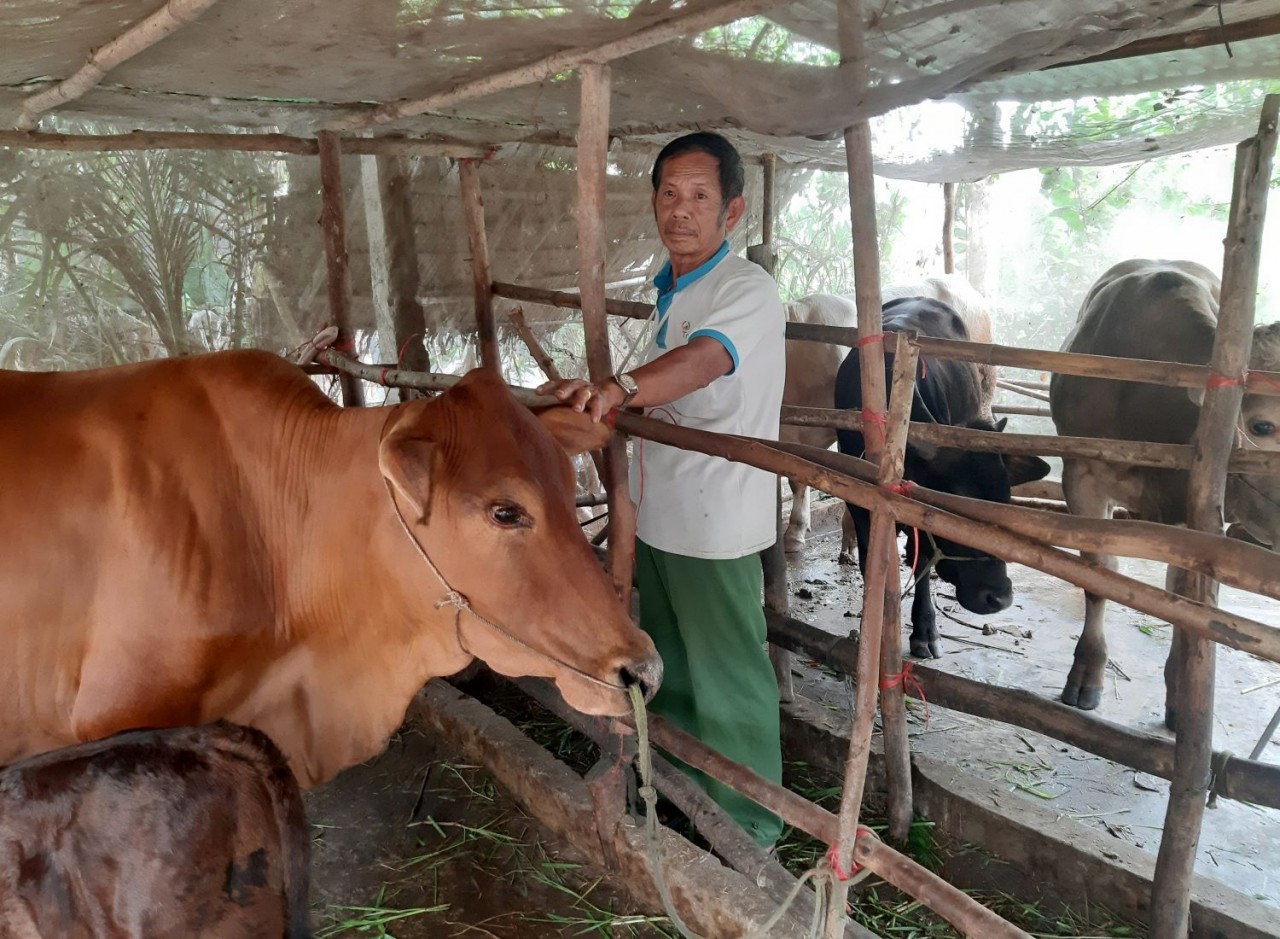 |
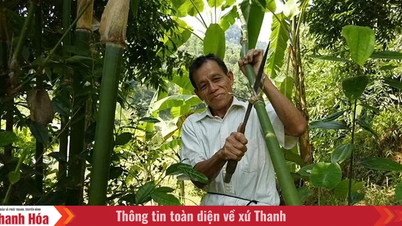
| Mr. Chau Nung, residing in Phuoc Loi hamlet, O Lam commune (Tri Ton district), is raising cattle using funds provided to ethnic minority households facing extreme difficulties, and his herd is currently thriving. (Photo: Phuong Nghi) |
Many households have risen out of poverty.
Livelihood support for ethnic minorities goes beyond simply providing "fishing rods" in the form of machinery and equipment; the relevant departments also teach people "how to fish" through vocational training classes. The effectiveness of these models has helped many people improve their income and stabilize their lives.
O Lam commune (Tri Ton district) has over 97% Khmer ethnic minority residents; in recent years, thanks to government programs and projects, many households have been able to change their lives and rise out of poverty.
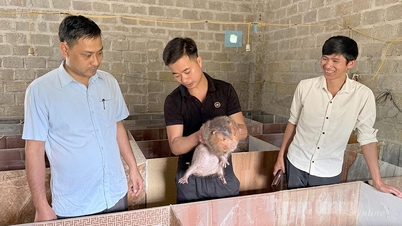
Visiting Mr. Chau Nung's cattle farming model in Phuoc Loi hamlet, we were surprised by his systematic and clean farming methods and the excellent development of his herd. A few years ago, his family received a loan of 8 million VND from the program supporting ethnic minority households in extreme difficulties and 20 million VND from the poverty alleviation program. They invested this money in breeding cattle, and after 4 years, they have a herd of 6 cows. These are not only valuable assets but also provide his family with fertilizer to improve 3 acres of land for growing vegetables, generating an income of over 50 million VND per year.
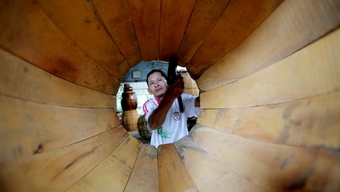
The family of Ms. Neáng Kha Ly in Tô An hamlet is one of the successful households, thanks to support in providing equipment to revive the traditional craft of making palm sugar, which has made their family life increasingly prosperous. She recounted: “Before, life was very precarious, and without capital, making the sugar-making business difficult. Thanks to the government's support in providing capital to buy pots and cooking equipment, we have now expanded the scale. In addition to nearly a dozen palm trees in our own yard, we also rent 30 more palm trees from neighbors in the hamlet to collect sap for making sugar every day.”
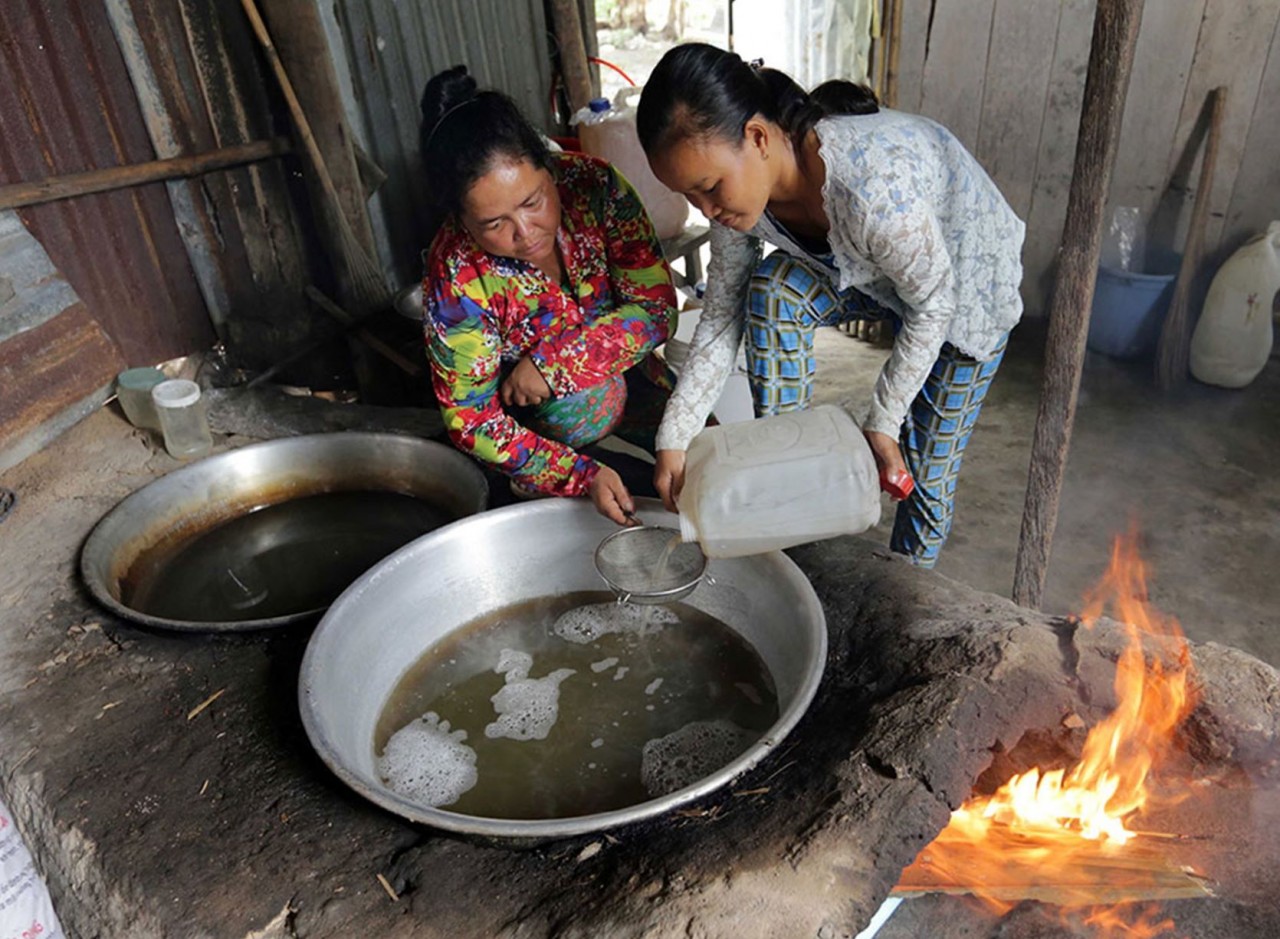 |
| Ms. Neáng Neáng Kha Ly, residing in Tô An hamlet, Cô Tô commune (Tri Tôn district), received support to purchase tools to revive the traditional palm sugar making craft, leading to a more prosperous life for her family. (Photo: Phương Nghi) |
To effectively implement the National Target Program 1719, An Giang province has set specific and clear goals, especially prioritizing particularly disadvantaged communes to focus investment on key areas. At the same time, it has mobilized the entire political system and conducted propaganda and campaigns to encourage people to participate in the program.
According to the Vice Chairman of the People's Committee of An Giang province, Nguyen Thi Minh Thuy, under the overall plan of the National Target Program 1719, An Giang province will provide land for housing to 317 households; housing support to 1,092 households; vocational retraining for 358 households; infrastructure investment in 59 projects in particularly difficult communes and hamlets; 3 communes will be removed from the list of particularly difficult areas; and 5 hamlets will be removed from the list of particularly difficult areas. An Giang strives to reduce the number of poor households according to the multidimensional poverty standard by an average of 1-1.2% per year; and the number of poor ethnic minority households by 3-4% per year. It is projected that the multidimensional poverty rate will decrease by 1% and the number of poor ethnic minority households by 3% by the end of 2023.
“In the coming time, An Giang will continue to strengthen propaganda and education work, raising awareness and responsibility of all levels, sectors and the whole society, especially the people, in order to create strong changes in awareness and action regarding the National Target Program 1719,” said Ms. Minh Thuy.
With the involvement of the entire political system and the efforts of ethnic minority people, the National Target Program 1719 has been effectively implemented in An Giang. This serves as a driving force and a source of confidence for An Giang to wholeheartedly develop socio-economic conditions, achieve sustainable poverty reduction in ethnic minority areas, and contribute to improving living standards and transforming the appearance of ethnic minority regions.
Source










































































Comment (0)