

Many believe that the shift to computer-based testing is a strategic move, reflecting the inevitable trend of education in the digital age. However, to ensure safe, transparent, and effective implementation, thorough and comprehensive preparation of conditions and pilot programs according to a roadmap are necessary.
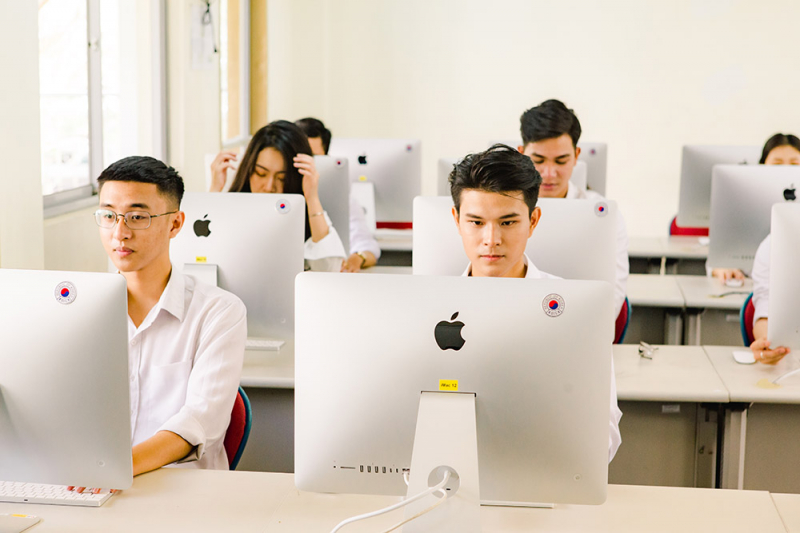
Dr. Nguyen Tung Lam, Chairman of the Education Council of Dinh Tien Hoang High School ( Hanoi ), believes that organizing the high school graduation exam on computers is a significant step forward. This method minimizes human error and reduces negative practices such as cheating and exam leaks. The elimination of printing, transporting, and storing paper exam papers reduces pressure on invigilators and exam supervisors in managing and collecting exam papers. Results are graded automatically and objectively, ensuring fairness for all candidates. Exam data is digitized, allowing for faster and more accurate management, statistics, and analysis of results.
However, organizing the high school graduation exam on computers will also present some difficulties that need to be addressed, such as the lack of synchronized information technology infrastructure, with many localities, especially remote areas, still lacking computer equipment; and the issue of data security and confidentiality, ensuring absolute safety and security for exam questions, papers, and results, which requires a significant initial investment.
Therefore, thorough preparation is needed for the implementation of the exam, such as developing and refining new exam regulations and rules suitable for the computer-based format, ensuring rigor and transparency; a synchronized and modern information technology infrastructure; and, most importantly, building a high-quality, standardized question bank to ensure fairness; well-trained examination staff; and thorough training for teachers and candidates. In particular, the implementation of the high school graduation exam should follow a roadmap, starting with pilot programs in major cities where conditions permit, before being rolled out on a wider scale.
From an expert's perspective, Dr. Dang Quang Vinh, lecturer at the Faculty of Computer Science & Technology, British University Vietnam, also believes that with good preparation in terms of infrastructure, question banks, technical personnel, and security procedures, the computer-based high school graduation exam is not only feasible but also contributes to enhancing fairness, transparency, and approaching international standards.
In fact, many major exams around the world have adopted computer-based testing models, such as IELTS, SAT, and other online supervised exams. In Vietnam, aptitude and competency assessment exams organized by major universities have also been conducted on computers for many years, with a large number of participants and taking place simultaneously in many localities. Given the current conditions, organizing the high school graduation exam on computers is entirely feasible.
According to Dr. Dang Quang Vinh, with an exam of such special importance and scale involving millions of candidates as the high school graduation exam, implementation needs to be extremely cautious. First and foremost, it is necessary to effectively address the challenges of disparities in access to computers among students in different regions.
In addition, there is the challenge of organizing exam rooms because if it's a paper-based exam, a room can accommodate up to 30 students, but with a computer-based exam, to ensure cheating prevention, each student must have a separate space, and the number can be reduced to only about 10 students. This means the exam must be divided into multiple sessions, requiring a sufficiently large question bank with a high degree of equivalence.
On the other hand, the computers used for exams are usually specialized devices, installed only with software for the exam, and are therefore hardly used for other purposes throughout the year. This also presents a cost and efficiency issue that needs careful consideration. Another problem is that, from a technical standpoint, it is difficult to avoid incidents such as power outages, system crashes, or connection interruptions. Therefore, each exam location must have a team of technicians on standby to provide timely support and ensure the rights of the candidates.
Furthermore, there is the risk of unauthorized interference with the system because, on computers, the risk of modifying results at the system level is more likely to occur without strict monitoring, security, and tracing mechanisms. This is also a point that needs special attention when designing technological solutions to ensure safety and prevent cheating in exam organization.
Based on the above analysis, Dr. Dang Quang Vinh suggests that a feasible approach is to pilot the system in major cities such as Hanoi, Ho Chi Minh City, Da Nang, and Hai Phong, where infrastructure is good; to conduct both paper-based and computer-based exams simultaneously to gain experience and evaluate performance; and to allow candidates to familiarize themselves with the computer-based exam experience, as reflexes and thinking skills are very different when taking exams on a screen compared to on paper.
Minister of Education and Training Nguyen Kim Son stated that, in preparation for the pilot program of conducting the high school graduation exam on computers starting in 2027 as directed by the Prime Minister, the Ministry of Education and Training is focusing on several key tasks, including: developing a plan for organizing the high school graduation exam on computers and submitting it to the Prime Minister for approval in 2026; mobilizing experts to build a standardized question bank, expected to be applied from 2027; developing procedures and regulations for organizing the computer-based exam, organizing training sessions and workshops nationwide; and continuing to coordinate with the Government Cipher Committee in the transfer and receipt of exam papers and other related security aspects of the exam. Currently, the Ministry of Education and Training is preparing the software systems for organizing the computer-based exam and conducting trials in various localities. It is expected that the trial will be implemented for over 100,000 students this academic year.
Source: https://cand.com.vn/giao-duc/chuan-bi-ky-luong-cac-dieu-kien-de-to-chuc-thi-tot-nghiep-thpt-tren-may-tinh-i781667/




























![[Video] The craft of making Dong Ho folk paintings has been inscribed by UNESCO on the List of Crafts in Need of Urgent Safeguarding.](https://vphoto.vietnam.vn/thumb/402x226/vietnam/resource/IMAGE/2025/12/10/1765350246533_tranh-dong-ho-734-jpg.webp)

































































Comment (0)