

The year 2025 not only marks the 95th anniversary of the Communist Party of Vietnam , but also a period of particularly important political events for the country's development.
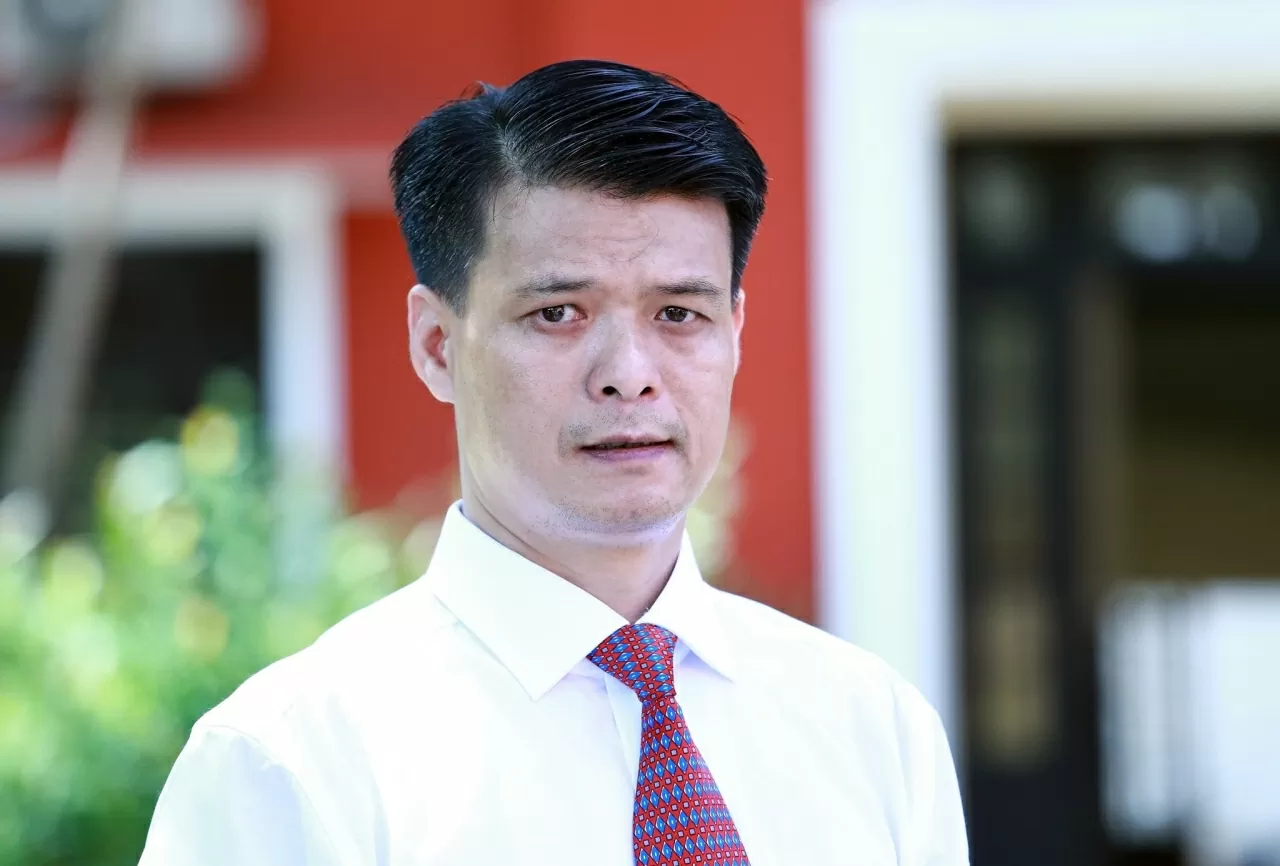 |
| Dr. Nguyen Van Dang believes that 2025 not only marks the 95th anniversary of the Communist Party of Vietnam but also sees a series of particularly important political events. (Photo: Provided by the interviewee) |
These are Party congresses at all levels, leading up to the 14th National Party Congress, which is expected to be held in early Q1 2026.
As with every Party Congress, besides political guidelines, leadership vision, and policy directions, the primary concern of the people at all levels is the leadership personnel. In particular, the group of strategic-level leaders, especially those holding key positions in the Party and State, not only for the upcoming term but also attracting the attention of the international community.
During his lifetime, President Ho Chi Minh stated that "cadres are the foundation of all work... The success or failure of all endeavors depends on whether the cadres are good or bad." The position and decisive role of the cadre were explained by President Ho Chi Minh in a very simple and easy-to-understand way. Accordingly, cadres in general differ from ordinary people in that they "must represent the interests of the nation and the class" and "must not represent personal interests."
In modern terms, the primary political duty and responsibility of every official working within our country's political system is to think and act for the common good. These are interests that affect many people and which they cannot resolve on their own, thus requiring the intervention of state agencies. This also means that, first and foremost, responsible Party and State officials are not allowed to think and act solely for the selfish, short-sighted interests of themselves, their group, faction, or clique.
According to President Ho Chi Minh, responsible cadres must always be aware of their role as a bridge between the people and the Party and the State. This is because they are the ones who "explain the Party and Government's policies to the people so they understand and implement them. At the same time, they report the people's situation to the Party and the Government so they understand it and formulate correct policies." Therefore, each cadre must "firmly grasp the policies, follow the correct mass line, and fulfill their duties."
Of the three criteria mentioned above, the requirement to master the "mass line" is particularly noteworthy. According to President Ho Chi Minh, cadres will master the mass line when they "not only diligently explain, propagate, and encourage, but also discuss with the masses, seek their opinions, and gather their initiatives. They lead the masses and welcome their criticism." In other words, essentially, each cadre will strictly adhere to the "mass line" if they always respect the people, listen to and understand their aspirations, and act in close alignment with the interests of the people, the country, and the nation.
Considering Vietnam's history, cultural and political traditions, and current level of socio-economic development, the emphasis on human resources remains an undeniable truth. Unlike people in many developed countries who are more concerned with institutional or policy adjustments, Vietnamese people today still prioritize the qualities and capabilities of individual leaders and managers to assess their potential for positive change within agencies, units, localities, and the nation as a whole.
From a modern perspective, the political system in our country, organized and operated according to the principle of "centralized and unified power," further reinforces the belief in the decisive role of human factors, specifically the cadre of officials, in the success or failure of community governance. Whether at the local or national level, the characteristic of "centralized and unified power" in the political system means that the risk of abuse of power for personal gain is always present. Therefore, officials with key qualities such as ethics, talent, and integrity will become the most solid foundation for the operation of the entire political system for the common good.
Recognizing the crucial role of cadres in the revolutionary cause and national development, recent Party congress documents have consistently affirmed that "Personnel work is a 'key' task in Party building, related to the survival of the Party and the destiny of the regime." Personnel work becomes even more special when the message and determination to lead the country into a "new era of national progress" has been publicly declared by Party and State leaders and has received widespread support from the people at home as well as attention from international friends.
Therefore, a top priority for the Party in 2025 is to best prepare the "foundation of all work" to be implemented in the 2026-2030 period, with a vision to 2045. However, as the country is on the verge of entering a period of breakthrough development, we also face a question that has long lacked a thorough answer: How to cultivate a good team of cadres, not only for the upcoming term?
Looking towards the future with positive belief, we cannot ignore the undesirable realities that have occurred recently. The determination to build and reform the Party, and the efforts to eradicate corruption and negative practices, have led to the disciplinary action, and even prosecution, of tens of thousands of cadres and Party members. This reality compels us to think and act more seriously for the future in order to minimize the situation of "correct procedures but wrong appointments," which leaves many negative consequences for the country.
Decades ago, President Ho Chi Minh expressed his compelling views: "Serving the nation now means sacrifice, struggle, forgetting personal interests and thinking of the common good. Those who want to become revolutionary officials should definitely not be elected." Placed in the context of the modern world, President Ho Chi Minh's viewpoint remains entirely correct because state agencies (or the public sector) are not places for individuals to seek and increase their own material benefits.
Instead, there's no need to wait until becoming a leader or manager; from the moment of applying for jobs at state agencies, each person should be aware that the career they will pursue is about serving the community, not seeking selfish gain. Instead, the State has the highest authority to recognize each individual's contributions to the development of the locality, the country, and the nation.
This also means that the greatest benefit an individual can receive when working for the State is spiritual value, not material. This characteristic not only highlights the need to continue innovating personnel management processes to emphasize a sense of service and dedication, but also ensures that capable individuals with a desire to contribute are selected, given opportunities, and provided with favorable conditions to pursue their goals.
Source






































































Comment (0)