

THAI NGUYEN - To increase the value of its products and develop community tourism at Ghenh Che Lake, Cao Son Tea Cooperative is transitioning its tea production methods to organic farming.
THAI NGUYEN - To increase the value of its products and develop community tourism at Ghenh Che Lake, Cao Son Tea Cooperative is transitioning its tea production methods to organic farming.
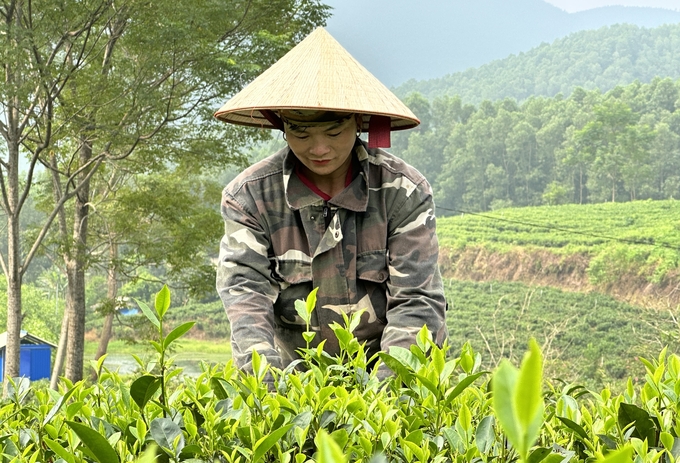
Cao Son Tea Cooperative is blessed with many favorable natural conditions for developing a specialty tea growing region. Photo: Quang Linh.
On the hills surrounding Ghenh Che Lake, the safe tea growing area of Cao Son Tea Cooperative (Khe Lim hamlet, Binh Son commune, Song Cong city, Thai Nguyen province) is sheltered from the harsh summer sun by the Tam Dao mountain range. As a result, the tea produced here has a characteristic mild astringency, and after aging, it develops a sweet taste on the tongue.
Binh Son commune is blessed with cool, fresh water and a mild climate year-round, making it very favorable for developing a specialty tea growing area linked with community tourism.
Cao Son Tea Cooperative currently has 20 hectares of tea plantations producing tea according to VietGAP standards, with 3 products achieving OCOP 4-star rating and in the process of upgrading to 5 stars. To meet the OCOP upgrade criteria and increase product value, the cooperative is gradually transitioning to organic farming.
Mr. Pham Van Tien, Director of Cao Son Tea Cooperative, said that all 12 members of the cooperative are very aware of consumer demand for organic products, placing customer health as their top priority. Beyond simply increasing product value, the shift to organic production is primarily driven by core values of human health, the environment, and sustainable development.
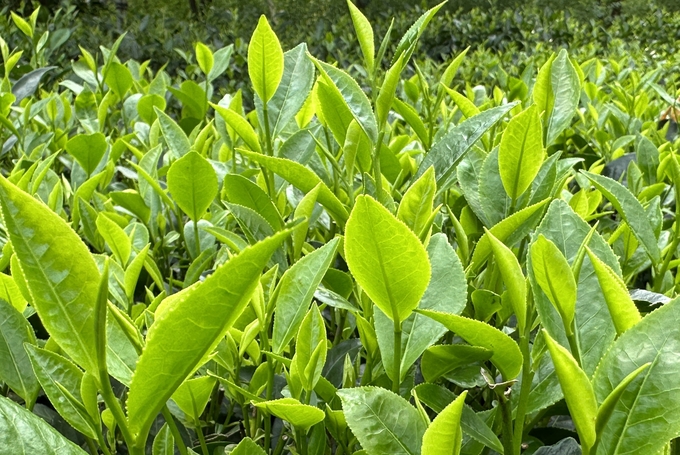
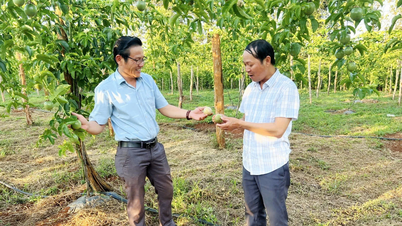
Healthy tea plants, free from pests and diseases, yield high-quality, safe products thanks to the switch to organic farming. Photo: Quang Linh.
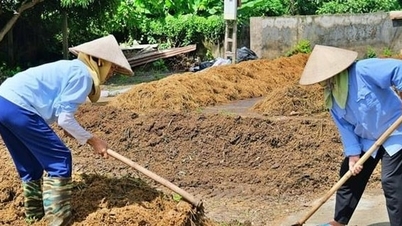
Currently, the cooperative composts organic fertilizer for tea plants using agricultural by-products such as soybeans, corn, and discarded fruits, along with animal manure and microbial preparations.
“Using organic fertilizers helps the cooperative improve degraded land caused by years of cultivation. Currently, not only residential land but also agricultural land is very limited. Therefore, improving the land through organic farming processes helps the cooperative save a significant amount of production costs,” Mr. Tien said.
Currently, tea products from Cao Son Tea Cooperative have relatively high market value. Specifically, the bud tea variety is priced at 3-5 million VND/kg, the young shoot tea variety at 0.8-1.5 million VND/kg, the mature tea variety at 300-700 thousand VND/kg, and matcha powder at 1 million VND/kg.
On average, the cooperative produces and sells about 15 tons of dried tea annually. The cooperative's market extends throughout the country, including provinces and cities such as Hanoi, Ho Chi Minh City, Hai Phong, and Bac Ninh. The cooperative is also actively participating in trade fairs and promotional activities to increase export volume.
During the production process, cooperative members strictly adhere to organic farming practices, avoiding herbicides and pesticides, using only herbal preparations to control and repel insects, and using clean water to irrigate the tea plants.
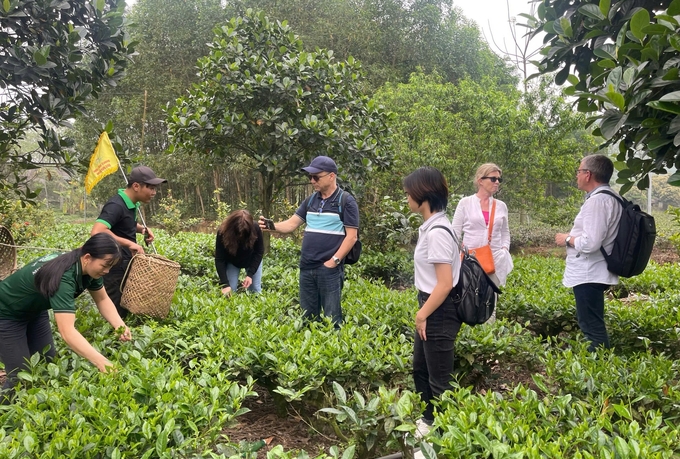
Foreign tourists experience the Cao Son Tea Cooperative. Photo: QL.
In particular, the cooperative has received government support to install the iMetos smart weather monitoring station. The iMetos station effectively serves farmers by calculating planting and harvesting schedules, forecasting weather, and providing early warnings of pests and diseases.
“The people here are in direct contact with tea plants every day, from caring for them, harvesting, drying, and packaging… In addition, their houses are nestled amidst the tea plantations. If the tea is treated with harmful chemicals, we will be the first to suffer the consequences. Therefore, organic farming will protect our health,” shared Ms. Tran Thi Diep, a member of the Cao Son Tea Cooperative.
Besides protecting the environment, the shift to organic production also promotes the development of community-based tourism at Ghenh Che Lake, which has great potential. In recent times, Cao Son Tea Cooperative has attracted a large number of tourists to experience tea picking, becoming a connecting point in the sightseeing itinerary at Ghenh Che Lake.
In the future, Cao Son Tea Cooperative hopes that the local authorities and specialized agencies will plan an organic tea growing area in Binh Son commune in general and Khe Lim hamlet in particular to create conditions for farmers to change their production methods.
Source: https://nongsanviet.nongnghiep.vn/chuyen-doi-huu-co-o-vung-che-duoc-day-tam-dao-che-cho-d407470.html





















![The Essence of Viet Bac Villages: [Part 3] The Precious Fragrance of Nghinh Tuong](https://vphoto.vietnam.vn/thumb/402x226/vietnam/resource/IMAGE/2026/05/29/1780020600366_5237-tinh-tuy-ban-lang-viet-bac-bai-3-chuyen-o-nghinh-tuong-050626_700.jpeg)
![The Quintessence of Northern Vietnam's Villages: [Part 2] The Famous Cassava Noodles of Kunming](https://vphoto.vietnam.vn/thumb/402x226/vietnam/resource/IMAGE/2026/05/28/1779937455892_3929-3144-mien-dong-15-nongnghiep-023138.jpeg)
![The Essence of the Village: [Part 1] Wine on the mountain, tea in the clouds - Bang Phuc](https://vphoto.vietnam.vn/thumb/402x226/vietnam/resource/IMAGE/2026/05/27/1779841729178_3821-1jpg-nongnghiep-103814.jpeg)
![[Photo] Reception to welcome General Secretary and President To Lam and his wife on their State visit to the Philippines](https://vphoto.vietnam.vn/thumb/1200x675/vietnam/resource/IMAGE/2026/06/01/1780295488620_vna-potal-chieu-dai-chao-mung-tong-bi-thu-chu-tich-nuoc-to-lam-va-phu-nhan-tham-cap-nha-nuoc-toi-philippines-8798060-7855-jpg.webp)



























































Comment (0)