

The Southeast region, the economic heart of Vietnam, is undergoing a dramatic transformation, not only in industrialization but also in adopting innovative and sustainable growth models.
With a strategy focused on high technology, smart agriculture , and digital transformation, this region not only enhances production capacity but also creates a solid foundation for comprehensive development, affirming its role as a national growth engine in the new era.
The wave of paradigm shifts
The Southeast region of Vietnam is witnessing a strong wave of transformation in its growth model, particularly the development of high-tech and sustainable industrial zones.
Binh Duong , Dong Nai, and Tay Ninh are three exemplary provinces with groundbreaking strategies aimed at combining economic growth with environmental protection, striving for sustainable development in the future.
In Binh Duong, the LEGO factory, with an investment of $1.3 billion, is a clear example of the combination of high technology and sustainable production.
Mr. Pham Trong Nhan, Director of the Department of Planning and Investment of Binh Duong province, affirmed that LEGO is not only a large investment project but also helps the province access high-tech global standards. This factory not only produces high-quality products but also applies advanced technologies to minimize environmental impact.
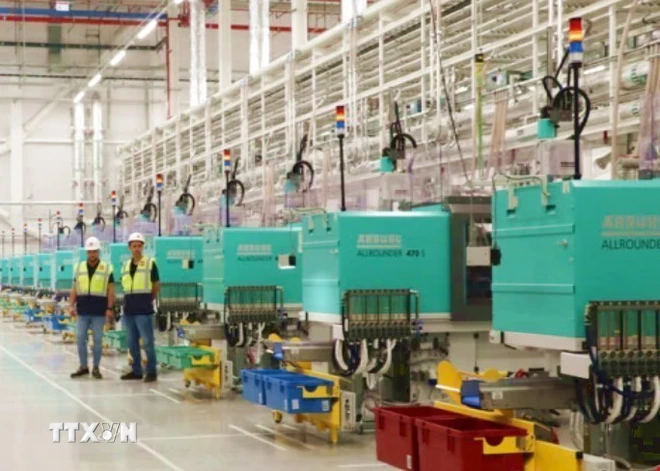
LEGO is also part of a strategy to attract businesses to invest in smart industrial models, contributing to the transformation of Binh Duong's growth model from traditional industry to high-tech industry.
Another exemplary model in Binh Duong is the Jakob Saigon factory in Tan Uyen city. The factory not only focuses on production efficiency but also pays special attention to environmental protection. With nearly 40% of the factory area covered in greenery and solar energy systems installed, Jakob Saigon contributes to reducing greenhouse gas emissions, creating a healthy working environment for workers, and protecting the natural environment.
Mr. Truong Van Phong, Deputy Head of the Management Board of Industrial Parks in Binh Duong province, believes that Jakob Saigon is a typical model of green industry, where the combination of economic development and environmental protection is a core element.
Not only Binh Duong, but Dong Nai is also striving to develop green industries. The province has 33 industrial parks, of which 31 are operational. Dong Nai is encouraging businesses to invest in new technologies and digital transformation, while also building green and smart industrial parks.
One example is the Amata Industrial Park, which has implemented an eco-friendly model aimed at saving costs and minimizing negative environmental impacts. These industrial parks not only save energy but also help create a sustainable production value chain, thereby attracting the attention of investors.
Tay Ninh is also a province that places special emphasis on high-tech agriculture. The province aims to increase the proportion of agricultural products using high technology to 50% by 2030. High-tech agricultural projects, such as the DHN Tay Ninh livestock farming area, are developing strongly, contributing to sustainable economic growth and environmental protection.
Mr. Gabor Fluit, General Director of De Heus Group, noted that Tay Ninh has a significant advantage thanks to its developed transportation infrastructure and strategic location, especially its convenient connection with Cambodia. These factors help the province attract investors in high-tech agriculture, creating a clean and sustainable source of raw materials for the agricultural processing industry.
Provinces in the region such as Binh Duong, Binh Phuoc, Dong Nai, Tay Ninh… are implementing sustainable industrial and agricultural development strategies aimed not only at increasing production value but also ensuring stable long-term development. These strategies focus on integrating economic development with environmental protection, minimizing the negative impacts of industry on nature, and building smart, green, and sustainable industrial zones.
Innovation growth pole
Digital transformation and green transformation are becoming solid pillars in the development strategy of the Southeast region.
Mr. Nguyen Thanh Toan, Director of the Department of Industry and Trade of Binh Duong, shared that Binh Duong is moving towards becoming a smart city, where technology and innovation are prioritized for modernization and sustainable development. With the goal of developing solar power by 2030, the province expects to reach 1,497 MW of solar power, and this figure will increase to 5,359 MW by 2050.
Binh Duong has implemented incentive mechanisms to promote the development of solar power, especially rooftop solar power and solar power in industrial parks. This is an important step in the green transformation strategy, optimizing resources, avoiding waste, protecting the environment, and improving the quality of life. The province is also deploying a smart management platform in six industrial parks to improve the efficiency of automated production and develop sustainable next-generation industries.
Meanwhile, Ms. Tran Thi Dieu Thuy, Vice Chairwoman of the People's Committee of Ho Chi Minh City, emphasized that digital technology is a key driving force for Ho Chi Minh City's breakthrough in the coming period. The city aims to achieve 25% of its GDP from the digital economy by 2025 and 40% by 2030. This vision not only aims for economic growth but also towards a green, smart, multi-centered city closely connected with neighboring regions.

Recently, the Ho Chi Minh City Center for the Fourth Industrial Revolution (C4IR) officially commenced operations, marking a significant step in Vietnam's digital transformation strategy. This is the first center in Vietnam and the second in Southeast Asia to be part of the World Economic Forum (WEF) network, focusing on research and deployment of advanced technology solutions such as artificial intelligence (AI), IoT, and biotechnology.
Mr. Phan Van Mai, Chairman of the People's Committee of Ho Chi Minh City, affirmed that the C4IR Center not only brings economic development opportunities to Ho Chi Minh City but also promotes the digital transformation process nationwide. With approximately 300,000 businesses currently operating, the city will create favorable conditions in terms of technological infrastructure, open policies, and flexible support to help businesses access Industry 4.0 solutions.
C4IR plays a central role in supporting innovative businesses, applying modern technologies for digital transformation and green transformation. Projects such as the Galaxy Innovation Hub and the High-Tech Development Support Fund have laid the foundation for the city's integration and sustainable development.
As the country's largest economic center, Ho Chi Minh City is leading the way in realizing the goals of industrialization and modernization, aiming to become a smart city in the new era.
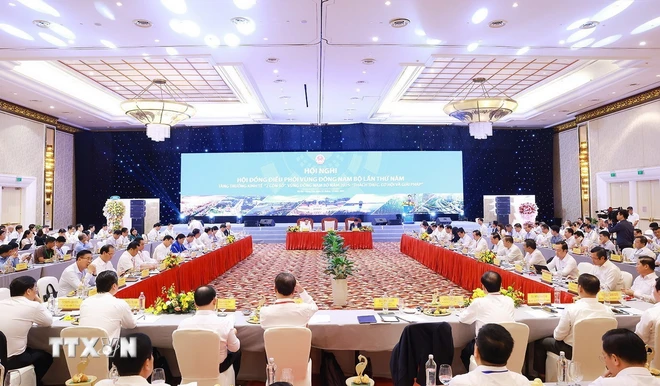
Resolution 24-NQ/TW dated October 7, 2022, of the Politburo on socio-economic development and ensuring national defense and security in the Southeast region until 2030, with a vision to 2045, also sets out the goal of developing the Southeast region in a sustainable and modern direction, with a focus on the digital economy, green economy, and circular economy. At the same time, this region will focus on innovating the growth model and restructuring the economy, ensuring consistency with the sustainable development strategy and adaptation to climate change.
With the goal of rapid and sustainable development, industrial, urban, service, and logistics belts will be built in conjunction with transportation corridors. Maximizing the mobilization of internal resources combined with external forces will help the Southeast region achieve self-reliance and deep international integration.
Source: https://www.vietnamplus.vn/chuyen-doi-mo-hinh-tang-truong-xay-dung-cac-khu-cong-nghiep-xanh-post999740.vnp

![[Photo] Prime Minister Pham Minh Chinh presides over a meeting on private sector economic development.](/_next/image?url=https%3A%2F%2Fvphoto.vietnam.vn%2Fthumb%2F1200x675%2Fvietnam%2Fresource%2FIMAGE%2F2025%2F12%2F20%2F1766237501876_thiet-ke-chua-co-ten-40-png.webp&w=3840&q=75)








































































Comment (0)