

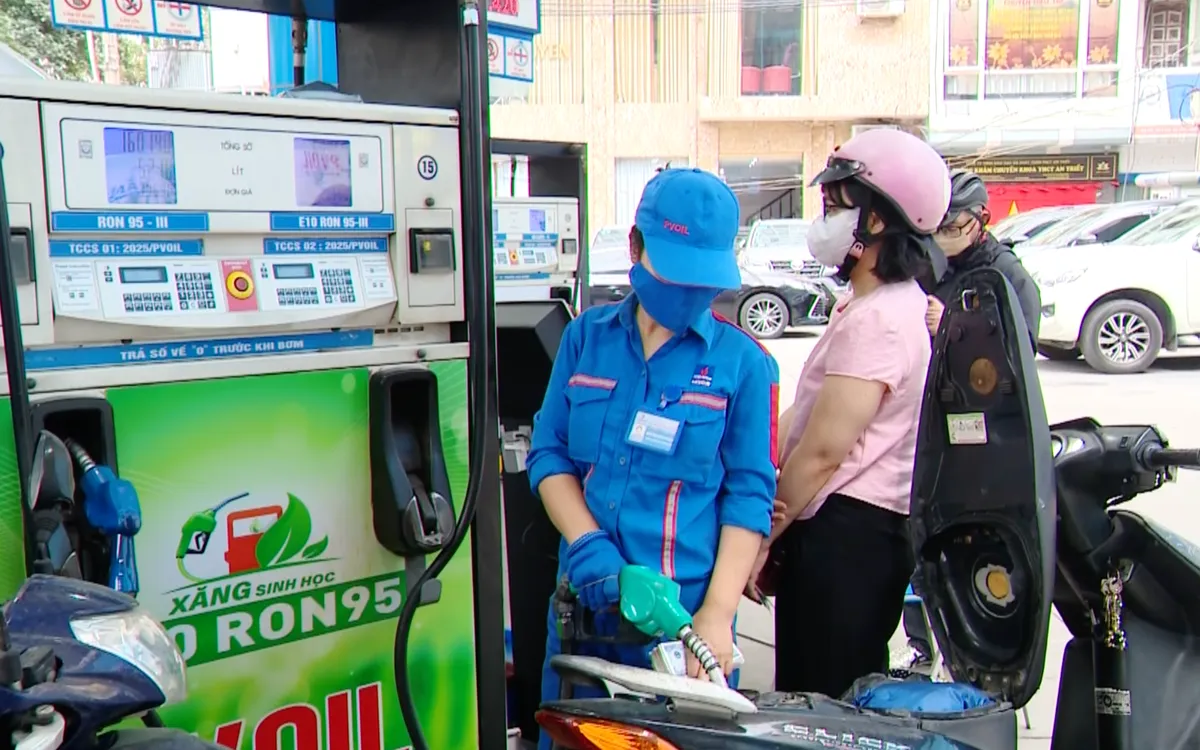
What is E10 biofuel?
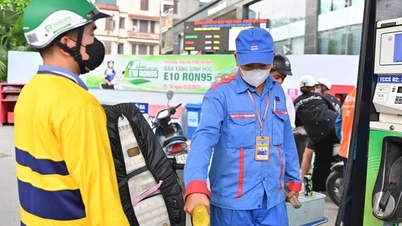
According to Circular 50/2025 of the Ministry of Industry and Trade , from June 1st, unleaded gasoline (according to current national technical standards) must be blended into E10 gasoline for use in gasoline engines nationwide. E5 RON 92 gasoline will still be sold until the end of 2030 to ensure compatibility with older motorcycles.
Having begun trial deployment on August 1, 2025, this type of fuel is receiving much feedback ahead of its official nationwide launch on June 1, 2026.
Essentially, according to Associate Professor Pham Huu Tuyen, Director of the Center for Research on Power Sources and Autonomous Vehicles ( Hanoi University of Science and Technology), it is important to understand that E10 bioethanol is a fuel consisting of approximately 10% ethanol and 90% mineral gasoline. While the ethanol blending ratio of 10% is relatively low, it is sufficient to improve some of the fuel's properties.
"Ethanol contains oxygen, which helps the combustion process in the engine to be more complete and cleaner. As a result, combustion efficiency is improved, contributing to better engine performance," Mr. Tuyen said.
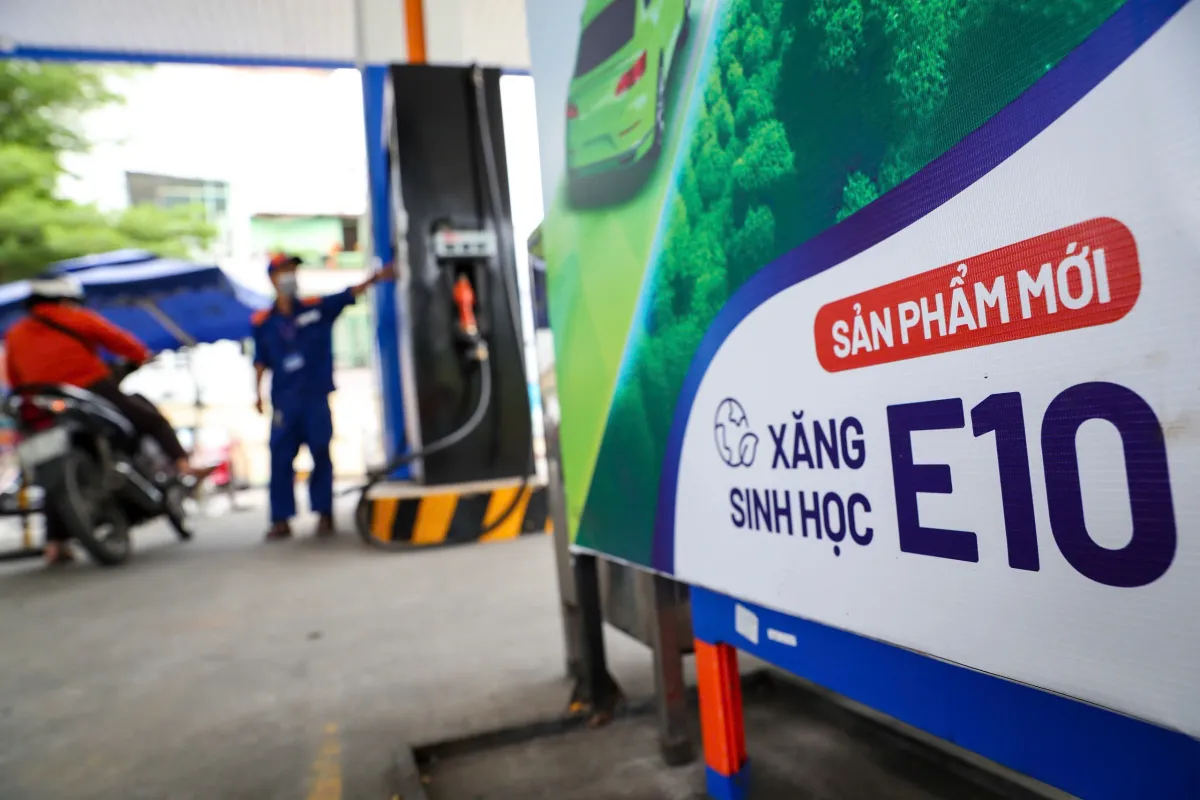
From June 1st, 2026, only E5 and E10 gasoline will be sold simultaneously nationwide.
Some argue that ethanol has a lower calorific value than mineral gasoline, so blending it could reduce the fuel's energy content, leading to increased consumption. Regarding this issue, according to Mr. Tuyen, in reality, this difference in calorific value is not significant (only a few percent) and is compensated by more efficient combustion in the engine. Studies and tests show that when using E10 gasoline, engine power and fuel consumption are essentially equivalent to mineral gasoline. In some cases, fuel consumption can even be improved due to more optimized combustion.
Furthermore, a clear benefit of E10 gasoline is reduced emissions. Harmful substances such as CO (carbon monoxide) and some unburned organic compounds are significantly reduced. This not only contributes to environmental protection but is also better for public health.
Is your car sluggish and losing power because you're using E10 gasoline?
Elaborating on the impact of E10 gasoline on vehicle quality and performance, Mr. Dao Cong Quyet, Head of the Communications Subcommittee of the Vietnam Automobile Manufacturers Association (VAMA), stated that for vehicles currently sold on the market, the materials used in the fuel system, from the fuel tank and fuel pump to the injectors and seals, have all been researched and selected with ethanol resistance in mind.
"Therefore, corrosion or aging of the rubber gasket will not occur if customers use the correct E10 fuel according to the National Standard QCVN 01:2022 of the Ministry of Science and Technology . Therefore, customers can rest assured when using it," Mr. Quyet emphasized.
Technically, most newer car models are fully compatible with E10 gasoline. VAMA recommends that customers owning older cars should proactively have their vehicles inspected at authorized dealerships for advice and replacement of parts such as gaskets and fuel lines if necessary before switching to E10 gasoline.
According to VAMA, research and use of biofuels have been implemented by global automakers in many markets such as Thailand, Indonesia, and Brazil. In addition, the Vietnamese government has issued regulations related to biofuels for over 10 years. Therefore, before introducing vehicles to the Vietnamese market, manufacturers conduct technical assessments based on actual operating conditions and Vietnamese standards to ensure the highest level of compatibility before making official recommendations to customers.
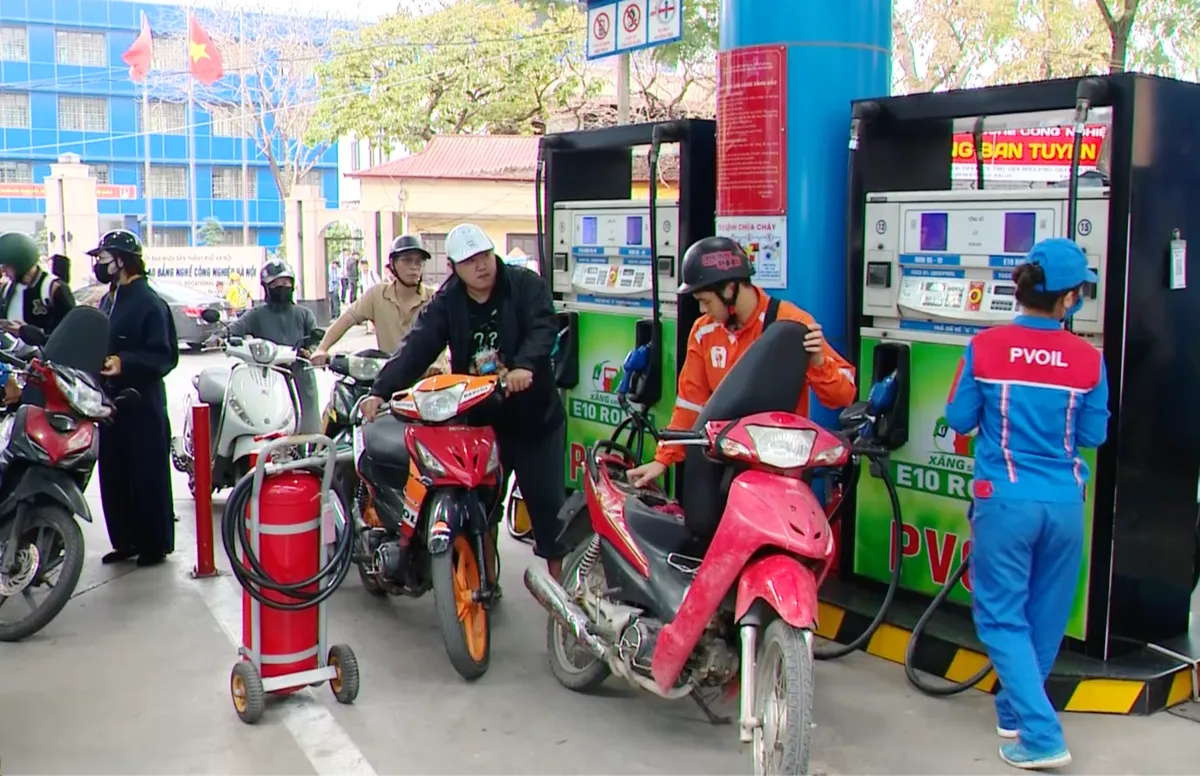
According to experts, most new car models are fully compatible with E10 gasoline.
According to Mr. Quyet, phenomena such as sluggishness or loss of power usually only occur when the fuel's octane rating is unsuitable or the fuel is contaminated with impurities or water. Meanwhile, E10 gasoline has an octane rating equivalent to or higher than regular mineral gasoline, resulting in more stable combustion. If the vehicle is regularly maintained and uses standard E10 gasoline as recommended by the manufacturer, the loss of power will not occur.
"Besides regular maintenance, VAMA particularly advises customers not to leave their vehicles unused for too long, especially when the fuel tank is low. The reason is that ethanol has the property of absorbing moisture from the air, which can cause condensation in the fuel tank."
"In addition, users need to strictly adhere to the manufacturer's recommended fuel filter replacement schedule to ensure the fuel system remains clean," Mr. Quyet advised.
Does E10 gasoline cause the engine to overheat and consume more fuel?
Regarding the compatibility of E10 gasoline with vehicles, Mr. Do Van Tuan, Chairman of the Vietnam Biofuel Association, stated that most motorcycle models manufactured from 2000 to the present are already compatible with E10 gasoline.
"Current fuel tanks have all been treated and painted on the inside; the piping system and related fuel components are also designed to be compatible with this type of biofuel. Therefore, concerns about E10 gasoline affecting new motorcycles are unfounded," Mr. Tuan emphasized.
For older vehicles, manufactured before 2000, some parts such as rubber gaskets or fuel lines may age faster over time when using E10 gasoline. However, this mainly affects the rubber material after prolonged use and does not directly impact the engine. Replacing these parts is also quite simple and the cost is negligible.
"Concerns that E10 gasoline may damage engines, corrode machinery, or reduce vehicle durability are completely unfounded scientifically and have not been verified in practice," Mr. Tuan emphasized.
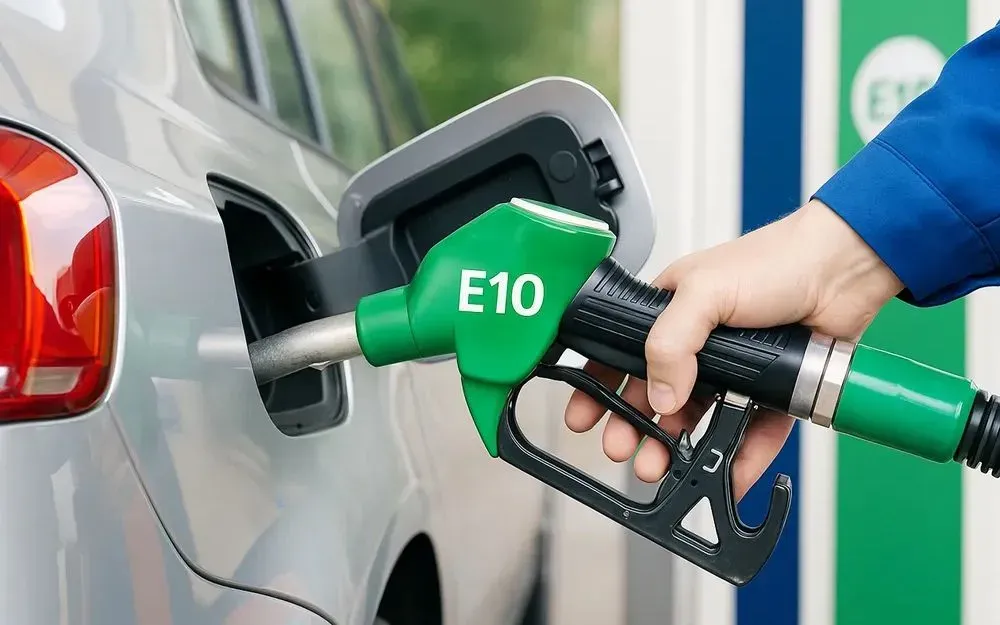
Concerns that E10 gasoline causes engines to overheat are based on emotion and lack clear scientific evidence.
According to Mr. Tuan, some online information suggests that using E10 gasoline causes the engine to overheat. However, this is mainly a subjective opinion and lacks clear scientific basis. In reality, it is very difficult for a motorcyclist or car driver to accurately perceive the difference in engine temperature during normal operation. Therefore, the claim that the engine overheats is almost entirely unfounded scientifically.
Regarding the claim that E10 gasoline causes higher fuel consumption, this is theoretically possible. The reason is that E10 gasoline generates about 3% less heat energy than conventional gasoline. However, this difference is quite small, and in practice, it's difficult for users to notice a significant increase in fuel consumption of 3%.
Conversely, E10 gasoline has a higher octane rating than RON95 mineral gasoline, which helps the engine run more smoothly. A smoothly running engine also contributes to optimizing performance and fuel efficiency. Therefore, it is difficult to say whether actual fuel consumption will differ significantly when using E10 gasoline.
In theory, E10 gasoline could increase fuel consumption by about 3%, but in real-world usage, this difference is hardly noticeable.
Source: https://vtv.vn/chuyen-gia-yen-tam-su-dung-xang-e10-100260527130302807.htm

![[Photo] The heat at the fireworks display site on the opening night of the Da Nang International Fireworks Festival 2026](https://vphoto.vietnam.vn/thumb/1200x675/vietnam/resource/IMAGE/2026/05/27/1779889741485_ndo_br_z7872039145157-fecaba5112f39e8352544099d7ef4738-5140-jpg.webp)

![[Photo] The courage of new recruits of Brigade 144 on the training ground.](https://vphoto.vietnam.vn/thumb/1200x675/vietnam/resource/IMAGE/2026/05/27/1779881651341_anh-man-hinh-2026-05-27-luc-18-32-52.png)







































































![[Photo] The courage of new recruits of Brigade 144 on the training ground.](https://vphoto.vietnam.vn/thumb/402x226/vietnam/resource/IMAGE/2026/05/27/1779881651341_anh-man-hinh-2026-05-27-luc-18-32-52.png)

































Comment (0)