

It's easy to see that fake news and harmful information are increasingly prevalent on social media platforms. Much of this information is completely unfounded but is still shared simply because it plays on users' curiosity, fear, or anger, causing social unrest.
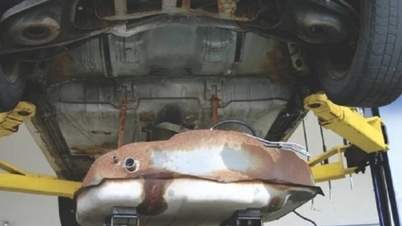
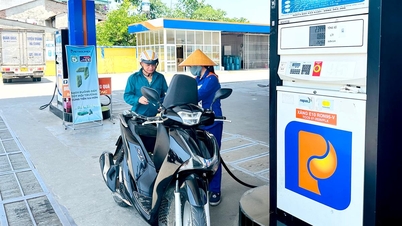
A prime example is the story of E10 gasoline. Before E10 gasoline is widely used starting June 1st, the online community is once again in an uproar due to unsubstantiated articles and videos /images circulating on social media claiming that E10 gasoline damages engines. This has caused widespread confusion and anxiety among the public, with some even hesitant to fill up their tanks. Meanwhile, relevant authorities have confirmed that this type of fuel fully meets technical standards and is widely used in many countries.

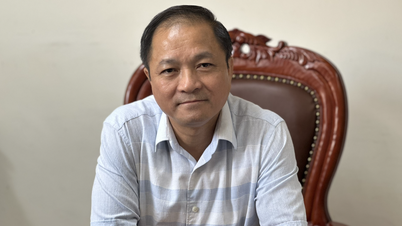
A Facebook user expressed this on a forum specializing in automobiles.
Recently, amidst a severe heatwave in Northern and Central Vietnam, social media was abuzz with images of "rice grains exploding into popcorn due to extremely high temperatures." Many users shared images of the exploding rice grains with skepticism, leading to a flurry of comments expressing concern about the extreme weather.
Later, experts determined that the image was created by AI, because an outdoor temperature of around 40 degrees Celsius could not possibly cause rice grains to pop as depicted in the circulating image. However, even though the original post has been deleted, its consequences remain as the image continues to be shared and spread at an uncontrollable rate.

Images of rice grains popping into puffed rice, created by AI, have been circulating on social media in recent days.
These are just two of many examples demonstrating the dangerous nature of "information junk" on the internet today. What's worrying is that the explosive development of AI technology is making the creation of fake news increasingly sophisticated. Now, without complex techniques, perpetrators can create fake images, videos, and voices with a high degree of realism. Many clips and images of natural disasters, accidents, fires, or statements by celebrities are actually just products of AI-generated editing or manipulation aimed at generating interaction.
An alarming reality is that many social media users lack the skills to distinguish between truth and falsehood. Older adults, those with limited access to technology, or those who believe that "if many people share it, it must be true" are particularly vulnerable to fake news. Even more dangerously, many social media users still share for fun or simply repost what they heard, without considering the legal consequences and social impact of their actions.
With just one click sharing unverified information, users are contributing to the spread of fake news. When misinformation is shared thousands or tens of thousands of times, the consequences go beyond ordinary misunderstandings; it can cause social unrest, affect security, and negatively impact socio -economic life.
It's also necessary to frankly acknowledge that some users are turning social media into a tool for making money, regardless of right or wrong, truth or falsehood. With the current "clickbait" mechanism, the more shocking and provocative the content, the easier it is to attract interaction. This leads many people to disregard ethics and the law to spread false information. From natural disasters and epidemics to economic and social issues, as long as there is "buzz," a flood of fabricated, speculative, or manipulated information immediately appears to serve the intentions of the person spreading it.
More dangerously, some individuals deliberately exploit social media to undermine new policies, distort facts, incite unrest, and erode public trust in the government and relevant agencies. For example, on May 26, 2026, the Ho Chi Minh City People's Court sentenced Le Anh Diep (TikToker "Tang keng Ong Trum") to 3 years in prison and Doan Quoc Viet (TikToker "Du Bau Troi") to 3 years in prison for the crime of "Abusing democratic freedoms to infringe upon the interests of the State, the legitimate rights and interests of organizations and individuals" for posting videos that sow regional discord and undermine national unity for the purpose of gaining views. This also serves as a stern warning to those who mistakenly believe that social media is a "lawless free zone."
Undeniably, authorities have intensified efforts to crack down on the spread of fake news and misinformation. Many cases have resulted in administrative penalties, and numerous individuals have been prosecuted and criminally punished. However, compared to the current rate of fake news dissemination, previous measures have still not been sufficiently deterrent.
Therefore, the implementation of Decree 174/2026/ND-CP, which stipulates administrative penalties for violations in the fields of postal services, telecommunications, radio frequencies, electronic transactions, and information technology, from July 1, 2026, is considered a necessary and timely step to restore order in cyberspace. According to the new regulations, those who post or share false information causing public panic can be fined up to 50 million VND. This is seen as a strong measure to restore order in cyberspace.
It is also important to emphasize that strict penalties are not intended to "restrict" freedom of speech, but rather to protect the truth, safeguard citizens' right to access accurate information, and maintain social stability. In any civilized society, freedom must always be accompanied by responsibility and adherence to the law. It is unacceptable to use the pretext of "freedom of speech" to spread false information, slander, distort facts, or incite public opinion.
It is noteworthy that Decree 174 was issued at a time when fake news was no longer an isolated phenomenon but had become a serious information security issue. Without sufficiently strong measures, "junk" in cyberspace will continue to poison the information environment, distort social perceptions, and harm the socio-economic life of the country.
However, strong sanctions alone are insufficient without community awareness. "Cleaning up" the online space is not only the responsibility of regulatory agencies but also requires the involvement of the entire society. Social media platforms must enhance their responsibility in content moderation and preventing accounts from spreading fake news; agencies and departments need to continue playing a role in guiding information, quickly refuting false narratives; and, more importantly, each social media user must strengthen their own "resistance" to harmful information. Before clicking the share button, they should ask themselves: Is this information from an official source? Has it been verified? What will the consequences be if it is fake news?
A developed society cannot accept a situation where truth and falsehood are mixed together, and harmful information is rampant without being dealt with. The online space needs to be cleaned up to become a civilized, safe, and useful environment for the community. Taking strong action against fake news and severely punishing those who spread false information is a necessary step to "clean up" the online space, protecting the truth, safeguarding social trust, and maintaining order in the digital age.
According to Minh Thuyet/News and Ethnic Groups Newspaper
Source: https://baocantho.com.vn/manh-tay-don-rac-บน-khong-gian-mang-a205671.html
![[Photo] The heat at the fireworks display site on the opening night of the Da Nang International Fireworks Festival 2026](https://vphoto.vietnam.vn/thumb/1200x675/vietnam/resource/IMAGE/2026/05/27/1779889741485_ndo_br_z7872039145157-fecaba5112f39e8352544099d7ef4738-5140-jpg.webp)

![[Image] Checking the security conditions at the exam site, ready for the 10th grade exam.](https://vphoto.vietnam.vn/thumb/1200x675/vietnam/resource/IMAGE/2026/05/28/1779943458889_z7872507660648-d764421a26e8cd7b61d70d142a48a685-jpg.webp)


![[Photo] Life on both banks of the river returns to its bustling pace on the day the Long Bien Bridge opens to traffic.](https://vphoto.vietnam.vn/thumb/1200x675/vietnam/resource/IMAGE/2026/05/28/1779949763708_cau-long-bien-minh-duy-7-3610-jpg.webp)






















![[Photo] Opening Ceremony of the National People's Council Conference on the Implementation of Directions and Tasks for the 2026-2031 Term](https://vphoto.vietnam.vn/thumb/1200x675/vietnam/resource/IMAGE/2026/05/28/1779939257690_ndo_br_bnd-1991-jpg.webp)






























































Comment (0)