


Indian students go to school under the scorching sun. Photo: AP
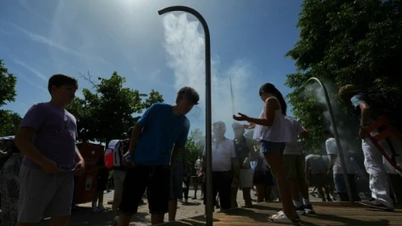
Britain and France recorded their hottest May days on record this week as a "heat dome" brought scorching temperatures, typically only seen in mid-summer, to Western Europe. According to Stiell, the "main culprit" is human burning of coal, oil, and gas. " Science has proven that human-induced climate change is making heatwaves more frequent and extreme," the expert asserted.
Currently, around 4 million households in the UK have installed air conditioning, double the number from three years ago. Amid rising temperatures, even political parties that previously opposed the widespread use of air conditioning due to its high energy consumption are beginning to acknowledge its necessity.
In response to the heatwave, climate advocacy groups in the UK are urging the government to urgently install air conditioning in schools, hospitals, nursing homes, and other facilities for vulnerable groups, as the country has recorded record-high temperatures in May. Numerous studies have shown that the use of air conditioning can reduce heat-related deaths by up to 75%.
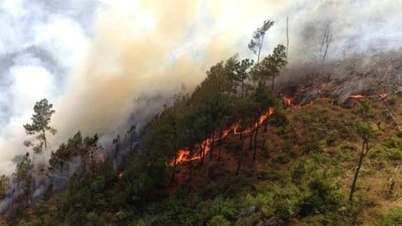
In South Asia, the Indian army is battling wildfires, and local authorities have reported dozens of deaths from heatstroke. The international air quality monitoring platform AQI recorded that 45 of the world's hottest cities at midday on May 27th were in India, all exceeding 43 degrees Celsius. The situation was so critical that Prime Minister Narendra Modi issued a nationwide appeal for urgent measures to protect citizens from the heat.
The Indian Meteorological Department (IMD) has warned that the risk of extreme heat in the coming period could worsen due to the El Niño phenomenon. The World Meteorological Organization forecasts El Niño could occur as early as May to July. While not stating whether the current high temperatures are related to El Niño, the IMD cited previous studies, including a 2022 document showing how past El Niño events have affected extreme temperatures across India and exacerbated heatwaves.
Meanwhile in North America, the non-profit science organization Climate Central says climate change is altering the World Cup, as players and fans face increasing heat risks during the planet's biggest sporting event.
According to Climate Central, almost all stadiums hosting the 2026 World Cup will experience more days of extreme heat during the tournament than the first North American World Cup in 1970.
Global temperatures have risen sharply since the first World Cup in 1930. As the Earth warms, players and fans face more extreme heat waves. Tourists from cooler climates may face higher risks.
The 2026 World Cup is expected to attract more than 5 million spectators to 16 stadiums in the United States, Canada, and Mexico from June 11 to July 19.
NATIONAL DAY (Compilation)
Source: https://baocantho.com.vn/loi-canh-bao-tu-thien-nhien-a205725.html




![[Photo] The heat at the fireworks display site on the opening night of the Da Nang International Fireworks Festival 2026](https://vphoto.vietnam.vn/thumb/1200x675/vietnam/resource/IMAGE/2026/05/27/1779889741485_ndo_br_z7872039145157-fecaba5112f39e8352544099d7ef4738-5140-jpg.webp)
![[Photo] Life on both banks of the river returns to its bustling pace on the day the Long Bien Bridge opens to traffic.](https://vphoto.vietnam.vn/thumb/1200x675/vietnam/resource/IMAGE/2026/05/28/1779949763708_cau-long-bien-minh-duy-7-3610-jpg.webp)








































































































Comment (0)