

In the Dao ethnic villages of the Northwest mountains, ancestral paintings are considered treasures. These sacred paintings accompany a person throughout their life, present in almost all of the important rituals of the Dao people. However, not everyone can paint a complete and standardized ancestral painting. Today, the masters of ancestral painting still strive to preserve the craft with much dedication.

We arrived in Giàng Cài at dusk and met Mr. Lý Hữu Vượng, a renowned "master" of painting religious images in the Gia Hội area. In his small room, colorful paintings were proudly displayed on the wooden walls. But on his work desk, the brushes and ink were covered in a thick layer of dust.
Mr. Vuong confided, "Since my wife passed away, I haven't painted ancestral portraits anymore. I only dare to paint when my family is complete." This confession sparked our curiosity about the taboos associated with painting ancestral portraits.
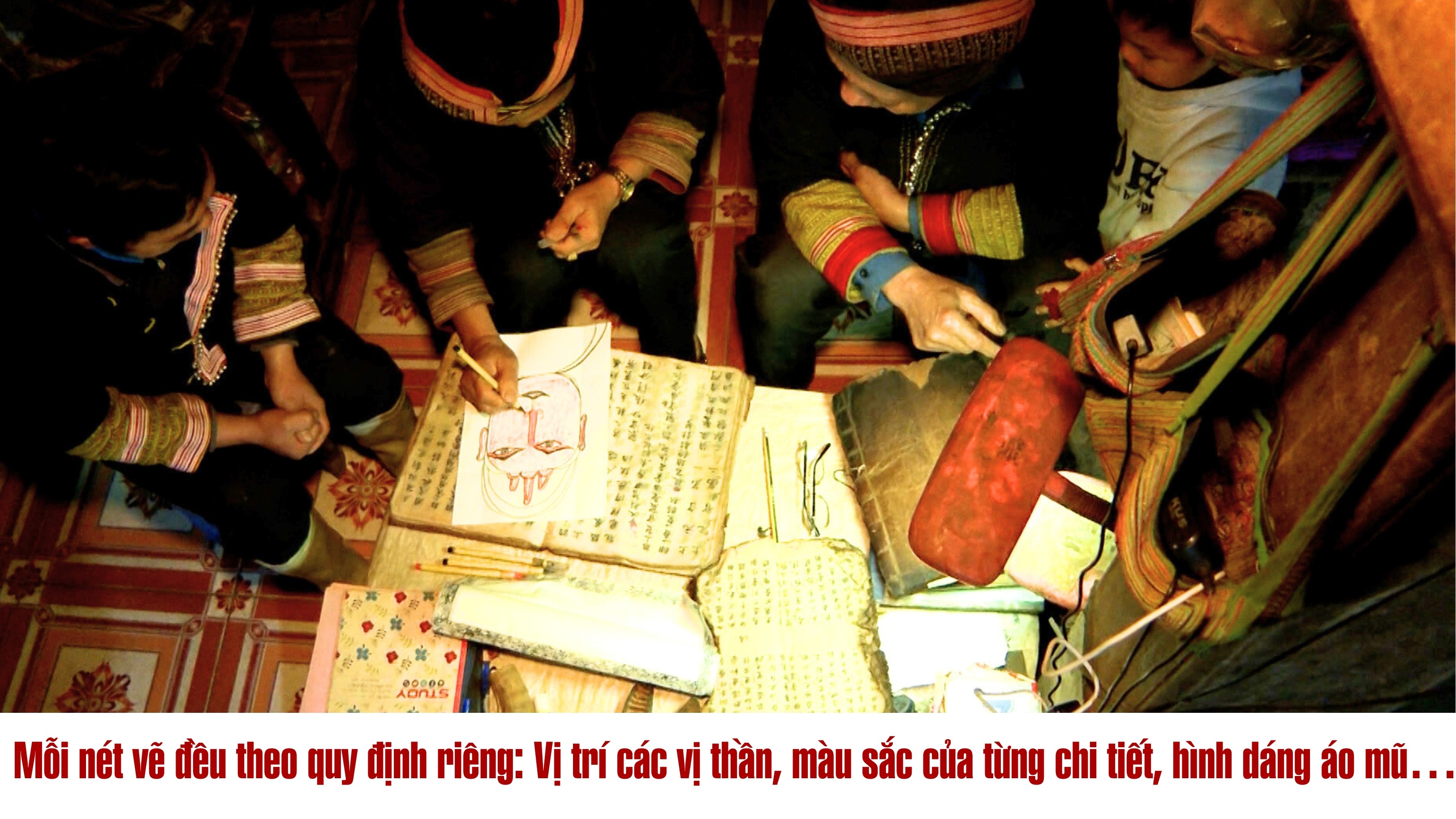
According to the Dao people's beliefs, ancestral paintings must be beautiful and painted by a reputable person, as the paintings represent solemnity and bring good fortune to the family. When painting ancestral paintings, one must wear proper clothing and observe strict taboos; a "study room" is set up to store brushes, paintings, tables, chairs, and painting materials, preventing the "impurities" of life from entering. This place is filled only with light and sunlight.
To complete a religious painting, it can sometimes take a week, or even months. Every brushstroke follows specific rules: the position of the deities, the colors of each detail, the shape of their robes and headwear, etc. A single mistake is considered disrespectful to the gods.
This strictness discourages most young people from learning, while the number of older people, who are the most knowledgeable, is dwindling. The risk of the art of painting ancestral altars disappearing is becoming increasingly apparent.

In Lao Cai , most of those who preserve the craft of painting religious images are shamans or come from families with generations of shamans. They learned the craft from their ancestors, then independently researched and accumulated experience over decades.
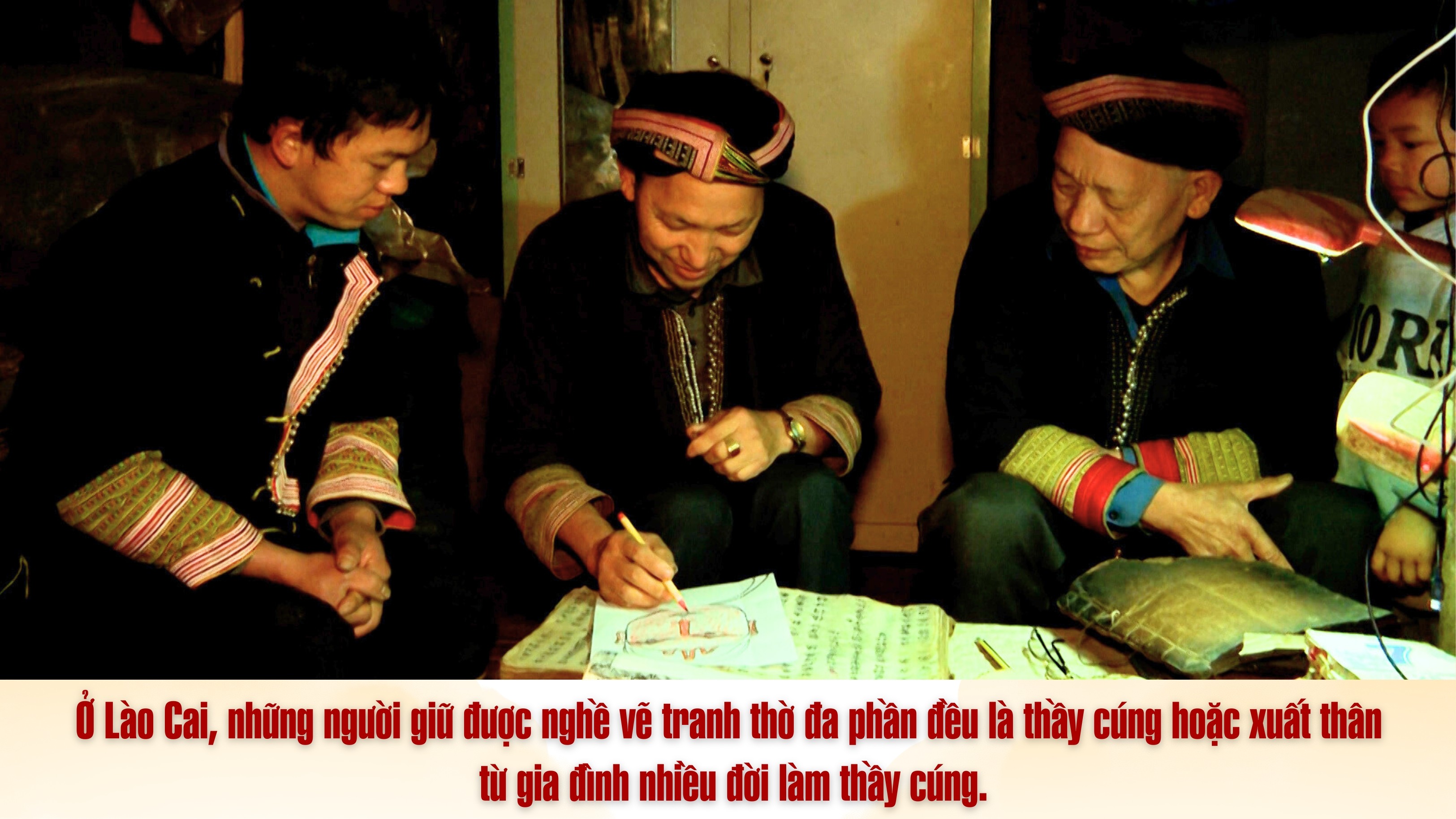
Born into a family with generations of teachers, Mr. Chảo Láo Chiếu in Tòng Sành commune (formerly Bát Xát district) was familiar with ancient books, the Dao script, and ancestral paintings from an early age. However, it was only in adulthood that he truly began to study and preserve his ancestors' craft.
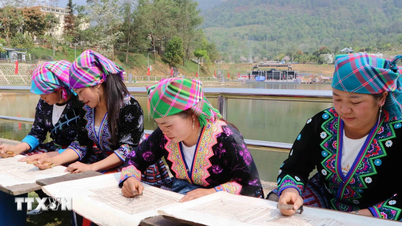
Mr. Chieu didn't consider himself a great teacher, but his love for national culture compelled him to do something to prevent the knowledge of his people from fading away over time. Therefore, classes on painting ancestral altars were established. The class consisted of a small wooden table by the window, with students sitting around it, each with a sheet of paper and a pen. He taught them how to "learn by doing," patiently guiding them step by step.
One of "Teacher" Chieu's students, Chao Ong Kieu, shared: "Before learning, I didn't understand, I thought it was easy, but after drawing, I realized how difficult it is. I learned a little bit and found it interesting and valuable, so I decided to follow the teacher to learn thoroughly."
"Teacher" Ly Huu Vuong also had a few students, the most outstanding being Ly Ton Chua. Chua said: "During the learning process, I trained myself, learned the rules set by the teachers, knew how to do good, and knew how to live responsibly towards myself and society."
These heartfelt confessions partly reveal the arduous but meaningful path of learning a trade for those who are truly passionate about it.
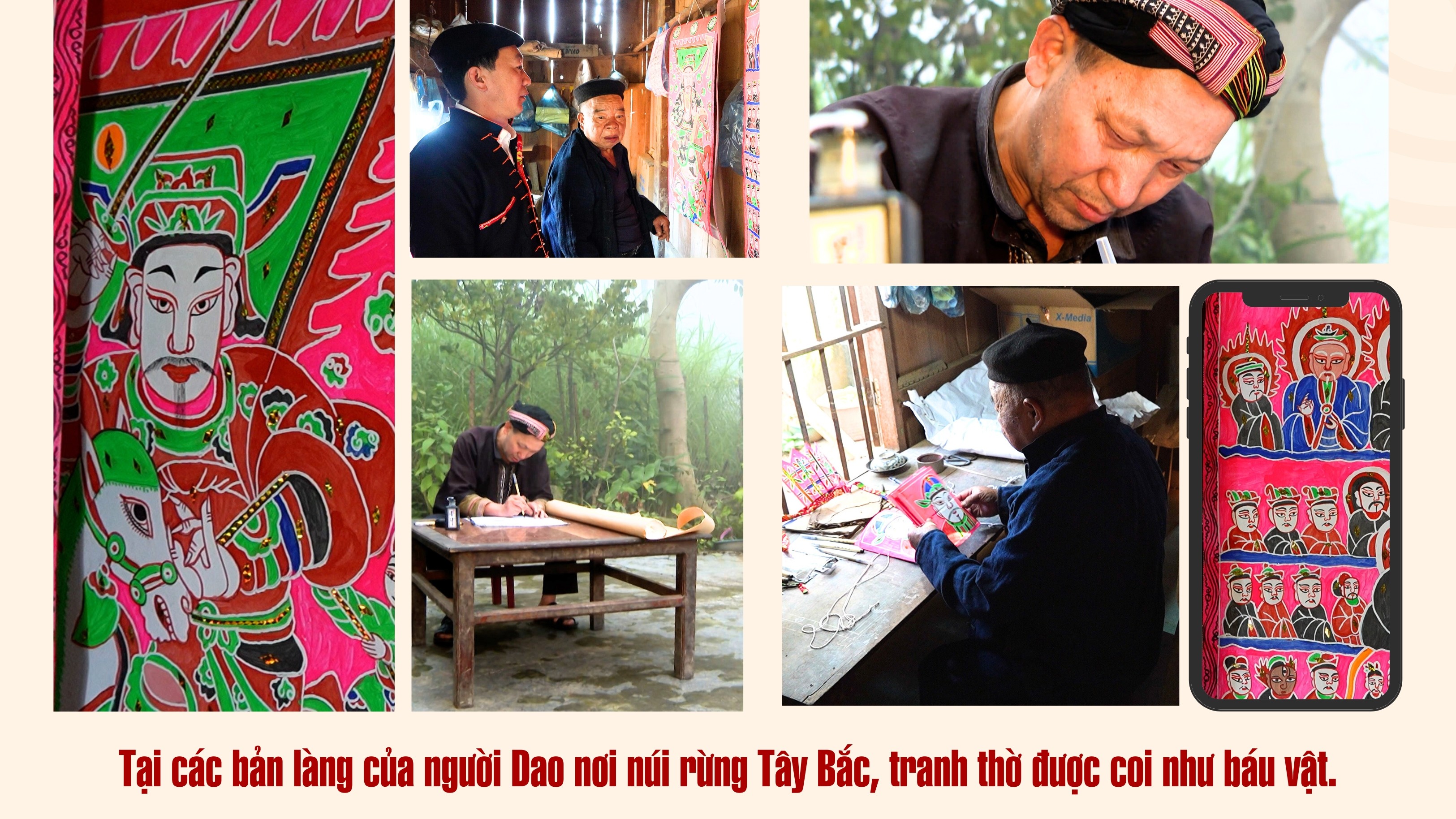
Although not many people still know how to paint ancestral portraits, dedicated individuals like "Master" Chieu and "Master" Vuong continue their tireless efforts to preserve and pass on this tradition. Amidst the hustle and bustle of modern life, they quietly carry out their work, like ancient trees standing firm in the mountains, protecting traditional values from being swept away. They not only paint portraits but also teach their descendants how to live morally, to live with a sense of roots, and to beautify life.
Presented by: Thanh Ba
Source: https://baolaocai.vn/chuyen-nguoi-ve-tranh-tho-post889369.html


![[Photo] The General Secretary, President and his wife begin their state visit to the Philippines.](https://vphoto.vietnam.vn/thumb/1200x675/vietnam/resource/IMAGE/2026/05/31/1780230559452_anh-man-hinh-2026-05-31-luc-19-28-11.png)
![[Image] Hanoi Police officially crowned champions of V-League 2025/2026](https://vphoto.vietnam.vn/thumb/1200x675/vietnam/resource/IMAGE/2026/05/31/1780244769054_ndo_br_039d561b692be875b13a-jpg.webp)
![[Photo] Admire the coral "masterpiece" amidst the million-year-old heritage of Dak Lak province.](https://vphoto.vietnam.vn/thumb/1200x675/vietnam/resource/IMAGE/2026/05/31/1780221235105_anh-man-hinh-2026-05-31-luc-16-53-27.png)
![[Photo] Solemn bathing ceremony and Buddha procession in Hue](https://vphoto.vietnam.vn/thumb/1200x675/vietnam/resource/IMAGE/2026/05/31/1780228263543_1-jpg.webp)













![[Video] Sunset at Lap An Lagoon – Where the sun sets over the fishing nets](https://vphoto.vietnam.vn/thumb/340x192/vietnam/resource/IMAGE/2026/05/31/1780192137701_beach-landscape-sea-water-nature-grass-745871-pxhere-com.jpeg)


































![[Photo] Admire the coral "masterpiece" amidst the million-year-old heritage of Dak Lak province.](https://vphoto.vietnam.vn/thumb/402x226/vietnam/resource/IMAGE/2026/05/31/1780221235105_anh-man-hinh-2026-05-31-luc-16-53-27.png)






























Comment (0)