

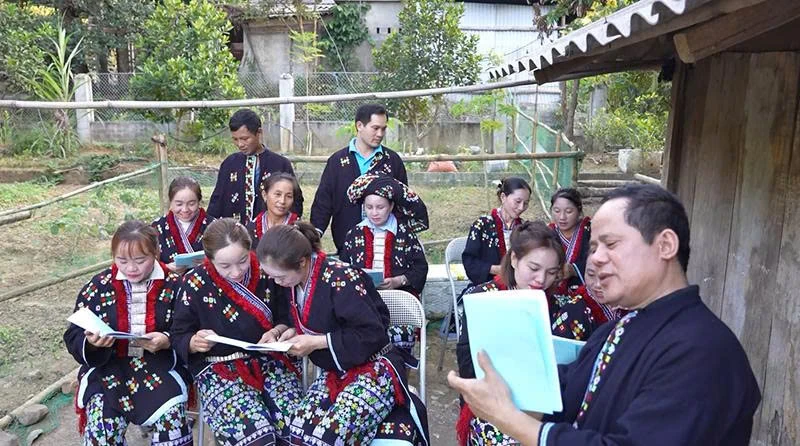
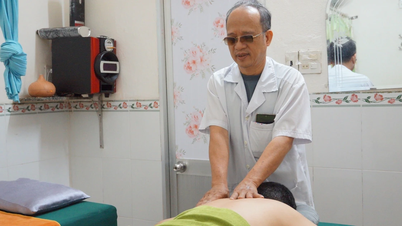
Mr. Trieu Van Luu teaches the Dao script to students.
The journey of "carrying the house" down the mountain...
Three decades ago, Pù Quăn had only 21 households with over 100 inhabitants. The villagers rarely left the mountains, especially the children and the elderly. The village is 16km from the center of Pù Nhi commune, and traveling that distance took a whole day climbing mountains, wading through streams, and trekking through the forest...
Life was almost completely isolated; the villagers cultivated corn, cassava, and rice, largely self-sufficient. Sometimes, they would only descend the mountain once every few months, mainly to buy kerosene and salt, two essential necessities; then they would laboriously carry their loads and walk back to the village. That journey could sometimes take several days.
Due to the remoteness and isolation, whenever people fall ill, they often treat themselves with folk remedies or invite shamans to perform rituals. Some people are sick for months without recovering before they need the help of relatives and villagers to carry them through the forest to the commune's health station for treatment.
Learning was even more difficult. Most of Mr. Trieu Van Liu's peers did not go to school. A few did, but they only studied up to the second or third grade, dropping out before they could even read and write fluently. After finishing primary school, only three people from the Dao Pu Quan village went to the commune center to continue their secondary education, including Mr. Liu.
Poverty and illiteracy are like a vicious cycle, relentlessly engulfing the lives of people in the remote mountain regions...
At that time, Trieu Van Lieu was young, but he had a small family to care for, surrounded by countless hardships. He faced a difficult choice: to continue staying in his village, poor but close to his relatives and neighbors, or to leave decisively, despite facing many uncertainties? Ultimately, the aspirations of youth prevailed. He decided to "descend the mountain," seeking a chance for change for himself and his village.
In 1996, at the age of 27, Trieu Van Liu began his journey of "carrying his house" down the mountain. His house in Pu Quan village was dismantled. With no roads or means of transportation, he and his relatives had to carry and move parts of the house down to their new home. This arduous journey lasted a whole month. Finally, the small house was erected on new land. And the village's name, Ha Son (meaning "down the mountain"), later originated from this.
At that time, Ha Son village was still wild and undeveloped, but it was close to the commune center, making transportation more convenient. Following Mr. Liu's example, and with the encouragement of the Resettlement and Land Allocation Committee of the former Muong Lat district and the Pu Nhi Border Guard Post, many households left Pu Quan village and moved to Ha Son to live...
The tall, shady tree of the village
Three decades have passed, and Mr. Trieu Van Liu is about to turn 60, while Ha Son village is celebrating its 30th anniversary. Mr. Liu's hair has turned gray, and his former vigor is gone. But the older he gets, the more he resembles a towering tree casting its shadow over the village. Since the establishment of Ha Son village, he has earned the trust of both the government and the villagers, being elected village head, and later also serving as the Party branch secretary. For 30 years, he has always been a pioneer, working alongside the villagers to care for production and preserve the cultural identity of his ethnic group.
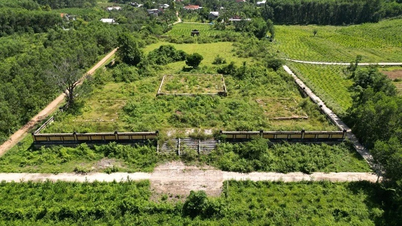
After decades of reclaiming barren land and establishing villages, the once desolate area has now become densely populated. Ha Son village currently has 52 households with nearly 300 inhabitants, including one Muong household, one Thai household, three Mong households, and the rest are Dao. Ha Son is the first village in Pu Nhi commune to achieve the New Rural Area status. When they first "descended from the mountains," 100% of the households in the village were poor; now, the entire village has escaped poverty. Instead of just growing corn and cassava, the village has developed many new models that bring high economic efficiency.
"With encouragement from Uncle Lĩu, my family boldly invested in planting oranges on the hill and developing a pig breeding model, bringing in several hundred million dong a year. Life used to be very poor. Now we've escaped poverty and have some savings, so my family is very happy," shared Triệu Văn Cáu, one of the well-off families in Hạ Sơn village.
From a situation where the majority of the villagers were illiterate, now 100% of children of school age in Ha Son village attend school. Approximately 40 people in the village have graduated from university.
The village of Hạ Sơn has escaped poverty, but one thing still worries Mr. Triệu Văn Lĩu. The Dao people have a unique traditional culture, especially their writing system. However, over the years, the Dao script has gradually faded away. Deeply concerned about the loss of their ethnic culture, Mr. Triệu Văn Lĩu has diligently researched and relearned the Dao script and disseminated it to the people of Dao villages in the former Mường Lát district. To date, he has taught four classes, training 120 students to read the Dao script.
Ms. Trieu Thi Lai, one of Mr. Liu's older "students," said: "We know that the Dao people have a written language, but we didn't learn it in the past, so we don't know how to read or write. Mr. Liu teaches us how to read and write, and we all want to learn. We must preserve our ethnic script so that we can pass it on to our children and grandchildren in the future..."
The path down the mountain that Mr. Trieu Van Liu took 30 years ago has now become a part of the memories in the journey of change for Ha Son village. At nearly sixty years old, he still wishes he had the health to teach the Dao language, prepare Dao medicine, preserve the essence of Dao ethnic culture; and especially to continue walking with the people of Ha Son village on the path of national and homeland renewal...
Text and photos: An Thu
Source: https://baothanhhoa.vn/chuyen-ong-liu-o-ban-ha-son-283429.htm

![[Photo] General Secretary and President To Lam presides over a meeting on preparations for the review of one year of operation of the three-tiered government system.](https://vphoto.vietnam.vn/thumb/1200x675/vietnam/resource/IMAGE/2026/06/02/1780391821195_a1-bnd-4595-9717-jpg.webp)






































































Comment (0)