

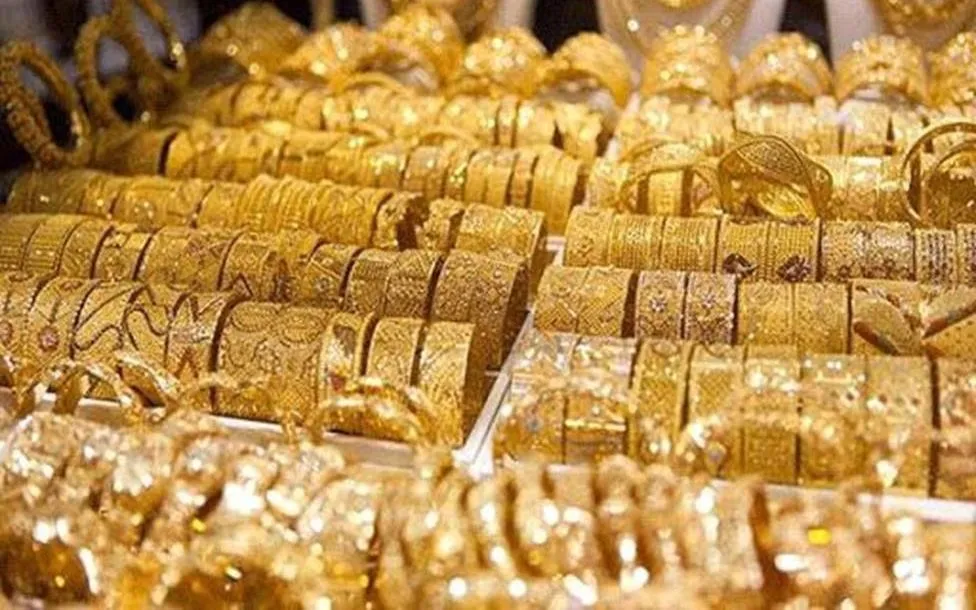
The State Bank of Vietnam (SBV) is seeking feedback on a draft decree amending and supplementing several articles of Decree 24/2012/ND-CP on the management of gold trading activities. One of the issues attracting significant attention from the business community is the change in the management mechanism for the production, processing, and trading of gold jewelry and handicrafts.
Moving towards eliminating business conditions from July 1st.
Specifically, in the draft amendment to Decree 24 published on May 29th, the State Bank of Vietnam (SBV) proposed abolishing the "sub-license" mechanism for the production, processing, and trading of gold jewelry and handicrafts from July 1st. Accordingly, organizations and individuals participating in this field will no longer have to apply for a certificate of eligibility to operate as before. The SBV will also no longer conduct specialized inspections and audits of gold jewelry and handicraft production under the current mechanism.
Nevertheless, businesses producing and trading gold jewelry and handicrafts must still fully comply with relevant legal regulations, such as: ensuring product quality, technical standards, measurement, labeling, price listing, invoices and documents, tax obligations, fire safety, environmental protection, consumer rights protection, and anti-money laundering...
According to Mr. Nguyen Van Dung, Chairman of the Ho Chi Minh City Jewelry and Goldsmiths Association (SJA), previously, businesses wishing to participate in the production of gold jewelry and handicrafts had to obtain a certificate of eligibility from the management agency. "Businesses had to have a suitable business registration license, a legal production facility and workshop, and relevant certifications related to the environment, fire safety, and security. If all those conditions were met, the State Bank of Vietnam would issue the certificate. The key was to fully fulfill all the requirements according to regulations," Mr. Dung said.
According to Mr. Dung, this revised draft decree is a positive sign, creating more favorable conditions for the business community. The abolition of sub-licenses reduces administrative procedures and increases proactiveness in production and business activities. "With the new regulations, businesses will organize production themselves, self-declare, and take responsibility for their own operations, while still having to ensure compliance with legal regulations on security and order, fire prevention and control, environmental protection, and other related conditions. Functional agencies will conduct inspections and supervision as prescribed. The abolition of sub-licenses will help businesses reduce administrative procedures," Mr. Dung stated.
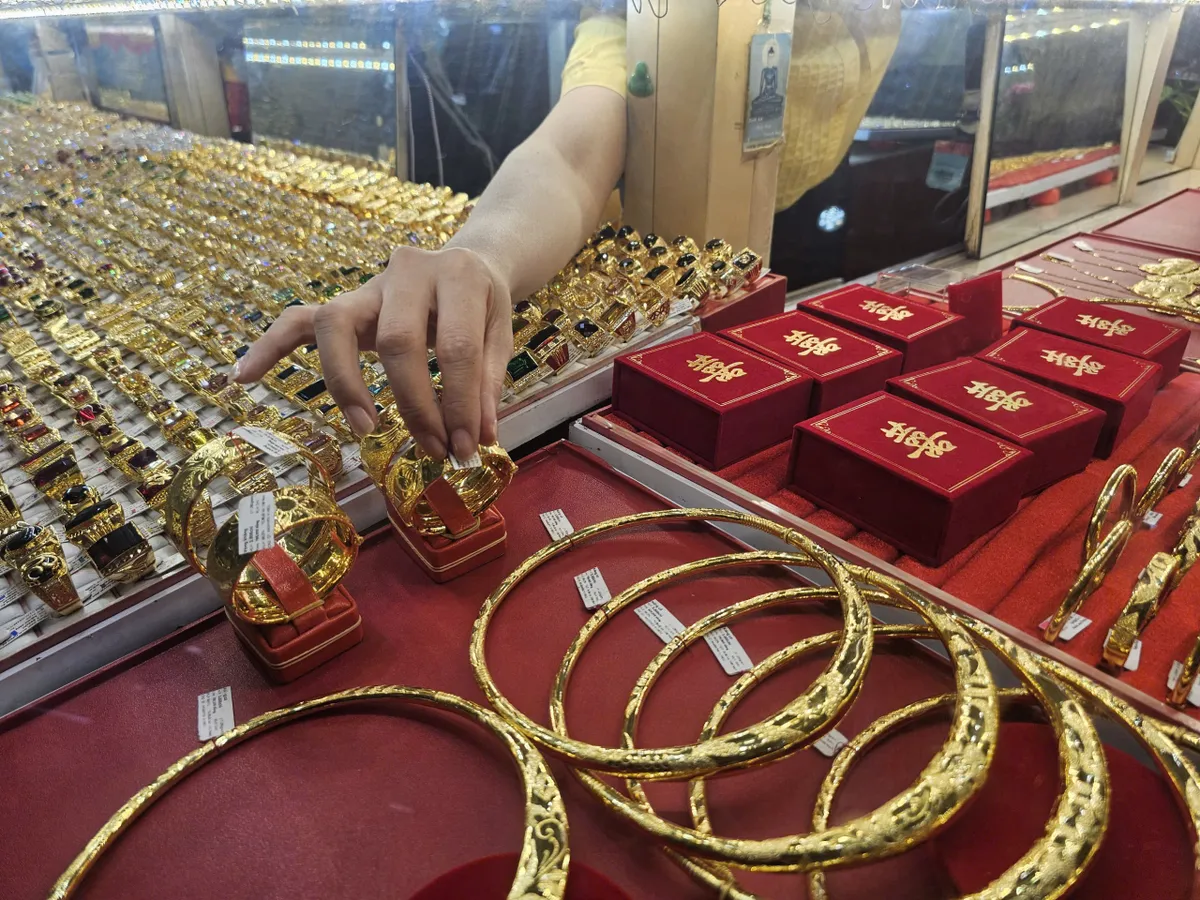
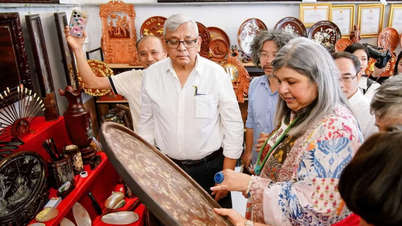
According to current regulations, the production of gold jewelry and handicrafts is a conditional business activity. Photo: LAM GIANG
The leaders of the Vietnam Gold Business Association (VGTA) also stated that for many years, the business community in the gold industry has repeatedly petitioned for adjustments to regulations to better suit market realities. Most recently, Appendix IV of the 2025 Investment Law classified the gold jewelry and handicraft industry as a group of ordinary trading goods. Therefore, the association has proposed that the management agency promptly specify regulations to align with the 2025 Investment Law, and synchronize the State Bank of Vietnam's regulations with documents from the Ministry of Industry and Trade and other relevant ministries and agencies. This is expected to create a more favorable legal framework, helping jewelry businesses proactively invest, expand production, and enhance their competitiveness.
According to VGTA's assessment, if given favorable conditions in terms of mechanisms, raw materials, and the business environment, Vietnam's gold jewelry and handicraft industry could achieve export turnover of 4-5 billion USD per year. This is considered significant growth potential, contributing to increasing the added value of the gold crafting industry and boosting exports in the future.
We hope to be able to import gold soon.
Besides proposing the abolition of business conditions for gold jewelry and handicrafts, many businesses in the industry believe that the most pressing issue currently is resolving the bottleneck regarding the supply of raw materials. This is because, recently, the market has continuously faced a shortage of raw gold as no businesses have been granted official import licenses to serve the production of gold jewelry and handicrafts. This has made it difficult for many manufacturing facilities to maintain operations, expand production, and export.
Mr. Nguyen The Hung, Vice Chairman of VGTA, believes that along with "unleashing" the management mechanism for gold jewelry and handicrafts, the regulatory agency should soon allow businesses to import raw gold. Once the raw material issue is resolved, businesses will have the conditions to stabilize production, enhance competitiveness, and develop the domestic jewelry manufacturing industry.
Statistics from VGTA show that the demand for raw gold for jewelry production is currently around 50 tons per year, equivalent to $5 billion, averaging over $416 million per month. Of this, about half is used to meet domestic demand, with the remainder for export. With approximately 25 tons of gold used in manufacturing and export annually, the jewelry industry has the potential to generate between $3.5 and $4 billion.
According to VGTA leaders, this is one of the few sectors capable of both using imported raw materials and creating export products to generate foreign exchange for the economy . "Businesses importing raw gold for processing not only meet domestic consumption needs but also create added value through exports. This is a unique characteristic of the gold jewelry and handicraft industry," a VGTA representative stated.
Regarding the management of the gold market, the Ministry of Science and Technology is also seeking feedback on a draft circular regulating the measurement and quality of gold bars, gold jewelry, handicrafts, and raw gold during production, import, and circulation in the market. Mr. Nguyen Ngoc Trong, Director of NPJ New Partner Gold Company, believes that the implementation of new regulations needs to be accompanied by solutions to support businesses if the goal is to achieve comprehensive transparency in the gold market.
According to Mr. Trong, not only large enterprises but also small and medium-sized businesses need access to legal sources of raw gold with complete invoices and documents to serve production. "A suitable mechanism is needed to allow small businesses to continue to exist and develop. These are businesses that have been operating for many years, creating jobs for workers and contributing to maintaining traditional crafts. If only large enterprises are allowed to import raw gold, small businesses will face many disadvantages in accessing the supply," Mr. Trong proposed.
Many businesses also believe that the State Bank of Vietnam needs to quickly develop a mechanism for licensing the import of raw gold to ensure a stable and transparent supply for the production of gold jewelry. At the same time, product traceability requirements should be implemented synchronously to increase market transparency, create a healthy competitive environment, and help businesses feel secure in investing and developing in the long term.
Source: https://money.vtv.vn/coi-troi-vang-trang-suc-109260602111413062.htm




























































































Comment (0)