

To ensure that students from disadvantaged areas can safely and fairly access examination rooms, the perseverance of teachers, the support of society, and the well-prepared plans of the education sector are crucial.
Keeping students occupied during the farming season.
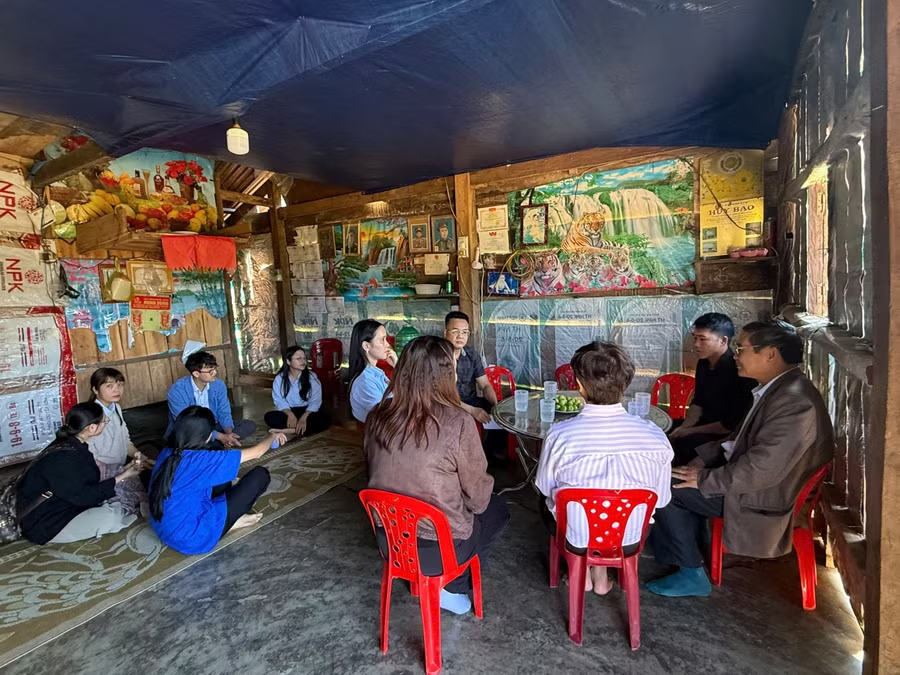
At Krong No High School ( Lam Dong province ), teachers are not only concerned about students' academic performance but also worried about students skipping exam preparation to help their families with the harvest. Principal Le Thi Chung stated that out of 526 12th-grade students, 14 are from disadvantaged backgrounds, facing the risk of dropping out of the exam, and live far from the school.
The school has made arrangements to provide financial support for accommodation, study materials, and exam preparation. "Many students have to study while also helping their families. Some students travel more than 20km to school, and their families need labor, so they may have to stop studying at any time," Ms. Chung shared.
The advantage is that 100% of students review their elective subjects starting from grade 10. Those who choose to retake subjects receive maximum support from their teachers. Some teachers are willing to teach extra classes in the evenings and call parents to encourage their children to continue attending classes. This is also the case at Nguyen Binh Khiem High School in Nam Dong (Lam Dong province), where more than 70% of the students are children of the M'Nong, Tay, and Nung ethnic minorities.
According to Principal Ly Anh Quyet, the school maintains study groups based on ability, subject, and residential area. "The school has a plan to support students from preparation to exam participation, with the motto that no student should be prevented from taking the exam due to financial difficulties," Mr. Quyet emphasized.
Mr. Phan Thanh Hai, Deputy Director of the Lam Dong Department of Education and Training, said that keeping students in class to prepare for exams has never been easy. For many families, a seasonal worker is sometimes just as important as their children's education. Therefore, in addition to knowledge, teachers must persistently persuade parents, accompanying them with both responsibility and compassion.
A special "scenario" for students in remote areas.
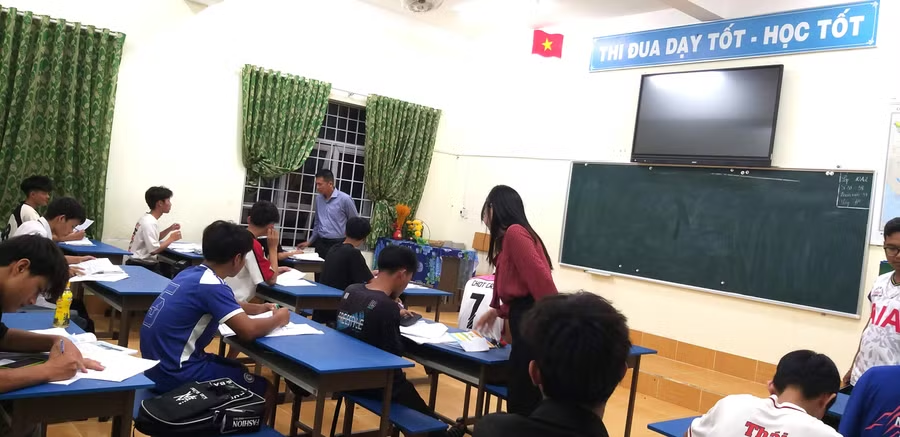
At Nguyen Chi Thanh High School (Dak Lak), difficulties seem to be a familiar companion. The school is located in the border area between Dak Lak, Lam Dong, and Dak Nong (formerly), with many villages tens of kilometers away through the forest. In the 2025-2026 school year, 147 out of 163 12th-grade students are from ethnic minority groups, but only 24 of them live in the boarding school.
Mr. Bui Quang Dinh, the Vice Principal, expressed: "Some students travel over 30km, even 40km through the forest to get to school. Many students stay for only a few days before having to return home to help their families." To maintain the achievement of a 100% graduation rate for three consecutive years, teachers have to develop very specific "scenarios."
Weak students receive free tutoring outside of class hours; review materials are streamlined to be concise and easy to understand; and practice questions closely follow the structure of the sample exam. The school also develops a "study buddy" model, focusing on psychological counseling and reducing pressure on students.
Mr. Chu Van Duong, Head of the History, Geography, and Physical Education Department, chose to apply technology to increase the effectiveness of exam preparation. "We create exercises on Azota, Quizizz, and Kahoot and send the links to students. If students make many mistakes on easy questions, the teacher will guide them to review the theory more carefully," Mr. Duong explained.
However, online learning in remote areas is not easy. Many students do not have smartphones or have unreliable internet connections. Teachers have to encourage them to study in groups or borrow friends' phones to do assignments. Seemingly small things like a phone, internet connection, or a few tens of thousands of dong for gas... in disadvantaged areas, these things can determine opportunities to access knowledge.
Efforts from schools to the community
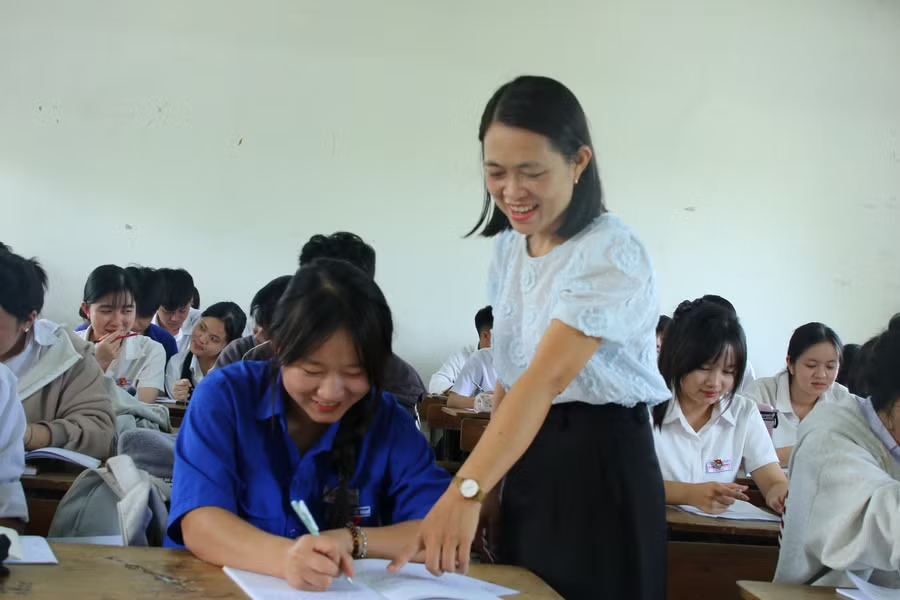
At Tran Hung Dao High School (Dak Lak), this school year there are 244 12th-grade students, including 48 from impoverished households, 49 from near-impoverished households, and 84 who live more than 10km from the school. Principal Duong Xuan Vy affirmed that in addition to organizing exam preparation from the beginning of the year, the school pays special attention to tutoring weak students, providing psychological counseling, and closely coordinating with parents.
The school organizes multiple mock exams to identify students at risk of failing the graduation exam early on, thereby developing intensive tutoring plans tailored to each ability group. In particular, the school guides students in applying AI to support learning, problem-solving, and knowledge systematization.
Meanwhile, at Krong Bong High School (Dak Lak), which has over 1,470 students, about 30% of whom live far from home, the "exam support" program has been implemented early. Principal Duong Kim Thach shared that the school organizes free review sessions for 12th-grade students by utilizing the teachers' unused class time.
Through mock exams, the school identified over 40 students at high risk of failing the graduation exam and organized intensive review sessions for them. In addition to academic support, the school also appealed to benefactors for scholarships, motorbikes, and laptops for disadvantaged students; and coordinated with local authorities to prepare accommodation, free meals, and transportation for students during the exam days.
In the disadvantaged areas of the Central Highlands, the exam is not just a matter for the education sector alone, but also a journey of the entire community working together to ensure that students do not miss the opportunity to change their lives.
No student should be left behind.
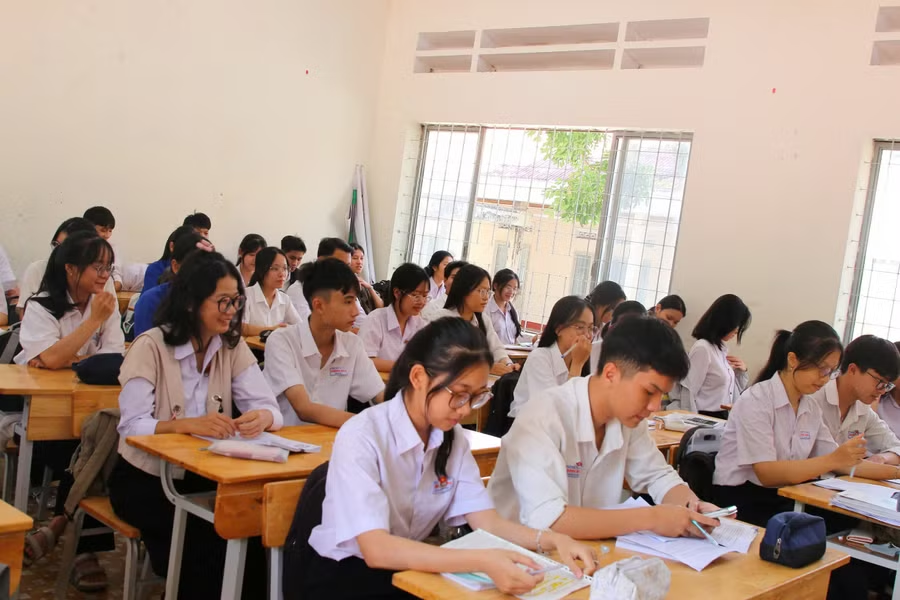
The Lam Dong Department of Education and Training has provided specific guidance to schools on organizing scientific review sessions, focusing on grouping and supporting disadvantaged students. "Because the exam often falls during periods of heavy rain and flooding, the department has developed contingency plans to support students in all circumstances to ensure their safe attendance at the exam," said Mr. Phan Thanh Hai.
Ms. Vo Thi Minh Duyen, Deputy Director of the Dak Lak Department of Education and Training, shared that from coastal areas to the land border, schools are urgently reviewing material and proactively preparing for various situations to organize the exam safely and seriously, creating the most favorable conditions for students.
Mr. Nguyen Hoa Nam, former Head of the Examination and Quality Assurance Department of the Dak Lak Department of Education and Training, noted that in the Central Highlands, students' journey to the examination room sometimes involves days of walking long distances, working in the fields with their parents, or even studying using friends' phones.
Therefore, "equality of opportunity" in education is not simply about having the same exam or exam regulations. Fairness also means that every student, whether in the city or in a remote area, has the opportunity to review, access knowledge, and enter the exam room with the utmost confidence.
To achieve this, behind each exam season lies the silent dedication of teachers working tirelessly day and night, the efforts to encourage students to return to class, free meals, temporary accommodation, and the support of the community. When the doors of the examination rooms open, what students from disadvantaged areas take with them is not only knowledge, but also the belief that they will not be left behind on their educational journey.
Source: https://giaoducthoidai.vn/cong-bang-co-hoi-cho-thi-sinh-vung-kho-post778640.html





![[Photo] General Secretary and President To Lam presides over the meeting to approve the draft report on the results of the second inspection by the Politburo of the Standing Committee of the Hanoi City Party Committee.](https://vphoto.vietnam.vn/thumb/1200x675/vietnam/resource/IMAGE/2026/05/26/1779789811432_a2-bnd-4430-9620-jpg.webp)




















































































Comment (0)