

In the context of Vietnam's accelerated development of renewable energy and implementation of the revised Power Development Plan VIII, high-voltage direct current (HVDC) transmission technology is being considered a strategic solution for long-distance power transmission, integrating green energy sources, and improving the stability of the national power system.
In an interview with a reporter from the Industry and Trade Newspaper, Professor Tran Quoc Tuan - INSTN University, University of Paris Saclay (Republic of France), and also the Fellow Scientist Research Director at the French Atomic Energy and Alternative Energy Commission (CEA) - shared many perspectives on the development trends of HVDC worldwide as well as its potential application in Vietnam.
The world is accelerating the development of HVDC power transmission.
Professor, how is high-voltage direct current (HVDC) transmission technology currently being applied in countries around the world?
Professor Tran Quoc Tuan: It can be said that high-voltage direct current (HVDC) transmission technology is currently developing very strongly worldwide. The primary reason stems from the remarkable development of power electronics technology, creating a foundation for HVDC to enter a new phase of application with much higher efficiency than before.
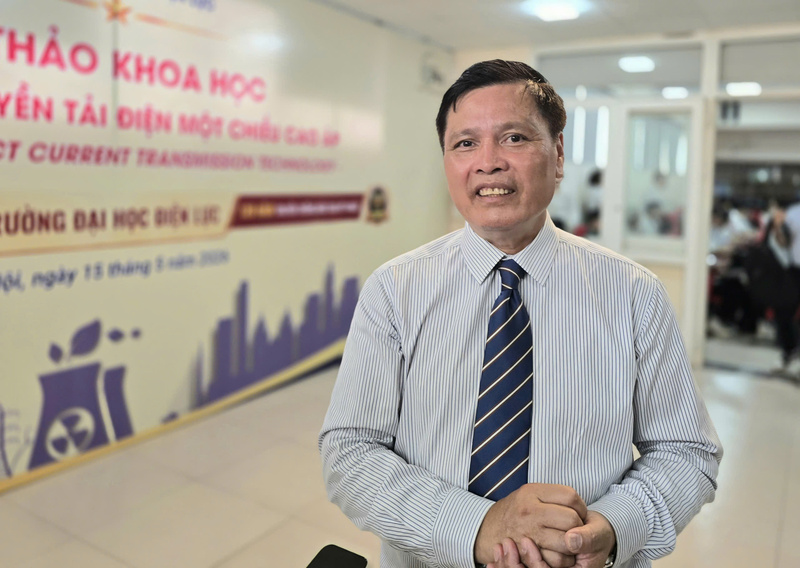
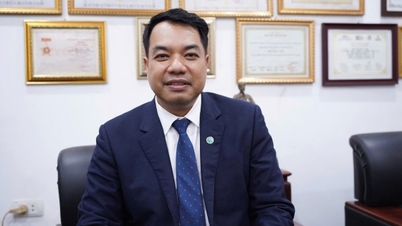
Professor Tran Quoc Tuan. Photo: Thu Huong
Furthermore, the global trend of renewable energy development also necessitates innovation in the power grid system. As the proportion of wind and solar power increases, integrating and coordinating these energy sources into the national power system becomes much more complex, and high-voltage power distribution systems (HVDC) are one of the key solutions to address this challenge.
China is currently a leading country in the development of HVDC technology. Initially, they imported the technology from Europe, but after systematic research and investment, China has now mastered many core technologies and implemented a series of large-scale projects.
In Europe, this technology is also developing rapidly, especially in cross-border grid interconnection projects. For example, the HVDC line between France and Spain is now considered one of the most advanced models in the world, using state-of-the-art voltage source switching (VSC) technology and serving as a model for many countries to emulate.
In addition, Germany is also investing heavily in HVDC lines to transmit wind power from the North to load centers in the South.
HVDC is suitable for Vietnam's extensive power grid.
Professor, why is HVDC technology considered particularly suitable for Vietnam?
Professor Tran Quoc Tuan: Vietnam is a country with a geographical structure stretching along the North-South axis, with power transmission lines over 500 km long. HVDC technology has many advantages over alternating current (AC) power transmission.
Firstly , HVDC is more economically efficient for long-distance power transmission. This is a crucial factor as Vietnam is aiming to develop large-scale renewable energy centers in the central and southern regions to transmit power to the north.
Secondly , HVDC significantly reduces power system stability issues. With traditional AC grids, voltage and system stability have always been major challenges, especially as the proportion of renewable energy increases rapidly.
Thirdly , HVDC offers significant savings in transmission line corridors and land area. Currently, Vietnam has built three 500 kV AC North-South transmission lines. If we continue to develop using the traditional AC model, it would be difficult to build 5 to 10 more lines due to the immense environmental pressure, land acquisition requirements, and social impacts.
Meanwhile, one HVDC line has the transmission capacity equivalent to approximately three AC lines, which is an extremely important advantage for Vietnam in the long term.
Standards and operating regulations for HVDC need to be established soon.
- The revised Power Development Plan VIII has set out directions for the development and research of high-voltage power plants. According to the professor, what are the issues that need to be prepared for right now?
Professor Tran Quoc Tuan: In the revised Power Development Plan VIII, Vietnam has oriented the development of several large high-voltage transmission lines such as the Central-Northern region and the South-Central-Northern region. However, there are still many issues that need further research.
For example, the choice of power capacity, voltage level, technology to use, and how integrating HVDC lines into the existing power system will affect the operation of the national power grid.
This is not a problem unique to Vietnam; all countries must address it when deploying high-voltage power lines.
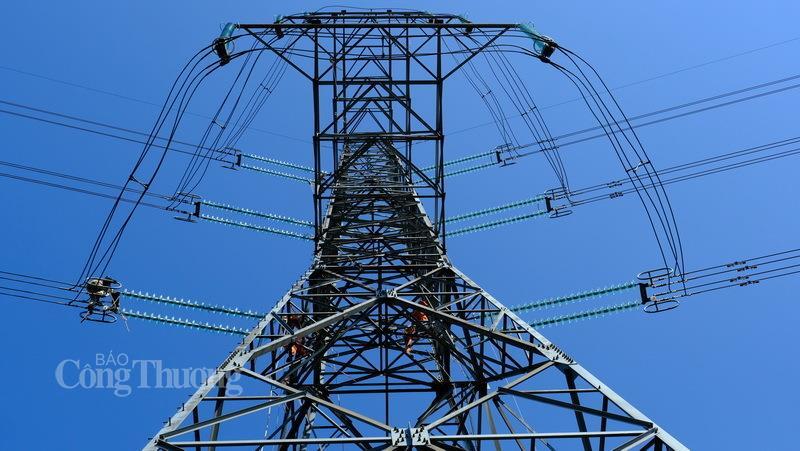
Currently, Vietnam is still using alternating current (AC) power transmission technology. (Illustrative image: Thu Huong)
Another crucial issue is the need to develop technical standards, regulations, and operating rules (grid codes). In my opinion, Vietnam needs to do this as soon as possible, before implementing any projects. If technical standards are revised only after the projects are completed, significant difficulties will arise in operation later on.
Therefore, what we hope to achieve through these scientific seminars is not to discuss bidding or investor selection, but to provide a scientific basis and create a forum for the electricity industry and universities to collaborate on research, enhance professional capacity, and prepare resources for the future.
- Vietnam currently has about 28% of its power capacity from renewable energy sources. How will HVDC support the integration of these power sources, Professor?
Professor Tran Quoc Tuan: This is a very important issue. As we know, solar and wind power currently account for about 28% of Vietnam's power generation structure. According to the scenarios in the Power Development Plan VIII, by 2030, the scale of renewable energy sources will increase very strongly, and by 2050 it could increase tenfold compared to the present.
As the proportion of renewable energy increases, the power system will face numerous challenges regarding operational stability and regulation.
Therefore, HVDC is not simply a long-distance power transmission technology, but also a tool to support the integration of renewable energy, enhance the absorption of green power sources, optimize power distribution, and improve the stability of the national power system.
If implemented comprehensively, HVDC will contribute significantly to the operation of a more flexible, stable, and efficient power system in the future.
Universities need to take the lead in training human resources for the High-Voluntary Vocational Training Center (HVDC).
Professor, what role should universities play in the development of HVDC technology in Vietnam?
Professor Tran Quoc Tuan: Currently, in Vietnam, there are some training activities related to power electronics, but mainly on a small scale or serving individual applications.
Meanwhile, HVDC is a very broad field, involving large-scale power transmission systems. We still lack well-structured training programs and specialized research groups in this area.
Therefore, I believe that universities need to be more actively involved. This should be a collaboration between the electricity sector and training institutions to jointly research, train personnel, and gradually master the technology.
Thank you very much, Professor!
On May 15th, in Hanoi, the University of Electrical Engineering, in collaboration with Professor Tran Quoc Tuan and other organizations, held a scientific conference on the topic of "High Voltage Direct Current (HVDC) Transmission Technology". The conference was attended by nearly 200 delegates from management agencies, energy enterprises, research institutes, and universities nationwide. The conference aimed to create a forum for scientists, experts, and managers to exchange ideas on development trends, challenges, and solutions for applying high voltage direct current (HVDC) transmission technology in Vietnam and around the world.
At the workshop, delegates agreed that, in addition to technical solutions, HVDC technology is also an important direction for Vietnam to develop a more modern, efficient, and sustainable energy system in the future.
Source: https://congthuong.vn/cong-nghe-hvdc-mo-huong-cho-luoi-dien-tuong-lai-456991.html
![[Photo] General Secretary and President To Lam presides over the meeting to approve the draft report on the results of the second inspection by the Politburo of the Standing Committee of the Hanoi City Party Committee.](https://vphoto.vietnam.vn/thumb/1200x675/vietnam/resource/IMAGE/2026/05/26/1779789811432_a2-bnd-4430-9620-jpg.webp)









![[GALLERY] Ubisoft suffers record losses, cancels 7 games, shocking the gaming industry.](https://vphoto.vietnam.vn/thumb/402x226/vietnam/resource/IMAGE/2026/05/26/1779805711288_uni-2-png.webp)





![[GALLERY] USB-C AA batteries are causing a sensation because they're so convenient for tech enthusiasts.](https://vphoto.vietnam.vn/thumb/402x226/vietnam/resource/IMAGE/2026/05/26/1779798818575_p-png.webp)









































Comment (0)